 Follow Us on Google News
 Follow Us on Google Discover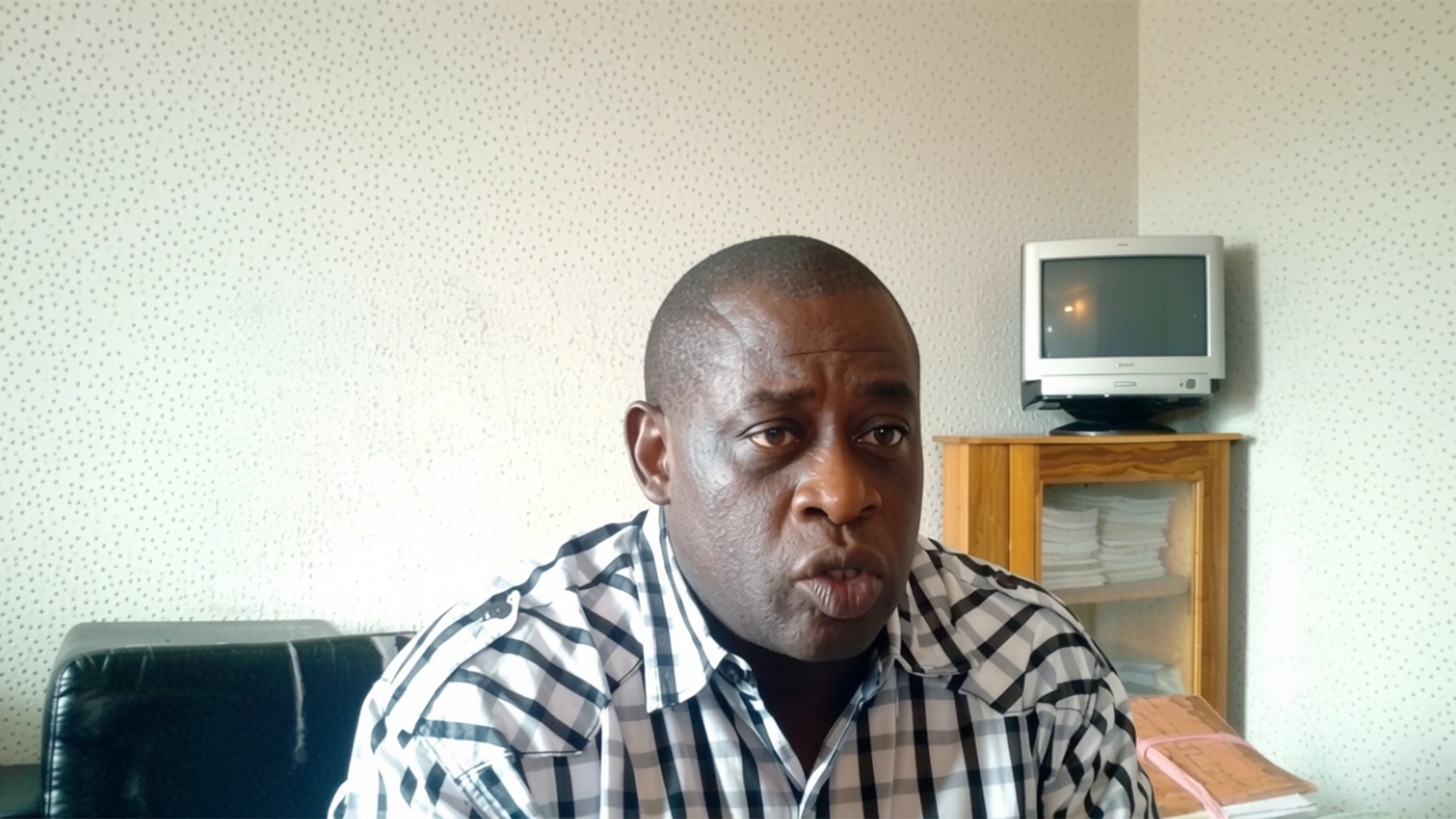
A lawyer and National Vice Chairman of the Peoples Democratic Party (PDP) in the South-East, Ray Nnaji, spoke to LAWRENCE NJOKU on the state of the party, court cases, Senate President’s jibe at the party, the role of Nyesom Wike in the opposition party, and embattled Uche Nnaji’s gubernatorial aspiration in Enugu, among others.
There are concerns that certain court decisions, especially those related to opposition political parties, may not guarantee a free and fair electoral contest next year. How do you see this?
One thing I understand is that the decisions of the judiciary are always predicated on the facts placed before it. Judges do not go outside the facts presented to them in reaching their judgments. Even if they know more than what is before them, the law does not permit them to rely on such knowledge. That is why it is difficult to fault a court’s decision simply because one disagrees with it.
In this instance, the judiciary is not actually the problem. The problem is politicians who rush to court at the slightest opportunity to seek one relief or another. Since the court is expected to uphold justice, it will always take a position based on the facts before it, even if some people consider the outcome unsatisfactory. If you look closely, you will discover that the facts presented informed the court’s decision.
Must the court respond to every issue brought before it, knowing that some cases are not intended to serve the public good, especially during this political period?
Access to the court is a constitutional right. You cannot question anyone for approaching the court to seek a legal remedy. Once a matter is brought before the court, it becomes justiciable, provided the court has jurisdiction and the case has merit. Those are the key issues.
So, nobody should be blamed for seeking redress in court. Rather, politicians should avoid using the judiciary to undermine democracy. If political parties strictly enforce their internal rules by ensuring that, after primaries, every aspirant supports the eventual winner, it would help stabilise the system. The court should not be blamed for performing its constitutional duty.
The 2027 elections are drawing closer. What is the situation in the PDP?
One thing you must understand is that some people make statements that are completely unnecessary. The Senate President, Godswill Akpabio, recently said he did not know the PDP still existed. That statement was careless and unbecoming of someone who benefited immensely from the party.

The PDP made Akpabio politically. Everything he has become today was made possible through this party. Even if the PDP is facing challenges, he should remember that the party once worked for him. It is unfortunate that someone in his position could make such a remark.
People should understand that political offices are temporary. One day, you will leave the office, and history will judge your words and actions. That statement was most unfortunate.
Now that he (Akpabio) has defected to the ruling party, he probably believes he can say anything. But let me assure you that the PDP is alive. Thanks to our leader, Nyesom Wike.
If Wike had also defected, as others did, the PDP would have faced even greater challenges.
If those of us who stayed behind to rebuild the party had left, perhaps people would no longer be talking about the PDP.
Some members moved to the Nigeria Democratic Congress (NDC), others joined the coalition African Democratic Congress (ADC), while some remained only to create more internal problems, including the individual who called himself the Caretaker National Chairman.
Rather than reposition themselves politically, they continued to create unnecessary crises.
The Supreme Court has since ruled on the PDP leadership issue, and that settles the matter.
We refuse to run away. We stayed back and ensured the party survived despite everything.
Today, we have repositioned the PDP and are working seriously towards winning elections next year.
Recently, we won a senatorial seat in Rivers State. It was during the introduction of that senator-elect that the Senate President claimed he did not know the PDP still existed.
I can also tell you that many governors and elected officials who defected to the APC after the 2023 elections did so, not out of conviction, but because of prevailing political circumstances that made life difficult for opposition parties. By the time the 2027 elections are concluded, many of those who defected will not return to public office.
We have done well in rebuilding the party, and everything we are doing is geared towards winning elections next year. This is important because we want Nigerians to know that the PDP remains Africa’s largest opposition party.
We have our presidential candidate and candidates in all the states where elections will be held next year. We also had internal disputes involving governorship aspirants in six states, including Borno, Oyo and Enugu, but those issues have now been resolved.
In Enugu, the dispute was between Uche Nnaji, the former Minister of Science and Technology, and Samson Nnamani. Nnamani petitioned against Nnaji. I was a member of the panel that handled the matter, but I excused myself during deliberations on the Enugu case to avoid allegations of bias.
When I returned, I was informed that the petitioner could not substantiate his claims. Last week, I presented Uche Nnaji with the party’s governorship certificate. Therefore, Uche Nnaji is the PDP governorship candidate for the 2027 election in Enugu State.
The candidate you mentioned, Uche Nnaji, was recently arrested by the ICPC over alleged forgery. Some people believe this could affect the party’s chances in the election.
If you understand the Constitution, you will know that it has no bearing on his eligibility to contest. Until someone is convicted, that person cannot be disqualified from participating in an election. Anyone who wants him off the ballot must first secure a conviction against him.
Some people believe his arrest will benefit the ruling APC politically, but I do not share that view. It is only a temporary distraction. Even the ICPC’s decision to seek a court order to detain him for a bailable offence raises serious questions.
How do you arrest someone, detain him and then begin looking for evidence against him? Proper investigations should precede an arrest. The Constitution clearly provides that within the stipulated period, the suspect should be taken before a competent court. It is the court that ultimately determines guilt or innocence.
Detaining him for this length of time, even with a court order, does not override constitutional safeguards. Eventually, the courts will determine whether the process was lawful.
The better approach would have been to conclude investigations while allowing him his liberty. Public office holders have no immunity from investigation. However, the manner in which the ICPC has handled the matter gives the impression that he has already been found guilty, whereas the forgery case is still before the court.
Unless the commission is investigating other matters relating to his tenure as minister, all the necessary official records remain accessible through the current minister.
The ICPC said it invited him several times, but he ignored the invitations, forcing it to obtain a court order.
If that is true, then he was wrong. Nobody has immunity from investigation. As a lawyer, if I receive such an invitation, I will honour it. If the proposed date is inconvenient, my lawyer can write to request another date.
Where a suspect refuses to honour lawful invitations, the law permits security agencies to use reasonable force to secure the person’s attendance. That said, unless he is convicted, he remains qualified to contest the election. He is only standing trial.
There are several examples. The former Attorney-General of the Federation, Malami, is a governorship candidate in Kebbi State and is facing trial. Former Kogi State Governor Yahaya Bello is a senatorial candidate while standing trial. Former Osun Deputy Governor Iyiola Omisore was in prison when he was elected to the Senate. Former Abia State Governor, Theodore Orji, was on remand before becoming governor. None of them had been convicted.
Therefore, Uche Nnaji’s candidacy remains valid. Nobody can replace him. Even if the ICPC refuses him administrative bail, the court can grant him bail. Once released, he will continue his consultations and campaigns. Even if he eventually wins the governorship election, the legal process will continue independently.
Our former governor was once in prison for several months. The current governor also faced certificate-related litigation before the election, but that did not stop him from contesting and winning. He is now the governor, and those issues have to follow due legal process.
What challenges could prevent the PDP from regaining control of the South-East in the coming elections?
We are working hard to restore the PDP in the South-East. When an estate is destroyed by fire and later rebuilt, people are often amazed by the transformation. The fact that the PDP experienced setbacks does not mean it cannot recover. It certainly will.
Our greatest challenge has been the lack of sincerity, commitment and hard work among some people within the leadership. Rather than working to rescue the party, some preferred to remain idle, expecting others to do the difficult work.
We lost political control across the South-East, and currently, the PDP does not control any state government in the region.
Another major challenge is funding. Running a political party requires substantial resources. When a party controls state governments, financial support from elected officials helps sustain party activities. We no longer have that advantage.
Politics cannot be effectively conducted without adequate funding.
We also face external challenges because the ruling party often creates conditions that make it difficult for the opposition to operate. In some states, opposition parties are charged exorbitant fees, sometimes as much as N150 million, before they can erect campaign billboards. Such practices are undemocratic and discourage healthy political competition.
There is no level playing field. In several states, opposition parties are denied access to public facilities. Some could not even secure venues for their congresses and primaries, despite paying for them in advance.
These are the realities confronting the PDP. Nevertheless, despite these internal and external challenges, we are working tirelessly to restore the party and position it for success in the 2027 general elections.

