 Follow Us on Google News
 Follow Us on Google Discover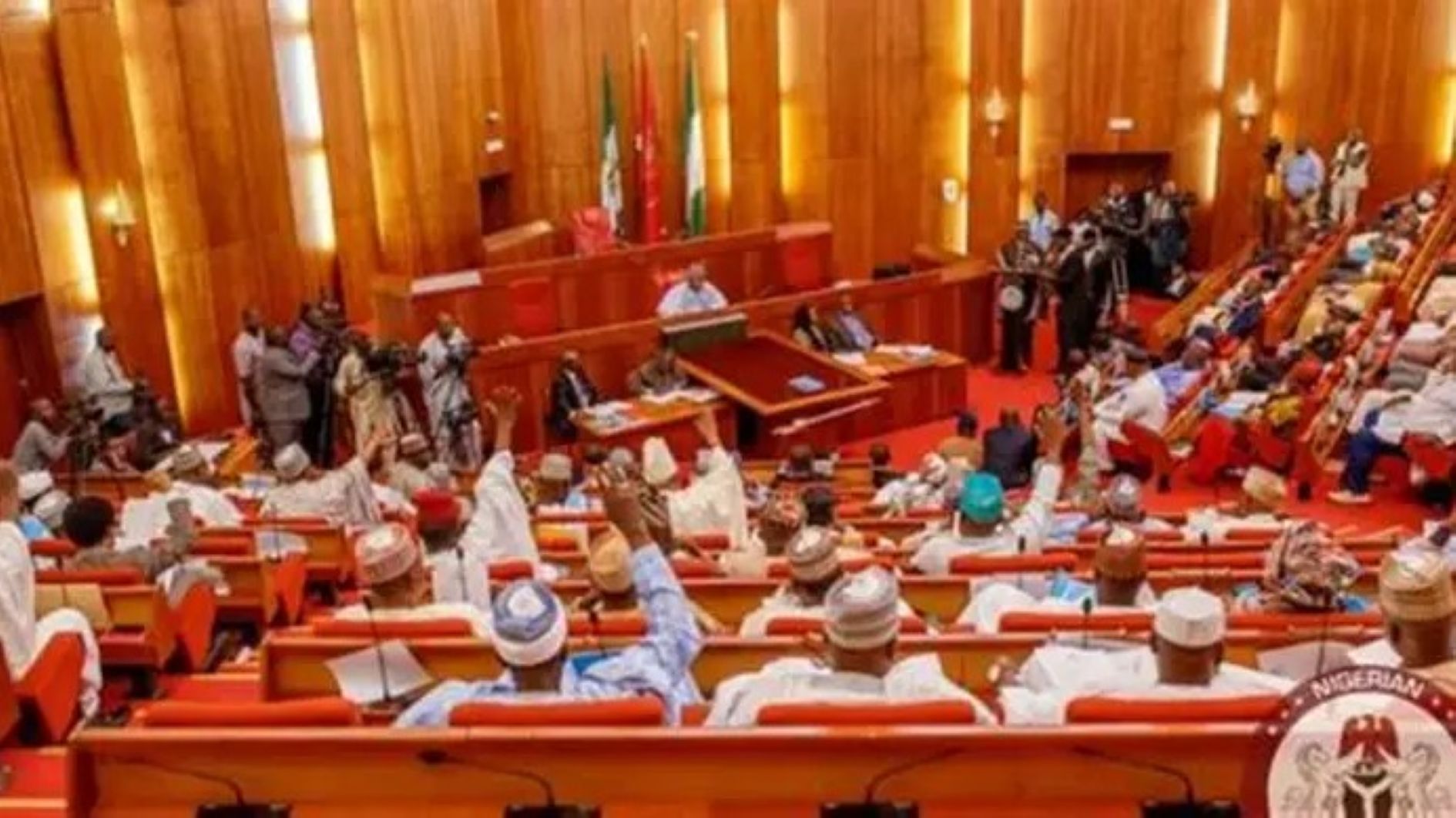
Despite an emotionally charged debate marked by calls for sweeping economic sanctions and a possible diplomatic rupture with South Africa, the Nigerian Senate on Tuesday stopped short of endorsing the hardline proposals, choosing instead to pursue a more cautious diplomatic path.
Although the chamber unanimously condemned the renewed xenophobic attacks against Nigerians and other African nationals in South Africa, Senate leadership resisted mounting pressure from lawmakers who demanded immediate punitive action against Pretoria.
The debate, sparked by a motion sponsored by Senator Asuquo Ekpenyong (Cross River South), who warned that anti-foreigner vigilantism in South Africa had escalated beyond undocumented migrants to include Nigerians and other African nationals legally residing and working in the country.
As the proceedings unfolded, it became evident that the leadership was reluctant to commit the Senate to measures that could significantly strain bilateral relations.
The debate, which dominated plenary, followed a motion sponsored by Senator Asuquo Ekpenyong (Cross River South), Presenting the motion, Ekpenyong said anti-migrant groups had unlawfully issued an ultimatum directing undocumented foreign nationals to leave South Africa by June 30, 2026, after which widespread reports of intimidation, violence, displacement, looting and attacks on foreign-owned businesses emerged.
He noted that even Nigerians with valid residence permits, work permits and immigration documents had reportedly been profiled, threatened, harassed and forced from their homes by unauthorized vigilante groups.

According to him, the indiscriminate attacks demonstrate that the campaign has gone beyond immigration enforcement and has become an expression of xenophobic hostility directed at foreign nationals.
The lawmaker reminded the Senate that Nigeria played a historic role in South Africa’s liberation struggle, providing diplomatic, financial and material support to the anti-apartheid movement, campaigning for the release of Nelson Mandela and hosting the 1977 World Conference for Action Against Apartheid in Lagos under the military administration of General Olusegun Obasanjo.
Ekpenyong also recalled the Senate’s resolution of May 5, 2026, which condemned earlier xenophobic attacks and urged diplomatic engagement and protective measures, lamenting that subsequent developments, including the voluntary repatriation of Nigerians and the expiration of the June 30 ultimatum, showed that previous interventions had failed to provide adequate protection.
While acknowledging South Africa’s sovereign right to enforce its immigration laws, he insisted that such enforcement must be undertaken only by authorised state institutions and in accordance with international human rights standards.
Calls for Citizen-Centred Foreign Policy
Supporting the motion, Senator Mohammed Tahir Monguno (Borno North) described the recurring attacks as an unfortunate cycle that resurfaces every one or two years.
He argued that Nigeria’s foreign policy must become more citizen-centred, with the protection of Nigerians abroad forming the core objective of the country’s diplomatic engagements.
According to him, safeguarding the lives and property of Nigerians wherever they reside is a constitutional obligation of government and the essence of the social contract between the state and its citizens.
Kalu Seeks Compensation, Not Retaliation
Former Abia State Governor, Senator Orji Uzor Kalu (Abia North), reminded the Senate of Nigeria’s enormous sacrifices in the struggle against apartheid and expressed disappointment that Nigerians were now victims of repeated xenophobic violence.
While commending President Bola Tinubu and the Ministry of Foreign Affairs for facilitating the evacuation of Nigerians willing to return home, Kalu maintained that South Africa should compensate Nigerians whose businesses and properties had been destroyed.
He nevertheless urged continued diplomatic engagement rather than retaliatory actions, saying Nigeria should continue to utilise international legal and diplomatic channels to seek justice.
Senator Abdul Ningi (Bauchi Central), however, argued that repeated appeals for restraint had failed to produce meaningful protection for Nigerians living in South Africa.
He maintained that Nigeria’s foreign policy should place Nigerians at its centre and warned that diplomacy without decisive action could be interpreted as weakness.
Ningi proposed that if the attacks continued, Nigeria should begin the process of severing diplomatic relations with South Africa.
Oshiomhole Demands Economic Retaliation
The debate became more heated when Senator Adams Oshiomhole (Edo North) proposed that Nigeria should nationalise South African businesses operating in the country if Pretoria refused to compensate Nigerians whose lives and properties had been destroyed.
Reacting to reported comments by a South African minister that some affected persons might not qualify for compensation, Oshiomhole argued that Nigerians should not bear the financial burden of compensating victims while South African companies continued to generate huge profits in Nigeria.
“If indeed the South African government refuses to compensate affected Nigerians, then the Federal Government of Nigeria should consider appropriating the profits made by South African companies operating in Nigeria, including their banks and other businesses, and use those funds to compensate Nigerian victims.”
He added: “We cannot allow Nigerians to suffer such losses and then use Nigerian taxpayers’ money to compensate them while South African businesses continue to make profits here.”
Oshiomhole’s proposal received support from several senators, who argued that Nigeria should adopt stronger economic measures to protect its citizens.
Abdullahi Urges Restraint
However, former Senate Leader, Senator Yahaya Abdullahi (Kebbi North), urged caution, warning that the violence in South Africa might be linked to broader internal political developments.
Drawing from his experience during the anti-apartheid struggle, Abdullahi argued that intelligence available to some observers suggested that anti-foreigner protests could be part of efforts by rival political interests to destabilise South Africa’s governing African National Congress (ANC).
He advised the Senate not to take decisions that might inadvertently strengthen those seeking to undermine the South African government.
Senate Leadership Rejects Hardline Measures
Deputy Senate President Barau Jibrin, who presided over plenary, said Abdullahi’s submission introduced an important dimension that deserved careful consideration.
While condemning the attacks in strong terms, Barau cautioned against taking retaliatory measures before establishing all the facts.
He directed the Senate Committee on Foreign Affairs to investigate the developments in South Africa and submit a comprehensive report within two legislative weeks.
The Senate leadership subsequently appealed to Oshiomhole and Ningi to step down their additional prayers seeking the nationalisation of South African businesses and the severance of diplomatic ties pending the committee’s findings.
Both senators eventually withdrew their proposals, although Ningi insisted that his position be reflected in the Senate’s records.
The reluctance of the Senate leadership to endorse the hardline proposals underscored its preference for diplomacy over retaliation despite the widespread outrage expressed by lawmakers.
The Senate unanimously adopted the substantive prayers of the motion, condemning the recurring xenophobic attacks, intimidation, unlawful profiling and vigilante activities directed at Nigerians and other African nationals in South Africa.
It also urged the Federal Government, through the Ministry of Foreign Affairs and the Nigerian High Commission in Pretoria, to obtain written assurances from the South African Government on the safety of Nigerians, demand the arrest and prosecution of perpetrators, and strengthen emergency consular arrangements.
The Senate further directed the establishment of a verified register of Nigerians who suffered death, injury, displacement, unlawful detention or destruction of businesses for purposes of legal redress, restitution and compensation.
Lawmakers also called on the Federal Government to engage the African Union and other affected African countries in developing an early warning mechanism against xenophobic violence and mandated the Senate Committees on Foreign Affairs and Diaspora and Non-Governmental Organisations to review the implementation of the Senate’s previous resolutions and report back within two legislative weeks.

