 Follow Us on Google News
 Follow Us on Google Discover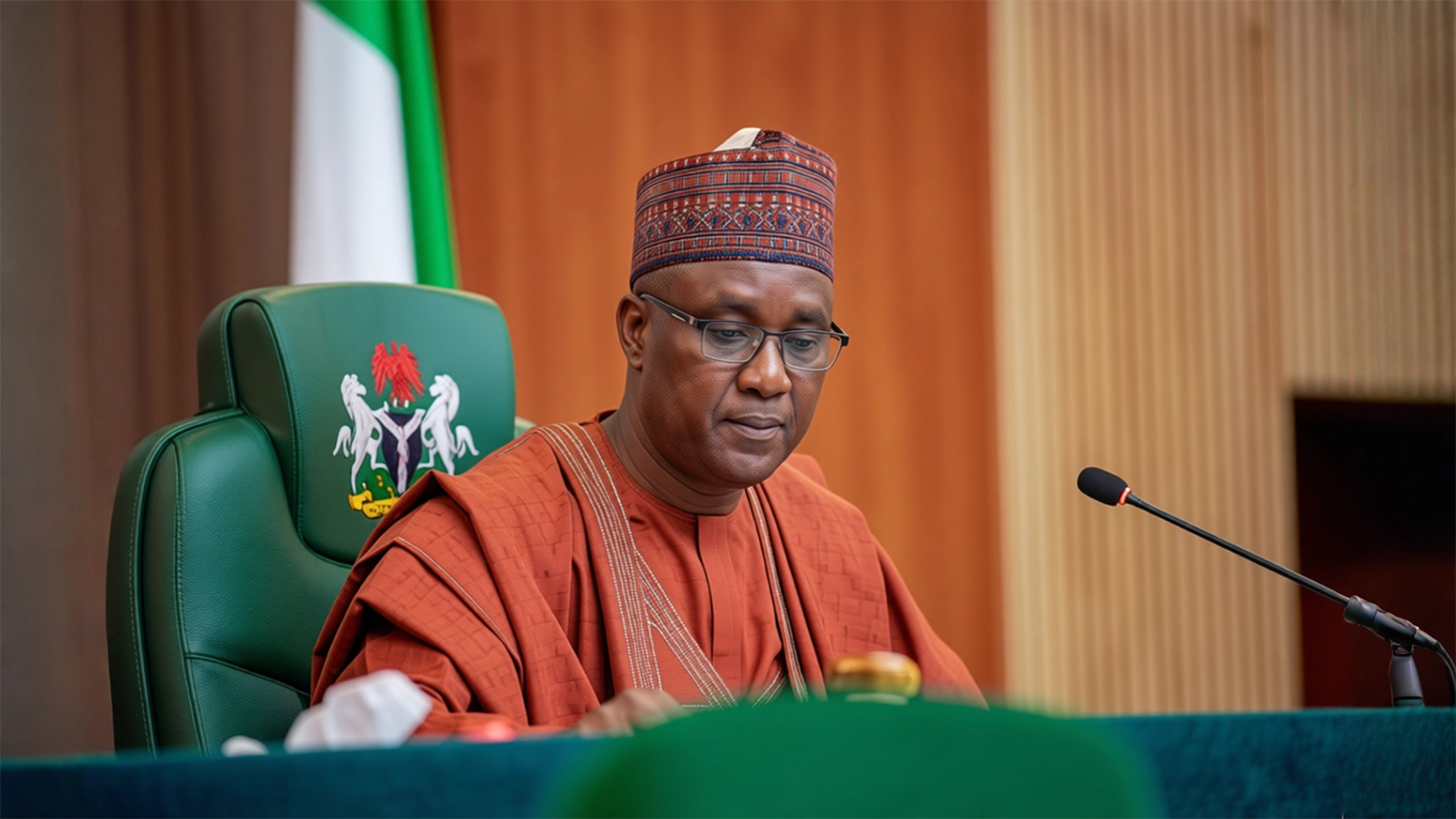
There was a rowdy scene in the House of Representatives yesterday when the Speaker, Tajudeen Abbas, rejected lawmakers’ attempt to summon President Bola Tinubu over delays in budget implementation.
This followed a motion moved by Alex Ikwechegh (LP, Abia), calling on the President to appear before the House over the persistent delay in funding constituency projects nationwide.
Relatedly, the House of Representatives urged the Federal Government to intensify efforts to dismantle the financial networks sustaining kidnapping, banditry and terrorism by strengthening financial intelligence coordination and tightening regulatory oversight on Bureau de Change (BDC) and Point of Sale (POS) operators as well as other financial intermediaries.
After the motion was seconded, another lawmaker proposed suspending plenary for one week until the issue was resolved.
Benedict Etanabene (Okpe/Sapele/Uvwie, Delta State) had raised a point of privilege over a June 29, 2026, circular issued by the Accountant-General of the Federation directing Ministries, Departments and Agencies (MDAs) to halt payments for constituency and zonal intervention projects pending vetting by the Ministry of Special Duties and Intergovernmental Affairs.
Etanabene argued that the directive would further slow the implementation of the 2025 budget and urged the House to invite Tinubu to explain the continued delays.

“The budgets are not being implemented presently in Nigeria today. We are implementing the 2024, 2025 and 2026 budgets concurrently. This is not in the best interest of everybody,” he said. “I wish to move the motion that this House invites the President to come in soonest to brief this House and explain the need for this circular.”
The proposal sharply divided lawmakers, with some backing the invitation and others objecting, prompting the Speaker to remind members that issues raised under a point of privilege were not subject to debate.
Shortly after, Ikwechegh moved a motion of urgent public importance, lamenting poor budget implementation and inadequate funding of projects and security agencies despite huge appropriations approved by the National Assembly.
Ikwechegh also supported calls for Tinubu to address lawmakers on what he described as a budget implementation crisis, a motion that was greeted by loud shouts of approval from several lawmakers.
But Chairman of the House Committee on Navy, Yusuf Gagdi, opposed the proposal to summon the President.
While expressing support for the concerns raised in the motion, Gagdi argued that responsibility for budget implementation rests with Ministries, Departments, and Agencies (MDAs) rather than directly with the President.
He said: “I am totally in support of the motion moved by my brother. But I reserve the right to make amendments and express my opinion as a parliamentarian on areas that I feel should not be handled the way he prayed for.
“Nigeria operates the principle of federalism with different departments and agencies of government. It is only ideal for Parliament to invite people delegated with responsibility in different departments and agencies of government.”
His remarks sparked immediate protests from lawmakers, many of whom shouted him down and demanded that he sit, plunging the chamber into disorder. As tensions escalated, Abbas called for order before a fresh dispute broke out over whether the motion before the House had been altered from the version originally submitted to the Chair.
The Speaker challenged the sponsor to produce his copy of the motion, insisting that the version before him did not contain a prayer seeking to summon the President.
Intervening, the Deputy Speaker, Benjamin Kalu, explained that motions of urgent public importance must first be cleared by the presiding officer and that members rely on the approved copy during debate.
Reading Prayer Five of the motion, Kalu explained that it merely sought the constitution of an ad hoc committee to interface with relevant MDAs on the status of releases for zonal intervention projects and report back within four weeks.
His explanation was repeatedly interrupted by shouts of “No!” from some lawmakers.
“We cannot import what does not exist in the prayers,” Kalu ruled.
Following the clarification, Abbas ruled that the proposal to summon President Tinubu was not contained in the approved motion and was therefore out of order.
THE House resolution followed the adoption of a motion entitled, ‘Need for Executive Action to Halt the Ransom Cash Economy, Strengthen Financial Intelligence Coordination and Enforce Compliance with Anti-Money Laundering Frameworks in Nigeria’, sponsored by Ademorin Kuye.
Leading the debate, Kuye described the growing “ransom economy” as a major threat to national security and economic stability, stressing that the Federal Government “has a constitutional responsibility” to protect lives and safeguard the country’s financial system.
He noted that existing laws, including the Money Laundering (Prevention and Prohibition) Act, 2022, and the Terrorism (Prevention and Prohibition) Act, 2022, already empower relevant agencies to detect, prevent and prosecute money laundering, terrorism financing and ransom-related transactions.
Citing reports by the Nigeria Financial Intelligence Unit (NFIU), the National Bureau of Statistics’ 2024 Crime Experience and Security Perception Survey, and independent security organisations, Kuye said Nigerians reportedly paid an estimated N2.23 trillion in ransom between January 2021 and June 2025.
He argued that the huge ransom payments continued to fuel organised criminal activities, enabling kidnappers and terrorist groups to expand their operations.
The lawmaker also cited findings from the National Counter Terrorism Centre (NCTC) under the Office of the National Security Adviser (NSA), indicating that some POS operators and other financial channels had been exploited to facilitate ransom payments and conceal financial trails, thereby making investigations and asset recovery more difficult.
According to him, criminal syndicates increasingly exploit both formal and informal financial systems, including BDC operators, hawala networks, cryptocurrency platforms, livestock trading and trade-based money laundering schemes, to launder proceeds of crime.
The House expressed concern that weak financial intelligence coordination and poor enforcement of anti-money laundering regulations continue to expose Nigeria to significant security risks, undermine public confidence and contribute to the country’s continued placement on the Financial Action Task Force (FATF) grey list.
Following the debate, lawmakers urged President Tinubu to establish a coordinated inter-agency framework to disrupt ransom financing and strengthen collaboration among security, financial and regulatory institutions.
They also called for stricter enforcement of existing laws on ransom payments and terrorism financing, while encouraging greater cooperation among victims, financial institutions and law enforcement agencies.

