 Follow Us on Google News
 Follow Us on Google Discover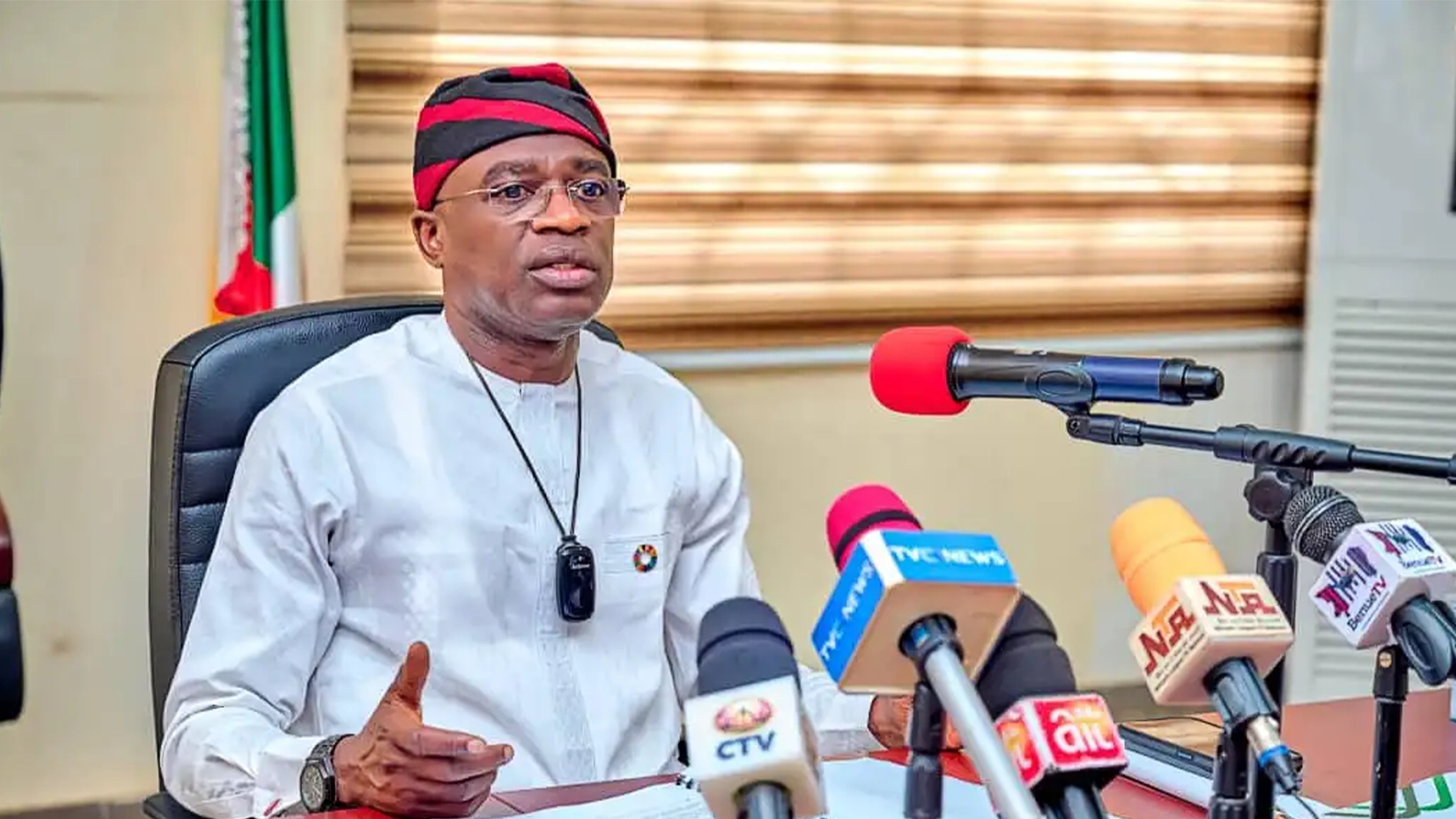
Unrelenting in his advocacy for the establishment of state police and the deployment of education as the antidote to Nigeria’s endemic security challenges, governor Hyacinth Alia this time carried his advocacy to the very bastion of the nation’s citadel of learning, the university. In an era where insecurity threatens to define Nigeria’s present and future, the governor has emerged as one of the most vocal and consistent advocates for structural reform. His prescription is simple, yet profound: decentralize policing through state police, and attack the root causes of violence through massive investment in education.
For a man who combines the collar of a Reverend Father with the mandate of an elected governor, Alia frames the security debate not just in policy terms, but in moral terms. To him, peace is not the absence of conflict, but the presence of justice, opportunity, and dignity.
Throughout his first three years in office, he has consistently argued that Nigeria’s centralized policing model is overstretched and disconnected from local realities.
“Every community understands its terrain, its people, and its threats better than a command center 700 kilometers away,” Alia said during the Benue at 50 celebrations. “State police is not about division. It is about effectiveness. It is about giving governors the tools to protect the people who elected them.”
Benue, which has borne the brunt of farmer-herder clashes, banditry, and communal crises, serves as the practical laboratory for his advocacy. Since 2023, the Alia administration has pushed for recruitment of community-based security outfits, better intelligence gathering at the local government level, and closer collaboration between traditional rulers and security agencies.
His position aligns with growing consensus among governors across party lines, but his moral authority as a clergyman-turned-governor gives the argument added weight in public discourse. He does not present state police as a political weapon, but as a constitutional necessity for a federation.
“The primary duty of government is the security and welfare of the people,” he often quotes from Section 14(2)(b) of the Constitution. “We cannot fulfill that duty with one pair of hands tied behind our back.”
If state police is Alia’s answer for immediate security, education is his answer for generational peace.
Under his “Benue First” agenda, the governor has prioritized human capital development as the surest way to dry up the recruitment pool for criminality. His administration has embarked on renovation of primary schools, payment of teacher arrears, and scholarship schemes for indigent students.
While delivering a public lecture at the university of Abuja before a full hall of staff and students during the University of Abuja Quaterly Guest Lectures, the Benue state governor insisted that “education when intentionally employed will always serve as a foundational, long term model for combating insecurity, in Nigeria by addressing its root causes such as illiteracy, ignorance, poverty, religious extremism and unemployment”.
Education, for Alia, is therefore about values. As a priest, he frequently links schooling to character formation, civic responsibility, and inter-ethnic tolerance, qualities he says are critical in a multi-ethnic state like Benue and a multi-religious nation like Nigeria.
The governor’s push includes vocational training centers and partnerships with tertiary institutions to align curriculum with agriculture and agro-processing which is Benue’s economic strength. The goal, is to make education relevant and to give young people a stake in peace.
But what truly distinguishes Governor Alia in the national conversation is his insistence on connecting security to development. He argues that you cannot bomb or police your way out of poverty and ignorance.
That linkage was evident during his University of Abuja lecture where the students enthusiastic cultural presentation was paired with sober reflection on infrastructure, civil service reform, and economic revitalisation. “Rather than using force and media threats’, he said, “quality, accessible, compulsory and functional education system fosters social cohesion, religious tolerance and economic empowerment which are crucial for building a peaceful society”
The debate on state police remains before the National Assembly, and education funding continues to compete with other national priorities. But Governor Alia has refused to wait. In Benue, he is implementing what he can at the state level while lobbying for what requires federal action.
Standing before the eager students and lecturers, among them the Chairman of Council Senator Dr Olanrewaju Tejuosho, the Vice Chancellor Professor Hakeem Fawehinmi and the twenty-seven professors who graced the occasion, the governor was unequivocal in his advocacy. “while education remains the most sustainable long term response to insecurity, it must be complemented by institutional reforms that strengthen Nigeria’s security architecture”, he said.
His message to Nigeria is clear: true federalism means trusting states to secure their people. True nation-building means investing in minds, not just weapons.
Whether the country adopts his blueprint remains to be seen. But in a time of anxiety, Governor Hyacinth Alia offers a vision that is both urgent and hopeful; that with the right institutions and the right investments, Nigeria can choose peace over fear, and progress over paralysis.
Gbabo Anyam, is an economist, administrator and the Principal Private Assistant (PPA) of Benue State Governor on Due Process Government House Administration.
By Daniel Gbabo Anyam

