 Follow Us on Google News
 Follow Us on Google Discover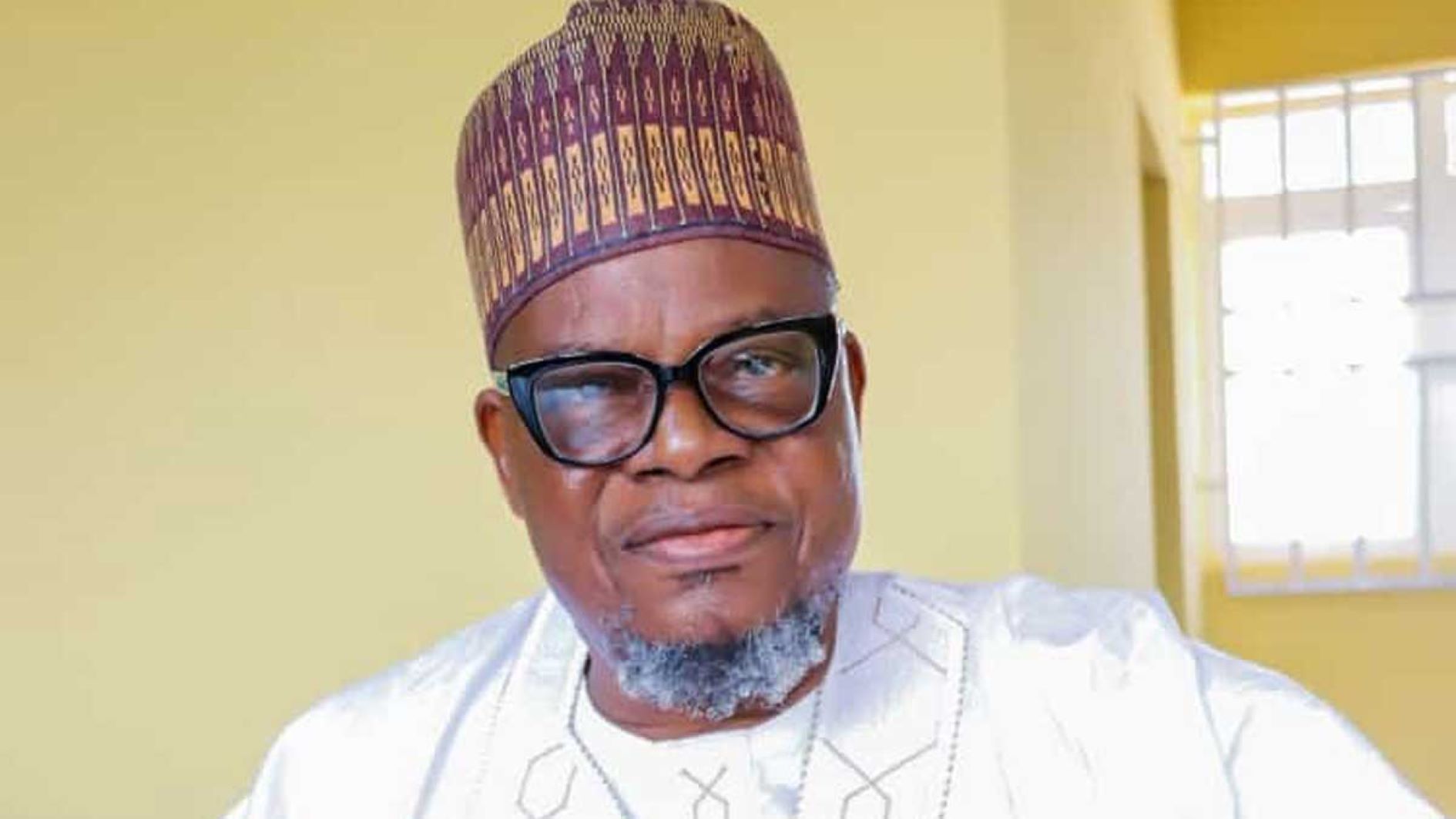
• Says Tinubu Is Sowing Seeds Of Development
Alhaji Liad Tella is a former News Editor of The Punch and former Managing Director and Editor-in-Chief of the defunct Monitor newspapers. In this interview with ROTIMI AGBOLUAJE, the All Progressives Congress (APC) chieftain said his party would defeat Governor Ademola Adeleke of Osun State in the August 15 governorship election, arguing that media popularity will not translate into electoral victory for the governor. He also expressed confidence that President Bola Tinubu will secure a second term in 2027 despite opposition. Tella also spoke on insecurity, the economy and attacks on Nigerians in South Africa.
The 2026 Osun State governorship election is set to be held next month. What is the fate of your party?
The governorship contest was initially expected to be between the All Progressives Congress (APC) and the Peoples Democratic Party (PDP). However, the crisis within the PDP has changed the dynamics of the race.
With Governor Ademola Adeleke now contesting on the Accord Party platform, I believe the election has become less competitive for the APC. I can tell you that we will defeat the Accord party convincingly.
Some observers argue that the Accord Party appears more popular than the APC. How do you respond?
Such people judge by appearances rather than reality. I have said before that the Adeleke administration lacks structure and focus. In terms of development planning or infrastructure delivery, it is not a well-coordinated government. Take road infrastructure as an example. How many of the projects initiated across the state have been completed? In Ile-Ife, several projects were started simultaneously, yet many remain unfinished. That has created significant challenges for residents.
Aside from road construction, it is difficult to identify major achievements in many sectors. In education, many government-owned primary and secondary schools face shortages of teachers. Some schools with enrolments of more than 500 pupils have fewer than five teachers. There are also secondary schools without enough subject specialists.
The health sector faces similar challenges. Many hospitals lack adequate manpower, with shortages of doctors and nurses. And a good number of projects in hospitals initiated under the administration of former governor Gboyega Oyetola have been abandoned.
Many people say Governor Adeleke remains popular among the people of Osun. How do you reconcile that?
During my years as a News Editor, I regularly conducted opinion polls. My question is: has any media organisation carried out a scientific opinion poll in Osun State to support that assertion? People should rely on verifiable data rather than assumptions or narratives on social media. In 2018, together with Semiu Okanlawon and Mojeed Jamiu, I conducted an opinion poll before the governorship election. Based on our findings, I told Asiwaju Bola Tinubu that the election would be extremely close. I projected a margin of about 51 to 49 per cent and stated that the outcome would be decided in court rather than solely at the ballot box. I also advised on what to do. At the time, polling organisations from Germany, Britain and the United States predicted a comfortable victory for Oyetola. Our survey was among the few that projected a very tight contest. That is why I challenge anyone who claims Adeleke is popular to present credible polling data. Let them publish the methodology and statistics showing the governor’s level of public support. Scientific opinion polling, not assumptions, should determine such conclusions. Look at the United States, where opinion polls are conducted regularly to assess public support for President Donald Trump. Campaign crowds should not be mistaken for electoral strength. There is a clear difference between perceived popularity and actual voting behaviour. Excessive media hype can create false impressions and media hype will not save Governor Adeleke. APC will sweep him out of office during the August poll.
From my assessment, the APC will perform strongly in Iwo. The establishment of the Federal College of Education has contributed to the town’s economic and social development, with increased commercial activities and physical expansion. The APC will perform well in Ile-Ife. I expect the contest in Ilesa to be much closer because the Ijesa electorate is difficult. In Osogbo, the APC has a strong chance of winning a majority of the votes. The ADC (African Democratic Congress) may perform well in Ejigbo because its governorship candidate hails from the area. I also expect Ila-Orangun to be highly competitive. The town has benefited from significant federal educational investments over the years, including a military training institution, a university of medical sciences and others. Governor Adeleke will lose the election. He is not fully in control of governance. Members of the Adeleke family exercise significant influence over government decisions. Again, development has been concentrated in Ede, their hometown. My question is: is he governor of Ede alone? Many of the projects in Ede have either been completed or are nearing completion, while projects in many other parts of the state remain unfinished.
But the Ilesa dualisation project has been completed. Is that not a plus for the government?
That project covers only the stretch from the roundabout to the expressway. Road construction alone does not address the broader challenges facing education, healthcare and other sectors. Finally, the electorate will decide.
The state government is also dualising the Ila-Orangun road. Can this influence voting patterns?
The road is only about three kilometres long and it has taken too long to complete.
Let’s go national now. In the face of mounting opposition, what is the fate of President Bola Tinubu in the 2027 elections?
Even if the ADC, PDP and other opposition parties were to come together in a coalition, they would not be strong enough to defeat President Bola Tinubu. The Obidient Movement does not have the electoral strength it demonstrated in 2023. I expect Tinubu to improve his performance in the South-East. In my assessment, his administration has taken steps that I regard as advancing aspects of restructuring—an issue that has been discussed since the return to democratic rule. One example is the establishment of regional development commissions. Another is the step towards the introduction of state police. These reforms are gradual and will take time to produce results. Nigeria’s challenges developed over many decades and cannot be resolved overnight. If Tinubu secures a second term, many of these initiatives will mature and become more visible.
Some people argue that introducing state police in a pre-election period could be abused for political purposes. What is your view?
I disagree with that view. Nigeria faces serious security challenges, and the current number of police personnel is inadequate to address them effectively. As a founding member of the Police Community Relations Committee, I had the opportunity to study policing systems in countries such as Morocco, Egypt and Saudi Arabia. Those countries have significantly larger security personnel than Nigeria.
I must say that Nigerians have the habit of criticising reforms before they are fully implemented. History also shows that some public officials such as Chief Samuel Ladoke Akintola, who initiated important projects, were not adequately recognised for their contributions.
Some Nigerians say that the economic reforms of the Bola Tinubu administration have not translated into improved living conditions. Do you subscribe to that?
I acknowledge that many Nigerians are experiencing economic hardship. However, some of the government’s policies are beginning to produce results. For example, the increased domestic refining capacity has helped reduce dependence on imported petroleum products. Global events, including tensions in the Middle East, could have had a greater impact on fuel prices if Nigeria remained heavily reliant on imports. Overall, the economy is gradually improving and industrial activities are expanding in parts of the country. The full benefits of current reforms will become clearer over time. President Tinubu has done excellently. The Industrial Revolution is gathering momentum.
But many Nigerians continue to complain of hardship and hunger despite the reforms…
(Cuts in) Economic hardship is a reality for many people. However, high living costs are not unique to Nigeria and are relative. It is appropriate to state that those who seek miracles will continue to complain of hunger. Those hawking miracles rather than hard work are the problem of the country. Nigeria belongs to the hardworking people.
Let’s talk about security. Kidnappings have become rampant in the South-West. What is the way out?
Nigeria’s security situation cannot be viewed in isolation. When Boko Haram emerged, I wrote that the outgoing Borno State government had mishandled the situation when the leader of an independent economic group broke out of the system seeking economic development under Yusuf. The crisis escalated after the group’s leader was killed. At the time, I advocated granting members of the group amnesty, similar to the approach adopted for Niger Delta militants. That was an opportunity that was missed and the insurgency subsequently expanded.
Many argue that the Niger Delta agitation was different from the Boko Haram insurgency. How do you respond to this?
Many of the Niger Delta militants had been involved in oil bunkering before they accepted the government’s amnesty programme. They were given opportunities for education and training in Europe and later returned to contribute to the country’s development.
Religion was not introduced into the Niger Delta crisis in the way it later became associated with Boko Haram. I warned at the time that if the insurgency spread beyond Borno State, it would become much more difficult to contain. Today, it has affected parts of the North-West, North-Central, and the South-West. I also believe many of the conflicts we are witnessing have longstanding ethnic and communal dimensions. Places such as Tafawa Balewa in Bauchi State have experienced religious and communal divisions for many years. Plateau State had recurring communal conflicts long before the Boko Haram insurgency. Benue State has also experienced prolonged violence.
What is the solution?
I believe external interests play a role in aggravating the situation. America is number one; Israel is number two. I also question why the violence is frequently presented in religious terms when many victims are themselves Muslims. Thousands of people have been killed in states such as Borno, regardless of their faith. I believe security challenges should be addressed based on facts rather than assumptions or stereotypes. Also, America’s coming to help fight insecurity is the greatest mistake Nigeria has ever committed. We opened our security to our enemy. Allowing foreign troops access to Nigeria’s security infrastructure carries significant risks.
Do you consider the United States an adversary of Nigeria?
I have long believed that some foreign governments have not always acted in Nigeria’s best interests. I have cited public statements made years ago predicting instability in Nigeria. It’s unfortunate that we opened our door to a country that doesn’t want Nigeria to emerge as the China of Africa. They are taking our statistics. Despite the country’s challenges, I remain confident that Nigeria will remain united and overcome its difficulties.
What is your view on xenophobic attacks against Nigerians in South Africa?
I consider the attacks deeply unfortunate. South Africans are the most ungrateful people I have ever seen on earth. As a student at the University of Ibadan, I volunteered in activities supporting the liberation of Southern African countries during the anti-apartheid struggle. Nigeria galvanised support globally and made enormous sacrifices in support of the struggle. The attacks we had from Western powers were because of the frontal roles Nigeria played during the struggle. Nigeria nationalised Western companies during the period. Nigeria has not been forgiven for playing that role. Given that history, attacks on Nigerians and other African nationals are unfortunate. I also think security agencies should thoroughly investigate the sources of weapons used by criminal groups operating across the continent.
How can the situation be resolved?
It will be difficult to resolve. Israeli and American CIA are the sponsors of xenophobic attacks. They are sponsoring some unsuspecting people in South Africa to take vengeance on Nigeria and to destabilise Africa so that the continent won’t speak with one voice to fight for economic liberation. Israel is an agent of the West in destabilisation and Nigeria must contain Israel’s incursion into the country.
Can you point to any verifiable evidence to support those allegations?
All these things I have been saying are the evidence. There are a lot of statements and information to support these assertions.
Those are your opinions. Do you have any documentary evidence, intelligence reports or official findings to support those allegations?
President Donald Trump himself admitted that the United States, through USAID, sponsored Boko Haram in Nigeria. He said it publicly and it was reported globally. Former U.S. Secretary of State, Hillary Clinton, also stated in previous interviews and public comments that America was behind the Al-Qaeda crisis and ISWAP.
On xenophobia, some South African politicians are now speaking out against the attacks and acknowledging the role Nigeria and other African countries played in the liberation struggle. Xenophobia is part of what I see as the West’s strategy to destabilise Africa. Nigeria paid a huge price for South Africa’s liberation. We were at the forefront of the anti-apartheid struggle. Murtala Muhammed was killed by the CIA after declaring that Africa’s freedom would be meaningless until the last vestiges of apartheid had been eliminated from Southern Africa. That was the last statement he made before he was assassinated. It is also widely believed among some international observers and Nigerian scholars that the nationalisation of British Petroleum under the Murtala/Obasanjo administration severely strained diplomatic relations between Nigeria and Britain, although those relations were later restored.
Can you identify the specific speech, publication or official document so readers can verify those claims?
Newspapers published it.

