 Follow Us on Google News
 Follow Us on Google Discover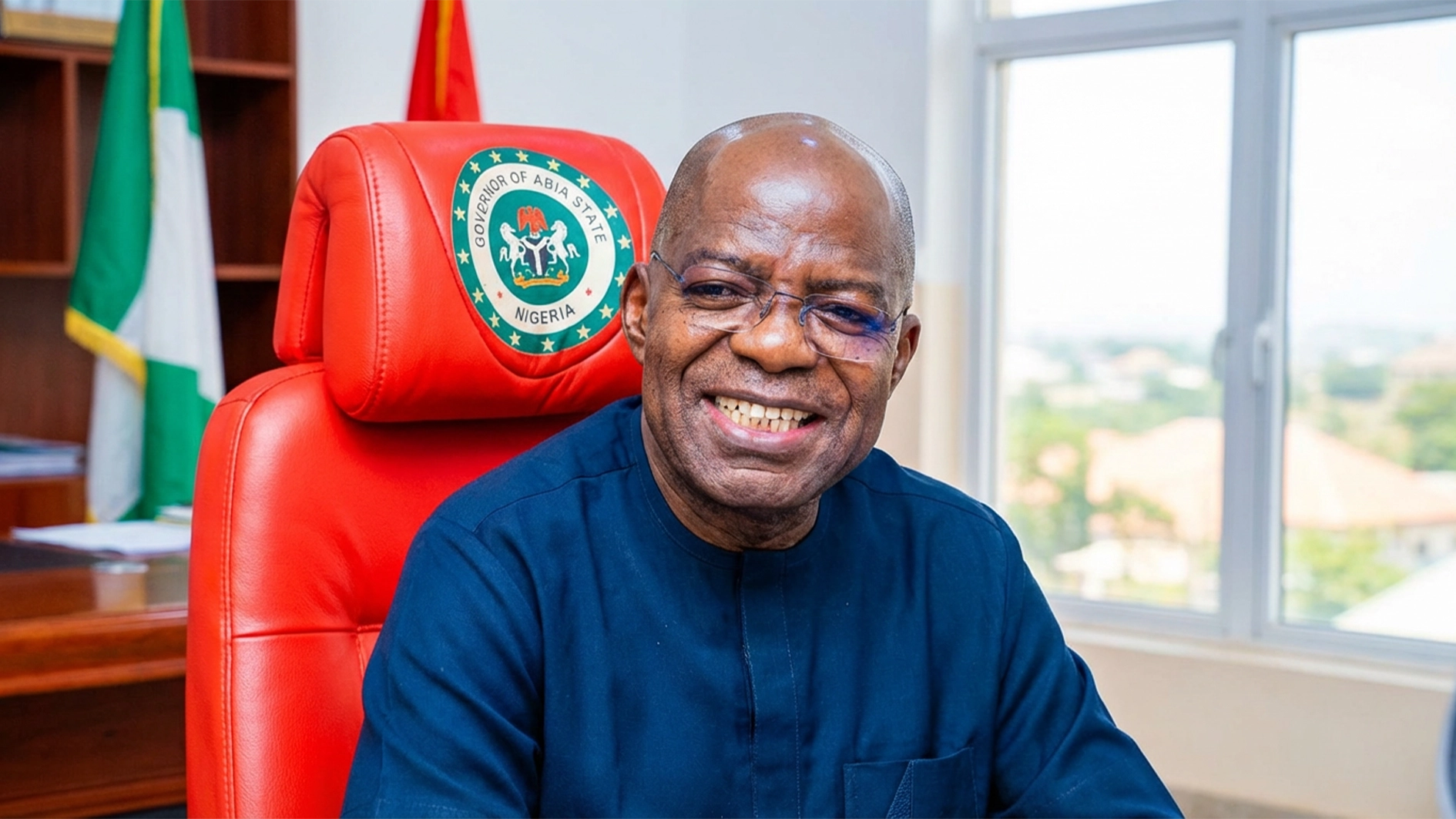
By Chief Eric Opah
I need to confess something before I start: I love a good infrastructure dream as much as the next Nigerian. Show me a governor cutting a ribbon, and I will cheer and clap along with everybody else, no shame. But somewhere between the clapping and the commissioning, somebody has to ask the boring, unglamorous question that nobody wants to ask at the podium: how much will this thing actually cost, and where exactly is the money coming from? And will this be beneficial to the people within the immediate environment in anyway?
There is something inherently seductive about grand infrastructure. Bridges go over rivers before the first vehicle crosses them. Airports rise from empty fields in anticipation of passengers yet to arrive.
Railways promise commerce long before freight begins to move. Seaports, perhaps more than any other public investment, evoke the image of prosperity itself. To the public, they represent progress. To politicians, they symbolize legacy. To investors, however, they pose a far less romantic question: will they generate sustainable economic returns? That distinction matters.
Around the world, the most successful ports were not conceived as monuments to political ambition. They emerged as responses to commercial necessity. They were built because industries required them, exporters depended upon them, and global shipping networks could no longer function efficiently without them. In maritime economics, ports are not engines that create trade. They are platforms that facilitate trade already being generated by productive economies. Put differently, ports do not create prosperity. Prosperity creates ports.
It is against this backdrop that Abia State’s proposed deep-sea port at Azumini deserves careful examination. The discussion has understandably generated excitement. Any project that promises jobs, investment and international connectivity should command public attention. Yet public enthusiasm should never substitute for economic analysis. Infrastructure of this scale is among the most expensive, technically demanding and financially consequential investments any government can undertake. The proper question, therefore, is not whether Abia can build a seaport. The question is whether the economic fundamentals justify building one now.

My perspective is shaped not by politics but by a lifetime in international shipping and logistics. The maritime industry has a habit of stripping away optimism and replacing it with numbers. Ships do not call at ports because governments desire them to. Shipping lines deploy vessels where cargo exists. Investors finance terminals where projected throughput justifies capital. Banks lend billions only after scrutinising demand forecasts, cash-flow projections and long-term commercial viability. The sea, unlike politics, has little patience for aspiration unsupported by economics.
This is why every serious port project begins with one question above all others: where will the cargo come from?
That question is remarkably absent from much of the public conversation surrounding the Abia Seaport.
Ports generate revenue through the movement of cargo, not through their physical existence. Every container handled, every tonne of bulk cargo discharged, and every vessel that berths contributes to the commercial viability of the facility. Remove sufficient cargo from the equation, and even the most technologically advanced port becomes an expensive fixed asset that struggles to recoup its investment.
The history of global maritime development repeatedly illustrates this.
The Port of Rotterdam did not become Europe’s largest port because the Netherlands simply decided to build bigger docks. Rotterdam became indispensable because it serves one of the world’s richest industrial hinterlands. Its logistics network extends deep into Germany, Belgium, France and Switzerland through an integrated system of inland waterways, rail freight corridors and motorways. Manufacturer’s hundreds of kilometres from the North Sea regard Rotterdam as their maritime gateway because infrastructure, customs systems and industrial production evolved together. The port is successful because it sits at the centre of an economic ecosystem far larger than itself.
Singapore tells a similar story, although through geography rather than hinterland. Located astride the Strait of Malacca, one of the busiest maritime corridors on earth, Singapore leveraged an extraordinary natural advantage through decades of disciplined investment in efficiency, digitization and trade facilitation. More than eighty thousand vessels transit nearby waters each year. The port did not manufacture that traffic. Geography provided the opportunity; policy maximised it.
Closer to home, Morocco’s Tanger Med offers perhaps the most instructive example in Africa. Frequently celebrated as one of the continent’s greatest infrastructure successes, the port’s rise was not driven by dredging alone. It formed part of a broader industrial strategy that integrated automotive manufacturing, free trade zones, modern rail infrastructure, customs reform and global shipping alliances. Renault and Stellantis established major production facilities nearby because logistics costs became globally competitive. Cargo followed factories. The port expanded because industry expanded.
The lesson is consistent across continents. Successful ports rarely precede economic transformation. More often, they consolidate and accelerate it.
This principle brings us back to Abia.
Since late 2025, Abia State has been in serious discussions with China Harbour Engineering Company (CHEC) over a proposed deep-sea port at Azumini–Obeaku, and the process has now reached the feasibility-study stage. As someone who has spent his career in international shipping and logistics, I want to lay out, plainly and technically, why this project is a poor use of Abia’s limited resources: it sits on a difficult and expensive engineering site, its financing has not been credibly worked out, and it competes for funds that would do far more good spent elsewhere.
The journey so far, a year of meetings, not metres
The confirmed timeline tells its own story. In November 2025, Governor Otti received China Harbour Engineering Company (CHEC) at Government House to “explore partnership” in dredging, rail, and seaport development talk, at that stage, of possibility.
On 5 May 2026, at a meeting in Nvosi, the governor announced his approval for an “immediate feasibility study” into the Azumini–Obeaku Seaport and Inland Waterways Corridor, pushing CHEC to compress its own proposed six-to-seven-month timeline. By June 2026, a CHEC technical team was on the ground at Obeaku carrying out hydrographic surveys — bathymetric readings, water-depth checks, the early paperwork of engineering, not the machinery of construction. That is the sum of it, seven months on: Abia has a survey team wading through the Imo River, not a port. And nowhere in any of these announcements has the state told Abians what this feasibility study itself is costing the public purse. Taxpayers are being asked to trust the process without being told its price.
Geography does not negotiate
Every successful seaport begins with one advantage that governments cannot legislate into existence: naturally deep, navigable water. Abia does not have it. The proposed site at Azumini is reported to sit somewhere between 19 and 23 nautical miles from the high sea, and the government’s own briefings acknowledge that roughly 19.5 kilometres of dredging would be required simply to create a channel.
Dredging on that scale, sustained indefinitely against silting, is one of the most expensive and technically demanding components of port construction anywhere in the world. It is not a detail to be resolved after the ribbon-cutting; it is the central engineering problem, and it alone can consume a large share of any realistic budget before a single ship berths.
The money question has never been answered
Even the state’s own leadership has conceded the project cannot begin until “adequate funds are secured.”
That is the correct instinct, but it also concedes the real issue: nobody has yet said, credibly, where the money is coming from, how much it will actually cost once dredging, breakwaters, road and rail linkages are included, or what Abia’s share of the exposure will be if a foreign partner’s enthusiasm cools once the feasibility numbers come back. A state that struggles with pension arrears and road maintenance should not be signing up for the kind of long-term financial exposure that deep-water port projects carry elsewhere on this coast.
Where the money should go instead
Every naira committed to a speculative deep-sea port is a naira not spent on the things Abians tell pollsters and town-hall meetings they actually need: functional hospitals, roads that survive one rainy season, timely payment of workers and pensioners, and support for the small manufacturers of Aba who need reliable power and access to existing ports far more than they need a new one twenty kilometres of dredging away. Aba’s industrial cluster can be connected to global trade through smarter logistics and rail links to Onne or Calabar long before a new Azumini port could plausibly become operational and at a fraction of the risk. But there is a bigger, structural answer too one that does not depend on a single foreign contractor’s feasibility report.
Ambition is not the problem in Abia. Judgment is. And there is a closer, cheaper, more honest route to the growth Abians actually want: real financial autonomy for our local governments. In 2024, it was Abia’s own name on the Supreme Court judgment — Attorney General of the Federation v. Attorney General of Abia State that ordered federal allocations to flow directly into the accounts of elected local government councils, not through the state.
That judgment recognised something the seaport dream keeps overlooking: government is closest to the people not at Government House in Nvosi, but at the council office in their own local government area. If Abia fully funded its 17 local councils as the Constitution intends with predictable, undiluted allocations they can plan around every ward would feel the difference within a budget cycle, in ways twenty kilometres of dredging cannot promise for years, if ever. That is the choice before Abia: a speculative port on the horizon, or a functioning government in every local government area, today. I am not against Abia dreaming big. I am against Abia dreaming expensively while its local governments dream on empty pockets.
• Chief Eric Opah is a businessman in international shipping and Abia State’s APC Guber Candidate, 2027

