 Follow Us on Google News
 Follow Us on Google Discover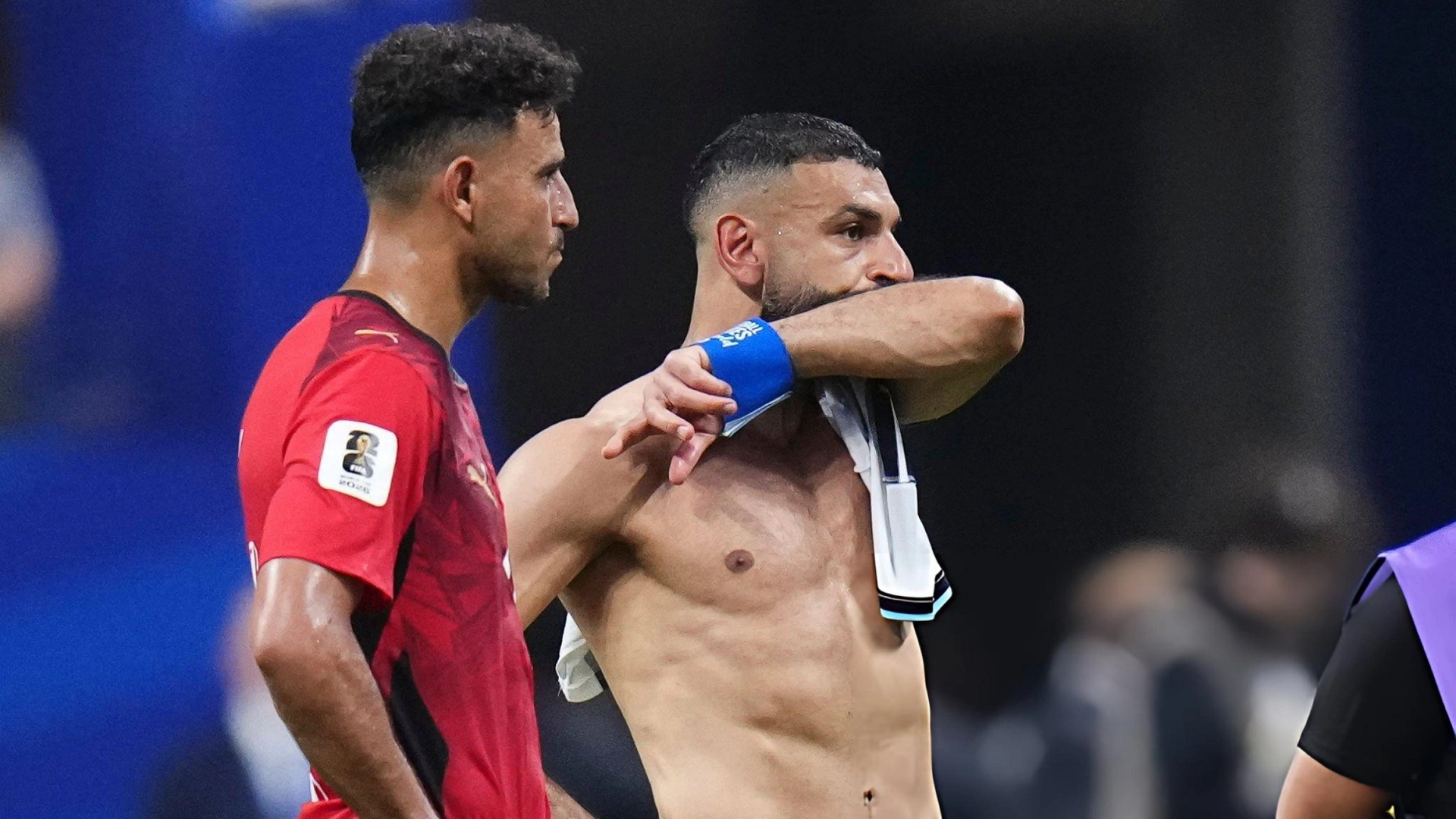
United States-based former Super Eagles and Flying Eagles player, Paul Okoku, has explained why some teams suffered defeats despite having an advantage of a 2-0 lead at FIFA World Cup.
At the 2022 FIFA World Cup final in Qatar, Argentina led 2-0 against France before Kylian Mbappe inspired the French team to fight back to make it 2–2, although Argentina eventually prevailed on penalties.
In the ongoing 2026 World Cup, Senegal established a 2–0 advantage over Belgium, only to lose 3–2 in their Round of 32 fixture.
And during the week, seven-time African Champions, Egypt, raced into a 2–0 lead against Argentina, yet the Lionel Messi-led Argentine recovered to win 3–2.
The defeat of Senegal and Egypt prompted many football fans to ask: “Is a 2–0 lead really more dangerous to defend than a 1–0 lead?
Okoku, a football analyst, told The Guardian that the defeat of Senegal and Egypt are some of the ‘Real Lesson’ from the 2026 FIFA World Cup.

He said: “Talent gives you the lead, while game management gives you the best chance to keep it. At first glance, recent matches appear to support that idea. Is a 2–0 lead really more dangerous than a 1–0 lead? We have seen remarkable comebacks at World Cup.
“But my answer is no. From both my experience as a former footballer and now as a football analyst, defending a 1–0 lead is generally more difficult than defending a 2–0 lead.
The reason is simple. A 2–0 lead gives you a margin for recovery. If your opponent scores, the score becomes 2–1. You still have the advantage. The opposition must score again to draw level.
“A 1–0 lead offers almost no margin for error. One mistake makes it 1–1. Another mistake turns victory into defeat. From a purely football perspective, a 2–0 lead is statistically safer.
“So why do we continue to see teams surrender two-goal leads? The answer is not the scoreline, but game management.
The score doesn’t change the match, but momentum does,” he said.
According to Okoku, football is played in phases. “Every goal creates a new phase. Whether you are leading 1–0 or 2–0, once your opponent scores, the emotional and tactical landscape changes immediately.
“The trailing team suddenly believes and confidence returns. The supporters become louder and every tackle carries greater conviction just as every attack becomes more purposeful.
“Meanwhile, the team that had been comfortably ahead often begins to hesitate. Simple passes become rushed and clearances become hurried. Players begin watching the clock instead of controlling the match, and confidence slowly gives way to anxiety.”
Okoku continues: “As a former footballer, I can tell you that momentum is perhaps the most difficult opponent you will ever face.
You cannot see it.
You cannot tackle it and you cannot mark it. But every player on the pitch can feel it. The best teams recognise momentum early and know how to wrestle it back before it decides the match.”
Okoku further stated that ball possession is defensive football saying: “Modern football has completely changed.
When I was growing up, very few coaches talked about ball possession the way they do today. The emphasis was on attacking, dribbling, individual brilliance, physical courage, and entertaining football.
“Today’s game is different. Possession is no longer simply an attacking statistic, but it has become one of football’s most effective defensive tools.
“Sometimes, the best way to protect a lead is not by defending deeper—but by keeping the ball. Every completed pass frustrates the chasing team. Every minute of possession reduces the opponent’s opportunities. Possession slows the opponent’s momentum, and it allows your players to recover physically.
“Most importantly, it allows your team—not your opponent—to dictate the rhythm of the match. That is intelligent football.”
Okoku, the Vice Captain of 1983 set of Flying Eagles said that game management belongs to the entire team. “Game management is often misunderstood. Many people think it applies only to the players, but it doesn’t. It applies equally to the coaching staff.
“A coach manages the game through: The timing of substitutions, selecting the right player to introduce, adjusting tactical shape, recognising fatigue before it becomes costly, knowing when to press, knowing when to defend, and helping players remain emotionally disciplined under pressure.
“Every substitution sends a tactical message. Introduce the wrong player, make the substitution too early, wait too long, or fail to recognise fatigue.
“Any one of those decisions can change the rhythm—and ultimately the result—of a match.
“As a former footballer, I understand that players execute the plan. And as an analyst, I also recognise that coaches influence outcomes through every decision made from the technical area.
“Ultimately, game management is a shared responsibility.
Players must make intelligent decisions on the field, while coaches must make equally intelligent decisions from the bench.”
Okoku, a CAF silver medalist, also spoke on Africa’s next football frontier saying: “One important point is often overlooked.
Game management is learned, but not inherited.
“For many African footballers, our predecessors, my generation, my contemporaries, and those who followed us, football education was very different.
“We grew up emphasising: Individual skill, flair, athleticism, courage, creativity and attacking football.
“Very little attention was devoted to: Ball retention, positional play, controlling the tempo, tactical transitions, structured pressing and managing different phases of the game.
“In many of Europe’s and South America’s traditional football nations, these concepts are introduced from childhood and reinforced throughout their academy systems.
By the time players become professionals, game management has become second nature.
“Africa has made tremendous progress. Today’s generation is receiving far better tactical education than previous generations. We are becoming increasingly intentional about possession, tactical discipline, decision-making, and collective organisation. The encouraging news is that Africa is steadily closing the gap. There was a time when qualifying for the World Cup was considered success.
“Today, African teams are no longer satisfied simply to participate, they expect to compete, and expect to win.
And increasingly, they are proving they belong among football’s elite. The next frontier is not talent. Africa has never lacked talent. The next frontier is mastering game management with the same consistency demonstrated by the world’s most established football nations.
“My final thoughts is: Football teaches us that the score alone never tells the whole story. A 2–0 lead gives you a tactical advantage, while game management determines whether you keep it. In football, nothing guarantees victory. But few things increase your chances more than intelligent game management,” he said.
Okoku, a journalist-at-large, columnist, football analyst and FIFA Legend, also spoke on the defeat of Morocco in the hands of France on Thursday.
“Football is not won by who controls the ball the longest. It is won by who uses it the best. Possession creates possibilities, while precision creates champions.
“For the second consecutive FIFA World Cup meeting between France and Morocco, the scoreboard read exactly the same. France 2-0 Morocco.
The difference was the stage.
“In Qatar 2022, France ended Morocco’s historic run in the semifinals. In the United States 2026, France did it again, this time in the quarterfinals. History repeated itself.
“But the story behind the scoreline deserves a deeper examination. This was not simply France defeating Morocco. It was a masterclass in why elite championship teams continue to survive football’s biggest moments.
“For nearly an hour, this quarterfinal remained delicately balanced. France created the better chances. Morocco refused to panic. Then came one of the game’s defining moments, when Kylian Mbappe missed a first-half penalty after Yassine Bounou produced an outstanding save, keeping Morocco alive.
“In knockout football, moments like that often change everything. Had Morocco scored first afterward, everyone would have pointed back to that penalty.
Championship football can be brutally unforgiving.
Miss your opportunities, and the game often punishes you.
“France understood that lesson before Morocco could capitalize. Great teams rarely allow disappointment to linger.
“Instead of becoming frustrated after the missed penalty, France became even more composed.
“The difference between contenders and champions often lies in those brief periods when pressure is converted into goals. France demonstrated exactly that here in Boston, on Thursday,” Okoku stated.

