 Follow Us on Google News
 Follow Us on Google Discover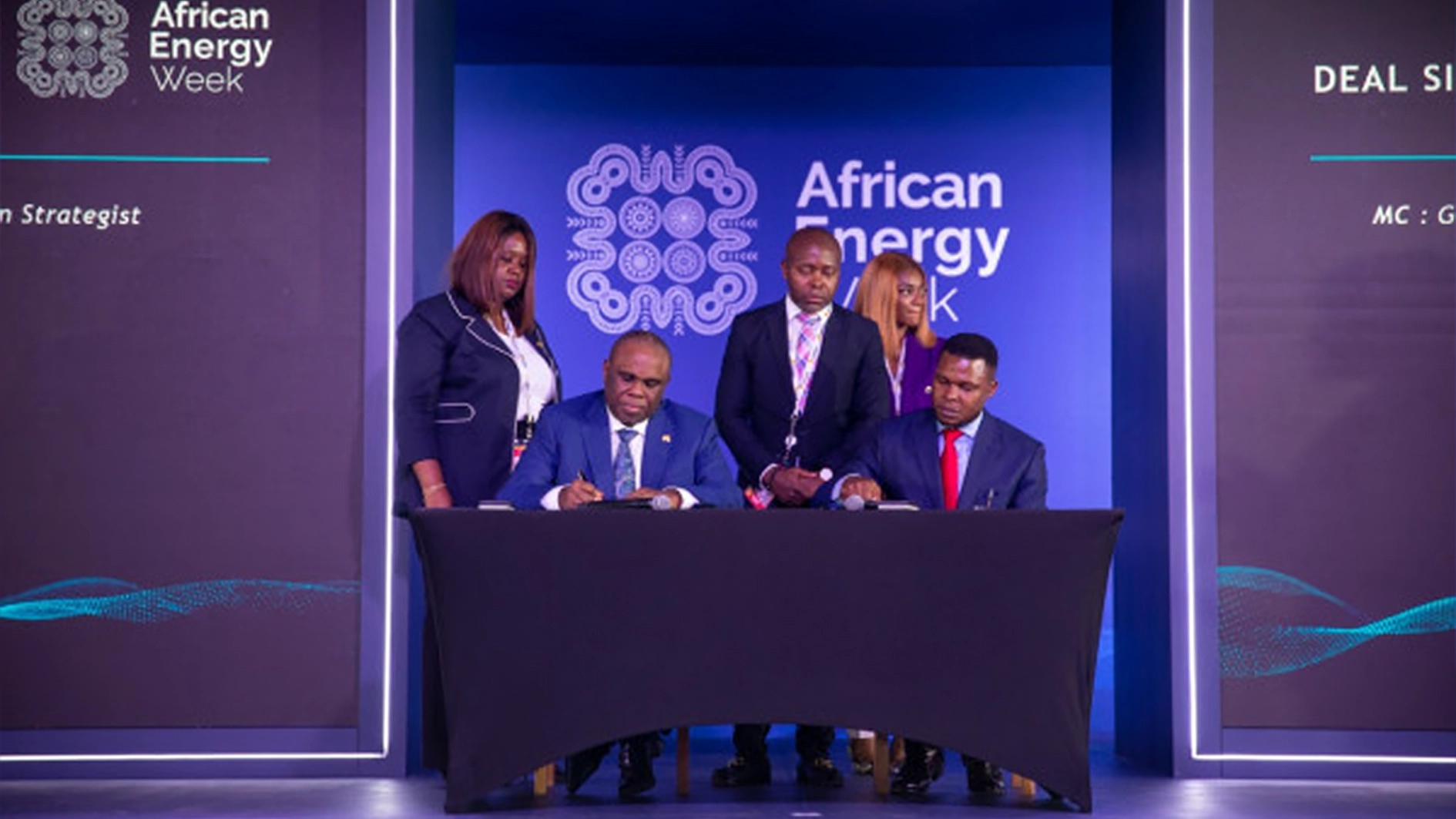
As African Energy Week 2026 prepares to convene governments, financiers and industry leaders in Cape Town, the central question is shifting from how much capital Africa can attract to how much value the continent can retain.
Africa’s energy investment debate is entering a more consequential phase.
For decades, governments measured progress largely by the volume of foreign capital attracted into oil, gas and power projects.
International companies supplied financing, technology and project-management capacity, while African countries provided the reserves, licences and markets.
That model helped develop major assets, but it frequently left local companies concentrated at the lower end of the value chain. Financing decisions were made abroad, sophisticated engineering was imported, equipment was procured externally and a substantial proportion of project value flowed out of host economies.
As African Energy Week 2026 approaches, that conversation is changing.
Scheduled for October 12–16 in Cape Town, the conference is expected to bring together ministers, regulators, international and indigenous operators, financial institutions, service companies, technology providers and investors from across the continent.
Confirmed participants include senior executives from Oando, Seplat Energy, SLB, TotalEnergies, Standard Chartered, Scotiabank, the World Bank, the US International Development Finance Corporation and several African national oil companies.
The significance of that gathering lies not simply in the number of participants.
It reflects a deeper contest over the structure of African energy investment: who owns the assets, who finances expansion, who supplies the technology, who executes the projects and how much economic value remains in Africa after production begins.
The next phase of the continent’s energy development will therefore not be defined only by attracting more capital. It will depend on combining international investment with African finance, indigenous ownership, competitive local content and stronger links between energy production and industrial development.
Beyond the headline investment figure, African governments still need foreign capital.
Large upstream developments, liquefied natural gas projects, pipelines, refineries, power plants, transmission systems, renewable facilities and data-centre infrastructure require financing and technical capacity that few domestic markets can provide independently. But the headline value of a project does not reveal its full developmental impact.
A multibillion-dollar investment may increase production and government revenue while contributing relatively little to domestic industry if its engineering, procurement, fabrication, insurance, legal advisory, technology and financing services are largely imported.
The more important measure is the proportion of project value retained within the host economy.
That includes contracts awarded to credible domestic companies, jobs created, workers trained, technology transferred, infrastructure built, taxes paid and profits reinvested. This is one of the defining issues that should underpin discussions at AEW 2026.
The conference spans upstream, midstream, downstream, power, renewables, finance and energy services. The real opportunity is to connect those sectors into an African industrial ecosystem rather than treat them as a collection of externally financed projects.
African capital must enter the engine room
One of the enduring contradictions in Africa’s development is that the continent has significant pools of institutional capital but remains heavily dependent on external finance for infrastructure.
African pension funds, insurance companies, sovereign wealth funds, banks, development finance institutions and private investment firms collectively manage substantial resources. Yet much of that capital remains concentrated in government securities, property, conventional banking assets and short-term instruments.
Energy projects are often considered too complex, long-term or politically exposed.
The concerns are legitimate. Projects face currency risk, regulatory uncertainty, delayed approvals, inadequate infrastructure and unreliable tariff or payment systems.
But African capital cannot remain permanently absent from the sector that underpins the continent’s industrial future.
The AEW 2026 line-up reflects the growing interface between project developers and financiers. Confirmed speakers include Quentin Savinaud, Managing Director and Global Head of Energy Corporate Coverage at Standard Chartered; Moncef Attia, Managing Director and Head of Energy Corporate and Investment Banking at Scotiabank; Mirlan Aldayarov, Infrastructure Programme Leader at the World Bank; and Vibhuti Jain, Managing Director and Regional Head of Africa at the US International Development Finance Corporation.
Their participation underscores an important point: Africa’s energy problem is not simply a shortage of opportunities. It is also a shortage of bankable structures capable of connecting those opportunities to capital at acceptable risk.
African financial institutions must deepen their expertise in project finance, reserve-based lending, acquisition finance, infrastructure bonds and blended-finance structures.
Pension funds may not be suited to high-risk exploration, but they can participate in pipelines, power plants, transmission assets, storage terminals, renewable-energy portfolios and other infrastructure capable of generating stable long-term returns.
Commercial banks can also work with development finance institutions, export credit agencies and international lenders to support transactions larger than they could finance independently.
If African savings remain disconnected from African infrastructure, the continent will continue exporting capital while importing development finance at a higher cost.
Indigenous operators are changing ownership
The expansion of African-owned energy companies is already altering the structure of the sector.
In Nigeria, indigenous operators have moved from marginal participation to ownership of significant producing assets. Divestments by international oil companies have created opportunities for domestic firms to acquire acreage, infrastructure and operating capability.
Oando Group Chief Executive Wale Tinubu is among the confirmed speakers at AEW 2026. His participation follows Oando’s acquisition of Eni’s former Nigerian Agip Oil Company onshore interests, significantly expanding the company’s upstream portfolio.
The conference line-up also includes Roger Brown, Chief Executive of Seplat Energy; Adegbite Falade, Managing Director and Chief Executive of Aradel Holdings; Tony Attah, Managing Director and Chief Executive of Renaissance Africa Energy Company; Osayande Igiehon, Chief Executive of Heirs Energies; and Ademola Adeyemi-Bero, Managing Director of First E&P.
Their presence points to a broader transition.
Africa’s upstream industry is no longer shaped solely by governments and international majors.
Indigenous and Africa-focused independent companies are acquiring assets, redeveloping mature fields, investing in gas and pursuing exploration across several markets. But transferring ownership is only the beginning.
African companies must prove that they can mobilise capital, sustain production, manage complex assets, meet environmental obligations and maintain credible relationships with host communities.
Indigenous ownership cannot become an excuse for lower standards. The strongest African operators will be those that combine domestic control with international standards of governance, safety, environmental management and financial transparency.
Local content must move beyond quotas
Ownership without technical capability will not transform the industry. That is why local content remains central to the new investment agenda.
Across Africa, local-content policies have sought to increase domestic participation in employment, procurement and service delivery. Nigeria’s framework, in particular, has helped create an ecosystem of engineering, logistics, fabrication, marine, drilling and specialist oilfield-service companies.
AEW 2026 will bring several companies associated with that capability-building process into the continental conversation.
Nosa Omorodion, Country Director for Nigeria at SLB, is confirmed to participate. His presence reflects SLB’s long history in Nigeria and its involvement in technical capability, workforce training and supplier development.
Other Nigerian service-sector participants include Victor Ekpenyong, Managing Director and Chief Executive of Kenyon International, alongside executives from Westpaq International, Century Group, NOV and other technology and infrastructure businesses.
Their participation should help move the local-content debate beyond employment numbers and procurement quotas.
The next phase must focus on capability.
African companies must be able to execute sophisticated engineering, drilling, well intervention, fabrication, digital monitoring, environmental management and asset-maintenance work to internationally accepted standards.Local content should not mean shielding inefficient suppliers or i nserting politically connected intermediaries into contracts. It should mean building African businesses capable of competing at home and exporting expertise across borders.
The clearest evidence of successful local content will be the emergence of Nigerian, Angolan, Ghanaian, Egyptian and South African service companies operating across several African energy markets.
From national content to African content
The localisation debate must also become more continental. National local-content policies are understandable. Governments want domestic companies and citizens to benefit from national resources.
But an exclusively national approach can fragment Africa’s energy-services market. A Nigerian company that develops strong technical capability may still face regulatory, tax, immigration and procurement barriers when attempting to operate in Ghana, Angola or Mozambique. The same applies to engineers, equipment and specialised services moving between markets.
The next investment agenda should therefore include the development of African content.
This would not replace national participation requirements. It would create a second layer of preference for capable African companies where equivalent domestic expertise is unavailable. Such an approach would allow skills developed in one country to support projects elsewhere, while creating a larger market in which African service businesses can achieve scale.
AEW 2026, by bringing governments, operators and service companies from different jurisdictions together, offers an appropriate setting for that conversation.
Gas, power and digital infrastructure converge
The investment agenda is also expanding beyond traditional oil production.
Africa’s gas resources are increasingly being linked to electricity, fertiliser, petrochemicals, manufacturing and digital infrastructure.
Reliable gas-to-power systems are becoming particularly important as the continent seeks to support data centres, cloud computing and artificial-intelligence workloads.
This convergence creates new opportunities for African capital.
Upstream producers can supply gas. Midstream companies can develop processing and pipeline infrastructure. Independent power producers can generate electricity. Telecoms, cloud providers and data-centre operators can create long-term demand.
The AEW 2026 speaker roster reflects this more integrated energy economy. It includes upstream operators and financiers alongside representatives of power-sector institutions, transmission companies and data-centre businesses.
The commercial opportunity is significant, but the developmental question remains familiar: who will capture the value?
If African countries provide gas, land and markets while importing technology, financing and digital platforms, much of the new economic value will again accumulate elsewhere.
African investors and companies must therefore participate across the emerging infrastructure stack, from energy production and power generation to fibre connectivity, data-centre ownership and cloud services.
The transition must create African industries
Renewable energy and critical minerals add another dimension to the agenda.
Africa has substantial solar, wind, hydro, geothermal and mineral resources. As global investment shifts towards cleaner energy, batteries, green hydrogen and electric mobility, the continent has an opportunity to build new industries.
But it could also repeat old mistakes. If African countries merely export lithium, cobalt, copper and other minerals while importing batteries, turbines, solar equipment and electric vehicles, the energy transition will reproduce the extractive structure of the hydrocarbon economy.
Local content must therefore extend into renewable energy, mineral processing and clean-technology manufacturing.African companies should participate in component assembly, engineering, construction, maintenance, software, battery production and supporting infrastructure. The relationship between energy, critical minerals and industrial development must become a central investment theme rather than an afterthought.
A test of the African energy proposition
AEW 2026 will ultimately test whether Africa can articulate a more mature investment proposition.
The continent must continue to welcome international capital, technology and expertise. Its infrastructure requirements are too substantial for isolationist strategies. But partnership cannot continue to mean permanent dependency.
Governments must provide predictable regulation, transparent licensing, contract enforcement and stable fiscal systems. African companies must demonstrate competence and sound governance. Financial institutions must develop the expertise required to support long-term energy projects.
International companies must also be prepared to build deeper domestic partnerships, transfer technology, develop suppliers and share more of the value created by African resources. The conference’s combination of ministers, national oil companies, indigenous operators, global majors, banks, development institutions and technology providers gives it the potential to move the conversation from aspiration to transaction.
Africa has experienced energy booms before. Too often, they produced exports without sufficient electricity, government revenue without industrial transformation and major investment figures without broad domestic value creation.
The next phase must be different. It must produce African operators capable of competing internationally, service companies able to execute complex projects, and financial institutions capable of funding infrastructure and energy systems that support manufacturing, technology and regional trade.
That is the investment agenda AEW 2026 must confront.
The defining question is no longer whether capital will enter African energy. It is whether Africa will build the ownership, capabilities and institutions required to ensure that the value created by that capital remains on the continent.

