 Follow Us on Google News
 Follow Us on Google Discover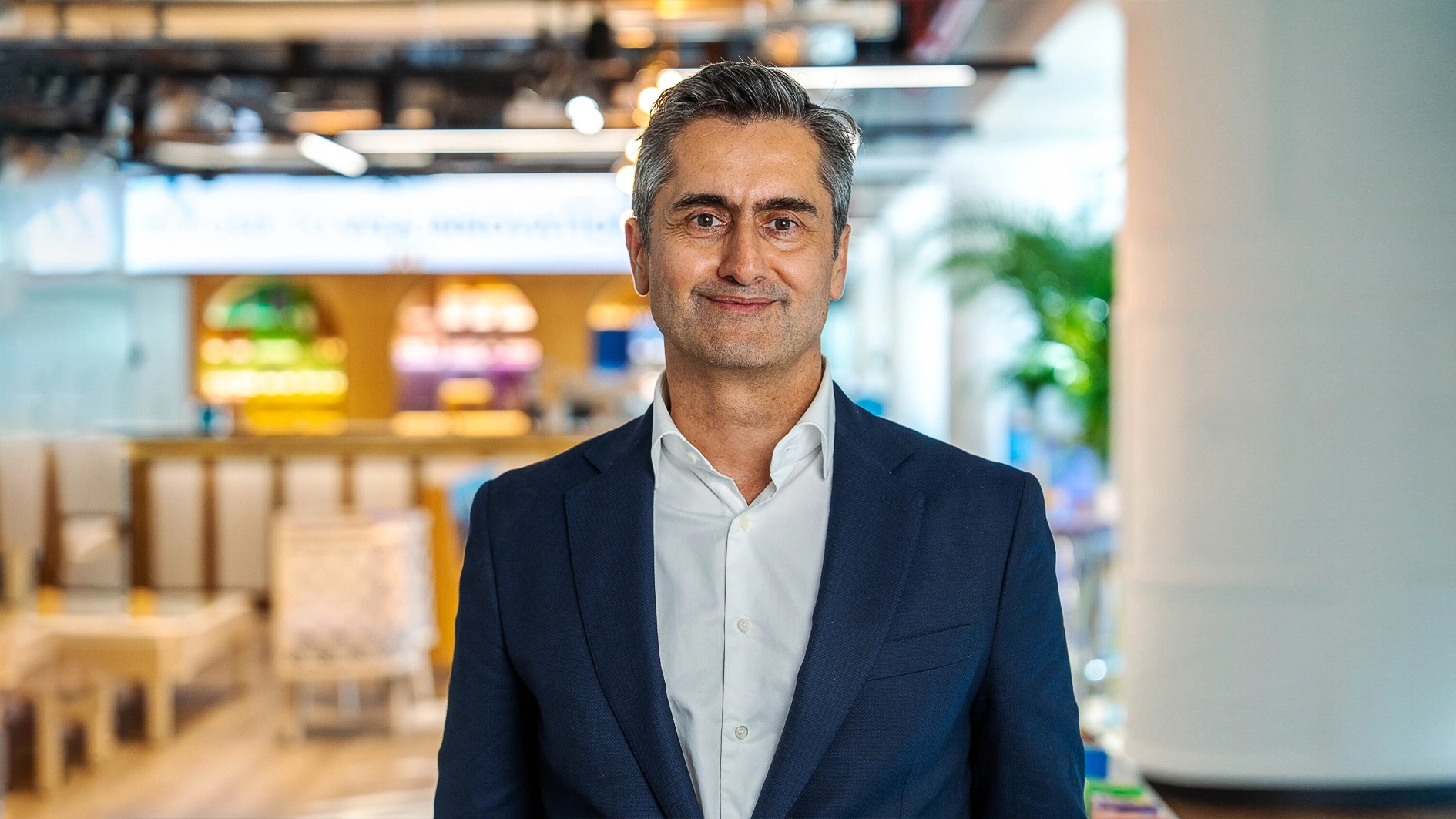
From banking to payment systems, Tareq Muhmood, who now oversees over 85 markets as Visa’s Regional President in charge of Central and Eastern Europe, Middle East and Africa (CEMEA), has earned his place as a global advocate for inclusive, secure and innovative payments. In an exclusive interview with GEOFF IYATSE during Visa Payments Forum in Paris, Muhmood spoke about the technology behind Nigeria’s dramatic reduction in cash transactions since the COVID-19 disruption, the significance of sustaining the innovation, the future of payment and concerns about digital payment risks.
The Central Bank of Nigeria (CBN) has directed that all payment data should be domesticated in Nigeria. Do you think we should legislate on data management or allow it to evolve naturally?
We have seen countries all around the world take different approaches to regulations in relation to data and payments. In relation to whether payment data should be domestic or not, in each local industry at Visa, we respect the position the regulator takes and comply.
Generally, we encourage governments to be more open environments because we find that it allows for innovation to happen and the right market to evolve as well. But we work with all governments depending on what they are looking to achieve. We will have to support the policy because we respect and acknowledge the fact that each country has its own regulations.
When you say the government should be open, what exactly do you mean?
What we find in some countries where they decide not to promote competition of different operating models is that you start blocking innovation. And what we have seen in Nigeria in the last few years is incredible innovation. We have seen players like OPay and Moniepoint really reduce cash transactions significantly.
I walked around markets in Lagos the last time I was there. I was so impressed by the level of digitisation of payments in Nigeria. So, there is clearly something going right in terms of accelerating digital capabilities and deployment. But there are clearly also opportunities to do things even better.
You have a data centre in South Africa. Do you intend to build one in Nigeria, especially considering the new policy?
We are making all kinds of technology investments in different markets, depending on what makes sense for that market. In South Africa, it made sense to build the data centre. In South Africa, we are investing a lot in processing technology to allow for first-class payments processing to happen.

In Nigeria and other markets, we are doing the same. We build different platforms depending on the country. So, in Nigeria’s case, we are making a lot of investment to strengthen many of our partners, including Moniepoint and many others. This is to really strengthen and further develop a world-class processing infrastructure in the market.
Looking at the data on digital payments in Nigeria, what we see is that substantial growth is happening.
A lot of people are using digital payments instead of cash, and there is trust in those payment methods.
We work not only on the issuing side so that you can go to any of the banks to get a Visa credential, but we are also working on the acceptance side to make sure that we are accepted in as many locations as possible. From the data that we see, we are seeing substantial growth in digital payments in Nigeria.
We are finding a way to encourage more cross-border payment flows. We want to make the processes easier and more open. That involves looking at things like how we make it easier to get Visa credentials. How do we make it easier for trade to happen? How do we make it easier for commerce to happen? These are important questions.
Tokenisation is one of the frontiers of the new payment system. But many times, tokens are not delivered to complete payment processes. What do you think is often broken when there is such failure? Is it often from the payment service providers, banks or telcos?
Great question! This can happen at any stage of the process. We do a huge amount of work to evaluate the process. And we make sure that we continue to evaluate with many of our partners in Nigeria and other countries, and to look at all the steps of the payment process to find out the percentages of payments that are successful. What is the percentage of payments that are not successful? For those that were not successful, what were the reasons?
Sometimes it has to do with the service connection with the phone lines or the satellite. Sometimes it has to do with the risk settings set by the bank in trying to prevent fraud. Sometimes it has to do with insufficient funds in the accounts. There are so many reasons a payment may not be successful. But we have seen incredible growth in the success rates of payments using Visa. Still, there is clearly some work to be done to make sure that the payment experience is frictionless and smooth.
Nigerian regulators and operators often brag that the country has one of the most advanced payment systems. How true do you think this is, considering other markets you know of?
I have looked at the data. I have really looked at the data over the last few years. We have seen the volume of cash transactions in Nigeria drop substantially.
If you think about this and what it was about five or six years ago, there is much improvement. You probably used cash a lot more six years ago than you do today. I think a lot of innovation has happened in the market; a lot of great work has happened in the market to expand the use of digital payments in the country. We are really excited about what we see in the Nigerian market. We have invested a lot in the market. We have a great team on the ground that is working with our clients around the clock to improve our services.
And you think the speed of growth and innovation is good enough?
You can never say it is good enough. I think we have got to make sure that we are just solving pain points together, finding ways of improving customer propositions and delivering benefits to the community.
And we see a lot of really good things happening in Nigeria. Is it complete? No, there is always room for improvement, and that is the benefit of Visa. We keep bringing the ideas from other countries to our partners in Nigeria about things we can improve on together.
A few Nigerians are super wealthy but the majority of the citizens are still very poor. As a result, people are concerned about the cost of the digital payment system. Going forward, do you see the cost coming down to almost zero?
There are two or three things that are important here. What we have found in Nigeria is that there are still many, many businesses in Nigeria that, if I visit as a tourist, I cannot pay. I have to go and get money from an ATM and then pay with cash. For those, I am not going to be bothered. I would go to another shop where I can pay with my card.
One thing we are trying to do is make sure, as cheaply as possible, that we are expanding so that tourists will be able to use their Visa credentials when they transact with small businesses. That will drive more growth for those small businesses. But right now it is very hard. If I visit Nigeria right now, I will just stick to the main shops because I know they accept cards. But that does not help the small businesses in the country.
The other thing we did recently in Nigeria that I am really excited about is that we launched something called the Value Card. It is a card that has very, very low costs, but it gets people started on how to use a card and how to make a payment. That way, it reduces cost substantially. So, depending on the segment, there is always a solution.
I do not generally believe it has to do with cost. We have seen payments grow in 200 countries around the world. Generally, it is not about cost. The question is whether you are solving a pain point. How are you making it easier for somebody to move forward with their life? I think that is where our technology can really be deployed and help.
From barter systems through fiat to digital money, money is constant while its form keeps changing. What do you think could be the next form of money after this phase?
You know what I think it’s going to be? It is going to be invisible. But it should be simple and secure. It is going to be secure and it is going to be inclusive. It is going to bring everyone in.
And so I think in the future, you won’t need to think about the payment. You just think about what you want to do and the payment would take care of itself. So, I think in the future, money will be invisible.
Are we going to see an uptick in the payment risks we have today or otherwise?
It depends on the type of payment. As long as it is a Visa payment, the risk will be managed really well.
In terms of payment generally, are we going to be talking about identity theft and data management risk?
There are so many different forms of payment these days around the world, and there is a lot of technology that is growing so quickly, like AI. The risks are growing in the industry because you can have a lot of bad actors using that technology to scam and trick people.
With the Visa Network, we invest huge amounts to manage that risk and minimise it. That might not be the same with every single payment method. So it is something that we are very proud of. We work with our network partners to make sure that the security of the Visa Payment Network is never compromised.

