 Follow Us on Google News
 Follow Us on Google Discover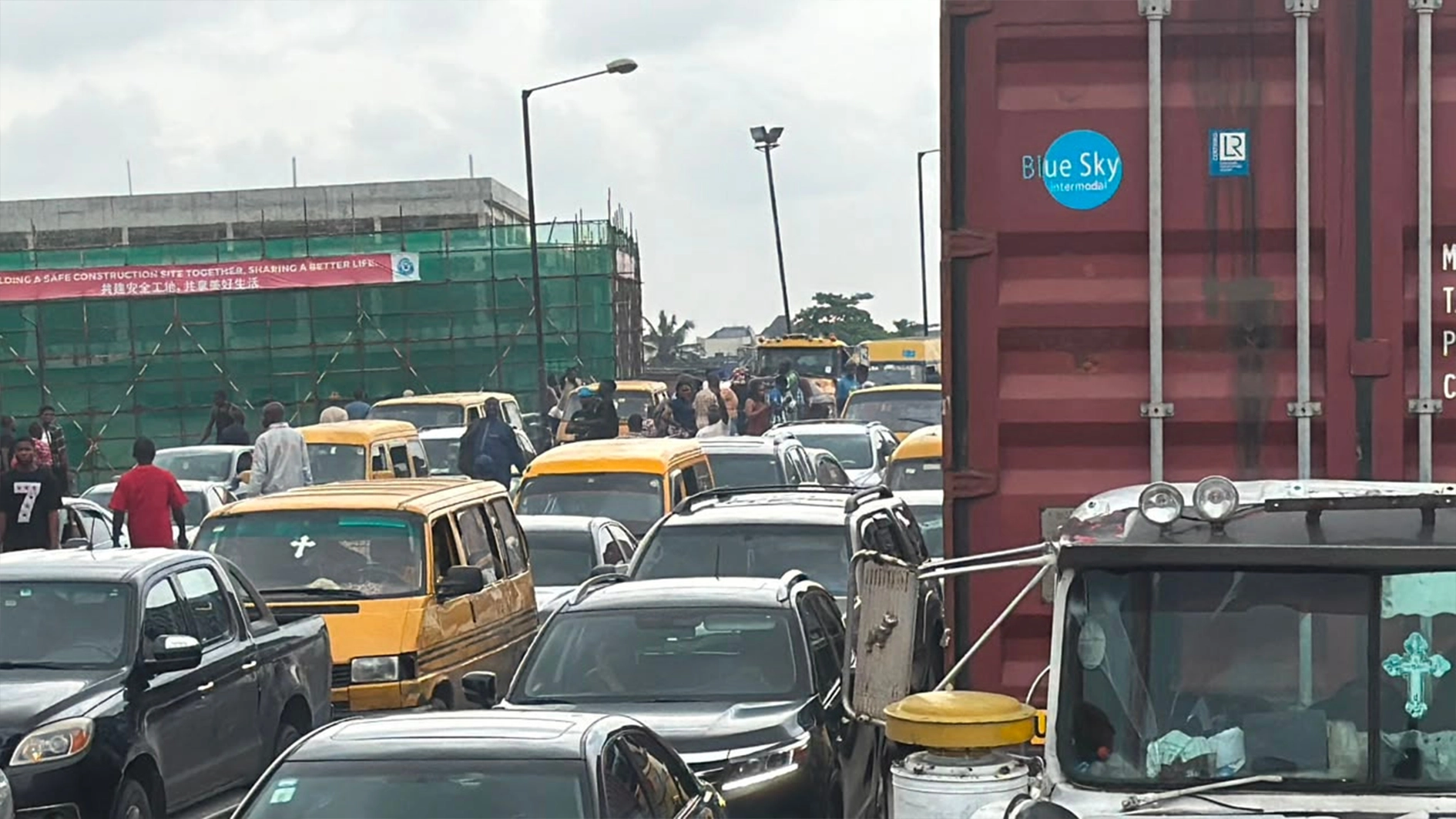
LASTMA appeals for patience
Commuters and motorists endured one of the worst traffic nightmares in recent months last week as the Oshodi-Apapa Expressway was brought to a standstill by a massive gridlock.
The worsening congestion has raised fresh concerns among truck owners, transport operators and businesses, who warned that the recurring traffic crisis is disrupting port operations, increasing transportation costs and affecting commercial activities.
The latest gridlock followed an influx of container-laden trucks and fuel tankers that paralysed traffic along the Oshodi-Apapa Expressway. Movement was severely disrupted along the Mile 2-Berger Yard axis and adjoining roads as trucks parked indiscriminately on both sides of the highway, while reckless driving by truck operators further worsened the situation along the Mile 2-Tin Can corridor.
Residents, transport operators and business owners attributed the recurring congestion to the commencement of operations at the new Kirikiri terminal, poor road infrastructure, inadequate traffic coordination, indiscriminate parking by tanker drivers and weak enforcement of traffic regulations.
Despite the deployment of police officers, military personnel and officials of the Lagos State Traffic Management Authority (LASTMA), the gridlock persisted for several hours, leaving motorists, commuters and commercial operators stranded.

The latest traffic nightmare has once again highlighted the unresolved challenges associated with truck movement around Lagos ports despite repeated interventions by government agencies and stakeholders.
Investigations revealed that the increased availability of petroleum products along the Mile 2-Coconut corridor attracted hundreds of tanker drivers, many of whom abandoned the Dangote Refinery route and diverted to the Mile 2-Coconut Expressway in search of loading opportunities.
Further findings showed that the congestion originated from the Coconut axis, where hundreds of tankers besieged several tank farms to load petroleum products. Entrances to major depots, including Shema, Integrated and Sahara, were completely blocked by stationary tankers.
Many of the drivers queued to load fuel but, after failing to obtain clearance, remained on the road, obstructing traffic.
As the situation deteriorated, members of the Petroleum Tanker Drivers (PTD), a branch of the Nigeria Union of Petroleum and Natural Gas Workers (NUPENG), moved in to clear the road by forcing several tankers out of the queue.
However, many of the displaced tankers simply relocated to the opposite side of the road, worsening the congestion and preventing loaded trucks from exiting the depots.
As a result, movement became almost impossible, with the traffic stretching all the way to Mile 2.
Eight years ago, then Vice President Yemi Osinbajo conducted on-the-spot assessments of the Apapa port gridlock in July 2018 and again in June 2019 alongside Lagos State Governor Babajide Sanwo-Olu to inspect decongestion efforts and ongoing road construction.
Osinbajo, who chaired the Presidential Task Force on the Apapa traffic situation, ordered joint military and police operations to remove stationary trailers from the Apapa-Oshodi Expressway.
Although the completion of the Oworo-Mile 2 road project, partly funded by Aliko Dangote, eased traffic between Oshodi and Cele Bus Stop, restoring sanity from Mile 2 to Apapa Port has remained elusive.
The annual rainy season has further compounded the situation as motorists slow down to navigate flooded sections and pothole-ridden portions of the road.
When The Guardian visited the corridor, trucks occupied both the service lane and parts of the main carriageway. Traffic officials were seen attempting to control vehicular movement, while motorists struggled through the congestion.
Residents and motorists lamented that trucks transporting empty containers to the ports routinely occupy major sections of the road, creating bottlenecks despite the presence of traffic management officials.
A motorist, Olatunji Oshinowo, said: “The traffic has been terrible. The trucks and containers are back on the road, and they park wherever they like. I used to spend between 25 and 30 minutes travelling from Mile 2 to Tin Can Island Port, but now it takes between two and three hours.
“I am losing both time and money in this traffic. I wish the government would be more proactive. They need to remove the tankers and container trucks from the road.”
A truck driver, Monday Isaiah, said:
“I spent an hour travelling between Fatgbems and Coconut, a journey that normally takes about 10 minutes. The gridlock is caused by tankers and container trucks taking over the road.
“Ordinarily, it takes about 20 minutes to travel from Mile 2 to Apapa, but with the current traffic, it is impossible to predict. The government needs to find a lasting solution by deploying enforcement teams and implementing sustainable measures.”
Another driver, Yahaya Adesina, said:
“Without traffic, it takes between 12 and 20 minutes to drive from Mile 2 to Apapa, but now it takes more than an hour.
“The former Vice President came here in 2018 and made promises. This is what we have today. This road leads to both the international airport and the seaport. It is one of the busiest roads in Lagos, so I don’t understand why it has been neglected.”
A commercial minibus driver, who identified himself simply as Ebube, said:
“Sometimes I have to turn back around Wharf because of the traffic. Truck drivers also create problems by attempting to turn on narrow roads and getting stuck. Everyone else is forced to turn back or look for alternative routes.”
Responding to enquiries by The Guardian, LASTMA appealed to road users to remain patient.
The agency’s Director of Public Affairs and Enlightenment, Adebayo Taofiq, said: “We are fully aware of the traffic congestion recently experienced along the Mile 2-Apapa corridor. This strategic route remains one of our priority operational corridors because of its high traffic volume and the significant commercial activities within the axis.
“Contrary to claims that the area has been neglected, LASTMA maintains a strong operational presence through personnel deployed from strategically located zonal offices. Additional officers are assigned daily to regulate traffic, clear obstructions and ensure the free flow of vehicles.
“The agency has also engaged transport unions and associations overseeing commercial bus operations along the corridor. While the majority have cooperated, a few recalcitrant operators continue to engage in illegal parking, indiscriminate loading and unloading of passengers, route violations and other traffic infractions that contribute significantly to congestion.”

