 Follow Us on Google News
 Follow Us on Google Discover
There are growing indications that Kwara State may head into the next general elections with a deeply fractured ruling party, an opposition at sea and an increasingly disillusioned electorate with few credible alternatives. The odd combination paints a drab political landscape, MONSUR ARAMIDE reports.
With the Independent National Electoral Commission (INEC) set to close its portal for the submission and substitution of candidates for the 2027 general elections on Tuesday, many voters and aggrieved stakeholders in Kwara State may have lost hope of seeing their preferred candidates on the ballot.
The controversial outcomes of the candidate selection processes in the ruling All Progressives Congress (APC) and the major opposition parties, particularly the Peoples Democratic Party (PDP), have left many voters in the State of Harmony dissatisfied.
Rather than inspiring confidence ahead of the elections, the primaries have raised fresh concerns about internal democracy, transparency and the extent to which party members influence the emergence of candidates.
As political activities ahead of the 2027 general elections gather momentum, Kwara State is witnessing renewed political manoeuvring among its major parties. While the ruling APC is grappling with internal disagreements over succession and party leadership, the opposition is equally striving to reposition itself after years out of power.
The outcome of these developments could significantly influence not only the electoral contest but also governance, public confidence and the quality of democratic competition in the state. Particularly striking, especially in the absence of substantial political mobilisation ahead of next year’s elections, is the growing possibility of widespread voter apathy among the state’s estimated 1.7 million registered voters.

Although the APC remains firmly in control of the state’s political machinery, recent events suggest that its internal cohesion is being tested. One of the aggrieved party elders, Abdulrasheed Akani, said that while the ruling party still enjoys the advantages of incumbency, unresolved disagreements among influential stakeholders could weaken its electoral strength if left unaddressed.
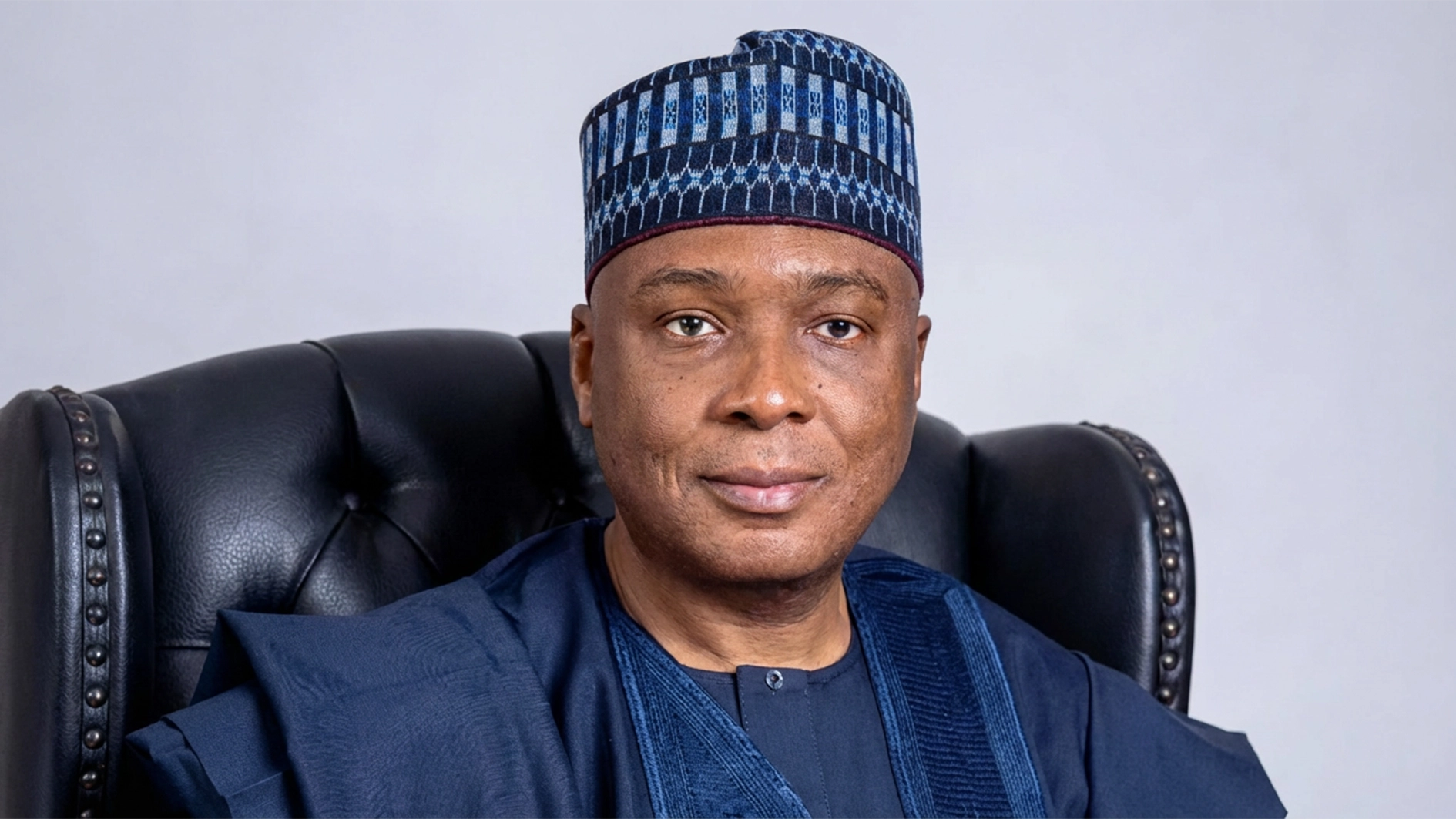
At the same time, the PDP, led in the state by former Senate President Bukola Saraki, is gradually rebuilding its grassroots structures in the hope of capitalising on any cracks within the ruling party.
Other opposition parties are also seeking relevance ahead of the elections, making the political environment more competitive than it has been since the 2019 “Otoge” movement that ended the PDP’s long dominance of the state.
For Akani, however, the emerging political contest is more about party supremacy than governance. He believes political leaders should focus on addressing pressing concerns such as unemployment, insecurity, infrastructure, healthcare and the rising cost of living, rather than becoming consumed by prolonged intra-party disputes.
One of the biggest challenges confronting the APC is the controversy over the emergence of Yakubu Danladi-Salihu as the Speaker of the Kwara State House of Assembly and the party’s governorship candidate.
His emergence has generated discontent among some party elders, serving lawmakers and governorship aspirants, many of whom questioned the process and called for the intervention of the party’s national leadership.
The disagreement has exposed deep divisions within the party, with rival groups openly expressing divergent views on the succession process. Rather than remaining within the party’s internal structures, the disagreements spilt into the public space, leaving many Kwarans wondering why some party leaders refused to allow members to freely choose their preferred candidate during the primaries. This has created the impression of a party struggling to maintain unity at a crucial political moment.
The divisions became even more apparent with the emergence of the G15, a coalition comprising aggrieved governorship aspirants, the state’s three serving senators, members of the House of Representatives, state lawmakers and other stakeholders.
According to the group, its objective is to demonstrate support for party leaders committed to preserving the APC’s founding principles of fairness, inclusion, internal democracy and collective leadership.
Members insist that their actions are intended to strengthen rather than undermine the party.
However, the Coordinator of the Renewed Hope Ambassadors, Abdulateef Alakawa, who is loyal to Governor AbdulRahman AbdulRazaq, maintained that the direct primary process was transparent, peaceful and reflected the wishes of party members.
The G15, however, insists that its concerns extend beyond individual political ambitions. In a statement, the group maintained that genuine reconciliation, fairness and respect for internal democratic processes are essential if the party hopes to preserve its unity ahead of the 2027 elections. It also urged its supporters to remain peaceful and law-abiding while consultations continue.
Beyond the exchanges between rival factions, the crisis raises broader questions about governance. Political analysts argue that when governing parties become consumed by internal power struggles, governance often suffers as attention shifts from policy implementation to political survival. Government officials may become preoccupied with succession battles instead of focusing on developmental priorities.
For ordinary Kwarans, prolonged political disagreements could lead to slower decision-making, delays in implementing government projects, and reduced attention to issues that directly affect citizens.
Investors may also adopt a cautious approach where political uncertainty persists, while public confidence in political institutions could decline if partisan disputes continue to overshadow governance.
The situation equally presents a major test of leadership for the APC. While disagreements are common in democratic politics, the party’s ability to reconcile aggrieved members and present a united front before the general elections may ultimately determine whether it retains the overwhelming support it enjoyed in previous electoral cycles.
While the APC battles internal disagreements, the opposition is confronting challenges of its own.
Although the PDP has intensified efforts to rebuild its structures under the leadership of former Senate President Bukola Saraki, it must still convince voters that it has learned from the circumstances that led to its defeat in 2019.
Since the emergence of the “Otoge” movement, Kwara’s political landscape has changed considerably. Many younger voters, who played significant roles in the 2019 political realignment, now place greater emphasis on good governance, economic opportunities and accountability than on traditional political loyalties. Consequently, the opposition’s task extends beyond exploiting the APC’s internal disagreements; it must also present credible alternatives that inspire public confidence.
One of the members of PDP, Tunde Akinlolu, said the opposition’s greatest opportunity lies in the growing dissatisfaction among sections of the APC. However, converting that dissatisfaction into electoral support will require unity among opposition parties, effective grassroots mobilisation and a clear policy agenda that addresses the everyday concerns of Kwarans.
Another factor shaping the political equation is the reported weakening of the coalition that produced the “Otoge” victory in 2019. The alliance brought together diverse political interests united by a common objective of ending the PDP’s long dominance of the state. Several years later, Akinlolu argued that some of those interests no longer enjoy the level of inclusion they expected after the APC assumed power.
Some party stakeholders have accused Governor AbdulRazaq of sidelining individuals and groups that contributed to the party’s electoral success. Although the governor’s supporters reject the allegation and insist that appointments and government policies have been guided by competence and the public interest, the debate continues to fuel political realignments within the state.
The governor’s emphasis on giving younger professionals greater opportunities in government has also generated mixed reactions. While supporters describe the approach as a deliberate effort to inject fresh ideas into governance, some party elders believe experienced politicians have not been adequately accommodated. The differing perspectives illustrate the delicate balance between political renewal and maintaining party cohesion.
The reported defection of the governor’s cousin, AbdulRahman Giwa, to the National Democratic Congress (NDC) has further heightened political speculation. Although a single defection may not fundamentally alter the state’s political arithmetic, it reflects the wider contest for influence ahead of the governorship election and underscores the fluid nature of political alliances in Kwara.
Regional voting considerations are also expected to shape the contest.
Historically, Kwara Central has produced the largest share of votes in governorship elections, making the district strategically important to all major political parties. However, Akinlolu cautioned that electoral outcomes are rarely determined by demographics alone. Candidate acceptability, party unity, campaign organisation, public perception and voter turnout often prove equally decisive.
However, the Kwara State Chairman of the APC, Sunday Fagbemi, told The Guardian that a reconciliation committee, led by retired Col. Lawal, had been constituted to address all grievances ahead of the campaigns and the 2027 elections.
While acknowledging that aggrieved members have the right to express their dissatisfaction, Fagbemi faulted the manner in which they had done so. “The methodology they deployed to air their grievances is what I believe is wrong. They should have followed the party’s internal dispute resolution process instead of publicly accusing the governor. I appeal to everyone to see reasons why we should come together in the interest of the party,” he said.
Beyond party calculations, the overriding concern remains the welfare of ordinary citizens. Political uncertainty can distract governments from delivering essential services, delay developmental projects and weaken public trust in democratic institutions.
The prolonged exchanges between rival political camps have also raised concerns about the possibility of heightened political tension as campaigns gather momentum. Although Kwara has largely maintained a reputation as one of Nigeria’s more politically peaceful states, aggrieved party members continue to urge political leaders and their supporters to avoid inflammatory rhetoric that could undermine public peace.
There is, however, another side to the unfolding political contest. Healthy competition among political parties can strengthen democracy by promoting greater accountability, encouraging robust policy debates, and compelling leaders to be more responsive to citizens’ needs. A genuinely competitive political environment could push both the ruling party and the opposition to engage voters more meaningfully and articulate clearer development plans for the state.
Conversely, the opposition has an opportunity to present itself as a credible alternative, but only if it overcomes its own internal divisions, remains united and offers practical, people-centred solutions to the challenges confronting the state. Merely capitalising on the APC’s difficulties is unlikely to persuade an increasingly discerning electorate.
The Secretary of the Kwara State chapter of the PDP, Abdulrahman Abdullahi Kayode, expressed confidence that the opposition would reclaim the state in the next general election.
“Aside from our strategy, which I will not disclose now, the disagreements within the APC will also work in our favour. Before now, the party had the G10 to contend with; today, it is G15. As of yesterday, I learnt the number had risen to G19. That alone shows that the centre can no longer hold. No reconciliation can restore the old Kwara APC. We are confident of defeating them and winning by a landslide,” he said.
For the people of Kwara, however, the expectation extends beyond which political party wins the next election. Citizens are becoming more interested in leadership capable of improving living standards, expanding economic opportunities, strengthening public institutions and sustaining peace across the state. Whether the APC retains power or the opposition stages a comeback, the ultimate measure of success will be the ability of those elected to deliver inclusive governance, accountable leadership and tangible development.
As preparations for the 2027 general elections continue, both the ruling party and the opposition face defining moments. Their ability to manage internal differences, rebuild public trust and place the interests of the people above partisan calculations may ultimately determine not only their electoral fortunes but also the future direction of governance in Kwara State.
Yet the greatest challenge may not lie with the political parties alone. It is whether the electoral process can inspire confidence among citizens who increasingly question whether their votes and voices truly matter. If the APC fails to heal its internal divisions and the opposition fails to present a compelling alternative, many voters may conclude that they are being asked to choose between competing political interests rather than competing visions for Kwara’s future.

