 Follow Us on Google News
 Follow Us on Google Discover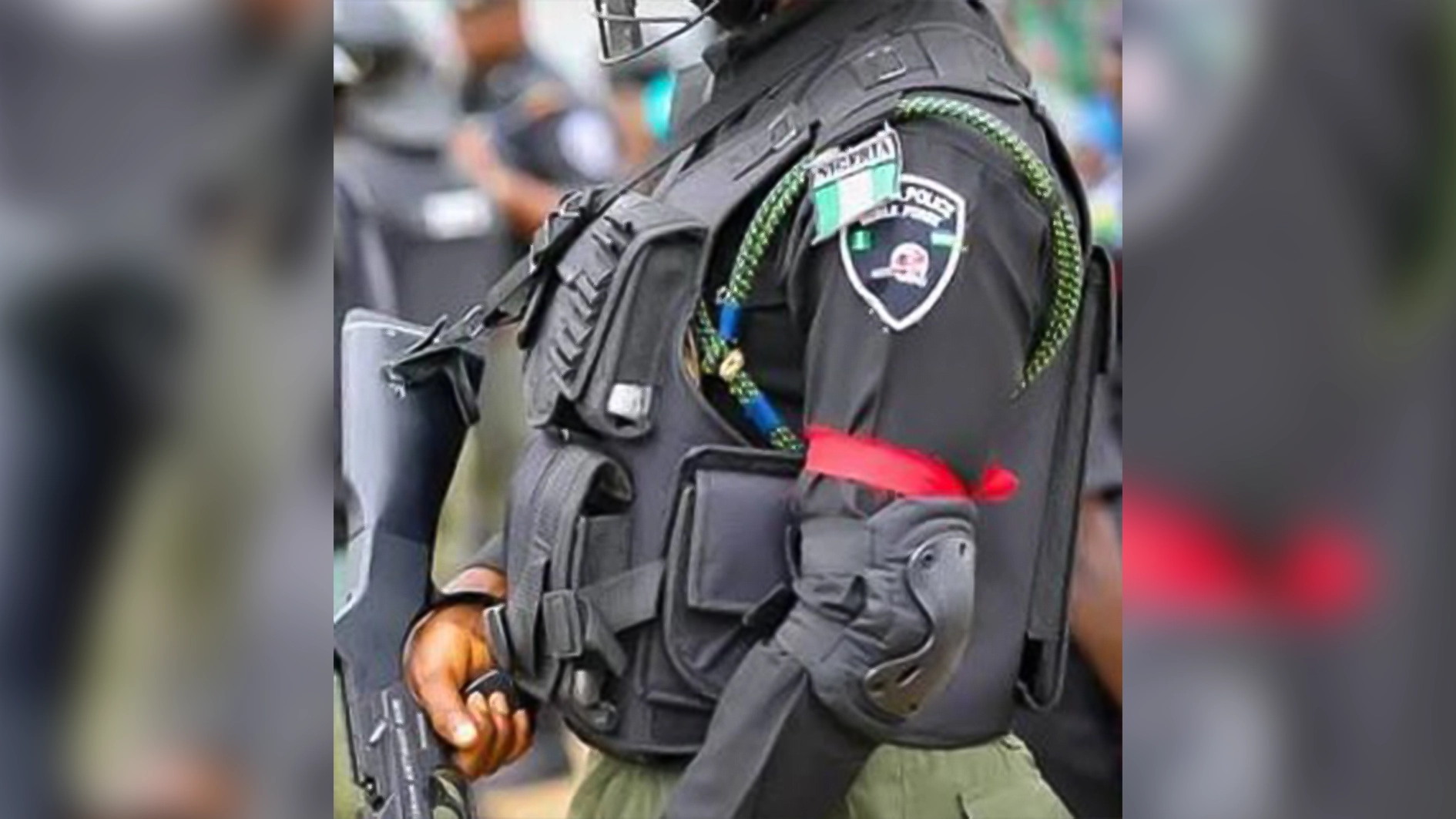
Until the Tinubu administration applied unusual speed and resolve to push through the creation of state police, it used to be a popular idea among Nigerians and across political parties that power of law enforcements in states should revert to governors. The idea gained popularity in the last 10 years, when insecurity blossomed and central authorities were unable to tame crime and ensure safety in communities.
The argument is that crime takes place in states and local governments as well. Instead of waiting for Abuja to make up its mind on what to do with criminals, state governors that are closer to the scene of crime should be granted power to establish and operate the police they can readily call on to do the job.
On that note, it can be said that majority have agreed that state police could be the answer.
The advent of terrorism and banditry has made the argument for state police even stronger. Many governors say they have no forces to deploy in far-flung jurisdictions that are not served by the federal police.
They watch terrorists invade their communities and are unable to protect citizens. Yet, they are referred to as the chief security officers in states.
More converts now agree that state police should complement the federal efforts as it is done in jurisdictions that operate federal systems. The United States, Canada, Germany, Brazil, India and others operate layers of policing for states, counties and other authorities that are the equivalent of local governments. Some citizens want to see an end to the monopoly deftly crafted for the Federal Government on police matters.
The 1979 and 1999 Constitution both provide that only the Federal Government can establish and manage a police force. Section 214 of the Constitution establishes the Nigeria Police Force as the national police for the Federation. It explicitly prohibits the establishment of any other police force for the federation or any part of it.
For command and control, Section 215 provides that the President shall appoint the Inspector General of Police on the advice of the Nigeria Police Council. State contingents are commanded by a Commissioner of Police. When the military were to leave office in 1979, they supervised the making of a constitution that met their requirements for internal security.
The military governed by decrees and by a chain of commands that did not leave room for citizens participation. The police system they left behind fitted their purpose. But in the hands of a civilian government that emerged out of other political parties, the police are instruments to constrain and intimidate. In the election of 1983, which was managed by civilians, the police were used to assist the party in government to steal votes. The elections were massively rigged in opposition strongholds, particularly in the South-West.
Since 1999, elections have been prosecuted like wars. The police have been unable to maintain neutrality and the integrity required of electioneering. Sometimes, police looked the other way while electoral fraud is committed. That is if the police are not the major perpetrators. The impression had been that, perhaps, state police might counter or reduce excesses of federal policing.
So, what has changed now that some concerned citizens have developed cold feet regarding state police? At a time the Tinubu-led government is upbeat to deliver state police there are pockets of concerns. First, some Nigerians have issue with the speed deployed to push the legislation.
Former Inspector General Kayode Egbetokun was accused of stalling efforts to implement state police. Tunji Disu, the current IGP did not waste time on the matter. He inaugurated an 8-member committee to do a framework on what to expect if the country were to accommodate state police. The committee chaired by Professor Olu Ogunsakin came up with proposals on personnel redeployment, jurisdiction, funding and implementation, and submitted the framework to the Senate Committee on Constitution Review.
President Tinubu followed up by transmitting the Constitution of the Federal Republic of Nigeria (Alteration) State Police Bill, 2026, to the National Assembly. The upper chamber approved the Bill after considering the report of the Committee on the Review of the Constitution, presented by its chairman, Barau Jibrin. More than two-thirds of members voted in support. Similarly, the House of Representatives passed the bill after securing more than two-thirds majority.
The legislation has been forwarded to the 36 State Houses of Assembly for concurrence, which requires the approval of at least 23 state assemblies, before returning for final constitutional processing and presidential assent.
Some in the opposition fear that the speed of passage by the NASS without public hearing and much debate is suspicious. They claim that a fundamental bill that seeks to alter the Constitution and establish state police should not be passed in a hurry, but must be subjected to rigorous debate and public hearing.
The opposition say they cannot trust the NASS, after it hurriedly passed the tax laws and the Electoral Act 2026, which turned out to be fraught with errors and targeted to defraud the people and give the ruling party the upper hand.
Whereas, IGP Disu’s committee proposed a 60-month (five years) phased implementation timeline for achieving state police, the Tinubu government seemed to be working at breakneck speed, as if to deliver state police tomorrow. The opposition considers this dangerous.
For instance, Atiku Abubakar, the presidential candidate of the African Democratic Congress (ADC) is a supporter of establishment of state police. But he says the ongoing process is politically motivated to let the ruling party recruit political thugs ahead of 2027.
The opposition also fears that in an election year, handing over police to governors who are contesting elections would give them undue advantage, considering the way policing has been abused to interfere in elections. The Peoples Redemption Party (PRP) declared categorically that it does not trust the Tinubu administration to supervise creation of state police because it lacks moral authority, especially now that public trust in state institutions is poor.
Femi Falana, SAN, is not impressed by ongoing efforts to create state police. He said the country must first deal with social security matters and the conditions driving people to commit crimes.
He queried in a television chat: “We always reduce the problem of insecurity to security architecture, in fact, structure. How do we have more police stations? How do we employ more policemen and women without considering social security? Why are more young men taking to criminality? Why are we not talking about creating employment for young people? Why are we not giving assistance to Nigerians that are vulnerable, extremely poor or multi-dimensionally poor? And unless you address these problems holistically, creating a state police or local government police will not address the crisis of insecurity in our country.”
It is clear that those who are raising questions at the moment regarding state police are not denying that the country needs to devolve policing. They are worried that the process is not inclusive; you cannot reform policing without involving stakeholders, whose major concern is that due process should be followed.
There are Nigerians who were sold out on state police for over a decade now. But their combined experiences of the past three years have forced a change of mind. When you consider the powers governors have marshalled even without having the instrument state police, it is enough to provoke fear.
For instance, Governor Monday Okpebholo does not have state police. But he goes about warning the opposition not to exist in the state. He warned Peter Obi not to come to Edo State. He dares the former governor Godwin Obaseki to walk the street of Benin if he thinks he is still popular? He promised President Tinubu more votes that contained in the register of voters in the state. His utterances and actions give a bad name to state police.
Perhaps, if he were to have state police, Rivers State Governor, Siminalayi Fubara, could have fought back when the FCT Minister, Nyesom Wike, with the assistance of federal police robbed him of executive powers and made him look ordinary. When lawmakers who were aided by Abuja troubled him, he couldn’t even mobilise vigilantes enough for a pushback.
State police could be a double-edged sword depending on the maturity of the systems in states. Some states have used the vigilante system to manage insecurity in rural communities. Some have used it to hound the opposition. That is why the proposed legislation contains provisions to prevent abuse by states’ chief executives. For example, Section 17(7) provides that the Commissioner of Police of a state shall not arrest, detain, investigate or deploy force against any person, political party or group for criticising the government, except in accordance with the law.
This could prevent the misuse of state police against political opponents or critics, and that any action taken against such individuals or groups complies with due process and existing laws.
Section 17(8) provides that the Inspector-General of Police or a Commissioner of Police of a state may request the appropriate Police Service Commission to review any directive considered unlawful or inconsistent with national minimum standards.
The provision further states that nothing in the section shall oust the jurisdiction of the courts. Section 17(10) provides that a Commissioner of Police of a state shall not be suspended or removed except for a stated cause, in accordance with the principles of fair hearing, on the recommendation of the National Police Council and subject to approval by a resolution supported by not less than two-thirds of all members of the state’s House of Assembly.
But there are other laws that state authorities can rely on to hound critics and the opposition. Even the Federal Government deploys the Cybercrime Act to shut out critics. Governors will even do more.
But overall, Nigeria is ripe for state police. It is supposed to be an accompaniment of the federal system, a necessary part of it. It might not solve all the problems of insecurity, but will stabilise federalism. It’s no strategy to develop cold feet now!

