 Follow Us on Google News
 Follow Us on Google Discover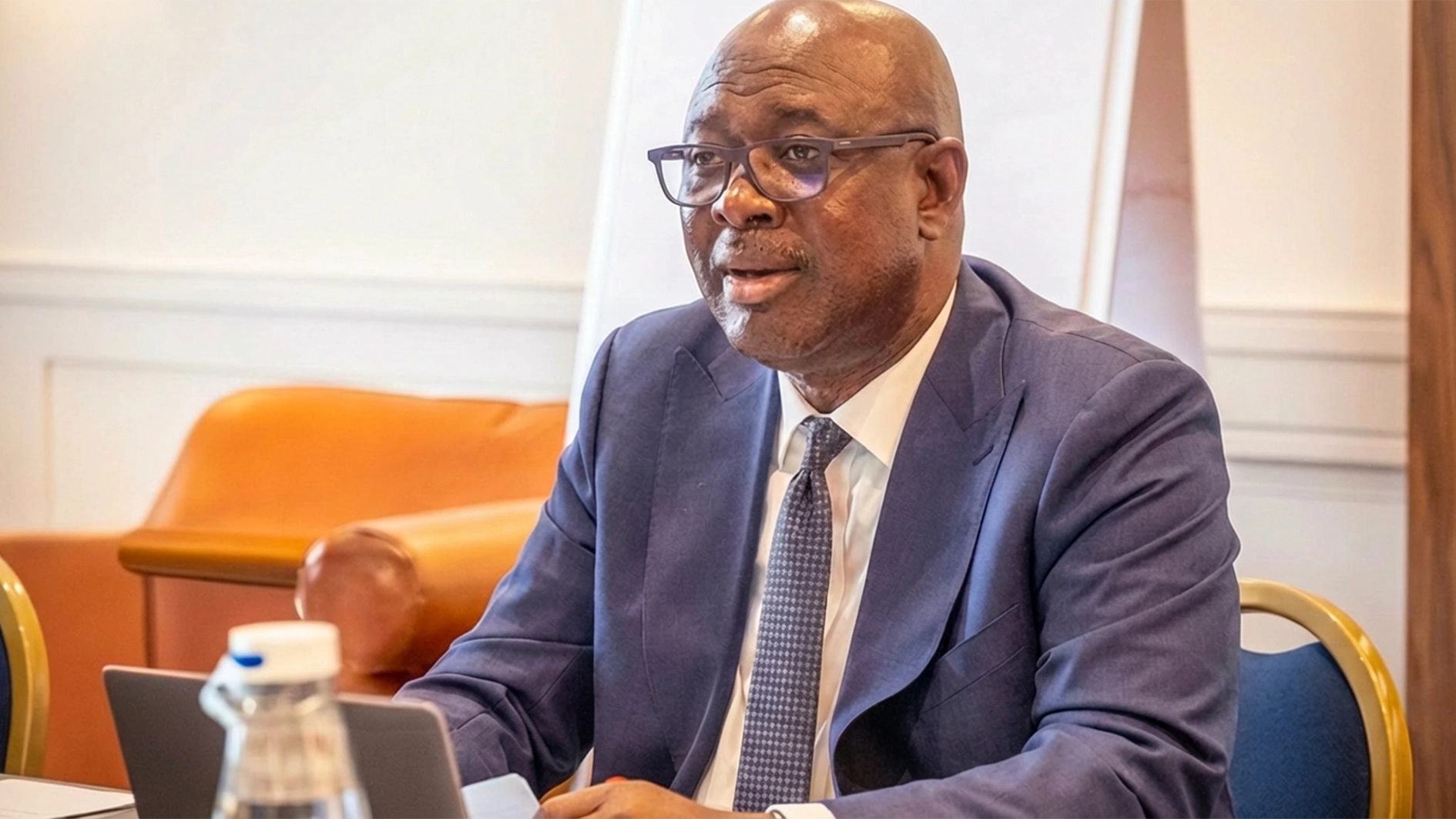
Strong legal frameworks, transparent regulations and harmonised policies across Africa are critical to achieving net-zero emissions while sustaining economic growth and attracting investment, the Minister of State for Petroleum Resources (Oil), Senator Heineken Lokpobiri, and other energy experts have said.
They spoke at the Lawyers in Energy International Conference (LEICA 2026) organised by the Lawyers in Energy Network with the theme: “Net Zero, Energy Law and Regulatory Reform: Managing Risk and Unlocking Opportunity in a Carbon-Constrained Energy Market.”

The three-day conference is ongoing at the Oriental Hotel, Victoria Island, Lagos and will end on July 15.
Represented by the Director of Legal Services in the Ministry of Petroleum Resources, Mr. Terlumun George-Maria Tyendezwa, Lokpobiri said Nigeria’s energy transition must be driven by laws and regulations that provide certainty for investors while supporting the country’s climate commitments.
He said the Federal Government was determined to shape Nigeria’s energy transition on its own terms by ensuring that the sector operates within a transparent, predictable and enforceable legal framework.
According to him, the Petroleum Industry Act (PIA) has laid a solid legal foundation for the sector, while regulators have continued to develop rules that provide greater clarity for both upstream and downstream operators.
Lokpobiri stressed that legal certainty was indispensable to investment decisions, noting that sound policies alone would not attract capital unless they were backed by effective implementation.
“The energy sector must be governed by a framework that is transparent, predictable and enforceable. What this means in practice is that there is clarity in our legal framework,” he said.
He added that investor confidence depends on certainty created by law and regulation.
The minister noted that Nigeria had already demonstrated its commitment to climate action through the Climate Change Act and the establishment of a carbon credit framework.
According to him, these initiatives provide incentives for investors and assure businesses that Nigeria remains a stable destination for long-term investments.
He warned that decisions taken today by lawmakers, regulators and legal practitioners would shape Nigeria’s energy future for generations.
Lokpobiri reaffirmed the ministry’s commitment to strengthening regulatory institutions, deepening stakeholder engagement and improving the country’s legal framework to protect investors, host communities and the public.
He urged participants at the conference to use the gathering to address difficult issues confronting the sector and contribute practical solutions for Nigeria’s energy future.
Delivering the keynote address virtually, Secretary-General of the African Petroleum Producers’ Organisation (APPO), Farid Ghezali, called for harmonised petroleum laws and regulatory frameworks across Africa, describing fragmented legal systems as one of the continent’s biggest obstacles to investment.
Ghezali said the global energy transition had fundamentally changed how investors evaluate destinations, with regulatory stability, fiscal clarity, contract sanctity, environmental standards and policy consistency becoming as important as resource potential.
“In this new reality, geology is no longer enough,” he said.
While Africa possesses abundant resources and a growing market, he said the continent must move from “a patchwork of rules” to a predictable regulatory environment capable of attracting investment.
He described regulatory uncertainty as Africa’s “biggest hidden tax” and harmonisation as its “biggest untapped incentive.”
According to him, investors currently face more than 50 different legal and regulatory systems across Africa’s petroleum industry, increasing transaction costs, delaying projects and diverting capital to regions with more predictable legal environments.
He said fragmented regulations also undermine regional projects such as cross-border pipelines, regional gas markets and interconnected electricity grids because incompatible legal systems turn economic opportunities into legal obstacles.
Ghezali argued that harmonisation would also strengthen Africa’s bargaining power in global energy negotiations by enabling countries to negotiate from a common regulatory foundation rather than as isolated jurisdictions.
He pointed to initiatives such as the African Petroleum Regulators Forum (AFRIPERF), which is promoting common standards on transparency, safety and environmental protection among participating countries.
“Harmonisation does not remove sovereignty; it multiplies it. It turns individual efforts into continental strength,” he said.
The APPO chief clarified that harmonisation did not mean imposing identical laws on every country but establishing shared principles on transparency, environmental protection, local content, licensing, dispute resolution and investor protection while preserving national sovereignty.
He said Africa must also ensure that its energy transition supports industrialisation, job creation and energy access rather than merely complying with international climate obligations.
“If the rules of the transition are written without Africa, they will be written against Africa,” he warned, urging governments to ensure that communities, women, youths and local businesses participate in lawmaking processes.
Chairman of the Board of Trustees of the Lawyers in Energy Network, George Etomi, said legal practitioners would play a decisive role in helping countries achieve their 2060 net-zero targets.
Etomi said the conference theme reflected the realities confronting governments, investors, regulators, energy companies and lawyers as global energy markets undergo rapid transformation.
He noted that net-zero emissions had moved beyond aspiration to become a legal, commercial and policy imperative shaping investment decisions worldwide.
For Nigeria and other developing economies, he said, the challenge was to balance environmental sustainability with energy security, economic growth and social development.
According to him, achieving that balance would require robust legal frameworks, forward-looking regulations, effective dispute resolution mechanisms and stronger collaboration among stakeholders.
“As lawyers and energy professionals, we have a vital role to play in shaping the legal and regulatory architecture that will support sustainable investment, encourage innovation, manage disputes and promote responsible energy development,” Etomi said.
He added that LEICA 2026 offered a valuable platform for dialogue and knowledge sharing aimed at building a resilient and inclusive energy future.
Founder and Executive Secretary of the Lawyers in Energy Network, Raqueebah Oloko, said this year’s conference was designed to examine the legal and regulatory reforms required to help African countries navigate the global energy transition without sacrificing their development priorities.
She said the organisation, established in 2015, has evolved into a leading platform bringing together legal practitioners, government officials, in-house counsel, academics and industry stakeholders to promote knowledge sharing and practical solutions for the energy sector.
Oloko added that through conferences, training programmes and collaborations with government agencies, law firms and industry organisations, the network continues to strengthen legal and regulatory capacity across Africa’s energy industry.

