 Follow Us on Google News
 Follow Us on Google Discover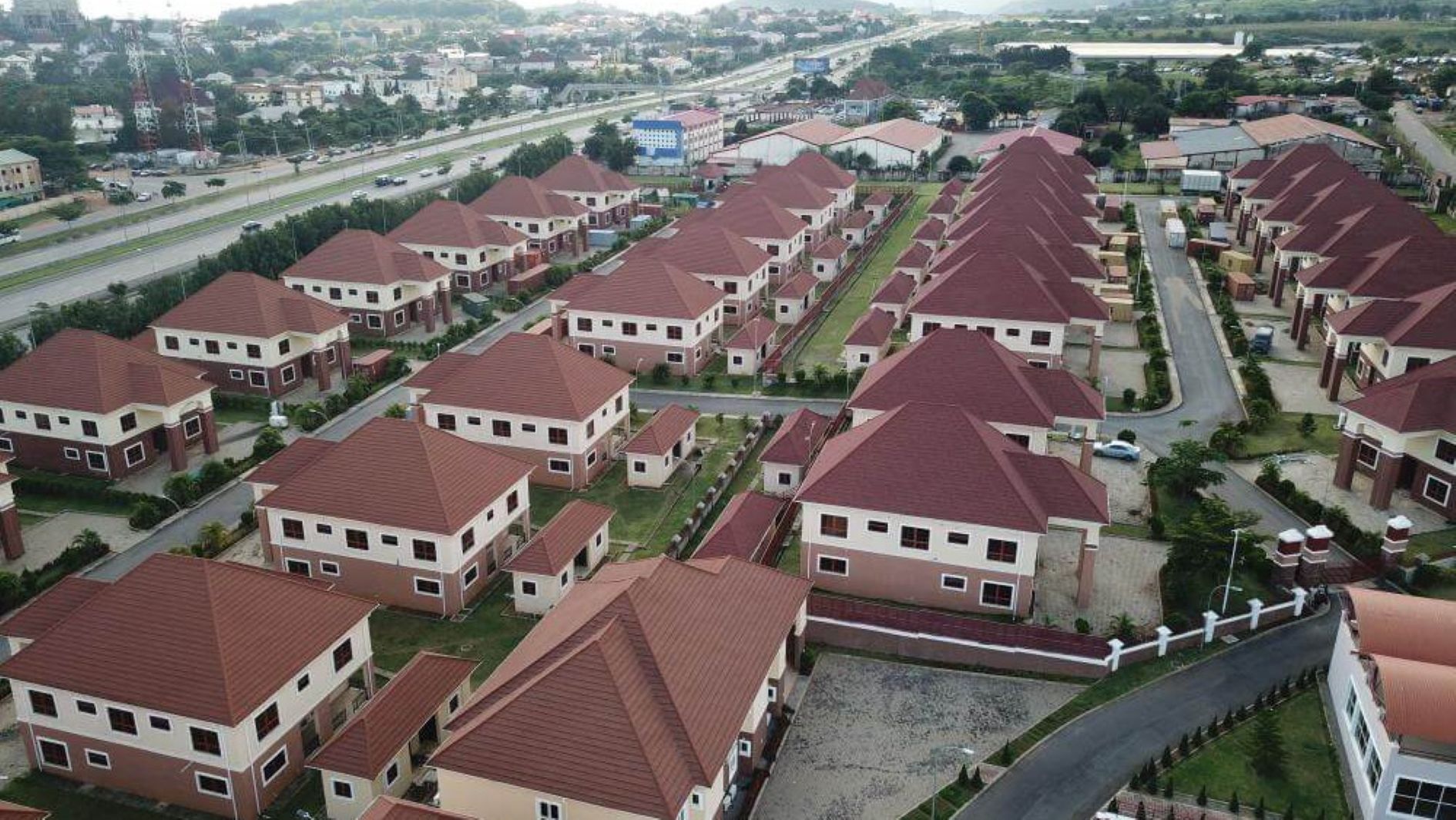
As part of efforts to bridge Nigeria’s housing deficit, the federal government and a Chinese firm, China Hyway Group Limited, have disclosed plans for 10,000 resettlement housing units, saying the arrangement will facilitate access to land for successful project implementation.
The proposed project is designed to complement the government’s housing programme by providing affordable, durable and rapidly deployable housing solutions across the six geopolitical zones.

This comes as President Bola Tinubu disclosed yesterday that 7,171 housing units under the New Hope City Housing projects are currently making significant progress in the FCT and in states.
The president, represented by the Minister of Housing and Urban Development, Muttaqha Darma, spoke when he declared open the 18th Africa International Housing Show in Abuja. He listed the projects as the 2,888-unit New Hope Housing Project in Katampe, Abuja; the 2,084-unit project in Ibeju-Lekki, Lagos; and the 2,207-unit project in Lambu, Kano State.
Speaking this when a China Hyway Group delegation visited his office and presented the proposed 10,000 resettlement housing units, Darma stated the government’s readiness to partner with credible investors to address the need.
He added that the government is prepared to provide suitable land in the Federal Capital Territory (FCT), states and local councils across the country for mass housing development. He further commended the company’s innovative approach to housing delivery and its interest in investing in Nigeria’s housing sector.
According to him, the proposal aligns with the government’s objectives, which prioritise expanding access to decent, affordable and sustainable housing for Nigerians through strategic public-private partnerships.
Earlier, the Chinese company’s chief engineer, Huynh Hai, explained that the company was motivated to invest in Nigeria because of the country’s enormous housing demand and strong economic potential.
According to him, Nigeria, the world’s sixth most populous country and Africa’s most populous nation, currently faces a housing deficit of approximately 17 million units, making large-scale housing interventions both necessary and urgent.
In view of this, “our objective is not merely to construct houses, but to develop sustainable communities through modern industrialised construction technology. We believe this initiative will make a significant contribution towards closing Nigeria’s housing gap while supporting the government’s vision of affordable housing for all,” he stated.
According to him, China Hyway intends to deliver the 10,000 housing units within 30 months, deploying advanced prefabricated construction technology under the Engineering, Procurement, Construction and Financing (EPC+F) model, which integrates project design, financing, construction and delivery into a single framework.
Meanwhile, Tinubu stated that, alongside the ongoing projects across the country, the new developments are meant to meet the growing demand, while the completed estates have been handed over to state governments for allocation to deserving citizens for timely occupation.
“Through strategic public-private partnerships and innovative financing arrangements involving the Federal Mortgage Bank of Nigeria, mortgage real estate investment funds, the Family Homes Fund, the Nigeria Mortgage Refinance Company and private developers, we are expanding opportunities for affordable home ownership,” he stated.
“Looking ahead, the federal government is advancing the proposed Tinubu Mass Social Housing Scheme, a transformative initiative designed to deliver about 150,000 affordable housing units across the 774 local council areas of Nigeria in two phases.”
Also, the Secretary to the Government of the Federation, Senator George Akume, commended the organisers of the AIHS for building a stable platform for dialogue, innovation, partnerships and investment in the continent’s housing development sector.
Akume explained that Africa’s housing development agenda must be driven by policies intentionally aligned with its development objectives and focused on high-level delivery and leadership, not only to grow the housing sector but also to make housing accessible and affordable.
Earlier, the Chairman of the AIHS, Senator Ayim Pius Ayim, said that beyond housing construction, liveable communities require adequate infrastructure and effective urban planning, adding that housing has become a major platform for economic development under the policy framework.

