 Follow Us on Google News
 Follow Us on Google Discover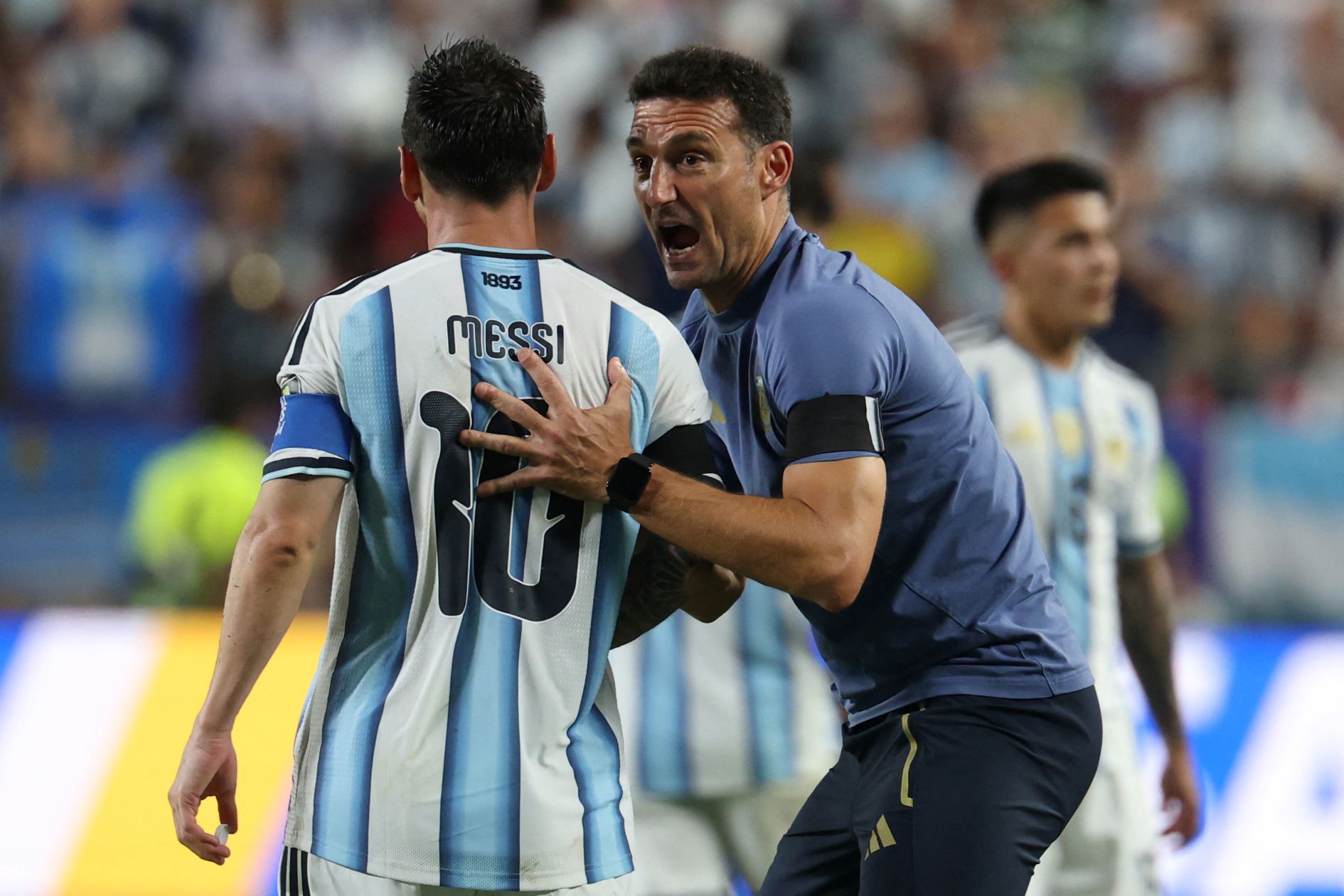
Africa showed at the ongoing FIFA World Cup that it can hold its own against bigwigs in world football,
given the same pedestal to compete. GOWON AKPODONOR reports, however, that among other things, the continent needs to up the ante in in-game management if it desires to become a serious contender for World Cup glory.
The world was braced for what promised to be a major upset in the round of 32 at the ongoing FIFA World Cup when DR Congo took a 1-0 lead over England and held the lead for much of the game. The Leopards had numerous other chances to ‘kill the game’ and give the continent its first major scalp at the tournament, but the African team inexplicably capitulated, allowing their English counterpart to draw level and eventually carry the day with less than 15 minutes left on the clock.
On the same day – July 1, Senegal also held what many fans thought was an unassailable lead when they raced to a 2-0 advantage over Belgium with a minute to go. But like DR Congo, they contrived to throw away the lead to lose the game 3-2.
In a recurring theme of the African campaign, with multiple squads surrendering winning positions late in matches against higher-ranked opponents, Egypt also blew a 2-0 lead in the 79th minute against defending champions Argentina, ultimately losing 3–2 in their quarterfinal clash.
This pattern is not new, as it dates back to the Italia 1990 edition of the tournament, where Cameroon, Africa’s first team to qualify for the quarterfinals, came from a goal down to lead England 2-1 up till the 84th minute before the Three Lions scored two late goals to win the tie 3-2, in Naples.
Four years later, the Super Eagles, in their debut appearance at the Mundial, held a 1-0 lead over eventual finalists, Italy, before the Azzuris equalised in the 89th minute and went on to win the game 2-1.

The ongoing tournament co-hosted by the United States, Canada and Mexico is historic in many ways for Africa, but it has delivered a major heartbreak for the players, coaches and fans from across the continent.
The knockout stage in the World Cup and football in general bring a lot of joy, just as it also ushers a lot of sadness because one mistake can be brutal and unforgiving for a team and its fans.
For the first time in the tournament’s history, Africa fielded 10 teams at the games, with nine advancing to the knockout stages. But what followed was heartbreaking for the fans.
From debutant Cape Verde to Senegal, DR Congo, seven-time African champions Egypt, and Morocco, the story was the same.
The defeat of Senegal and Egypt despite having a 2–0 lead prompted many football fans to ask: “What actually is the problem with African teams? “Why is it difficult for African teams to manage leads to victory in major championships?”
A United States-based former Super Eagles and Flying Eagles player, Paul Okoku, said the main problem is that African teams have failed to learn from the experiences of their predecessors.
Okoku said that Senegal and Egypt’s losses constitute some of the “real lessons” from the 2026 FIFA World Cup.
He said: “Football matches are not won by who controls the ball the longest; they are won by who uses it the best. Possession creates possibilities, while precision creates champions. Talent gives you the lead, while game management gives you the best chance to keep it.
“From my experience as a former footballer and now as a football analyst, defending a 1–0 lead is generally more difficult than defending a 2–0 lead. The reason is simple.
“A 2–0 lead gives you a margin for recovery. If your opponent scores, the score becomes 2–1.
You still have the advantage. The opposition must score again to draw level.
“A 1–0 lead offers almost no margin for error. One mistake makes it 1–1. Another mistake turns victory into defeat. From a purely football perspective, a 2–0 lead is statistically safer.
“So why do we continue to see African teams surrender two-goal leads? The answer is not the scoreline, but game management. The score doesn’t change the match, but momentum does.”
According to Okoku, football is played in phases. “Every goal creates a new phase. Whether you are leading 1–0 or 2–0, once your opponent scores, the emotional and tactical landscape changes immediately.
“The trailing team suddenly believes and confidence returns. The supporters become louder, and every tackle carries greater conviction just as every attack becomes more purposeful.
“Meanwhile, the team that had been comfortably ahead often begins to hesitate. Simple passes become rushed, and clearances become hurried. Players begin watching the clock instead of controlling the match, and confidence slowly gives way to anxiety. As a former footballer, I can say that momentum is perhaps the most difficult opponent you will ever face.
“You cannot see it, nor can you tackle it. You cannot mark it either. But every player on the pitch can feel it. The best teams recognise momentum early and know how to wrestle it back before it decides the match.
“Sometimes, the best way to protect a lead is not by defending deeper—but by keeping the ball. Every completed pass frustrates the chasing team. Every minute of possession reduces the opponent’s opportunities. Possession slows the opponent’s momentum, and it allows your players to recover physically,” he explained.
Okoku noted that game management is a shared responsibility, which demands that players make intelligent decisions on the field, while coaches must make equally intelligent decisions from the bench.
“Game management is often misunderstood. Many people think it applies only to the players, but it doesn’t. It applies equally to the coaching staff. A coach manages the game through the timing of substitutions, selecting the right player to introduce, adjusting tactical shape, recognising fatigue before it becomes costly, knowing when to press, knowing when to defend, and helping players remain emotionally disciplined under pressure.
“Every substitution sends a tactical message. Introduce the wrong player, make the substitution too early, wait too long, or fail to recognise fatigue. Any one of those decisions can change the rhythm—and ultimately the result—of a match.”
Sports analyst, Sabinus Ikewuaku, said that the 2026 World Cup has further exposed the deficiencies in coaching and team management that have always been the bane of the continent’s game.
He said that at the 2026 World Cup, Senegal had Pape Thiaw as head coach, Teddy Pellerin (assistant coach), Lamine Diagne (assistant coach) and Tony Sylva (goalkeeping coach).
“That is just four people controlling all aspects of the team’s campaign. But Belgium had eight coaches supporting their head coach, Rudi Garcia. Others were Eden Hazard, Claude Fichaux, and Stéphane Jobard, who were designated as assistant coaches. They also had two goalkeeping coaches, Guy Martens and Frederic
De Boever; physical and performance coaches, Bram Gielen and Charle Jaspers; and Vincent Mannaert, who worked as technical director.
“Apart from these coaches, they had scouts, whose job was to spy on their opponents and write technical reports from their observations to aid the coaches in planning for games.
“When you leave only four coaches to manage a game, what happens when confusion sets in, as we saw when Lukaku scored Belgium’s first goal in the 86th minute against Senegal.
“Did Senegal have a coach trained to calm the coaches and advise them to take match-calming decisions?
“Africa has shown that it can compete with football’s elite. Now the next challenge is reaching the World Cup final and finally turning potential into history. It is attainable, but Africa must invest in its coaches, train people in different aspects of the game, because the psychologist and match spies are as important as the head coach.”
Blaming African teams for celebrating victory when the game is still on, former French captain Thierry Henry, who is one of the television analysts at the 2026 World Cup, said that Africa has closed the gap in terms of skills and technique, adding, however, that they still have to learn how to see out games.
Henry said: “African sides relax too early. People talk about talent and passion, but when they go two goals up, the focus drops. African teams must address this weakness if they want to go to the next level and challenge for trophies.”
Similar sentiments were shared by ex-Swedish striker Zlatan Ibrahimovic, who added: “Several African teams that were leading found a way to lose. In a World Cup, that is not bad luck; that is bad game management.”
The proprietor of Cable Football Academy, Coach Edwin Onovwotafe, is yet to recover from the trauma after staying awake to watch the Senegal versus Belgium match.
Onovwotafe, a product of the National Institute of Sports (NIS), said: “In my days at the NIS, the late Yomi Tella taught us the importance of managing different phases of the game, including ball retention, positional play, controlling the tempo, tactical transitions, and structured pressing.
“While Senegal was leading 2-0, I expected the coach and even the players to revert to ball retention. They didn’t. That gave Belgium the slim hope, and before we knew what was happening, the 2-0 lead disappeared.
“It happened in the game between Egypt and Argentina. Some people still argue that the referee favoured Argentina, but I disagree to some extent. Egypt simply played into the hands of Argentina by squandering their 2-0 lead,” he stated.
Despite the last-minute heartbreaks, Onovwotafe sees a brighter future for African football. “Africa is steadily closing the gap,” he said. “Our teams are no longer making up the numbers at the World Cup but competing to win.”

