 Follow Us on Google News
 Follow Us on Google Discover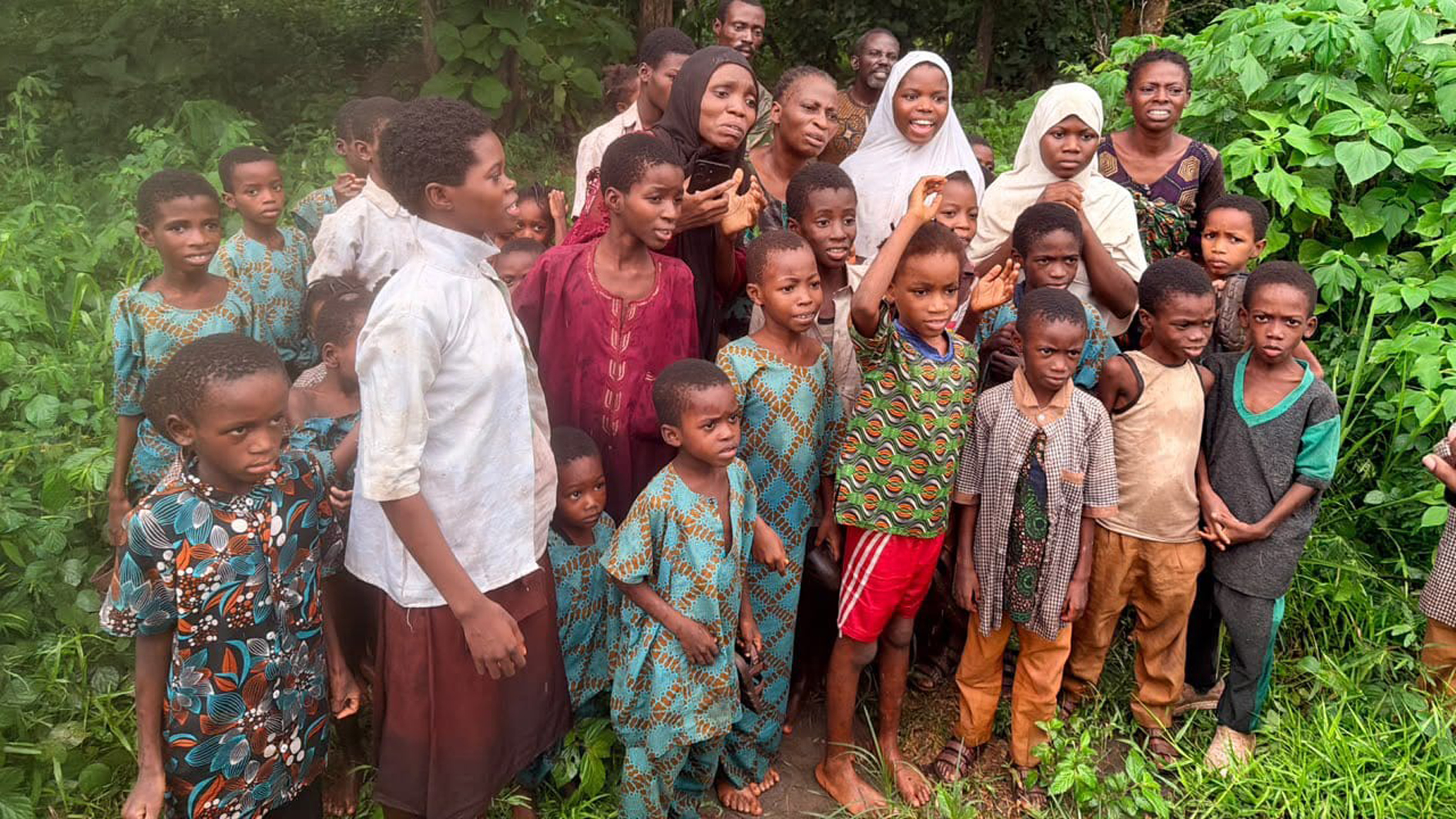
By Oluwapemi Bamidele

People do not always know the exact day history changes them. Sometimes, history arrives quietly, dressed as an ordinary morning.
That Friday in Orire was one of such mornings.Fathers carried hoes to the farm. Mothers packed food into children’s bags. Teachers unlocked classrooms believing they were opening the doors to another day of learning. Nobody suspected that before sunset, the forest would become a classroom and armed men would become unwilling teachers.
There is a Yoruba saying that bi ina ba jo ni ile alágbà, ti ko ba run ni, yóò ba ni lójú—when fire visits the elder’s house, if it does not consume him, it leaves smoke in his eyes. Orire escaped the flames of death for many of its children, but nobody escaped the smoke. That smoke now lives in their eyes, in their sleep, in their silence.
We Nigerians have become too generous with the word “rescued.” We announce it with the triumph of a football commentator. We clap. We congratulate ourselves. We breathe again. Then we move on.
But rescue is not restoration. A body may return from captivity while the mind remains somewhere beneath the trees of the Old Oyo National Park. The forest is a strange thing. Even after you leave it, it sometimes refuses to leave you.
I met a little girl in Orire who ran the moment she saw unfamiliar faces. She did not scream. She simply fled into the safety of her grandmother’s wrapper. At four years old, she has already learnt a lesson no child should know—that strangers sometimes come carrying danger.
Tell me, what medicine cures that?
What government committee debates that? Which budget line restores a child’s confidence to wave at visitors again? The hospital can certify her physically fit. Only heaven knows when her heart will sign that certificate.
Our people say ọmọ tí ejò bá jẹ lẹ́ẹ̀kan, á máa bẹ̀rù okùn—a child bitten once by a snake fears even a rope. The child in Orire has not merely seen the snake. She slept in its den.
And we wonder why she runs.
Then there is the grandfather who has decided his grandchildren will never attend school again.
Listen carefully.
He is not protesting against education.
He is protesting against fear.
His ancestors are buried in Orire. He will remain with them. But the children have gone to the city because, in his own arithmetic, literacy is useless if life itself cannot be guaranteed.
One kidnapping has accomplished what decades of urban migration could not. It has persuaded families that survival now lives somewhere else.
What a tragedy.
Yet another father says the school must never die because if it does, the kidnappers would have earned a victory greater than ransom.
He too is right.
This is the cruelty of insecurity. It forces good people into impossible choices where every answer carries pain.
Should a father protect his child’s life or protect the child’s future? What kind of nation asks such questions?
Then there is Bello. He speaks softly. Too softly for a fifteen-year-old. Young people should speak loudly. They should argue. They should interrupt adults. They should laugh without permission.
Instead, Bello remembers screams. He remembers rain falling through torn nylon. He remembers teachers disappearing into the forest with armed men. He remembers scars. No child should have memories older than himself.
The saddest home I entered in Orire belonged to a woman whose husband never returned.
Others celebrated the reunion. She celebrated nothing. Her husband, a teacher, was murdered. His body has not been found. The widow waits not merely for justice but for bones.
There can be no proper burial. No grave to visit.
No place where children can whisper, “Daddy, we came.”
Grief without a body is imprisonment without walls.
The government deserves praise for securing the release of many captives. The military deserves commendation. Lives were saved through courage and sacrifice.
But let us not confuse rescue with completion.The work has only begun. Trauma is a patient visitor. It knocks long after journalists have left. It enters homes quietly. It sits beside children in classrooms. It follows teachers into lessons. It wakes mothers at midnight because a motorcycle passed too quickly outside.
These are the wounds no camera captures. We often say children are the future. Perhaps we repeat the phrase too casually. The future is not built merely by constructing classrooms. It is built by making every child believe that school is safer than the forest.
Today, too many children in Orire know otherwise. As I drove away from those communities, life appeared almost ordinary.
Women roasted garri. Farmers returned from the fields. Children walked home from school.
Then a little girl saw strangers.
She turned.
She ran.
And suddenly, I understood that while the nation was busy counting rescued victims, nobody had begun counting stolen childhoods.
Perhaps that is because childhood cannot be measured.
It can only be mourned.
And until that little girl learns once again that every stranger is not a threat, until Bello remembers classmates before he remembers screams, until parents send children to school without first whispering a prayer against kidnappers, Orire will remain a reminder that some people return from captivity.
But not everything returns with them.

