 Follow Us on Google News
 Follow Us on Google Discover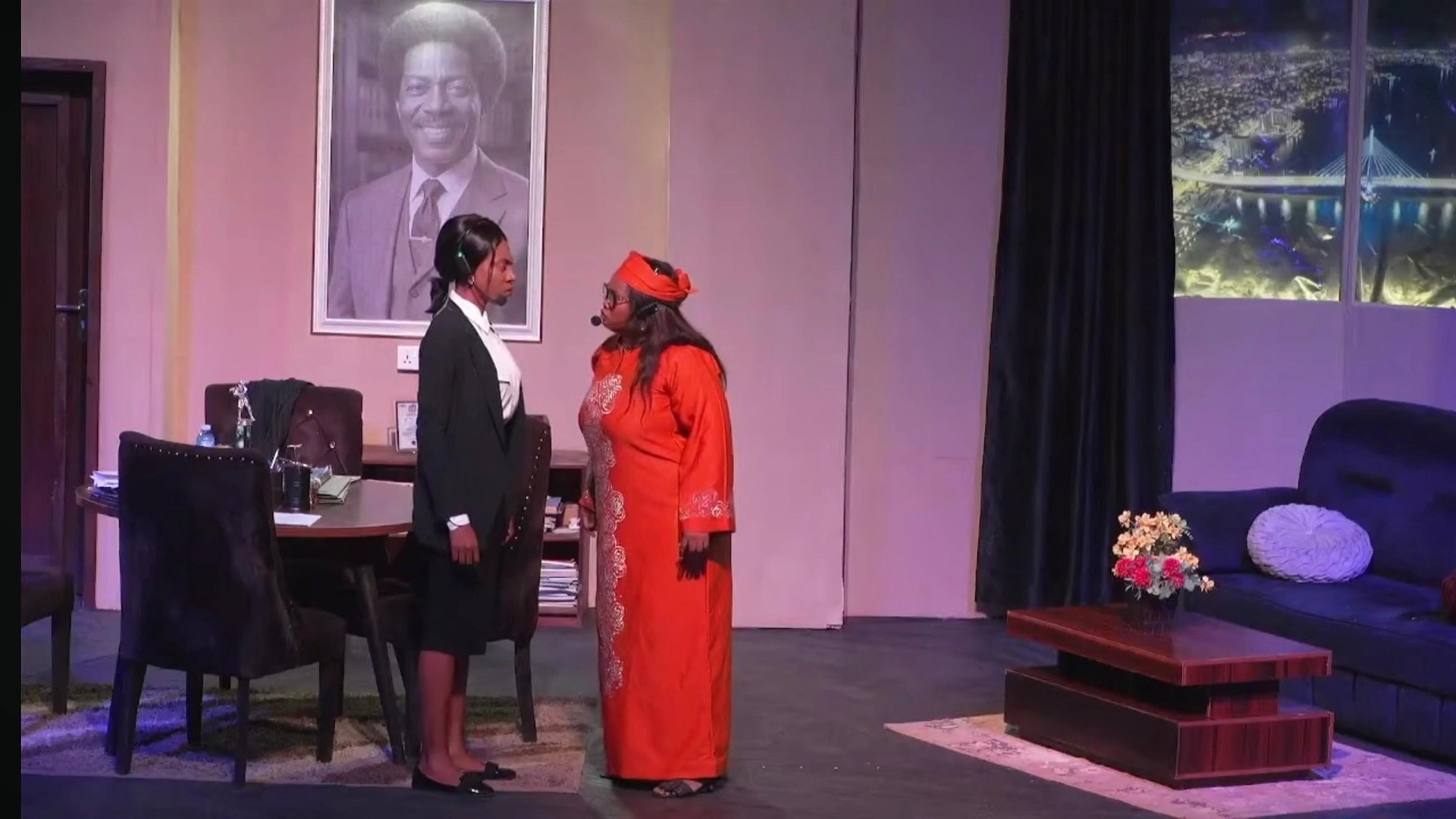
There are plays that entertain, and there are plays that confront. House of Glass, written by UK-based playwright Olorunjuwon Oloruntoba and produced and directed by Tolu Fagbure, belongs firmly in the latter category. Through a tightly constructed one-act drama, the production uses a deeply personal confrontation between a mother and daughter to examine the wider questions of corruption, power, justice and accountability in Nigeria.
Staged at the Wole Soyinka Theatre, University of Ibadan, with a simultaneous YouTube livestream, the production strips away theatrical excess in favour of minimalist storytelling. The result is an emotionally charged performance that leaves audiences reflecting not only on the characters before them but also on the society they represent.
At the centre of the story is Faramólá, a veteran politician whose carefully guarded secrets begin to unravel when she confronts her daughter, Zendaya, a young lawyer determined to prosecute her. What begins as a family dispute quickly develops into an allegory for Nigeria’s long struggle with corruption and the abuse of public office.
The production’s most striking visual element is its extensive use of glass. Rather than serving merely as part of the set, the transparent panels become symbols of fragile power, hidden truths and inevitable accountability. As darkness gives way to light, the audience witnesses not only the exposure of family secrets but also a broader commentary on transparency in public life.
Director Tolu Fagbure uses lighting with precision, allowing every shift from shadow to illumination to reinforce the central theme that no secret remains hidden forever. The sparse stage design creates an atmosphere of tension, forcing the audience to focus almost entirely on the emotional conflict between the two protagonists.
Olabisi Ariyo delivers a commanding performance as Faramólá, portraying a politician accustomed to authority but increasingly unsettled as her daughter dismantles the foundations of her carefully constructed world. Opposite her, Esther Onuoha gives Zendaya remarkable restraint and conviction, transforming what could have been a conventional courtroom drama into a compelling psychological battle.

One of the play’s defining moments comes when Faramólá questions why her daughter chose to prosecute the case. Zendaya’s response, that she is “the only lawyer in Lagos who cannot be reached by the people protecting you”, captures the production’s central message about integrity and institutional independence.
The chemistry between both actors sustains the production throughout its uninterrupted runtime. Rather than relying on dramatic outbursts, the performances draw strength from measured dialogue, prolonged silences and carefully controlled emotion.
Beyond its family drama, House of Glass serves as a broader reflection on governance in Nigeria. Faramólá becomes the embodiment of an entrenched political establishment sustained by patronage and impunity, while Zendaya represents a younger generation unwilling to accept corruption as inevitable.
The play also raises difficult questions about accountability. By making the prosecutor the daughter of the accused, it suggests that meaningful reform may ultimately come from those willing to challenge wrongdoing within their own circles rather than waiting for external intervention.
Its political themes resonate strongly against Nigeria’s continuing anti-corruption challenges. Without directly referencing contemporary political figures, the production explores familiar issues of influence, institutional weakness and the perception that powerful individuals often remain beyond the reach of justice.
Technically, the production is polished and disciplined. The lighting design effectively complements the minimalist set, while the restrained sound design avoids distracting from the dialogue. Every movement across the stage appears carefully choreographed to reinforce the emotional intensity of the unfolding confrontation.
Although some of the symbolism occasionally borders on the explicit, particularly in its repeated use of the glass motif, the directness arguably serves the production’s purpose. House of Glass is less concerned with subtle abstraction than with provoking public reflection on corruption and civic responsibility.
Audience reaction suggests the approach succeeds. The performance reportedly received sustained applause, with many viewers describing it as a timely examination of contemporary Nigerian society. Several attendees praised its willingness to address difficult issues through theatre while maintaining emotional authenticity.
Ultimately, House of Glass succeeds because it refuses to separate personal choices from public consequences. It presents corruption not simply as a political problem but as a moral one, rooted in families, institutions and the everyday decisions that shape society.
As both a theatrical production and a social commentary, House of Glass demonstrates how contemporary Nigerian theatre can remain artistically compelling while engaging directly with pressing national issues. It leaves audiences with an uncomfortable but necessary question: when truth finally breaks through the glass, who will be prepared to face what it reveals?

