 Follow Us on Google News
 Follow Us on Google Discover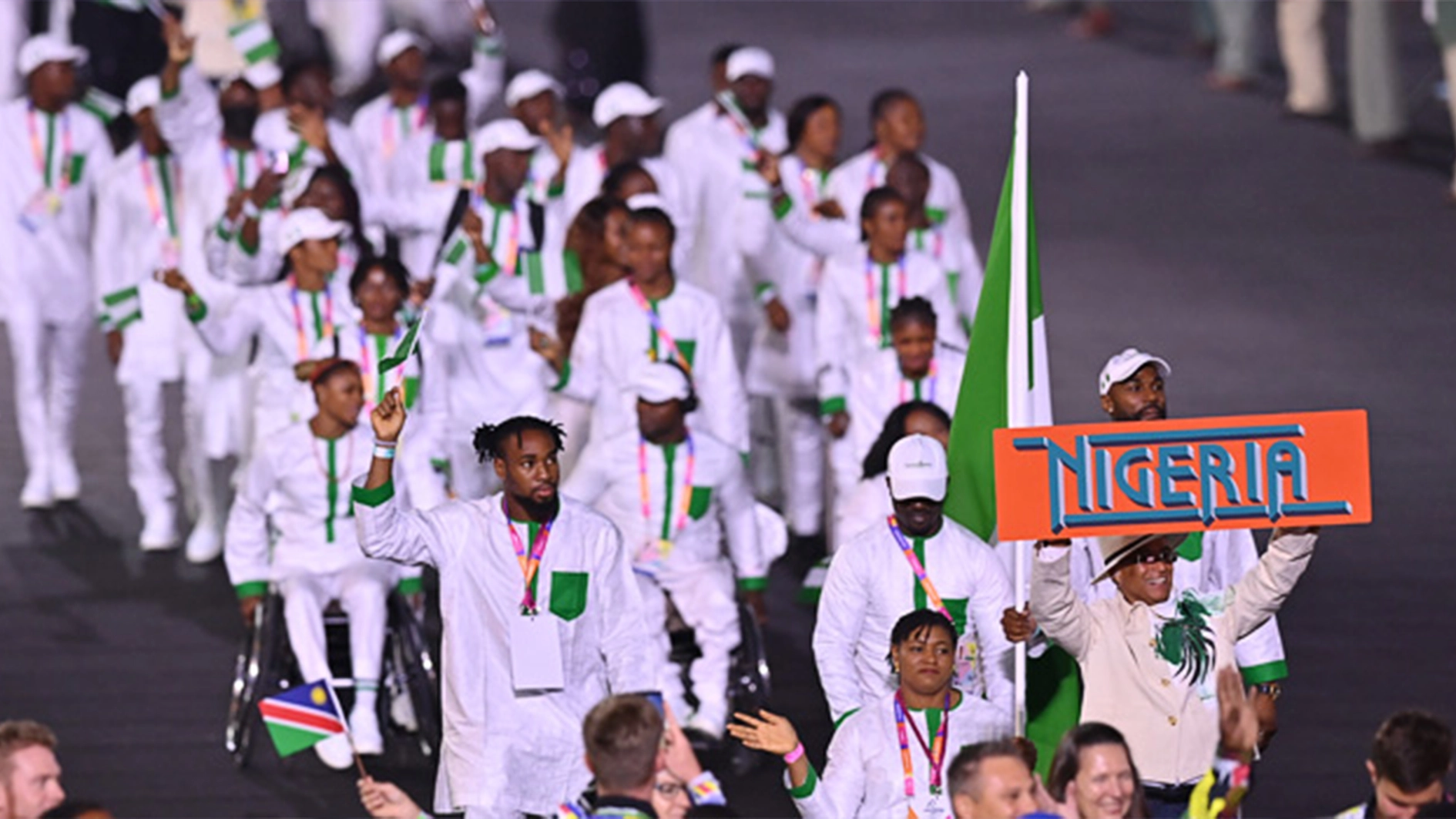
From today through August 2, 2026, athletes from Commonwealth countries will gather in Glasgow, Scotland, to vie for glory. However, CHRISTIAN OKPARA reports that beyond the quest for sporting glory, questions are beginning to crop up on the continued relevance of the games in a fast-changing world.
Global sports competitions like the Olympic Games, football’s World Cup and the Commonwealth Games, among others, apart from allowing participating athletes to know their peers from different parts of the world, also give their countries the latitude to make boundary-defying connections that help them achieve some of their national goals.
The Olympic Games, held every four years and often regarded as the world’s foremost multi-sport event, feature thousands of athletes from more than 200 countries who vie for honours in a variety of sporting competitions.
Although people from all around the world tune in to watch the physical prowess of Olympic athletes as they perform feats of strength, speed, endurance and skill, the Games are more than just a celebration of athletic achievements; they’re a platform for promoting solidarity.
Events like the Olympic Games, the World Cup and other international championships are unlike any other sporting event in the world because of their capacity to unite people through a shared enthusiasm for sport on a global scale.
The Commonwealth Games, whose 23rd edition will begin in Glasgow, Scotland, today, like the Olympic Games, also helps bring people of diverse cultures and experiences together to vie for honours on the field while creating a union that is meant to be mutually beneficial to the participating nations.

However, unlike the Olympic Games, the Commonwealth Games, which is also a quadrennial international multi-sport event, is a political association comprising the majority of the former territories of the British Empire.
First held as the British Empire Games in 1930, the event has undergone several name changes, reflecting the shifting geopolitical landscape and the gradual decolonisation of the Empire.
Overseen by Commonwealth Sport, which determines the sporting programme and awards hosting rights, the Commonwealth Games is distinguished from other international sporting competitions by its inclusivity and heritage.
The Commonwealth Games, according to the founding fathers, is aimed at bringing the countries of the old British Empire together in a conducive sporting environment, with each participating country possessing the right to compete and win medals fairly.
Apart from the sporting benefits, the Games are also meant to aid the economic and cultural integration of the member countries, who are expected to belong to an economic bloc that benefits all.
However, recent developments have given some stakeholders cause to doubt the continued relevance of the Games.
To date, only 20 cities in nine countries have hosted the Games. Some cities like Auckland, Edinburgh and Glasgow have hosted the event twice, while such countries as England, Australia, Scotland, Canada, Wales and New Zealand have hosted it multiple times.
Asia has hosted the Games twice (Malaysia and India), while the Caribbean has staged it once in Jamaica.
Africa, which has the highest number of members, has not staged the Games even once.
Nigeria, which has been at the forefront of bringing the Games to Africa, has failed in two bids to host the competition.
Part of the reasons the owners adduce for not giving Africa the hosting rights are that the countries, except South Africa, do not meet the conditions for hosting a global competition as big as the Commonwealth Games.
Apart from the facilities, critics say that no African country has demonstrated the capacity to muster the enormous financial resources to host the event.
For example, the upcoming Commonwealth Games was supposed to be hosted by Victoria, but it was moved to Glasgow because the Australian city could not afford the enormous costs of staging the event. Rather, Victoria agreed to provide over £2 million to the Glasgow organisers to help the city host it on its behalf.
Although 72 sovereign states constitute the Commonwealth of Nations, only 56 have active Commonwealth Games Associations.
They are divided into six regions (Africa, the Americas, the Caribbean, Europe, Asia and Oceania), and each has a similar function to the National Olympic Committees in relation to their countries or territories. In some countries, such as India and South Africa, the CGA functions are assumed by their NOCs.
To demonstrate how costly it is to host the Games, the 2010 edition held in Delhi, India, cost over $11 billion.
Before Glasgow agreed to host the 2026 Games, the event was offered to Malaysia, which promptly declined due to the financial implications of staging it.
Although some analysts agree that these sums could be too stiff for African countries to meet, there is the argument that countries like Nigeria and Ghana, which have hosted the African Games and Cup of Nations on several occasions, can put up the money to stage the Commonwealth Games.
These stakeholders believe that the problem is that most of the member countries, especially Britain, Australia and Canada, do not trust Africa.
According to them, the relationship among the Commonwealth nations is steadily becoming one-sided, with Britain and the more developed countries benefiting from the union more than the others, especially African countries.
They point to the ease with which European countries and others find their way into Africa, while they make it difficult for Africans to come to their countries.
The Games are now viewed by critics as a nostalgic vestige of British imperialism and colonialism. They argue that in a world where other global multi-sport events like the Olympics and World Championships dominate, the necessity and appeal of a Commonwealth-specific competition come into question.
In an article entitled “The Commonwealth Games must confront the truth about its sportswashing past,” and published by The Guardian of London on July 27, 2022, Andy Bull described the Commonwealth Games as an uneasy celebration of “common values” with nations that the British Empire once exploited.”
Bull, who said that “these Games were predicated on the mistreatment of people and cultures,” asked: “When people are tearing down statues of slave traders, when Barbados has become a republic and Jamaica is pressing the case for reparations for the slave trade, what’s the role of a Commonwealth Games that is sold on the promise that it is a celebration of common values with the nations we once exploited? Once the usual legacy promises about urban regeneration and sports participation are stripped away, what value do the Games have unless they’re part of a genuine attempt to reckon with our own unconfronted history?”
Picking the 2026 Commonwealth Games to buttress his point that the event is becoming “ridiculous,” legal practitioner/sports analyst Sabinus Ikewuaku said that the British government has not made it easy for people to appreciate the need for the Games.
“You can imagine that people are paying as much as N300,000 as a visa fee in a game they have an official part to play.
“Even accredited journalists are made to pay as much as £170 as a visa fee. These are people going to Glasgow to cover the Games. They have created two levels in the visa processing process, with those “in a hurry” expected to pay above the odds to get the document. If not, you may wait until after the Games to get the visa.”
The Guardian’s check revealed that the cost of getting a British visa ranges from £130 for a six-month stay to £903 for a five-year visa.
Ikewuaku also said that the Commonwealth Games have failed to achieve their aim of helping to integrate the people into one economic and cultural bloc, saying that immigrants from the Commonwealth countries, especially Africans, are hounded and made to go through difficulties to live in such countries as Great Britain and Canada, “while Arabs and Asians have an easier passage to these countries.”
He added: “Most Africans in Britain are involved in menial jobs, while these people come to Africa to get the best of the deal.”
A former African tennis champion, Dr Sadiq Abdullahi, slightly disagrees with Ikewuaku.
Abdullahi affirmed that the Commonwealth Games were started in 1930 with a clear vision, purpose, and direction.
“During this period, there was a need to bring all British colonies together using sports as a tool to improve sports infrastructure. It is not clear whether the colonies were involved in the design of the competition. The colonies could not have participated, and therefore, the decision was imposed.
“Today, it is all about historical and economic survival. There is a big tension regarding immigration and economics in advanced countries such as Britain, Australia, Germany, Spain, Italy, Canada and America.
“There are too many competing regional and international events as well. Naturally, the Union will benefit Britain because many nations like Nigeria, Jamaica and others pay affiliation and participation fees and are using the event to promote their respective sports. But the four-year cycle, with a two-year lead-up before the Olympics, allows member nations to plan for the Games.
“For this reason, I will not conclude that the Commonwealth Games has outlived its usefulness because it still creates opportunities for athletes and for the colonies.”
The Director-General of the Nigerian Institute of International Affairs, Prof. Eghosa Osaghae, also disagrees that the Commonwealth Games has lost its relevance, saying that it still plays its role of keeping the cultural and historical ties of the countries together, with sports “as is well known, being one of the most cost-effective ways of doing all of this.”
He said: “The Commonwealth Games have had a place in the world sports calendar from time immemorial, and remember that for many countries, especially countries from Africa, you have those, let’s call them sub-global platforms, for preparing for the bigger platforms, the biggest of them all of course during the Olympics.
“These days, the ability of African members to host the Games might have dwindled, but that has not in any way diminished the importance of the Commonwealth Games; after all, India, which is a Global South country, has hosted it.”
On the cost of acquiring the British visa and other immigration issues, Prof Osaghae said that these are issues one can talk about, adding that one should be familiar with the British policies to determine such issues.
“Are you familiar with the British visa policy? Are the costs for procuring British visas lower or higher than they used to be? If the fees are lower, then we have a case; if the fees are higher, then we also have a case.
“But I think that those are strict regimes, as we saw in the U.S. behaviour in the last World Cup.
Those things, we are learning every day, now don’t really change the border policies of countries and their immigration rules.
“In the past, the naira was doing very well, and the exchange rates were good, and the costs were not as exorbitant as they now appear.
“We must also be the first to understand that the costs of doing virtually everything have gone up because of the exchange rate.
“What you should be concerned about is how this relates to how much the regular visa fees cost. If you find out that they are higher, then there’s something wrong, and if you find that they are lower, then you can reach your own conclusion.”

