 Follow Us on Google News
 Follow Us on Google Discover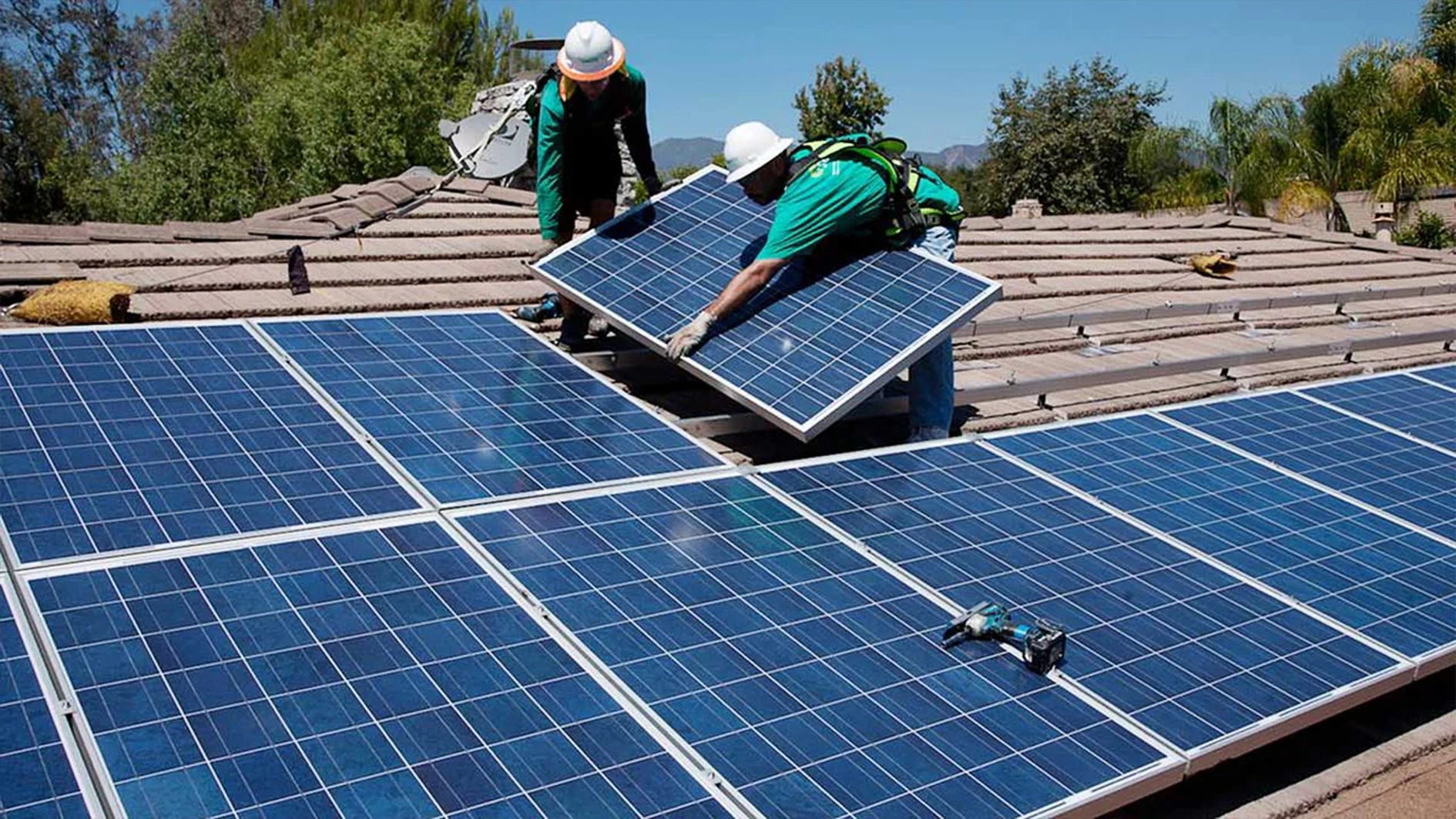
• 27% interest rate shuts local banks out of renewable financing deals
• Dangote refinery, services sector to drive over 4% GDP growth
Nigeria has emerged as Africa’s largest small-scale solar market after attracting $2.4 billion in investments amid the worsening electricity shortages and rising energy costs.
This comes as Sub-Saharan Africa’s renewable energy market attracted $13.5 billion in investment in 2025, marking the third consecutive year the region has secured over $12 billion in clean energy capital.
In its latest Sub-Saharan Africa Clean Energy Market Outlook, BloombergNEF (BNEF) said the region’s investment momentum is being driven by surging demand for distributed solar systems, while high financing costs continue to limit utility-scale renewable energy projects in many countries, particularly Nigeria.
The report showed that while South Africa remains the continent’s dominant renewable energy destination, attracting $20.4 billion between 2023 and 2025, Nigeria ranked second with $5.4 billion, followed by Kenya at $4.3 billion, Senegal at $1.8 billion, Namibia at $1.2 billion, Angola at $993 million, Democratic Republic of Congo (DRC) at $874 million, and Tanzania at $776 million.
According to BNEF, despite a slight decline from the $13.8 billion invested in 2024, Sub-Saharan Africa has continued to demonstrate resilience as investment shifted from large utility-backed projects towards decentralised solar systems serving homes, businesses and commercial users.

Solar remained the dominant technology across the region, accounting for $10.9 billion, or over four-fifths of total renewable energy investment in 2025, it stated.
“Solar continues to be the technology of choice across sub-Saharan Africa. Of the $13.5 billion invested in 2025, solar accounted for $10.9 billion, a record for annual solar investment in the region,” BNEF noted.
The report attributed much of that growth to the rapid expansion of the small-scale solar market, where investment more than doubled within one year. It said small-scale solar investment increased from $3.4 billion in 2024 to $8.5 billion in 2025, making it the fastest-growing renewable energy segment on the continent.
According to BNEF, “Small-scale solar investment more than doubled year-on-year to $8.5 billion in 2025. The largest small-scale solar markets were Nigeria ($2.4 billion), South Africa ($1.5 billion) and Kenya ($840 million).”
The findings reinforce Nigeria’s growing position as the continent’s biggest market for decentralised electricity solutions, where millions of households and businesses increasingly rely on rooftop solar systems and batteries to cushion the impact of unreliable public power supply and higher diesel and petrol prices.
BNEF observed that over 99 per cent of Nigeria’s $2.4 billion renewable energy investment in 2025 was directed towards small-scale solar, largely because projects are easier to finance than large grid-connected plants. The report stated that “In Nigeria, the only other market with over $1 billion invested in 2025, over 99 per cent of the $2.4 billion invested was small-scale solar, as high capital costs and a lack of bankable off-takers limit utility-scale deals.”
Though utility-scale renewable investment across Sub-Saharan Africa remained substantial at $4.3 billion in 2025, it declined sharply from $5.1 billion recorded a year earlier as fewer large solar and wind projects reached financial close.
Corporate procurement, however, continued to gain prominence as BNEF disclosed that corporate-backed renewable energy investment reached $10.5 billion since 2024, representing 94 per cent of South Africa’s renewable energy market, while countries such as Zambia, DRC and Ghana also witnessed increasing private-sector participation.
The report noted that South Africa continues to dominate utility-scale renewable energy because of its mature procurement framework, whereas Nigeria remains constrained by financing and policy bottlenecks.
According to BNEF, Nigeria is experiencing an ongoing shift from diesel generators to solar-plus-storage, positioning the country as one of the fastest-growing distributed solar markets globally.
The report said Nigeria currently has about 20GW of installed electricity capacity and projected that figure would increase to 30GW by 2030, with renewables accounting for 30 per cent of total installed capacity.
It further projected rapid growth in Nigeria’s cumulative solar capacity, rising from 2.4GW in 2026 to 7.8GW by 2030 before reaching 16.2GW in 2035.
BNEF stated that Nigeria’s long-term potential remains significantly higher, noting that the country possesses an estimated 50GW power grid and approximately 250 million people, compared with a projected 50GW grid in Kenya for a population of about 60 million, suggesting substantial room for future expansion.
Despite the encouraging outlook, the report warned that Nigeria’s renewable energy transition continues to face major financing constraints. According to BNEF, Nigeria’s 27 per cent benchmark interest rate makes local-currency borrowing largely unsuitable for capital-intensive renewable energy projects, forcing developers to depend heavily on foreign investors and development finance institutions.
The report observed that high capital costs have created significant dependence on foreign project financing across much of Sub-Saharan Africa, though countries such as South Africa, Namibia and Senegal remain better positioned because of stronger domestic financial markets.
BNEF also linked renewable energy growth to broader economic expansion across the continent. It is projected that Nigeria’s economy will grow by over four per cent through 2028, supported mainly by the services sector as well as oil and gas refining activities, including increased output from the Dangote Refinery.
However, the report noted that, unlike many African economies, Nigeria’s economic growth has a weaker relationship with electricity demand because a significant share of the economic activity is already powered through off-grid electricity systems.
Beyond investment flows, the report highlighted Sub-Saharan Africa’s growing importance in global renewable energy supply chains. It noted that the region recorded the fastest year-on-year growth in Chinese solar imports between the first quarter of 2025 and the first quarter of 2026, with its share of China’s global solar exports doubling from about five per cent in 2025 to 10 per cent by March 2026.
BNEF further attributed the surge to rising electricity prices, unreliable grid supply and growing demand for backup power systems across the continent

