 Follow Us on Google News
 Follow Us on Google Discover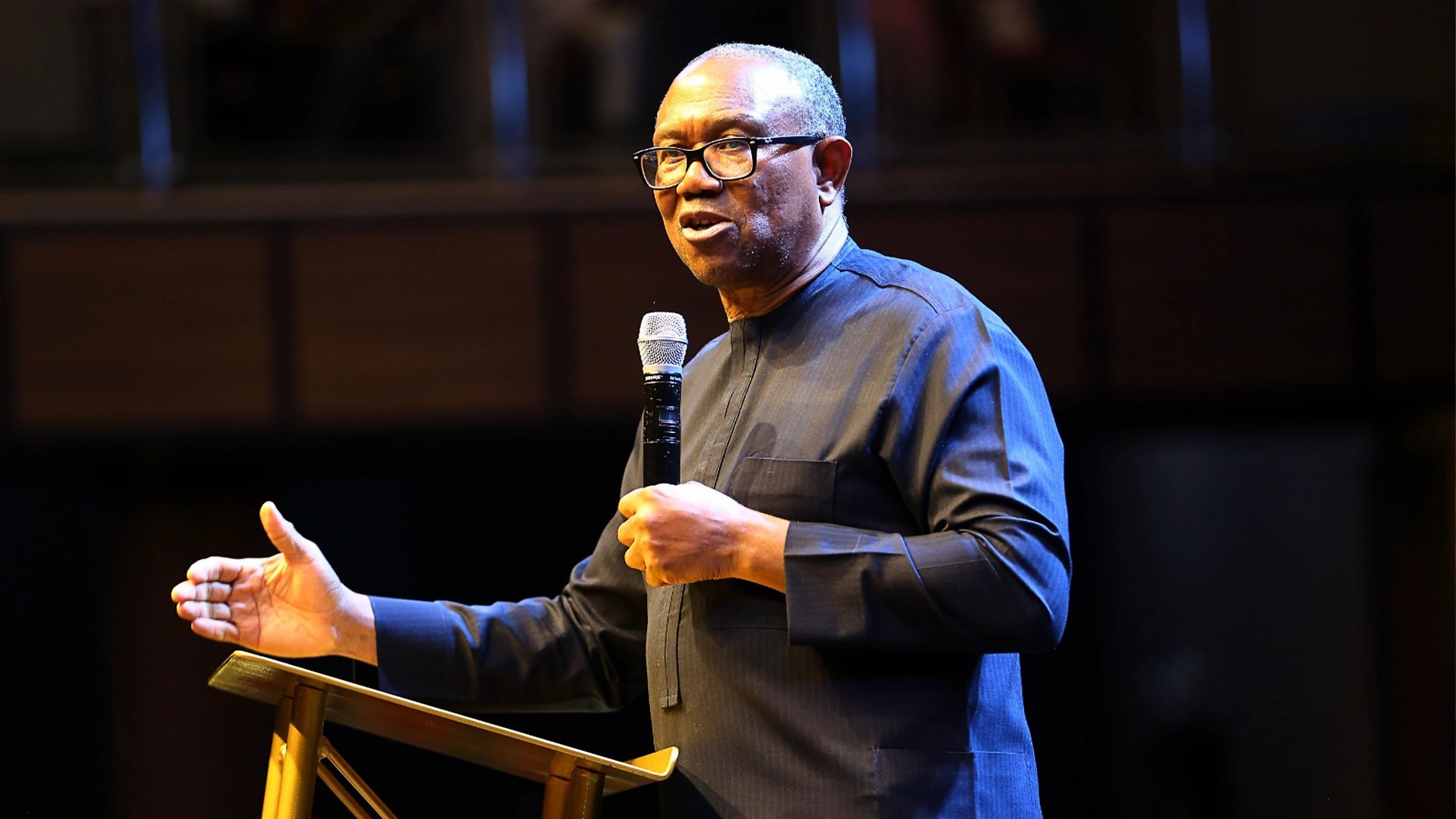
…Ex-Anambra governor says 2027 may be his last presidential bid
…’We must ensure what happened in 2023 does not happen again’
…Obi vows to slash cost of governance, scrap First Lady’s office
Four years after the 2023 presidential election, Peter Obi has returned to the political battlefield with an old grievance and a new promise — that the mandate he believes Nigerians gave him will not be lost again in 2027.
The presidential candidate of the New Democratic Congress, Obi, used his latest appearance on Channels Television’s Politics Today with Seun Okinbaloye to revisit the disputed 2023 election, while presenting his 2027 campaign as a fresh opportunity to change a political system he believes frustrated his earlier bid for the presidency.
Obi has consistently maintained that he won the 2023 presidential election and that the result declared by the Independent National Electoral Commission did not reflect the votes cast by Nigerians. He challenged the outcome in court, but the Presidential Election Petition Court and, ultimately, the Supreme Court upheld the result that returned Bola Tinubu as president.

But the former Anambra State governor has refused to treat the 2023 outcome as the end of the road.
Instead, he is presenting 2027 as another opportunity for Nigerians to take ownership of their political future.
Asked about the major lesson from the 2023 election, Obi’s response was revealing.
He said the country must learn from what went wrong and, most importantly, ensure it does not happen again.
For Obi, that means an election in which votes are not merely cast but properly counted, protected and transmitted.
The argument gives his 2027 campaign a powerful emotional foundation: the unfinished business of 2023.
Obi said he was willing to work with political figures across the opposition, including former Vice-President Atiku Abubakar and former Kano State governor Rabiu Kwankwaso.
But he insisted that his most important political coalition was not with politicians.
“My biggest group I need to work with is the youths of Nigeria,” he said.
The statement places the youth vote at the heart of Obi’s strategy as he seeks to convert the enthusiasm that surrounded his 2023 campaign into a broader electoral coalition in 2027.
He urged young Nigerians to recognise that the election was fundamentally about their future and called for leadership anchored on competence, capacity, compassion, character and commitment.
Obi also offered perhaps his clearest indication yet that 2027 could be his final presidential contest.
Asked whether he would continue running after 2027, he said it would depend on the circumstances but acknowledged that younger Nigerians should eventually take over.
He noted that he would be approaching his late 60s by the end of a possible first term.
“I believe that the younger ones should be allowed,” he said.
That remark adds another dimension to his 2027 pitch: not simply a return attempt by a candidate who believes he was denied victory in 2023, but possibly his final opportunity to achieve the presidency.
Obi also used the interview to draw a sharp contrast between his proposed administration and the political establishment he has repeatedly criticised.
He promised to attack what he described as waste and extravagance in government, arguing that Nigerians should not be asked to make sacrifices while political leaders continue to enjoy luxury.
“You ask the people to fast, you fast with them. You can’t ask them to fast when you’re feasting,” he said.
The former governor promised to begin cutting the cost of governance from his first day in office.
He said expensive presidential aircraft, unnecessary government offices and other privileges should be reviewed, with resources redirected towards education, healthcare and other productive sectors.
Obi was particularly blunt on the issue of the First Lady’s office, saying his administration would not maintain a separate government structure around the president’s wife.
“The person seeking vote today is Peter Obi, not Mr and Mrs Obi,” he said.
Although his wife would remain First Lady, Obi said there would be no separate bureaucratic machinery attached to the position.
He described such arrangements as unnecessary costs that Nigeria could no longer afford.
Obi also promised an aggressive fight against corruption, insisting that his personal conduct would be central to his anti-corruption campaign.
“I will fight corruption brutally and I will show it. I will live it,” he said.
The statement reflects the broader argument Obi has made throughout his political career: that the credibility of reform begins with the conduct of those in power.
He argued that a government demanding sacrifice from citizens must first demonstrate sacrifice at the top.
The political calculation behind Obi’s latest message is straightforward.
His 2023 campaign transformed him from a relatively conventional presidential contender into a major political force, particularly among young voters. Yet the official results placed him third behind Tinubu and Atiku, with 6,101,533 votes against Tinubu’s 8,794,726.
Obi’s political narrative since then has remained anchored on the belief that the official outcome did not represent the true verdict of the electorate.
Now, as 2027 approaches, he is seeking to turn that grievance into another electoral mobilisation.
The message is no longer simply “I was robbed in 2023.”
It is increasingly becoming:
“You gave me your votes in 2023. This time, we must make sure those votes count.”
And with Obi suggesting that he may be approaching the end of his presidential journey, the 2027 election could carry an added sense of urgency for his supporters.
For the former Anambra governor, the battle is not simply about returning to the ballot.
It is about whether the political movement that emerged around him in 2023 can finally translate its anger, enthusiasm and demand for change into power.

