 Follow Us on Google News
 Follow Us on Google Discover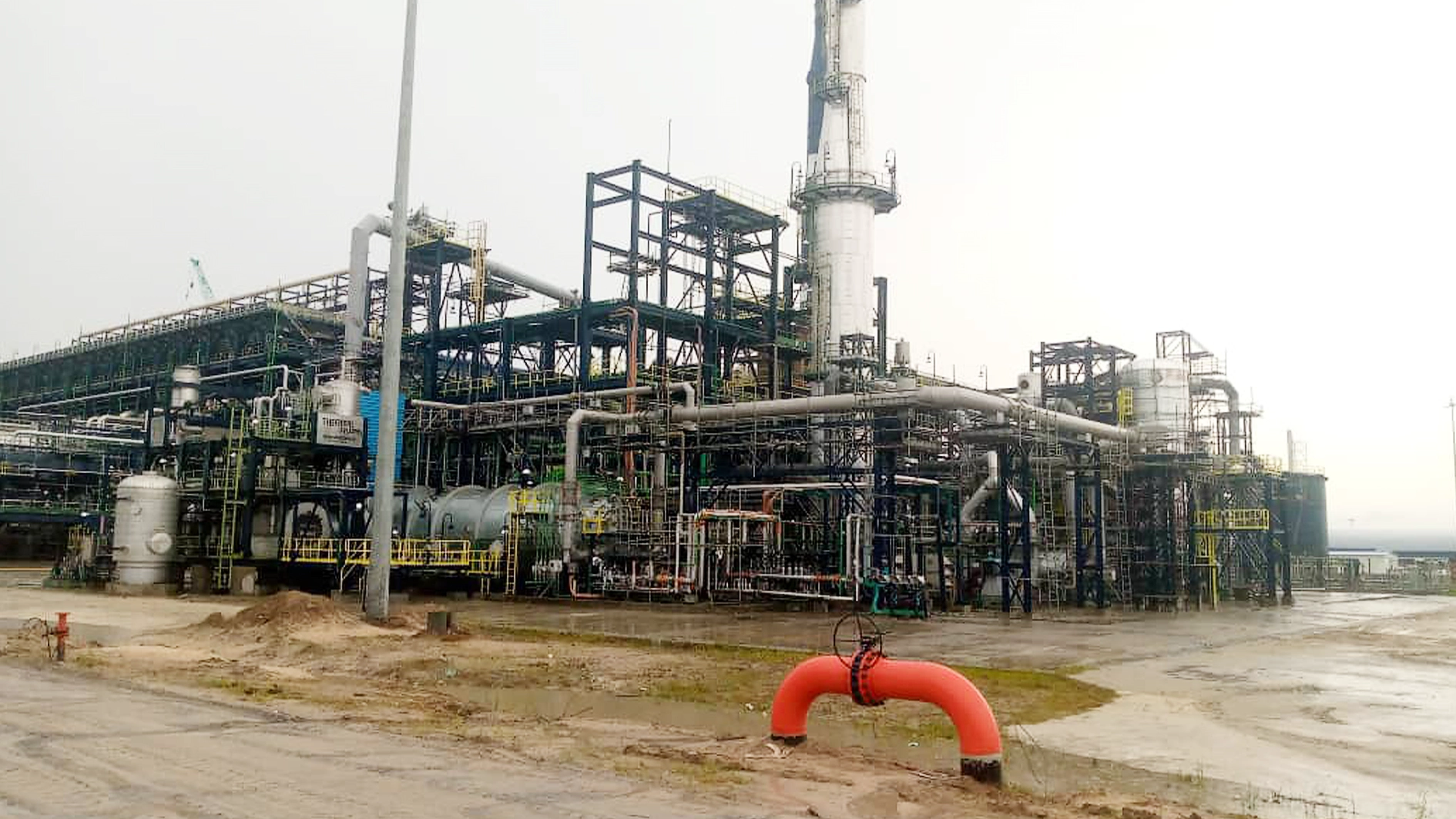
Nearly five years after Nigeria enacted the Petroleum Industry Act (PIA), the country’s downstream petroleum sector is almost unrecognisable from the heavily regulated market it replaced. Fuel subsidies have been dismantled; state-controlled pricing has given way to market forces. Private refineries are beginning to challenge decades of dependence on imported petroleum products. But the sector is still clouded by many challenges, showing that the institutions and market conditions necessary for the PIA’s projected goals remain aspirations, KINGSLEY JEREMIAH reports.
On paper, the reforms introduced by the PIA represent one of the most significant overhauls of Nigeria’s petroleum industry in decades. But for many industry stakeholders, the country has only succeeded in reforming its laws.
The debate is therefore no longer whether the PIA was necessary but whether Nigeria possesses the regulatory discipline, policy consistency and institutional capacity to implement it.
When former President Muhammadu Buhari signed the PIA into law in August 2021, expectations were high. The current administration followed up with “petrol subsidy is gone”.
For decades, Nigeria’s downstream sector was characterised by an opaque fuel subsidy regime, multiple pricing distortions, weak private-sector participation, infrastructure deficits, and heavy dependence on imported petroleum products, despite being Africa’s largest crude oil producer.
The PIA sought to reverse that model by providing legal backing for deregulation, establishing clearer regulatory responsibilities, promoting market-based pricing, and introducing incentives to encourage investment across refining, storage, transportation, and gas infrastructure.
Perhaps most importantly, the legislation shifted the government’s role from being the dominant market participant to primarily a regulator responsible for creating an environment in which competition could flourish.
The emergence of large-scale private refining projects, particularly the Dangote Refinery, alongside several modular refineries, reflects growing investor confidence in that legal framework.
Similarly, the establishment of the Midstream and Downstream Gas Infrastructure Fund (MDGIF) under Section 52 of the act signalled the government’s intention to accelerate domestic gas utilisation through investments in pipelines, processing facilities, compressed natural gas (CNG), liquefied petroleum gas (LPG) infrastructure and industrial gas distribution networks.
For the Executive Secretary of MDGIF, Oluwole Adama, the objective extends far beyond increasing gas production.
“Economic growth tells us the economy is getting bigger; economic development tells us Nigerians are getting better off,” he said during the Nigeria Oil and Gas (NOG) Conference in Abuja.
His argument reflects a broader policy shift. Gas infrastructure is increasingly viewed not merely as an energy investment but as industrial infrastructure capable of supporting manufacturing, electricity generation, transportation and employment.
Already, the MDGIF said it has invested in eight gas processing facilities, 15 CNG mother stations, 86 daughter stations, and four LPG depots, all currently at various stages of completion. Whether implementation can keep pace remains the bigger question.
If the first phase of the PIA reform focused on changing legislation, industry experts insist the next phase must focus on improving governance.
A renowned energy economist, Prof. Wunmi Iledare, argued that Nigeria no longer suffers from a shortage of petroleum reforms but from inconsistent implementation.
Five years after the PIA, he believes, the challenge is no longer drafting better laws but enforcing existing ones with discipline, transparency and consistency.
Investors, he argued, are not demanding additional legislation but certainty. They want assurance that fiscal terms will remain stable, regulatory decisions will be predictable and political interference will not undermine commercial decisions, he said.
Without those guarantees, investor confidence inevitably weakens, he added.
His assessment reflects a recurring concern raised across the industry. Nigeria’s downstream sector is now competing for investment against jurisdictions offering greater policy stability. Capital, unlike natural resources, has choices. Resources may attract attention, but institutions determine where investment eventually flows.
One of the most striking observations comes from an energy lawyer and Partner at Bloomfield Law Practice, Dr Ayodele Oni, who argued that Nigeria’s current challenge should no longer be described as a legislative problem.
The PIA, he noted, already provides a comprehensive legal framework. The problem lies elsewhere.
“Deregulation has outpaced the institutional machinery meant to police it,” Oni said.
While petrol prices are now largely determined by market forces, there remains no widely accepted independent pricing benchmark that allows consumers, marketers or investors to distinguish competitive pricing from dominant pricing.
Consequently, public confidence in market pricing remains fragile. The absence of transparent price discovery mechanisms has fuelled persistent allegations of arbitrary pricing whenever petrol prices fluctuate.
Oni further argued that distribution costs continue to function as an invisible tax on consumers. Because pipelines remain largely unavailable for transporting refined products, marketers rely heavily on expensive road haulage. The result is higher logistics costs, greater exposure to tanker accidents and increased pump prices.
Indeed, industry records indicate that between January 2010 and January 2025, Nigeria recorded more than 2,500 petroleum tanker accidents, resulting in approximately 3,445 fatalities.
These figures illustrate that pipeline rehabilitation is no longer merely an infrastructure issue. It should also prompt the Nigerian National Petroleum Company Limited to question the use of its product pipelines, which have remained idle. It has become both an economic and public safety imperative.
Oni also warned that litigation is increasingly replacing regulation, particularly in areas such as import licensing and market access.
Rather than resolving disputes through clear regulatory procedures, operators often rely on the courts to interpret policy. Such uncertainty inevitably discourages investment.
The solution, he argued, lies in publishing independent monthly pricing benchmarks, restoring pipeline and coastal transportation, making licensing decisions time-bound and rule-based and insulating regulatory appointments from commercial influence.
These measures, while seemingly administrative, could fundamentally improve investor confidence.
The transition to a deregulated market was expected to usher in robust competition, encourage innovation and ultimately lower costs for consumers. Yet industry operators argue that liberalisation alone does not automatically create a competitive market.
Country Manager and Chief Operating Officer of Trad Grid, Jide Pratt, believes the next phase of reform should focus on ensuring that regulation keeps pace with market liberalisation.
According to him, Nigeria must avoid replacing one form of market dominance with another.
“One thing in a liberalised market is the need to allow both imports and local production to coexist so there is choice, competition, and ultimately the consumer is better for it. It also augurs well for energy security when the market isn’t left to one supply point,” he said.
His observation goes to the heart of one of the biggest debates in Nigeria’s downstream sector.
While local refining remains the country’s long-term objective, market experts caution against creating conditions in which a single source of supply, however efficient, becomes dominant enough to determine prices or influence market behaviour. True competition requires multiple refiners, transparent import policies, open access to infrastructure and non-discriminatory market rules.
Pratt also advocated greater pricing transparency by publishing ex-refinery prices and establishing pricing windows or guide bands to improve market confidence without reverting to price controls.
“The regulator can’t dictate prices in a deregulated market,” he noted. “Its responsibility is to ensure fair pricing through transparent methodologies that balance the interests of consumers and investors.”
He pointed to countries such as Ghana, Kenya and Chile, where independent pricing templates provide market participants with sufficient information to understand how fuel prices are determined. Such systems, he argues, reduce speculation and improve public confidence in deregulation.
Founder of Etinpower Limited and former secretary at NNPC, Prof. Yinka Omorogbe (SAN), while describing the Dangote Petroleum Refinery as a significant milestone, cautioned against relying on a single refinery to guarantee energy security.
The development should prompt organisations like the NNPC to revamp state-owned refineries, which together have a combined capacity of 445,000 barrels per day, compared with existing modular refineries.
Omorogbe called for multiple operational refineries to compete in an efficient market to improve affordability, attract investment, stimulate petrochemical industries, and deepen manufacturing.
An energy lawyer, Dr Ayodele Oni, similarly argued that with one refinery currently accounting for the overwhelming share of domestic petrol supply, Nigeria must urgently clarify how competition would be regulated.
He recommended clearer coordination between the Nigerian Midstream and Downstream Petroleum Regulatory Authority (NMDPRA) and the Federal Competition and Consumer Protection Commission (FCCPC) on issues relating to abuse of market dominance.
He called for the enforcement of third-party access to critical infrastructure, such as depots, jetties, and pipelines, under transparent, non-discriminatory tariffs. Without such safeguards, infrastructure ownership could become a barrier to market entry rather than an enabler of competition.
For investors, perception matters almost as much as reality. If operators believe market rules favour certain participants, investment decisions are inevitably affected.
Although Nigeria now possesses one of Africa’s largest refining capacities on paper, industry operators insist that refining alone will not solve the country’s downstream challenges.
According to the Crude Oil Refineries Association of Nigeria (CORAN), local refiners continue to struggle with crude supply uncertainty, foreign exchange volatility, inconsistent regulations, high financing costs, power shortages and logistics constraints.
The association describes refining as “an industrial declaration of confidence in Nigeria’s future,” noting that unlike trading businesses, refinery investments are fixed assets that require billions of dollars in capital and have payback periods that stretch over many years.
Such investments, it argued, can only thrive where policies remain predictable.
The association also expressed concern over Nigeria’s continued dependence on imported petroleum products despite significant investments in domestic refining infrastructure.
Industry stakeholders, therefore, insist that ensuring a consistent crude oil supply to domestic refineries must become a national priority.
Equally important is creating transparent procedures for issuing permits for imported feedstock, where necessary, and guaranteeing timely regulatory approvals for petroleum products and gas operators .
For independent marketers, deregulation has created opportunities but also exposed longstanding financial vulnerabilities.
President of the Independent Petroleum Marketers Association of Nigeria (IPMAN), Elijah Shettima, acknowledges that the current leadership of the NMDPRA has shown greater willingness to engage industry stakeholders.
He, however, argued that unresolved legacy issues continue to undermine the operations of independent marketers.
Among these is the settlement of outstanding debts estimated at N60-N70 billion.
According to Shettima, while repayments have commenced, the amounts released so far remain insufficient to restore the financial health of many operators.
“When a business owes such a significant amount of money, it inevitably affects its operations and financial stability,” he said.
Beyond debt repayment, he called for direct access to petroleum products rather than compelling marketers to purchase through intermediaries.
Such access, he argued, would improve efficiency, lower operating costs and create a more competitive market.
Depot operators expressed similar concerns, calling for reliable access to quality products, including petrol, diesel and household kerosene, at competitive prices on a level playing field.
They believe that once supply becomes more transparent and competitive, marketers will compete on service quality, logistics efficiency and customer experience rather than merely on product availability.
If refining dominates today’s downstream conversation, gas is increasingly shaping tomorrow’s. The Petroleum Industry Act places considerable emphasis on expanding Nigeria’s domestic gas market through the Midstream and Downstream Gas Infrastructure Fund.
For MDGIF, the challenge extends beyond financing individual projects. It is about creating an ecosystem capable of attracting sustained private investment.
Adama argues that investors are not avoiding Nigeria’s gas sector because capital is unavailable. Rather, they are avoiding uncertainty.
“Investors are not simply investing in gas molecules; they are investing in confidence, predictability and execution,” he said.
He identifies project preparation, demand certainty, infrastructure availability and risk allocation as the primary reasons many domestic gas projects experience prolonged delays before reaching financial close.
Across the downstream petroleum value chain, investors consistently identify regulatory certainty, transparent approvals, stable policies and credible institutions as the foundations upon which investment decisions are made.
The broader objective is to transform gas from an export commodity into a domestic engine of economic growth.
Currently, Nigeria’s downstream petroleum sector stands at an important crossroads.
The foundations of reform have largely been laid. Market-based pricing has replaced subsidy-driven distortions. Private investment has entered refining. Gas infrastructure is receiving renewed attention. Regulatory institutions have clearer mandates than at any other point in Nigeria’s petroleum history. The future will depend less on the passage of new laws than on the quality of implementation.
Nigeria needs stronger regulatory independence, elimination of overlapping institutional responsibilities, digitalised approvals, improved transparency in pricing and licensing, guaranteed open access to infrastructure, reliable crude supply to domestic refineries, accelerated pipeline rehabilitation, enforced safety and environmental standards, and stable policies that survive political transitions.
Technology will also play a critical role. Digital licensing systems, automated permit processing, real-time product tracking and publicly accessible market data can significantly reduce bureaucratic delays, improve regulatory oversight and enhance investor confidence.

