 Follow Us on Google News
 Follow Us on Google Discover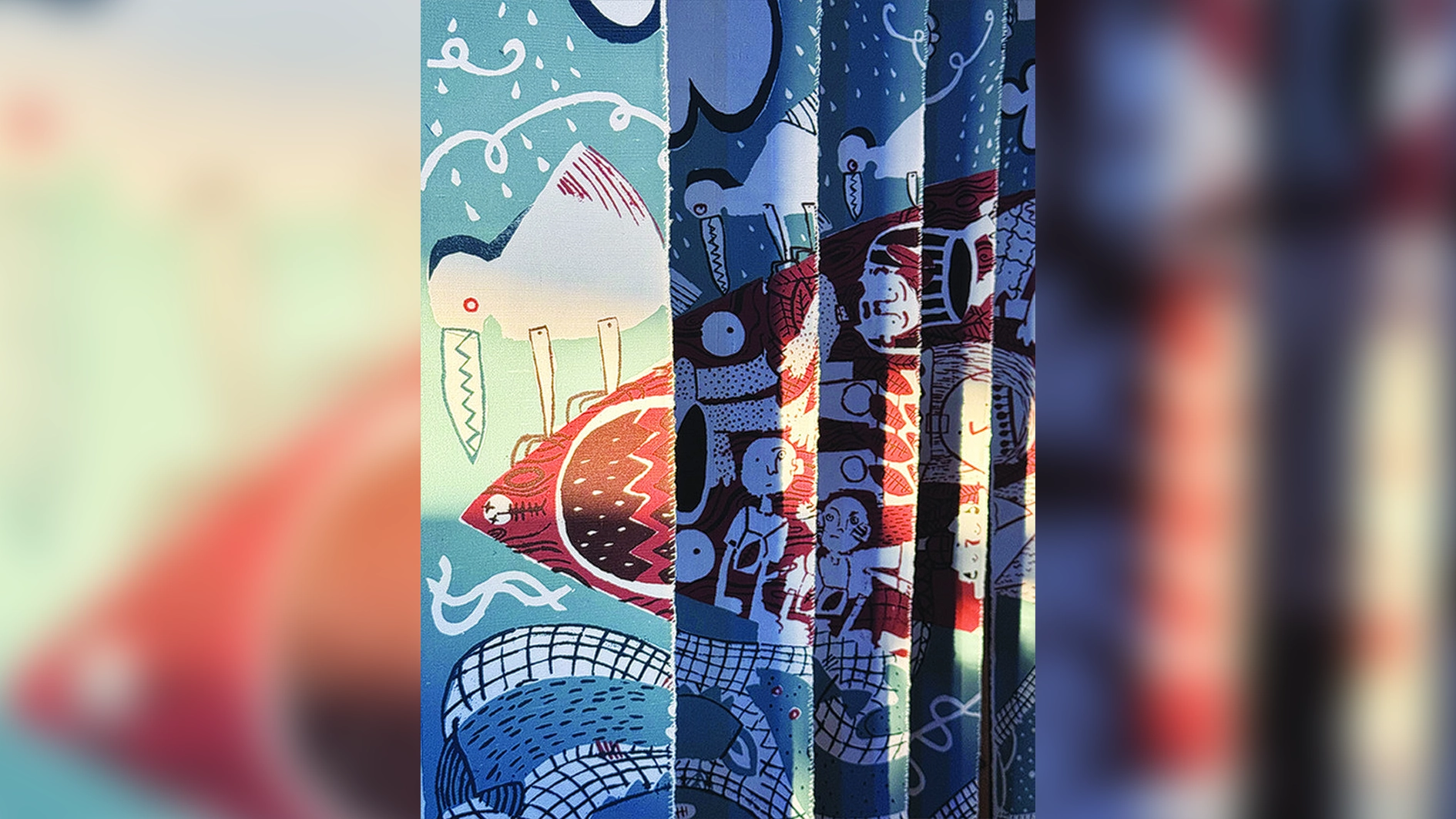
By Olu Adeosun
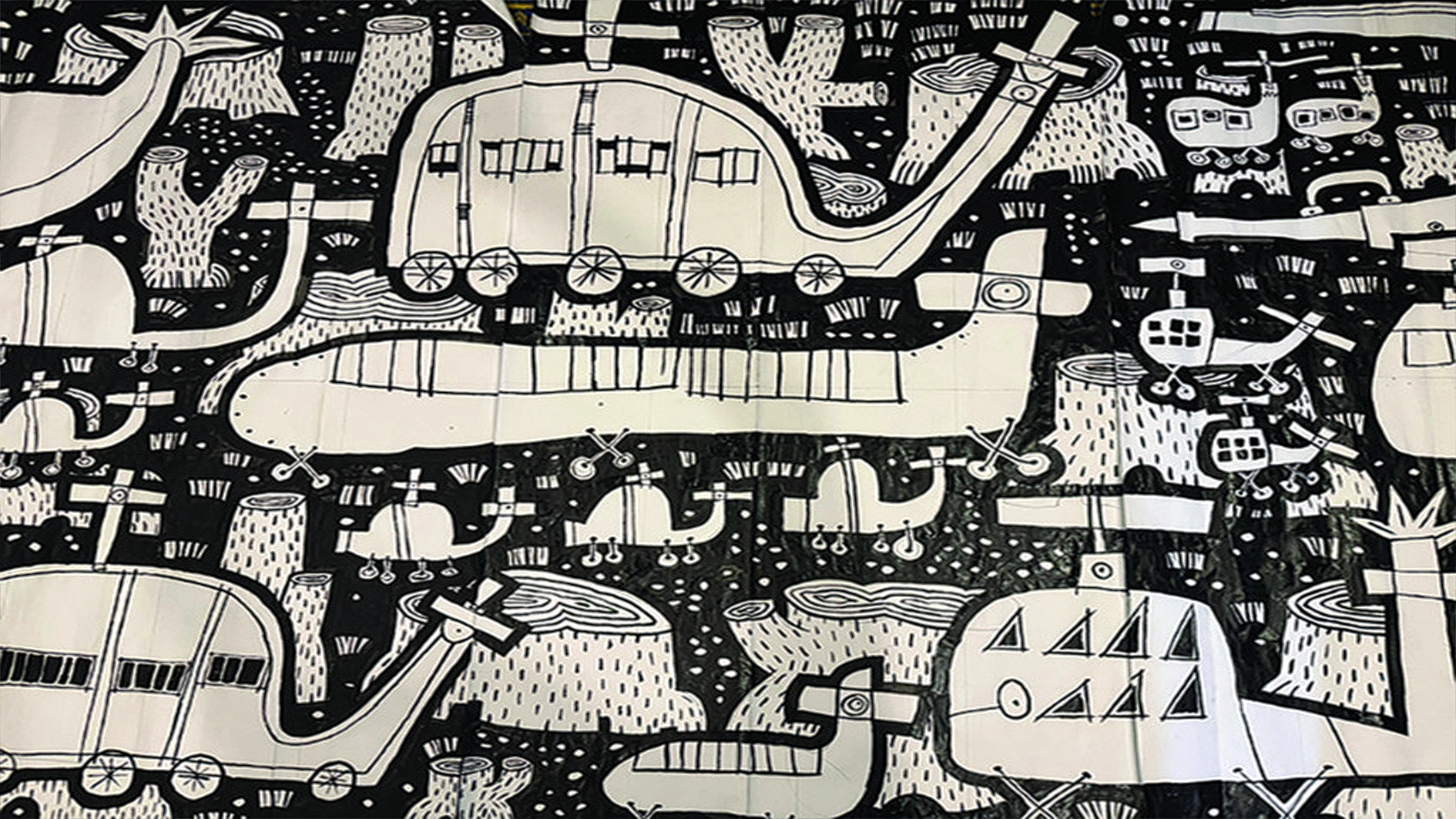
Standing in the entrance foyer of the Federal Palace Hotel in Victoria Island, Lagos, is an arresting contemporary art installation inspired by the Dufuna Canoe, one of the oldest boats ever discovered anywhere in the world, and evidence of the environmental transformation of northern Nigeria.
The original canoe, which now sits preserved in a museum in Damaturu, Yobe State, was unearthed in 1987 after a Dufuna herdsman in present day Yobe State, searching for water, repeatedly struck an unusual piece of wood buried beneath the earth. Archaeologists from the University of Maiduguri, working with researchers from the University of Frankfurt, confirmed that the vessel was between 8,000 and 8,500 years old.
Today, it serves as evidence of something almost unimaginable to modern Nigerians: the now-arid landscape around Dufuna was once land filled with abundant water, vegetation and human activity.
The installation at Federal Palace, commissioned by the Lokoja Dialogues Climate Initiative, tells this story through the eyes of children. Drawing on interpretations by schoolchildren from Yobe State who have seen the canoe in the museum, it juxtaposes an ancient landscape rich in water and life against the environmental reality they know today.
Their drawings are honest, sometimes unsettling. What previous generations would have regarded as environmental decline has become normalised for a generation growing up amid desertification, deforestation and ecological stress.

The canoe is more than an archaeological artifact. It is a warning.
If a landscape once capable of sustaining forests, waterways and human settlement becomes barren within the course of history, then climate resilience is not an abstract policy discussion. It is an existential matter. Nowhere is that lesson more urgent than in Nigeria’s water sector.
 Nigeria’s worsening water crisis is often described as a problem of scarcity. It is a governance failure driven by poor program management, weak institutions and decades of political neglect.
Nigeria is not water-deprived. Far from it. Unlike many countries in the world, we have abundant water resources, with an average of about 1,150 mm of rainfall annually, and according to World Bank data, an estimated 375 billion cubic metres of renewable water resources. Furthermore, numerous government publications have cited over 400 dams, and an irrigation potential of roughly 3.14 million hectares.
Yet, despite these natural advantages, UN Environment Protection (UNEP) and Global Geneva data shows that only 14 per cent of Nigerians have access to safely managed drinking water. No Nigerian city or town has full water coverage, and millions still live with unsafe sanitation and unreliable access to water.
The economic case is equally urgent. Water is the hidden infrastructure behind maritime progress, agriculture, power, industry, tourism and jobs across all sectors. Yet Nigeria has used only a fraction of its agricultural water potential. The UN’s Food and Agricultural Organisation data shows that only about 331,000 hectares—roughly 1% of cultivated land—is water-managed, despite the country’s much larger irrigation potential.
Evidence from the National Agriculture Investment Plan indicates that irrigation utilisation is still around 10% of formal potential, while hydropower development remains far below what Nigeria could achieve from its rivers and reservoirs. This means we are still overly dependent on rain-fed agriculture, leaving food production exposed to droughts, erratic rainfall and flooding. It also means the economy is paying a hidden cost in higher food prices, lower rural yields, weaker industrial productivity and avoidable import dependence.
Water insecurity is already undermining Nigeria’s national security. Across Nigeria, almost every community has a water story to tell, unfortunately too few people hear those stories and even fewer act on them.
Yet the consequences of this governance failure extend far beyond water supply. What is often overlooked is the fact that when water systems fail, the consequences spread quickly, exponentially and in seasonal cycles: farmers cannot irrigate crops, pastoralists and livestock farmers struggle to water livestock, communities compete over shrinking resources as seen around the Lake Chad basin, while local tensions increasingly manifest as kidnapping, banditry and inter-community violence. Left unresolved, these pressures accumulate until local grievances explode into security crises.
How can a country secure its people if it cannot secure the water on which life, livelihoods and local peace depend?
In addition to low access to safe water, a 2021 Water Sanitation and Hygiene National Outcome Routine Mapping (WASHNORM) survey report states that 48 million Nigerians still practise open defecation. The same survey conducted in 2018 found that 55 million of us lack basic sanitation services. These are not just public health statistics. They are indicators of a weakening and dangerous social compact between citizens and the state.
Climate change has turned the water question into a five-alarm fire. The evidence from sector papers and recent climate data occurrences is clear: shifting rainfall patterns, rising temperatures, reservoir depletion, dam siltation, salt-water intrusion and groundwater stress are no longer distant risks; they are already reshaping Nigeria’s hydrology.
The devastation of the 2022 floods, which affected all 36 states and the FCT, displaced more than 1.4 million people, damaged over 650,000 hectares of farmland and caused estimated direct losses of roughly US$6.6 billion, is a powerful reminder that climate resilience in Nigeria will be decided largely through water governance.
Recognising these interlinked challenges, Polly Alakija and Adwoa Edun, in collaboration with public and private sector stakeholders, founded the Lokoja Dialogues Climate Initiative to place water security at the centre of Nigeria’s development conversation. Sitting at the confluence of the Niger and Benue rivers, Lokoja is more than a geographical landmark. It is an ideal national platform for connecting flood management, irrigation reform, basin governance, groundwater protection and climate adaptation in one coherent conversation.
The independent not-for-profit initiative’s mission is simple: elevate water security from a technical issue to a national solution based on community-driven solutions for water security and climate resilience through a Water, Energy, Food, and Ecosystems (WEFE) nexus approach. After a long career in the water-hungry oil sector, I joined the initiative because, I want to be part of the solution.
In November 2025, with support from key government institutions and a network of committed experts and volunteers, Lokoja Dialogues Climate Initiative was formally launched in Abuja.
At Lokoja Dialogues, this is our central point of advocacy: Nigeria cannot talk credibly about food security, economic diversification or youth employment while neglecting the water systems that make all three possible.
Yet our story need not end as a tragedy. Nigeria does not need to start from scratch; we need to execute more effectively and follow through on reform programs more consistently.
We advocate for water security to be treated as a national development priority rather than a sectoral afterthought. The policy pathway is already visible. Nigeria should adopt a two-track water and irrigation recovery strategy.
First, ring-fence funding for strategic water agencies and irrigation infrastructure. At the national level, irrigation should be treated as a national priority sector in budgeting and planning. At the community level, water access should be designed around affordability, low maintenance, local ownership and extension support.
This is precisely the kind of pragmatic reform agenda that Lokoja Dialogues is already helping to advance by bringing policymakers, basin authorities, farmers, technical experts and development partners into sustained public dialogue – the Listening Project.
Second, because water security is the bridge between climate policy and real-world resilience, Nigeria must scale up community-level water solutions that help farmers and rural households manage water locally.
The UN’s Agricultural Sector Food Security and Nutrition Strategy (ASFNS), 2016- 2025 programme materials recommend practical options such as small pumps, drip irrigation, roof-water harvesting, wash bore systems, local storage and farmer cooperatives, especially in Nigeria’s diverse agro-ecological zones.
These are not glamorous interventions, rather they are the fastest and most practical routes to improving dry-season farming, stabilising yields, strengthening household resilience and reducing dependence on rainfall alone – which as previously stated is no longer predictable.
I will also add that philanthropists, public & private actors as well as local communities (especially community leaders) have a role to play in both funding and execution of these initiatives. We are taking our advocacy global, starting with the Lokoja Dialogues Climate Initiative Advocacy Programme in Copenhagen in October 2026.
The children whose drawings inspired the Dufuna installation understood something many of us adults and policymakers often miss. They understood that the environment they inherit will be shaped by the decisions we make today.
The Dufuna Canoe reminds us that landscapes change, sometimes dramatically with devastating generational consequences. What was once abundant can disappear. Nature’s water systems can fail. Forests can vanish. Livelihoods can be lost.
It also reminds us that history is not destiny. Water is not simply another sector of the economy; it is the foundation upon which every other sector depends. When we secure our water, we secure our food systems, our health outcomes, our climate resilience and a large part of our economic future. We also reduce a major driver of community conflict by ensuring that people and livelihoods are not forced into competition over basic resources.
Water security is therefore not a mere development issue. It is an economic issue, a climate issue and a national security issue.
A country that cannot secure its water cannot secure its future.
Adeosun is Chairman, Lokoja Dialogues Climate Initiative.
The Dufuna Canoe installation will remain on display at the Federal Palace Hotel until September 30, 2026.

