 Follow Us on Google News
 Follow Us on Google Discover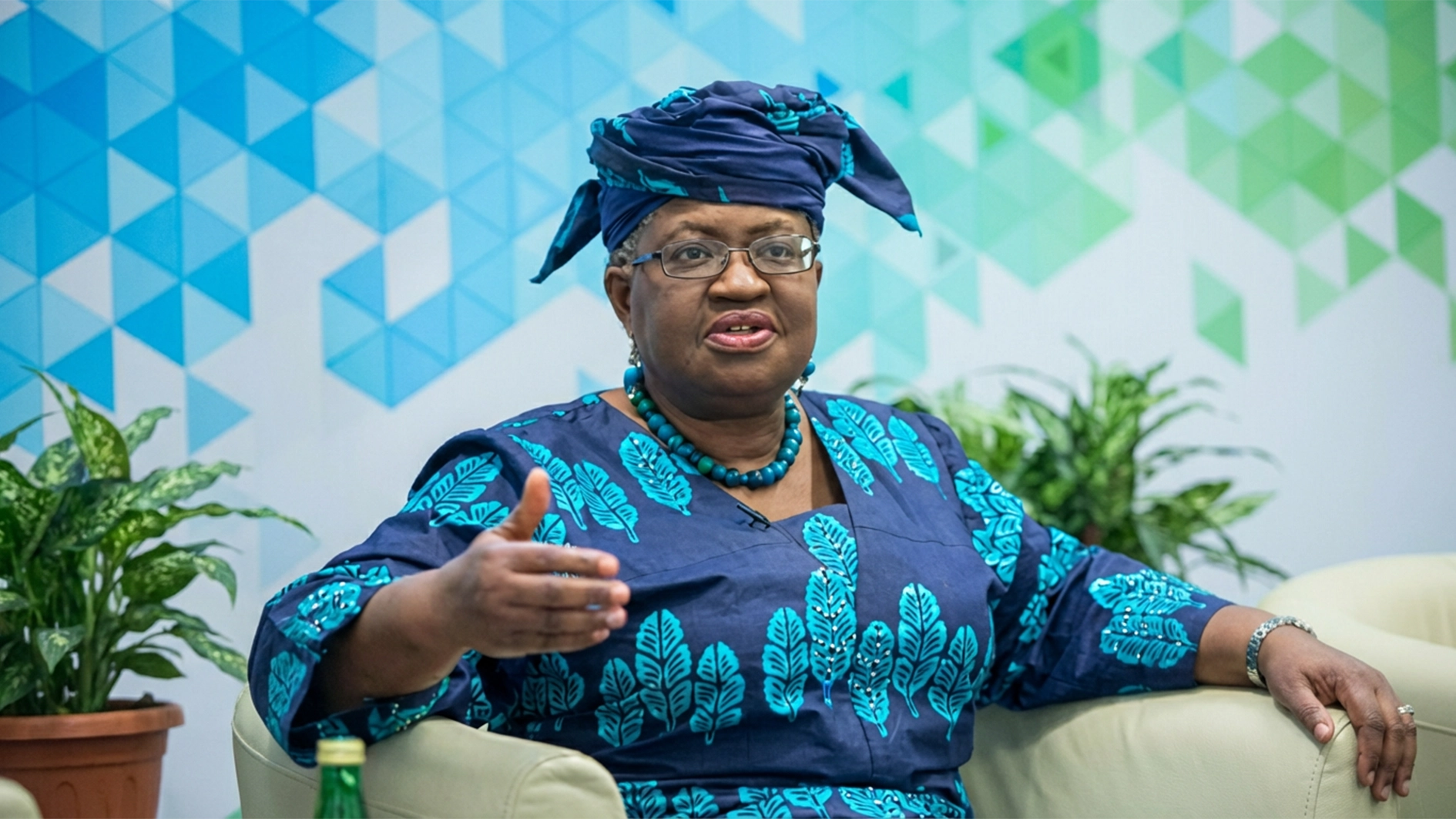
Director-General of the World Trade Organisation, Ngozi Okonjo-Iweala, and Governor of the Central Bank of Nigeria, Olayemi Cardoso, have called on African countries to reduce dependence on foreign aid and external borrowing by mobilising domestic resources to finance development.
Speaking at the ongoing seventh Africa Emerging Market Forum in Abuja, the two economic leaders noted that the changing global economic order presents a rare opportunity for the continent to build more resilient economies.
They declared that Africa must harness domestic savings, pension assets, insurance funds and diaspora investments while accelerating regional trade, industrialisation and value addition to reposition itself in an increasingly competitive global economy.
They argued that geopolitical tensions, supply chain realignments, technological disruption and changing investment patterns are reshaping the global economy, creating new opportunities for Africa to attract manufacturing, expand exports and strengthen its role in international trade.
Okonjo-Iweala dismissed suggestions that globalisation was ending, describing the current transition as a shift from cooperative to competitive interdependence.
“What we are seeing is not the end of globalisation but its transformation from cooperative to competitive interdependence,” she said, stressing that countries now compete more intensely while remaining deeply interconnected through trade and investment.

Cardoso said the challenge before Africa was no longer whether the global order was changing but how the continent could convert the transition into economic growth and shared prosperity.
Both leaders identified the restructuring of global supply chains as one of Africa’s biggest opportunities, noting that multinational companies are searching for alternative production locations to reduce overdependence on a few countries.
Okonjo-Iweala urged African governments to position the continent as a preferred investment destination by strengthening institutions, improving the business environment and developing regional manufacturing value chains rather than continuing the export of raw materials.
She argued that Africa’s vast deposits of critical minerals should serve as the foundation for industrialisation through local processing and manufacturing, rather than the long-standing extract-and-export model.
Cardoso echoed the position, insisting that foreign investment should be directed towards creating industries, transferring technology, developing local suppliers and strengthening African businesses.
The two economic leaders also called for deeper regional integration through the African Continental Free Trade Area, saying trade among African countries remains far below its potential.
Cardoso observed that intra-African trade accounts for only about 16 per cent of the continent’s total trade, despite the establishment of the continental free trade agreement.
He said governments must remove logistical and regulatory bottlenecks by improving transport infrastructure, harmonising customs procedures and making cross-border payment systems more efficient.
Okonjo-Iweala described the AfCFTA as one of Africa’s strongest economic instruments and challenged governments to significantly increase trade among African countries over the next few years.
On Nigeria’s economy, the WTO chief commended the Central Bank’s monetary reforms and exchange rate stabilisation efforts but maintained that macroeconomic gains must translate into improved living standards.
She said Nigerians should begin to experience the benefits of ongoing reforms through stronger economic activity and job creation.
Cardoso defended recent monetary policy decisions, saying the apex bank had restored credibility by unifying the exchange rate, ending monetary financing of fiscal deficits, strengthening transparency in the foreign exchange market and focusing on price stability.
According to him, those difficult reforms are beginning to yield results through stronger external buffers, improved investor confidence and declining inflationary pressures.
A major theme of the discussions was Africa’s growing need to finance its development from domestic sources as international development finance becomes more constrained.
Cardoso urged African governments to tap pension funds, insurance assets, domestic savings and diaspora capital to support infrastructure and productive investments, citing Nigeria’s recent bank recapitalisation exercise as evidence that substantial capital could be mobilised locally.
Supporting the position, Okonjo-Iweala said countries could no longer depend on the same level of external financial flows that characterised previous decades, urging governments to build confidence among domestic investors.
She argued that foreign investors are more likely to commit capital where local businesses are already investing.
The two leaders also highlighted artificial intelligence as both an opportunity and a challenge, stressing that Africa must become a producer of digital solutions rather than merely a consumer of emerging technologies.
Cardoso said this would require sustained investment in electricity, digital infrastructure, affordable internet access and skills development for young Africans.
Both speakers agreed that Africa’s youthful population would become a demographic advantage only if governments create sufficient jobs and equip young people with skills needed for an increasingly technology-driven global economy.
They insisted that stronger institutions, policy credibility, regional cooperation and decisive implementation of reforms would determine whether Africa successfully capitalises on the opportunities created by the changing global economic landscape.

