 Follow Us on Google News
 Follow Us on Google Discover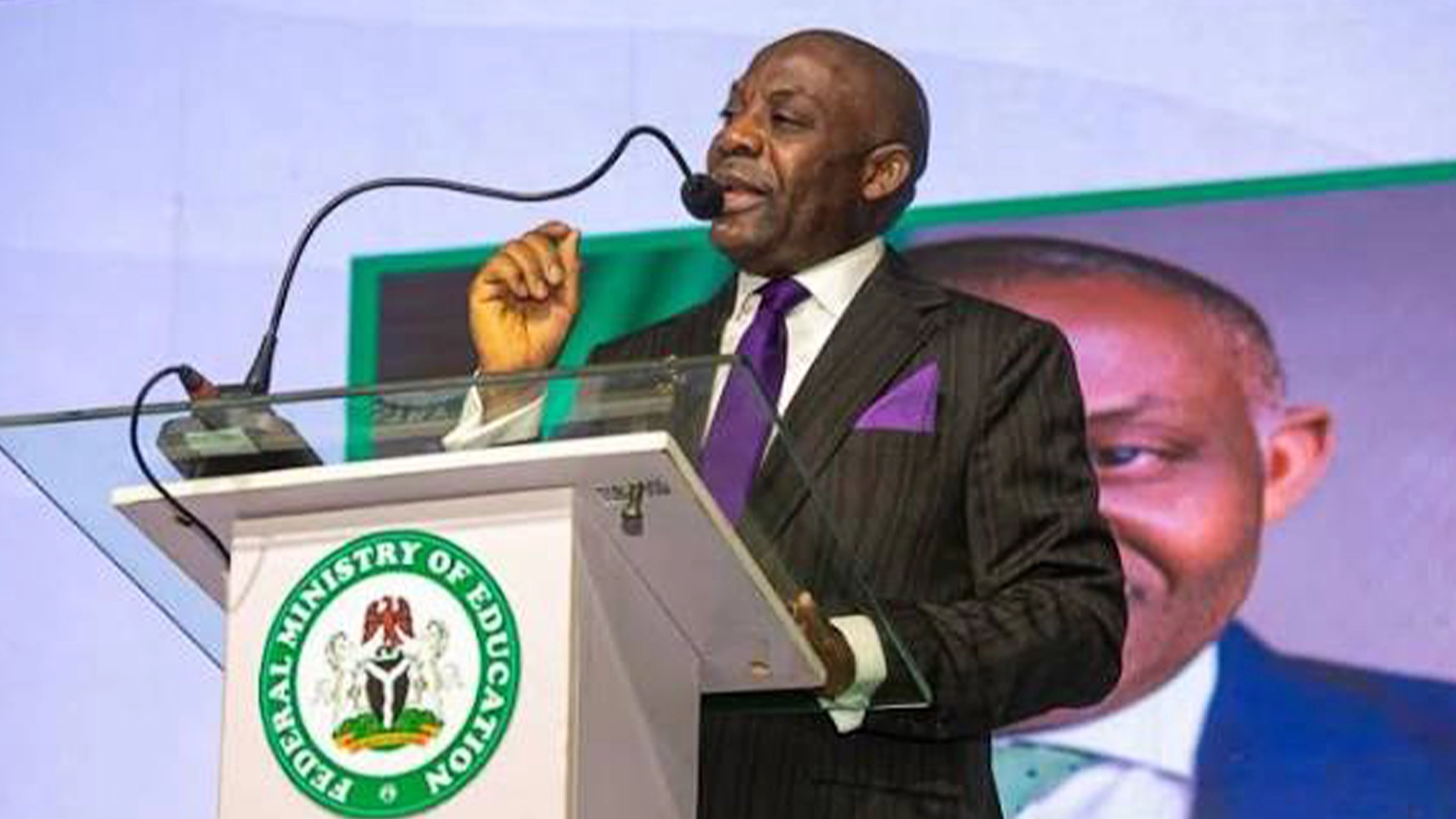
Remi Tinubu seeks Saudi support to reform Almajiri education
Nigerian Government has adopted Kaduna State’s household mapping model as the national framework for identifying out-of-school children, in a major policy shift aimed at replacing estimate-based planning with verified data to tackle Nigeria’s education access crisis.
The Minister of Education, Dr Tunji Alausa, announced that the new approach would be implemented across the 36 states and the Federal Capital Territory, with the Federal Ministry of Education partnering with the National Bureau of Statistics (NBS) to conduct a nationwide household mapping exercise.
According to the minister, the initiative will identify the exact number of out-of-school children, where they live, and the households they belong to, enabling governments at all levels to deploy targeted interventions and improve school enrolment and retention.
Alausa unveiled the policy during a meeting with Kaduna State Governor, Uba Sani, describing it as a decisive step towards addressing one of Nigeria’s most pressing education challenges.
He said the Federal Government was moving away from years of relying on broad estimates that often failed to accurately capture the scale and location of out-of-school children.

The minister cited Kaduna State as evidence of the approach’s benefits, noting that while previous estimates put the state’s out-of-school population at about 585,000, a household mapping exercise conducted by the state government revealed the actual figure to be fewer than 200,000.
He commended Governor Uba Sani for pioneering the initiative, saying the exercise had provided a clearer understanding of the challenge and demonstrated how accurate data could strengthen education planning and service delivery.
In his response, Uba Sani commended the Minister of Education and the Minister of State for Education for the reforms being implemented in the sector, describing their leadership as inspiring to state governments.
IN a related development, Nigeria’s First Lady, Oluremi Tinubu, has appealed to the Kingdom of Saudi Arabia to partner with Nigeria in addressing the growing challenge of out-of-school children, particularly the Almajiri population, through a comprehensive education model that combines Islamic and Western learning.
She said integrating formal education with Qur’anic instruction would not only provide better opportunities for millions of vulnerable children but also strengthen national security by reducing their exposure to poverty, exploitation and criminality.
The First Lady made the appeal yesterday while receiving the Ambassador of the Kingdom of Saudi Arabia to Nigeria, Yousef Mohammed Al-Balawi, at the State House, Abuja.
Speaking during the meeting, Senator Tinubu stressed that Almajiri children deserve access to quality education and better welfare, noting that Nigeria’s long-standing ties with Saudi Arabia provide a strong foundation for deeper collaboration in the education sector.
Responding, the Saudi Ambassador, Al-Balawi, said he was encouraged by the warm reception he had received since assuming duty in Nigeria five months ago.
He disclosed that he had already engaged with several members of the Federal Executive Council, expressing confidence that the growing diplomatic engagements would translate into stronger economic and developmental cooperation between the two countries.

