 Follow Us on Google News
 Follow Us on Google Discover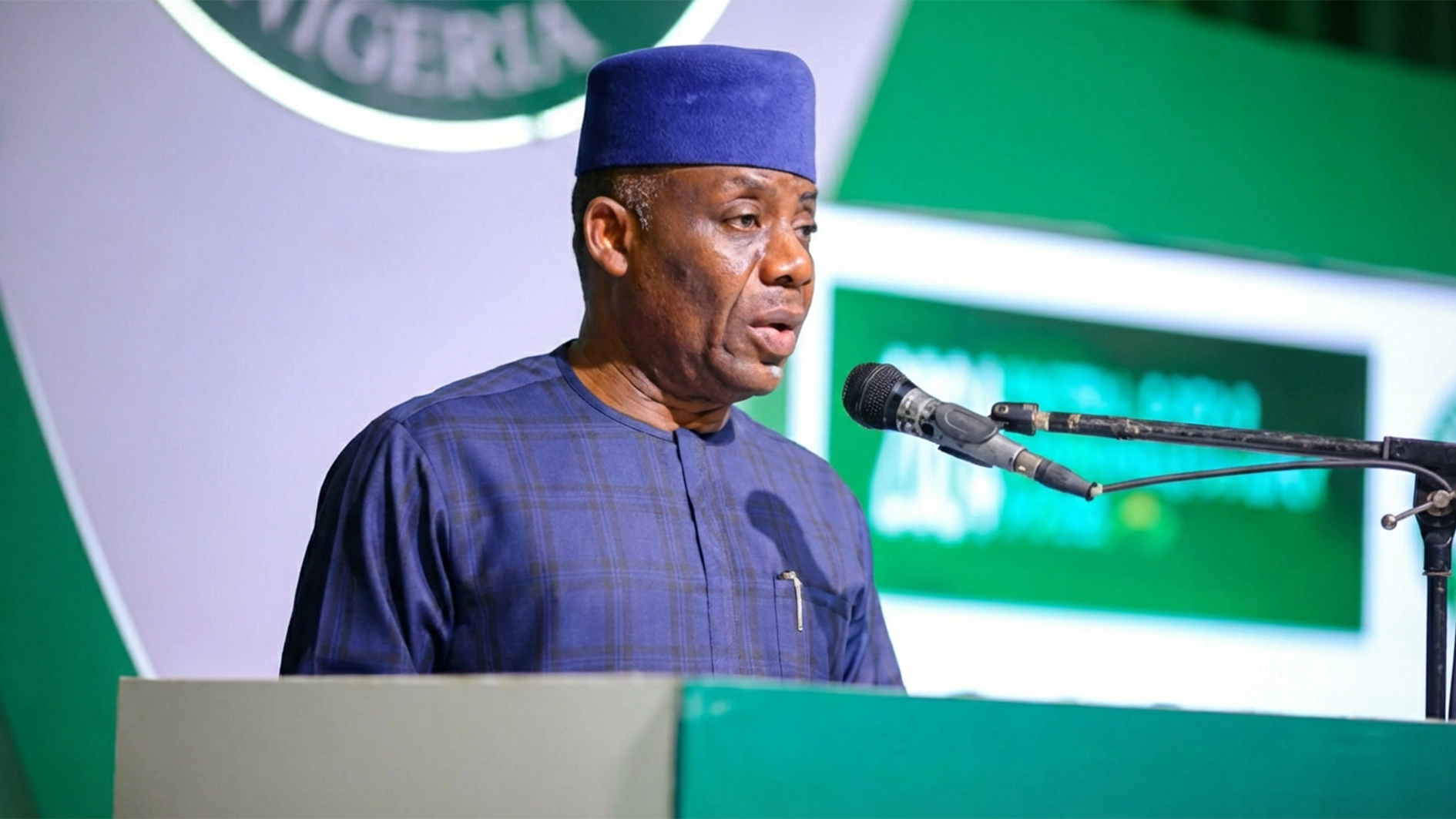
***As Education Minister Defends Past Spending, Unveils Major Reforms
***Says Every Kobo of Public, Donor Funds Must Be Accounted For
***Safe Schools Initiative Now Moved to Education Ministry
The Senate on Friday launched a sweeping investigation into billions of naira released under Nigeria’s Safe Schools Initiative, declaring that every kobo appropriated by the Federal Government and every foreign grant donated to secure schools must be fully accounted for.
The probe, being conducted by the Senate Ad-hoc Committee on Safe Schools Initiative and Safe Schools Financing, is expected to scrutinise years of disbursements made under the programme established in the wake of the abduction of the Chibok schoolgirls to protect schools from terrorists, bandits and other criminal elements.
Chairman of the committee, Senator Orji Uzor Kalu, said the investigation was not intended to witch-hunt anyone but to ensure transparency, accountability and value for public resources committed to securing Nigeria’s schools.
Welcoming the Minister of Education, Dr. Tunji Alausa, and members of his delegation to the National Assembly, Kalu commended the ministry for honouring the committee’s invitation.
He maintained that the committee was determined to establish how the funds were utilised, regardless of when they were released or who supervised the programme.
“Government is a continuum. Whether these funds were released before the present minister assumed office or not, government remains responsible for accounting for every kobo entrusted to it,” Kalu declared.
He added that because the investigation touches on national security, deliberations on sensitive operational matters would be held behind closed doors.
“Banditry, terrorism and attacks on schools are matters of national security. We will not discuss sensitive operational issues in public because we do not want to expose information that could be useful to criminals.”
Appearing before the committee, Alausa acknowledged the Senate’s constitutional oversight responsibility and disclosed that virtually all the financial transactions under investigation took place between five and seven years ago, long before he assumed office.
He explained that the only major disbursements made during his tenure were targeted interventions for the Nigeria Police Force, the Nigeria Security and Civil Defence Corps and other security agencies, with the funds administered through the Federal Ministry of Finance.
The minister traced the origin of the Safe Schools Initiative to the aftermath of the Chibok schoolgirls’ abduction, when the international community mobilised substantial financial support to help Nigeria secure schools against attacks.
According to him, both international donor funds and subsequent Federal Government appropriations were domiciled in the Ministry of Finance, which handled all disbursements.
“The Safe Schools Initiative was established following the unfortunate Chibok kidnapping. Significant international grants and donor funds were provided to Nigeria to improve the safety of our schools. Those funds, together with subsequent government appropriations, were domiciled in the Federal Ministry of Finance, which was responsible for their disbursement,” he said.
Although he was not in office when the funds were released, Alausa said his appearance before the committee reflected the commitment of the Federal Government to accountability.
“Government is a continuum. Even though I was not the Minister of Education when most of these disbursements were made, I have a responsibility to appear before the Senate because public officials must account to the Nigerian people.”
He disclosed that he appeared before the committee alongside the Permanent Secretary of the Federal Ministry of Education, the Permanent Secretary of the Federal Ministry of Finance and directors responsible for the Safe Schools programme in both ministries.
According to him, the Minister of Finance was unable to attend because of another official engagement but would appear before the committee at a later date.
Alausa also announced a major policy shift, revealing that the Safe Schools Initiative has officially been transferred from the Federal Ministry of Finance to the Federal Ministry of Education after he initiated the move shortly after assuming office.
He explained that it was difficult to justify keeping the programme’s financing outside the ministry responsible for education policy, implementation and monitoring.
“The Federal Ministry of Education coordinates education policy across the country. We work directly with states, implement programmes, monitor outcomes and oversee schools. It was therefore difficult to justify why the financing component of the Safe Schools Initiative was domiciled in another ministry.”
He said the transfer, which was initially delayed by administrative processes, has now been completed, while a dedicated Safe Schools Department has been established within the ministry to provide strategic leadership for the programme.
The minister said the department would coordinate policy implementation, monitoring and collaboration with state governments to strengthen school safety nationwide.
Reaffirming President Bola Tinubu’s commitment to education, Alausa said the administration considers the safety of learners a top national priority.
“The President has provided us with the political support and resources required to transform the education sector. Our responsibility is to ensure that every Nigerian child can learn in a safe and secure environment.”
He disclosed that the Ministry of Education is working closely with the Office of the National Security Adviser, the Department of State Services, the Armed Forces, the Nigeria Police and other security agencies to develop a comprehensive national framework for school safety.
According to him, the Safe Schools Initiative extends beyond deploying security personnel to schools.
“It includes perimeter fencing, solar-powered lighting, water and sanitation facilities, recruitment of school security personnel, surveillance technology, early warning systems and effective monitoring mechanisms. School safety is multi-dimensional and requires coordinated implementation.”
Alausa said while security agencies would continue to perform their constitutional responsibilities, the Ministry of Education would provide the policy direction and central coordination needed to ensure effective implementation across the country.
“We need a central command-and-control structure to coordinate all the components of the Safe Schools Initiative. Every institution has a role to play, but the Ministry of Education will provide the leadership to ensure that every school benefits from the programme.”
Committee members unanimously backed the investigation, insisting that the Senate was performing its constitutional oversight responsibility rather than embarking on a witch-hunt.
Vice Chairman of the committee, Senator Sahabi Yau, stressed the need to balance accountability with national security, while Senator Anthony Ani said government institutions must account for past actions to strengthen transparency and public confidence.
Before adjourning into an executive session, Kalu commended Alausa for consistently honouring invitations from the National Assembly and reminded all public officials that legislative oversight remains a constitutional obligation.
“This is the seat of democracy. Every minister appointed by the executive must be accountable to the representatives of the Nigerian people. No minister should ignore invitations from the National Assembly because oversight is a constitutional responsibility.”
The committee is expected to continue its investigation after reviewing documents and testimonies presented during the closed-door session, with the Minister of Finance expected to appear before the panel at a later date.

