 Follow Us on Google News
 Follow Us on Google Discover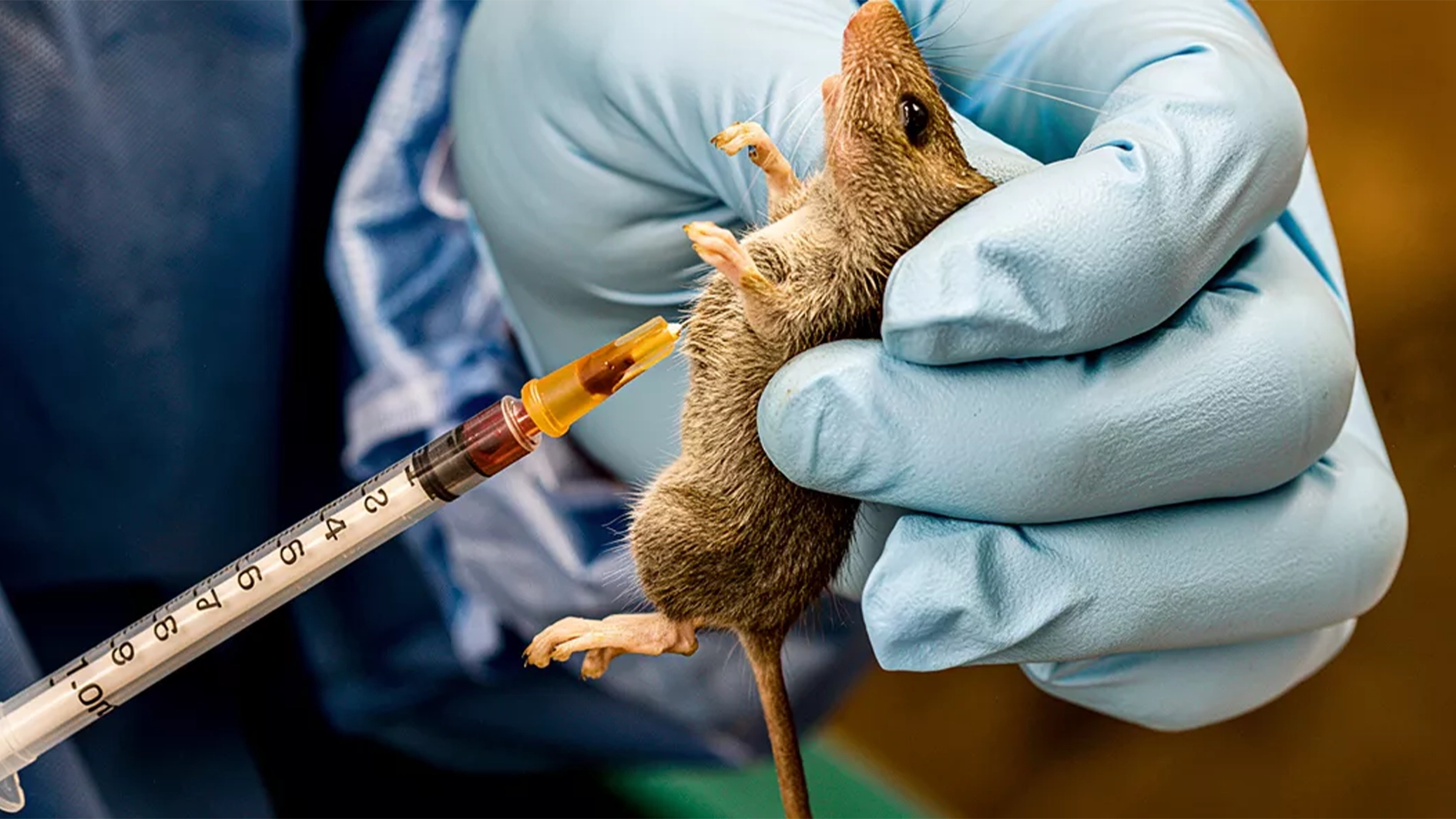
By Emmanuel Codjo
Benin has reported relatively few Lassa fever outbreaks since its first documented outbreak in 2014. However, the limited number of declared outbreaks should not be interpreted as an absence of risk, but rather as a reminder that transmission can occur in settings where surveillance and detection are limited. Across the border in Nigeria, Lassa fever infects hundreds of people in Nigeria every year. As recent outbreaks have shown, viruses do not respect national boundaries.
In Benin, the true disease burden is likely much higher than current estimates suggest, as Lassa symptomsclosely resemble those of malaria and other common illnesses; cases are often missedor misdiagnosed, meaning the true burden of disease is almost certainly higher than any reported figures suggest.Just because cases are not being reported does not mean people are not getting sick and reflects the limits of surveillance rather than the limits of transmission.
A general practitioner based in Igolo, a community in Benin bordering Nigeria’s Ogun State, noted that “we have recorded deaths related to this disease, particularly during the COVID-19 pandemic and even afterwards in 2024 and 2025. In my clinic, I received a patient from Abuja [Nigeria’s capital] who was confirmed to be infected withLassa fever,” adding that “the figures are not published. We are prohibited from releasing this data to the public, given the vulnerability of the disease and the sensitivity of the population.”
In 2016 alone, Borgou, Collines, and Alibori in northern Beninrecorded 54 suspected cases and 28 confirmed deaths, resulting in a case fatality rate of over 50%. Five healthcare workers were infected during the response, three were laboratory-confirmed cases, and two died, exposing significantgaps in infection prevention and control measures.
“We were powerless. We lacked equipment, and our training was inadequate. Some of our colleagues lost their lives,” confided a doctor from Parakou.

Insufficient preparedness puts communities at risk
The porous borders and numerous informal crossing routes between Benin and its neighbours, particularly Nigeria and Togo, complicate surveillance and make the early detection of Lassa fever cases more challenging. In Sémè-Kraké, a bordering community with Nigeria’sLagos State, a health worker explained that “travellers often use informal routes. We don’t always have the resources to monitor them.”
At the airport in Cotonou, the country’s largest city, travellers interviewed indicated that some of the border control measures put in placeincluded travel history questionnaires detailing their recent movements and any known contact with Lassa fever patients, as well as temperature checks using infrared thermometers or thermal cameras to detect fever. Travellers displaying symptoms consistent with viral haemorrhagic fevers may be asked to undergo secondary screening for further evaluation, and rapid diagnostic testsare conducted. This is however not always the case at all points of entry.
Thesememories linger within communities and are a reminder that no reported outbreak does not necessarily mean the threat does not exist. Instead, Benin exists in a state of constant vulnerability due to its geographical proximity to Nigeria, made worse by anew Lassa virus strain that emerged in recent years. Benin faces ongoing risk from multiple Lassa virus strains circulating in the West African region, even though it does not have any established transmission of the virus within the country’s borders.
This new virus strain complicates vaccine development and disease detection, as health workers need better diagnostic tools to identify infections accurately. The challenge however is that gaps in surveillance, without proper testing means that cases can be missed during outbreaks, and infections go undetected and therefore the true scale of Lassa fever circulation is unknown.
Despite recording relatively few recognised outbreaks, Benin has become an important contributor to regional Lassa fever research. The country is one of the sites participating in the CEPI-funded ENABLE clinical research programme, which is generating critical evidence to support the development and evaluation of Lassa fever vaccines. Research conducted in Benin has also advanced understanding of the disease beyond acute infection. The studyfound that hearing loss is a common long-term complication among people who have recovered from Lassa fever, highlighting the lasting health impacts of the disease and reinforcing the need for continued investment in vaccine research, surveillance and clinical care.
While the 2016 crisis prompted important reforms such as the strengthening of laboratories in Cotonou and Parakou,the implementation of emergency preparedness protocols in some hospitals, such as surge capacity management, triage and screening, and training supported by partners, including the World Health Organization (WHO) and the Clinton Health Access Initiative(CHAI), significant gaps in preparedness remain.
According to Jumoke Adekeye, Director of CHAI in Benin, “the country is going through a critical phase. The current lull is an opportunity to invest in resilience, but without sustainable funding, progress will remain precarious.”
Although no nationwide assessment of Lassa fever preparedness has been conducted in Benin, a 2019 assessment of two health districts in Cotonou found that readiness for Lassa haemorrhagic fever response was low, with a performance score of 58.43%. The assessment identified gaps, including the absence of a contingency plan, lack of epidemic-management budget lines in private health facilities, poor coordination, and delays in case reporting.
Dr Ali Imorou Bah-Chabi, Secretary General of the Ministry of Health, stated that “we learned the hard way. The weaknesses in our system were exposed. Since then, we have been striving to strengthen our preparedness, but much remains to be done.”
These weaknesses are not unique to Benin. Across West Africa, Lassa fever reveals similar issues, including late presentation, weak clinical suspicion, limited diagnostics, poor environmental sanitation, inadequate infection prevention and control in health facilities, and underfunded preparedness systems.
Nigeria’s 2026 Lassa fever response has also highlighted late presentation, high treatment costs, poor environmental sanitation, limited awareness, and health care worker infections as ongoing challenges.
What stronger preparedness should look like
Benin, Nigeria, and Togo needto strengthen institutionalised cross-border coordination mechanisms. This should include agreed standard operating procedures for suspected Lassa fever cases, rapid sharingof travel histories and case investigation data, and routine communication between national focal points for the International Health Regulations (2005),district surveillance officers and border health teams.
Surveillance must move closer to where patients first seek care. Community informants, private clinics, pharmacies, maternity centres and primary health care facilities should be equipped to recognise the Lassa fever case definition,report suspected cases promptly and understand referral pathways for testing and care. The US Centers for Disease Control and Prevention (CDC)has reported that Field Epidemiology Training Programme teams in Beninidentified previously missed Lassa fever cases, prompting revisions to case definitions and the reactivationof surveillance activities.
Laboratory systems require sustained investment. Rapid detection depends on safe specimen collection, reliable sample transport networks, well-equipped laboratories, a trained workforce, and shorter turnaround times. Without these capacities, suspected cases can go undetected, delayed isolation, treatment, contact tracing, and wider public health response efforts.
Healthcare workers must be protected. The deaths of healthcare workersduring Benin’s 2016 outbreak remains one of the strongest reminders of the risks posed by delayed recognition. Preparedness efforts should include triage systems, adequate supplies of personal protective equipment, infection prevention and control training, case-management guidelines, and safe referral pathways.
Prevention must begin in communities. Lassa fever is primarily transmitted throughexposure to food or household items, or environments contaminated with urine or faeces from infected Mastomys rodents. Reducing transmission therefore requires community engagement, including safe food storage, rodent control, environmental sanitation and waste management, early care-seeking, and culturally appropriate risk communication delivered in local languages.
Preparedness requires sustaineddomestic investment. While donor-supported training and emergency response mechanisms can help countries respond rapidly during crises, long-term resilience depends on predictable national and subnational financing for surveillance systems, laboratory capacity, workforce development,outbreak simulation exercises,stockpiles of personal protective equipment and community engagement. So, local funding to strengthen preparedness for any infectious disease outbreak is critical.
The WHO representative in Benin, DrKouamé Jean KONAN,emphasised the importance of sustained preparedness notingthat, “preparedness is not an option; it is our first line of defence.” He further emphasised that “surveillance has been too slow, especially outside major cities. Outbreaks can spread before they are even detected.”
The Beninese government, working with the WHO, the United Nations and civil society partners, has continued to strengthen preparedness through measures including strengthened border health surveillanceand rapid detection and referral mechanisms at strategic points of entry such as Sèmè-Kraké and Hilacondji. These investments are important, but their effectiveness depends on how well they are integrated into the broader health system.
The key lesson for Benin, Nigeria, and Togo is that health security does not begin at the border.
It begins when a healthcareworker recognises a suspected Lassa fever case early, when surveillance systems trigger a rapid response, when samples reach a laboratory quickly and safely, when neighbouring countries share information without delay, and when communities are equipped to reduce the risk of rodent exposure before transmission escalates.
Preparedness cannot wait for the next official outbreak declaration. By then, the virus may already have crossed borders and opportunities for early containment may have been lost.
Codjo wrote from Abuja.

