 Follow Us on Google News
 Follow Us on Google Discover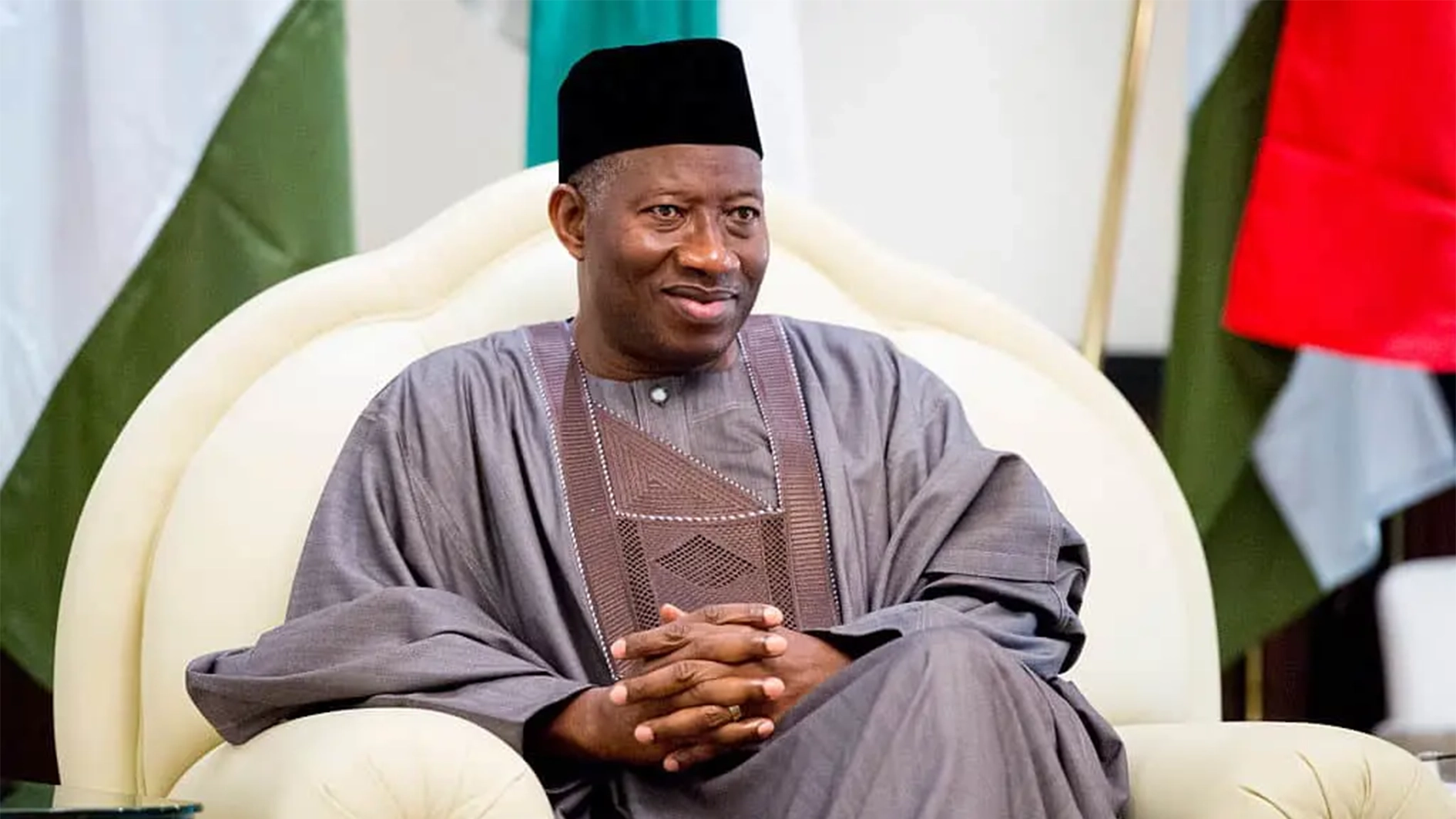
The Peoples Democratic Party (PDP), which dominated Nigeria’s Fourth Republic for 16 years, has struggled to regain its footing since losing presidential power in 2015. As preparations for the 2027 general election gather pace, the former ruling party appears more preoccupied with the Goodluck Jonathan candidacy, legal battles and internal disputes than demonstrating the political resolve needed to mount a serious challenge, LEO SOBECHI and AZIMAZI MOMOH JIMOH report.
Going by the name on the Independent National Electoral Commission’s (INEC) portal, Senator Sandy Onor is the presidential candidate of the PDP for next year’s election. But, to the Kabiru Tanimu Turaki-led Caretaker Committee of the party, former President Goodluck Jonathan is the proper person to fly the party’s flag in the presidential poll.
Penultimate Thursday, Turaki and his group took their case to a circus level by physically taking Dr Jonathan’s particulars to the Maitama headquarters of INEC, insisting that the electoral commission was obliged to receive its list of candidates for the election on the belief that the court would invalidate the list uploaded by the Abdulrahman Mohammed-led National Working Committee of the party.
PDP’s slide towards the farcical did not begin overnight. Although the party had continued to grapple with the structural damage caused by its sudden loss of presidential power to the fledgling All Progressives Congress (APC), the factionalisation that ensued in the aftermath of the 2023 presidential primary put it in its current dire straits.
When the group of five governors opposed to the emergence of former Vice President Atiku Abubakar as the PDP presidential candidate formed the G5, party faithful were divided along ideological lines. While those in support of the Nyesom Wike-led G5 excused their insurgency on the basis of fidelity to the zoning principle, others reasoned that since Atiku had already picked the ticket, all hands should be on deck to rally behind the candidate to prosecute the election and thereafter rebuild the party’s constitutional framework.
To worsen matters, when the leaders of the G5 split into further factions after the 2023 presidential election was again decided in favour of the ruling APC, it became obvious that the PDP was living its last days as a presidential contender. The parting of ways between former Rivers State Governor Nyesom Wike and his Oyo State counterpart, Governor Seyi Makinde, came as the last straw.
Yet, with Makinde charting a different political path to sustain his relevance, some watchers of the PDP’s undulating politics predicted that the former ruling party was in its final days. At least, that fact was cast in sharp relief last week when the Turaki-led splinter went begging at the INEC headquarters to be accommodated in the line-up of parties for the 2027 contest.
The questions left unanswered by the Turaki group during their visit to the INEC headquarters were many. In the first place, did INEC monitor the faction’s primaries, whether direct or indirect? Did the presidential candidate purchase, fill and submit the expression of interest and nomination forms? How will the party deal with the lists already uploaded on the INEC portal?
During his monthly media chat, Wike, who is currently serving as the Minister of the Federal Capital Territory (FCT) in the APC-led Federal Government, said that upon his election as the PDP presidential candidate, Sandy Onor delivered an acceptance speech, demonstrating his willingness to contest the position.
Wike was alluding to the Turaki faction’s claim that former President Jonathan remains the PDP’s authentic presidential contender. Up until the Turaki group’s visit to the INEC headquarters, the former President had never spoken either in support of or against his purported nomination.
But the suspense surrounding the identity of the PDP’s authentic presidential candidate has attained the level of an entertaining aside, especially as the August 19 date for the commencement of campaigns draws nearer.
While Jonathan continues to receive the Turaki-led PDP splinter on visits to his residence, only two remarks could be ascribed to him in relation to preparations for next year’s presidential poll. Speaking when some youths came to drag him into the 2027 presidential race, Jonathan stated: “How many of you have Permanent Voter Cards (PVCs), which qualify you to vote?”
Then, at the public unveiling of a book on electoral transparency, Jonathan quipped: “It is hard to wake up a man pretending to be asleep.” Amid those general observations on Nigeria’s democracy, those close to the former President claim that some Heads of State in Africa, particularly from the West African sub-region, are working behind the scenes to ensure that the former Nigerian leader participates in the 2027 presidential ballot.
At the height of those suggestions, a former governorship candidate in Kebbi State, Salihu Isa Nataro, told journalists in Abuja that President Bola Tinubu would easily defeat both Atiku Abubakar and Goodluck Jonathan in the election.
But, as Jonathan’s name continues to be associated with the January 18, 2027, presidential election, it remains to be seen whether the Turaki-led group propping him up is merely seeking to keep President Tinubu politically unsettled by turning the PDP into a subject of public ridicule.
To a large extent, many PDP faithful believe that the party was dethroned from the Presidency in 2015 through the strategic designs of former Lagos State governor and APC leader, Bola Tinubu. President Tinubu’s recent jabs at the records of former leaders are said to be his way of responding to the constant speculation about a possible re-entry by Jonathan into the presidential contest.
However, in jest or earnest, the Turaki-led PDP wing has two judicial rivers to cross, the Court of Appeal and the Supreme Court, before it can compel INEC to field the former Nigerian leader on the presidential ballot for next year’s showdown.
How far can Turaki’s court contest go?
It is on record that the PDP’s leadership crisis has evolved into one of Nigeria’s longest-running political litigations. The Turaki-led Interim National Working Committee (INWC) of the party has refused to forsake the courts despite a string of adverse judgments culminating in the Supreme Court’s nullification of the controversial November 15-16, 2025, Ibadan convention.
Rather than terminating the dispute, the apex court’s verdict fuelled fresh claims and counterclaims, leaving party faithful and observers wondering whether the Turaki faction still has a realistic path to judicial victory or is merely prolonging an increasingly difficult legal battle.
What came as the latest exchange between the two claimants was a statement by the Wike-backed National Publicity Secretary, Jungudo Mohammed, who dismissed claims that the April 30, 2026, Supreme Court judgment created a leadership vacuum within the party.
While insisting that the judgment only quashed the Ibadan convention and dismissed the Turaki faction’s appeal, Jungudo maintained that the court neither suspended nor removed any national officer.
“The PDP,” he declared, “remains under the leadership of Abdulrahman Mohammed (National Chairman) and Samuel Anyanwu (National Secretary), while claims by former Board of Trustees Chairman Adolphus Wabara and Interim National Publicity Secretary, Ini Ememobong, amount to deliberate misrepresentation of the court’s decision.”
The Wike camp also rejected Wabara’s assertion that the Board of Trustees constitutionally assumed leadership after the judgment, arguing that the party’s constitution confers no such authority on the BoT.
Against those divided positions, the Turaki-led group contends that the legal battle for the soul of the PDP is far from over. The faction’s Interim National Publicity Secretary, Ini Ememobong, argues that the recent Federal High Court judgment, which refused to compel INEC to recognise the Interim National Working Committee, contradicts earlier appellate court decisions.
In its further appeal against the judgment, the Interim NWC claims that Justice Salim Ibrahim ventured into issues already determined by superior courts, even as it alleges discrepancies between the judgment delivered in open court and its Certified True Copy, and promises to raise the matter before the Court of Appeal.
Would the latest appeal be the last chapter in a prolonged legal campaign that has produced more setbacks than victories? The journey has been long and winding. The Supreme Court invalidated the Ibadan convention that produced the Turaki leadership and dismissed the faction’s appeal. The Abuja Federal High Court later declined to compel INEC to recognise the Interim National Working Committee, just as earlier Federal High Court decisions restrained the faction from presenting itself as the PDP’s authentic national leadership.
It could be said that the string of judicial pronouncements has strengthened the position of the rival Wike-backed leadership, even as it continues to bask in the euphoria of INEC’s recognition. The FCT Minister, Nyesom Wike, has remained upbeat following those legal triumphs. Bearing his mind on the matter while inspecting some projects in Abuja two months ago, Wike mocked claims that the Court of Appeal had validated the Turaki faction’s position, accusing its lawyers of misleading supporters.
“You went on appeal. They said your appeal is dismissed. What it means is that you have lost,” he said, insisting that political actors should stop “selling false hope” and instead accept judicial outcomes. Further taunting the rival faction, the FCT Minister challenged it to provide convincing proof to INEC rather than issue public statements.
In a swift pushback, the Turaki camp explained that its litigation is more about the party than leadership. “The court actions seek to protect internal democracy and prevent the PDP from becoming subordinate to the ruling APC,” Ememobong stated.
He alleged that INEC has continued to display institutional bias by ignoring favourable judicial decisions while refusing to grant the faction access to the electronic portal for candidate nominations.
Yet, despite that huge institutional setback, the Turaki INWC said it submitted its list of candidates for the 2027 elections manually, including former President Goodluck Jonathan as its presidential candidate, insisting that the submission complied with the Electoral Act.
Nigerians are eager to see whether the latest appeals can significantly alter the direction of the prolonged dispute over the PDP’s structure and unified national leadership. However, experts in law and jurisprudence aver that while every litigant has the constitutional right to challenge unfavourable judgments, the Turaki faction faces an uphill task.
They contend that Supreme Court decisions are binding on all lower courts, making it difficult to reopen issues already substantially determined unless entirely fresh legal questions arise.
The cumulative effect of successive adverse judgments has also narrowed the available legal options. Beyond the courtroom, the prolonged litigation carries political consequences because, instead of consolidating its position as the country’s main opposition ahead of the 2027 elections, the PDP continues to flounder.
Consumed by competing leadership claims, rival candidate lists, and overlapping court cases, it appears that some of the protagonists believe that invoking Jonathan’s name is about the only way to keep the party alive in Nigerians’ consciousness.
The cloud of uncertainty over the authenticity of the actual candidates’ list has also complicated preparations for the elections. Amid that suspense, the Turaki camp remains optimistic that the appellate courts will vindicate its position, insisting that its struggle is necessary to preserve internal democracy.
On the flip side, the Wike-backed leadership argues that the legal contest has effectively settled all the issues in contention, stressing that continued litigation only prolongs uncertainty.
Whether the Court of Appeal offers a different interpretation remains to be seen. The coming months may determine whether the litigation represents a final bid for political survival or simply the closing chapter of one of the PDP’s most enduring internal disputes.

