 Follow Us on Google News
 Follow Us on Google Discover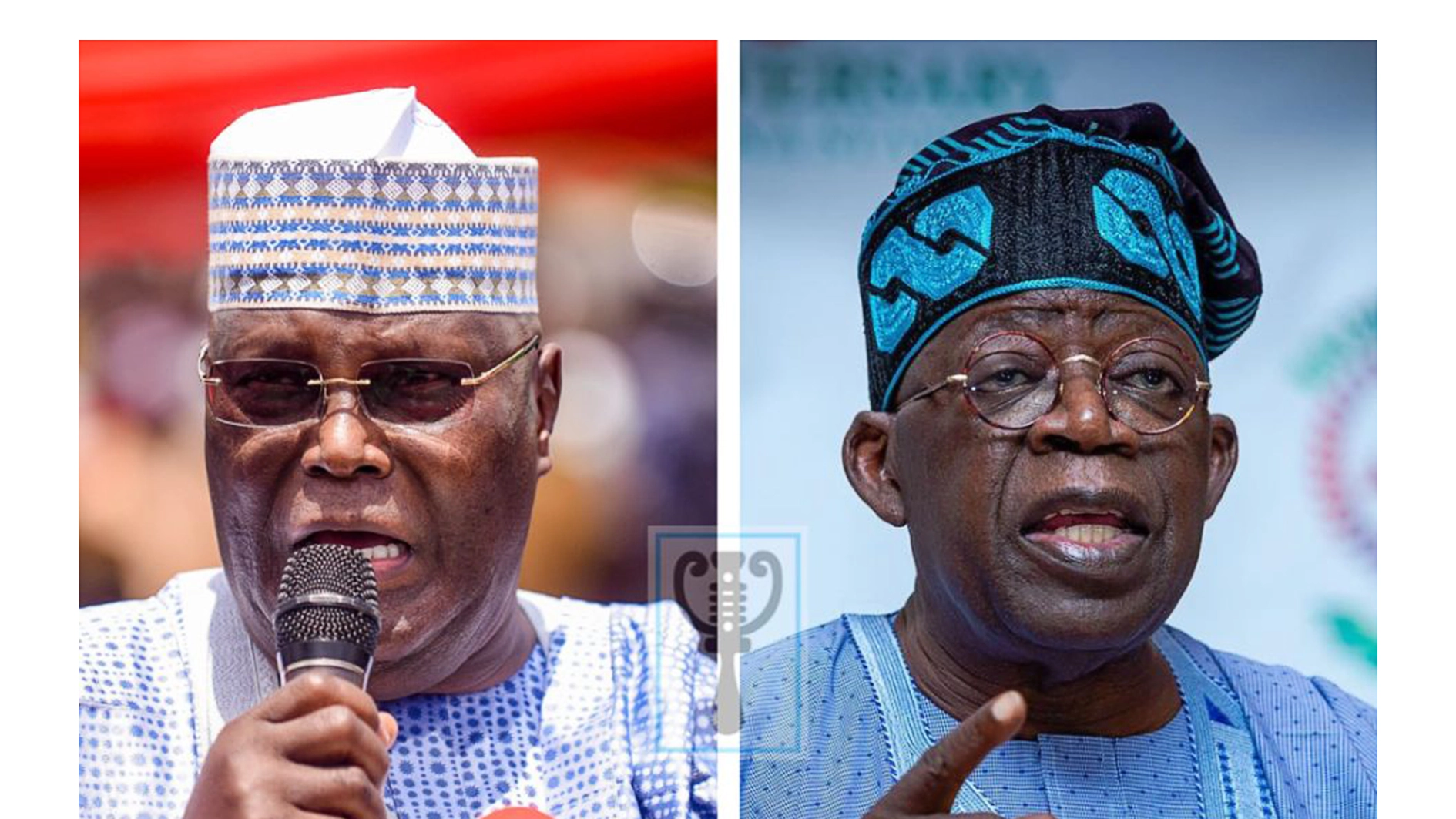
…Defends Tinubu’s economic reforms
The Presidency has replied former Vice President Atiku Abubakar on “Nigeria Reform Journey,” saying criticisms must be based on facts and not frozen snapshots of history.
In a statement on Sunday, Atiku slammed the President Bola Tinubu-led Federal Government over its management of Nigeria’s economy.
Atiku said that “no amount of lying with statistics” could shield the administration from what he described as its worsening economic record.
The former vice-president also accused the current administration of attempting to rewrite Nigeria’s economic realities through what he called “creative accounting” and polished public presentations, maintaining that the daily hardship confronting Nigerians tells a completely different story.
On Saturday, Atiku, in a statement by his Senior Special Assistant on Public Communication, Phrank Shaibu, dismissed recent comments by the Minister of Finance, Taiwo Oyedele, who had defended the administration’s economic reforms, including the removal of fuel subsidy, debt management strategy and workers’ welfare initiatives.
According to him, the government’s explanation that savings from the removal of fuel subsidy are being deployed to reduce inherited liabilities is inconsistent with publicly available financial records.
The presidential candidate of the African Democratic Congress (ADC) said that rather than reducing indebtedness to the Central Bank of Nigeria (CBN), the Tinubu administration had significantly expanded it.
Atiku lamented that government’s borrowing from the apex bank increased by N17.39 trillion between May 2025 and May 2026, representing a 77.6 per cent rise, saying: “This completely destroys the narrative that subsidy savings are being used to reduce government indebtedness. Nigerians deserve honesty, not creative accounting.”
Reacting on Sunday, the Presidency defended Tinubu’s economic reforms and replied Atiku on Nigeria’s reform journey.
Special Adviser to the President on Information and Strategy, Bayo Onanuga, said: “Politics thrives on disagreement. Democracy demands it. But disagreements must be rooted in facts, not frozen snapshots of history. When yesterday’s data are presented as today’s reality, the public deserves context.
“Former Vice President Atiku Abubakar, in his typical pastime, has accused the administration of President Bola Ahmed Tinubu of fiscal recklessness, citing excess borrowing in the 2024 budget, questioning the removal of fuel subsidy, criticising tax reforms, concocting an oil windfall of N7.98 trillion, and suggesting that Nigeria is drifting economically.
“His concerns, though misplaced, deserve a response—not because criticisms should be silenced – but because Nigerians should have a fuller picture of where the country is today.”
According to Onanuga, a debate anchored in 2024 cannot explain Nigeria in 2026, stressing that perhaps, the first observation is chronological.
He said it is curious that in the middle of 2026, the opposition’s principal economic argument remains anchored to developments in the 2024 fiscal year.
Onanuga explained that economies are dynamic, reforms are processes, not events and judging a reform programme solely by its earliest and most painful phase is like judging chemotherapy by the nausea it induces while ignoring the remission it seeks to achieve.
He stated that the Nigerian economy that underwent painful adjustment in 2024 has evolved considerably and following the exchange-rate reset, Nigeria’s dollar-denominated Gross Domestic Product (GDP) fell to about $253 billion, reflecting the immediate effect of currency realignment.
Since then, Onanuga said figures from statistics bodies and multilateral agencies like the International Monetary Fund (IMF) indicate that it has recovered significantly to approximately $377 billion, representing an increase of roughly 49 per cent from that post-adjustment trough.
Likewise, he said that Naira GDP has expanded from about ₦314 trillion in 2024 to around ₦530 trillion, a 69% increase reflecting both higher economic activity and price changes.
These figures, according to Onanuga, should continue to be assessed alongside real GDP growth, inflation, and household welfare because they do illustrate that the economy did not remain frozen at its most difficult moment.
“The reforms were never advertised as painless. They were presented as necessary structural adjustments intended to correct long-standing distortions, including distortions created in the Obasanjo-Atiku years, 1999-2007,” Onanuga said, positing that borrowing must be judged alongside economic capacity.
“On the matter of Nigeria’s debts, it is important to ask a broader question: What is Nigeria’s capacity to sustain her debt? For debt, in itself, is not the defining measure of fiscal health. What matters are the size of the economy; our revenue-generating capacity; debt servicing costs; the purposes for which funds are borrowed; and whether borrowed resources finance productive investments or recurrent consumption. Nigeria’s debts have been acquired for productive, long-term infrastructural and investment purposes – according to the law.
“Nigeria’s debt-to-GDP ratio remains relatively modest (at barely 40%) compared with many peer economies and advanced countries (South Africa (85%), Egypt (80%), Ghana (60%), Kenya (75%), USA (130%), UK (110%), China (300% – unofficially), even though debt-service pressures have historically been significant.”
Onanuga said still, the Tinubu administration has seen a reduction in the debt service-to-revenue ratio, from a high of nearly 100% in December 2022 to less than 60% today.
According to him, this is a remarkable achievement that shows that Nigeria’s revenue efficiency has improved, while debt management remains conservative and astute.
All the same, Onanuga said the more meaningful question is whether borrowing finances investments that expand productive capacity and future revenues, rather than merely postponing difficult choices.
On the alleged oil windfall, Tinubu’s aide said Atiku and his handlers have revealed analytical deficiency, explaining that: “There is no such oil windfall of N7.98 trillion. Any incremental revenue from higher oil prices is reflected in the monthly FAAC figures.
“While the average price for the half-year 2026 for Brent is around $90 compared to the $64.85 benchmark, the average daily production fell short at about 1.6m bpd compared to the forecast of 1.84m bpd.
“The production shortfall partly offset the price premium. In addition, some crude volume had been pledged for loans used to pay for the wasteful subsidy in the past, which the President was bold enough to remove, stopping the bleeding but not immediately translating into available revenue.”
According to Onanuga, the convenient mistake many analysts make is to multiply the oil price by the daily crude production volume to determine revenue to the government.
Such analyses, he stated, ignore the cost of production, the share of crude belonging to the oil-producing companies and the impact of crude sale contracts such as forward contracts designed to hedge against price volatility.
Challenging Atiku, Onanuga said the ADC presidential candidate will do well to show the workings for his N7.98 trillion oil windfall.
He added that history rarely remembers governments for the popularity of their decisions in the moment, it remembers whether those decisions ultimately strengthened or weakened the nation.

