 Follow Us on Google News
 Follow Us on Google Discover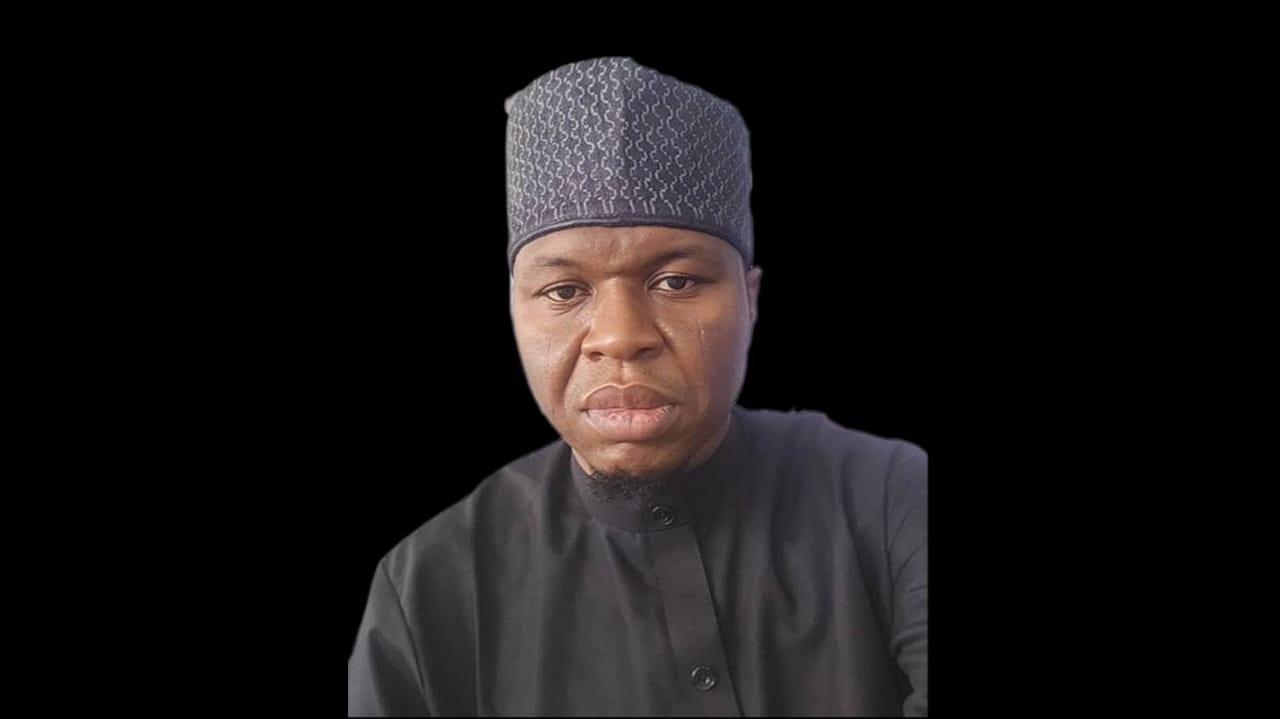
By Abdulrahman Abu Hamisu
While it is no longer a secret to the average Nigerians, and foreigners alike, the lingering problems of Boko Haram insurgency in the Northeastern region of Nigeria, have dent the country’s image in international affairs as the conflict have claimed lives of millions of innocent people, destroyed infrastructure and economy activities of the six affected states.
Despite the problem is yet to fully tamed, concerns both home and abroad now focused on how to stabilise and rebuild a region that suffered from past neglects, abuse and corruption, including devastation arising from the activities of Boko Haram.
Institutions they said, don’t fail. Values don’t failed too until abused. When people talk about the collapse of governance, governance in itself also don’t collapsed, what it does, it is only yielding to negative human actions called corruption. So, there is positive and negative effect in these regards wherever there is good or bad governance system in place .
While focused in the past few weeks have been on promises and realities alongside human capacity development of the people of the Northeast region of Nigeria, the issue of recovery and peace building which has been a long walk takes a center stage, Abduralman Abu Hamisu writes.
Violent attacks on civilians by Boko Haram since 2009 have left widespread devastation
in the North East of Nigeria in addition to the effects and impacts of past neglects and corruption which includes abuse of office responsible for the collapse of governance in most of the states in the region.
The BH armed conflict; a conflict that compounded the region’s existing development challenges is taking place in a setting characterised by a number of factors such as poverty and inadequacies in governance, poor social and economic outcomes, high inequality, perceived social injustice, low accountability and legitimacy of state, low levels of human security, lack of economic infrastructure, climate change and environmental degradation just as efforts are in place to ensure the revival of the once vibrant region of Nigeria. To this end, the Recovery and Peace Building Assessment (RPBA) which informs a collective vision and strategy on peace building and recovery, just like The Buhari Plan, the Revised Buhari and the North East Stabilisation and Development Master Plan that came after it, provides a framework for coordinated and coherent support to assist conflict affected people in the North-East.
The assessment covers the six states of Borno, Yobe, Adamawa, Gombe, Taraba and Bauchi, and provides an overarching framework for stability, peace building and recovery. The RPBA is founded on the recognition that a durable resolution to the conflict in the North-East requires addressing the structural and underlying drivers of conflict. This understanding has also underpinned the
identification and prioritization of needs presented in this report. As in other complex crises, there are many factors contributing to the violent conflict in the North-East.
The Humanitarian Response Plan for 2016 had requested USD 248 million, and was 8 per cent funded as of 5 March 2016. 63 partners had provided multi-sectoral humanitarian assistance to conflict affected people in the North-East.
This includes food, water and sanitation, health and hygiene services, shelter and non-food items, education, protection – including targeted responses for children and SGBV survivors, early recovery activities and livelihoods. Some 20 national CSOs and NGOs operated in the North-East play a critical
role in the delivery of assistance, especially in areas where international actors are not present or have no access.
On August 21, 2015, the Government of Nigeria requested assistance in assessing the needs associated with peace building and crisis recovery. This support has been provided in accordance with the 2008 Joint European Union
(EU) United Nation (UN)-World Bank (WB) Declaration on crisis assessment and recovery planning. The assessment was launched with a workshop in Abuja on 25-26 January attended by more than 250 participants representing Federal and State Governments, the World Bank (WB) European Union (EU), and United Nation (UN) and civil society organizations, internally displaced persons (IDPs) and other stakeholders.
The government response to the crisis from the onset has primarily been a nationally-based security and humanitarian response, with limited attempts at long term developmental projects, programmes and schemes as a result of two key challenges, the first being the devastating nature of the insurgency which requires humanitarian assistance and the nature of the insurgency itself which made developmental projects secondary at that point in time.
Also, at the national level, former President Goodluck Jonathan had earlier established the Presidential Initiative on the North East (PINE) in 2014. PINE was tasked with providing emergency assistance, mobilising targeted resources to jumpstart the regional economy, and strategically positioning the North East for long-term growth by leveraging its assets.
Late former President Muhammadu Buhari’s administration however, intensified and continued military operations against Boko Haram, and at the same time reviewing the activities of the Presidential Committee on the North East leading to the enactment of the bill for the establishment of the North East Development Commission which is charged with undertaking a survey of the region before developing the Master Plan for the redevelopment of the region to ascertain the key drivers of the insurgency and the required solutions.
The North East Development Commission which is both a coordinating entity as it is humanitarian, peace building, recovery and stabilisation is also a developmental entity too.
Buhari, who had came up with a comprehensive recovery and development framework designed to address the humanitarian and economic crisis caused by the Boko Haram insurgency in the North East and other parts of Nigeria since 2009 and the plan which represents the summation and centralisation of efforts at local, state, national, and international levels aimed at restoring stability, rebuilding communities, and driving long-term prosperity in the affected region cannot be wholly said to have achieved its aimed as the people of the Northeast still grapple with insecurity, unemployment and abject poverty.
According to the framework, of the plan, communities in the North East have shown resilience in the face of the insurgency by resisting violence, supporting victims, and sustaining livelihoods despite harsh conditions.To coordinate a regional response, North East State Governments developed the North East States Transformation Strategy (NESTS) which serves as a key reference point for the Buhari Plan and other subsequent Plans.
International partners have also played a role. Under the leadership of the World Bank, the global community conducted several assessments and published a recovery plan in April 2016 to guide post-conflict reconstruction.
The Buhari Plan draws from these state, national, and international strategies and integrates them into programmes developed by *President Muhammadu Buhari and the *All Progressives Congress (APC) administration.
Government officials say the objective of the plan goes beyond ending the insurgency. It is also intended to spearhead the full recovery and development of the North East, while providing a model for national development.
While the plan is expected to guide interventions in infrastructure, livelihoods, education, health, and economic empowerment as part of efforts to rebuild communities and prevent future crises, the long awaited recovery, economy, infrastructure development and peace, we must not loose sight of the warning contained in the French Agency for Develepment supported research titled Crisis and Development: The Lake Chad Region and Boko Haram, which cautioned that the North East risks becoming another South South of Nigeria where age long neglects, the need to rebuild the region and federal government determination to overcome youth restiveness in the South South Region became avenues for making elicit money-making by the elite of the region while the challenges that led to the establishment of the interventions remained intact without significant notable changes in the region.
This caution has become all the important in view of how corruption and abuse of interventions in Nigeria ruined well intended interventions that ought to have changed the lives of the people, especially now that the government has established more development commissions which are to cater for the development needs of all the regions.
Abdulrahman Abu Hamisu
A Researcher, Public Affairs Analysts, and Leader, Independent Researcher writes from Abuja

