 Follow Us on Google News
 Follow Us on Google Discover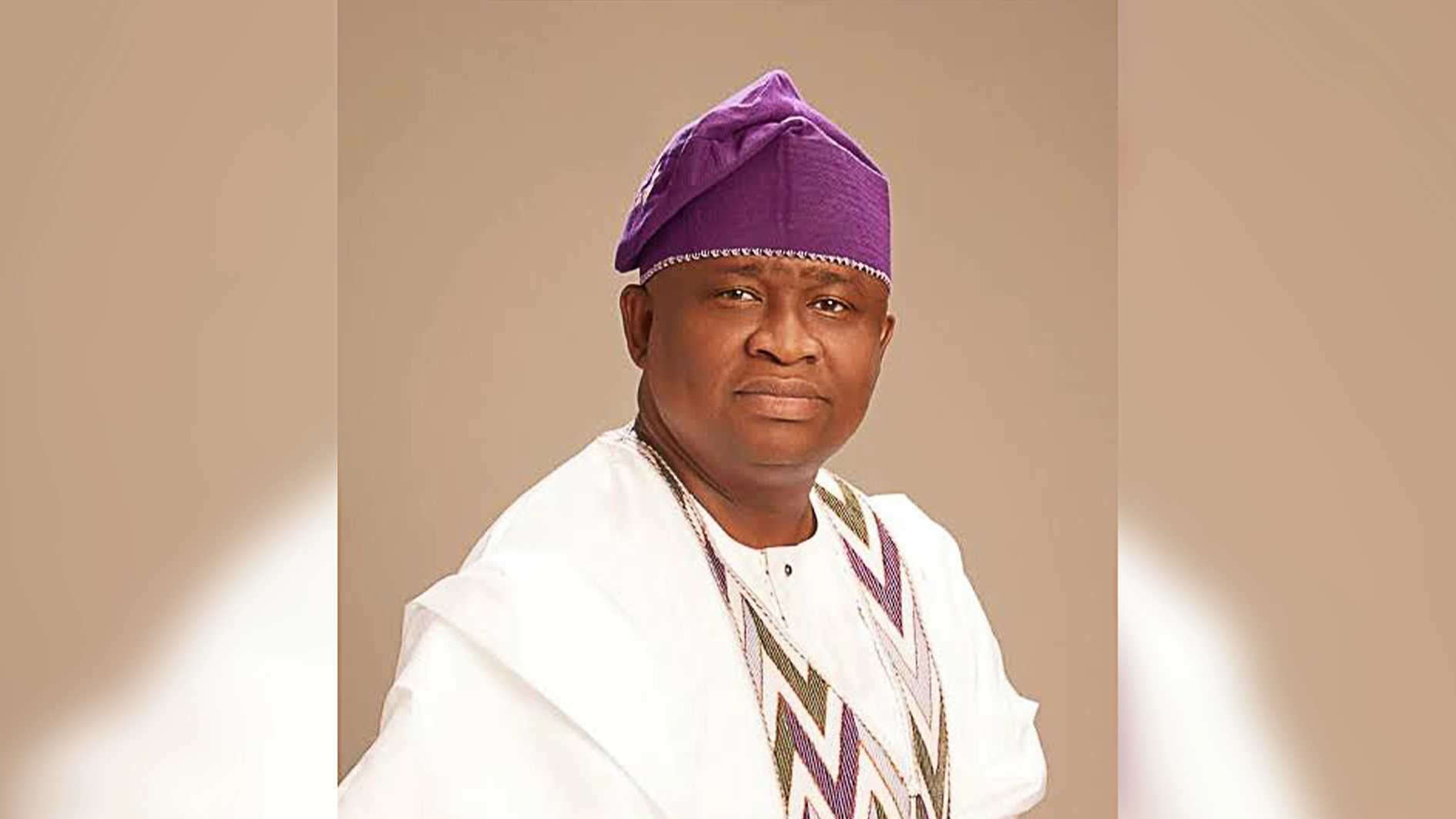
By Lekan Odunlami, Esq.
There is a road that runs from Lagos to Ilaro. It is not a long road, not by Nigerian standards. You can drive it in under two hours if the traffic is kind. But for Senator Solomon Olamilekan Adeola, the man everyone calls Yayi, it has taken more than three decades to travel.
He was born in Lagos, at the Island Maternity Hospital, to a family that worked hard and asked for nothing. He grew up in Alimosho, went to a public primary school there, and later to Community Grammar School in Akowonjo, Lagos. Nobody was writing his name down as a future governor. He was just another boy from a Lagos neighbourhood that produces more market traders and bus conductors than senators. But his people came from somewhere else. His roots trace back to Ilaro, the town that serves as headquarters for Ogun West. That is the part of the story that matters now.
A career built one office at a time
Yayi did not arrive in politics through connections or inheritance. He started at the Lagos State House of Assembly, doing the unglamorous work of committee meetings and budget papers. He chaired the Finance and Appropriation committee there, and by the time he was done, Lagos State’s monthly revenue had grown from about five billion naira to somewhere near fifty billion. That is not a small thing. That is the difference between a state that can pay salaries and fix roads, and one that cannot.
From there, he went to the House of Representatives, then to the Senate representing Lagos West for two terms. Along the way, he became known as the accountant in the room; the one who reads the budget line by line instead of skimming it. In 2023, he did something unusual. He left the comfort of Lagos, where he had already built a career and a name, and went home to Ogun West to contest for the Senate seat there. He won. Today he chairs the Senate Committee on Appropriations, which means he has a hand in every naira the federal government spends.
Ilaro: the town that never left him
Ask anyone in Ilaro about Yayi, and they will not talk about the Senate or the budget committee. They will talk about a man who kept coming back. Ilaro is a quiet town, the kind of place where everybody knows whose child you are before you finish introducing yourself. It sits in Yewa-Awori country, an area that has always felt a little further from the centre of things; further from the state capital, further from the contracts, further from the attention that other parts of Ogun State get. People there farm cassava, cocoa, and kolanut. They trade across the nearby border with the Benin Republic. They send their children to school and hope the roads hold up long enough for them to get there.

For years, Yewa-Awori people have had a quiet complaint that they rarely say too loudly outside their own gatherings: that they built the state alongside everyone else but never got to lead it. Not one governor from their side since Ogun State was created. It is the kind of grievance that does not show up in newspaper headlines every day, but it sits in the background of every election, the way an old debt sits in the back of a family’s mind.
Yayi grew up away from Ilaro, but he did not grow up away from it in his heart. Those who know him say he was in Ilaro for burials, for weddings, for Sallah and Christmas, long before anyone thought he would run for anything there. When he eventually returned to contest the Senate seat in 2023, it did not feel, to many in the town, like a stranger arriving. It felt like someone finally coming home to finish something.
What he says he wants to do
Talk to Yayi about his plans for Ogun State, and he does not start with slogans. He starts with roads and boreholes, the small things that decide whether ordinary life is easy or hard.
His pitch rests on a few simple ideas. The first is agriculture. Ogun State, and Ogun West especially, has land that has been farmed for generations but never fully organised into the kind of business that creates real wealth. Yayi talks about turning farming into agribusiness; helping farmers get better prices, easier access to processing, and a way to sell beyond the local market, instead of watching produce rot for lack of storage or buyers.
The second is young people. Like most of Nigeria, Ogun State has more school leavers and graduates than it has jobs waiting for them. Yayi has spoken about skills training and support for small businesses, the sort of practical help that does not need a factory to be built first; things young people can use to start earning almost immediately.
The third is healthcare, particularly for the parts of the state that tend to be forgotten. Over the years, he has funded ambulances, medical equipment, and drugs for communities in Ogun West that often go without. He says that as governor, he would try to make that kind of support a standard, not a favour handed out during election season.
And running underneath all of it is the thing he keeps coming back to the discipline of the budget man. He argues that Ogun State does not lack resources so much as it lacks the kind of careful, honest handling of money that turns revenue into roads and schools instead of into waste. Whether that argument holds up once he is in office, only time would tell. But it is, at least, a clear pitch: fix the money, and the rest follows.
The road is not without bumps
No serious political journey is smooth, and this one has not been either. There have been public disagreements with fellow political figures, and hard questions raised about trust. There have also been questions asked about aspects of the federal budget process he oversees. These are not small matters, and voters are right to ask about them. A man who wants to manage a state’s money should be able to answer for how he has managed the nation’s.
But strip away the noise, and what is left is a simple story: a boy from Lagos who never forgot where his people came from, who spent over twenty years learning the unglamorous mechanics of government, budgets, revenue, appropriations, and who now wants to bring that experience home to a town, and a region, that has been waiting a long time for its turn.
Whether Ogun State agrees that his walk should end at Oke-Mosan is a decision only its voters can make. But it is hard to deny that the walk itself has been a long one, and that he has covered most of the distance on foot, one committee room and one visit home to Ilaro at a time.
Lekan Odunlami, Esq. is a Lagos based Legal Practitioner.

