 Follow Us on Google News
 Follow Us on Google Discover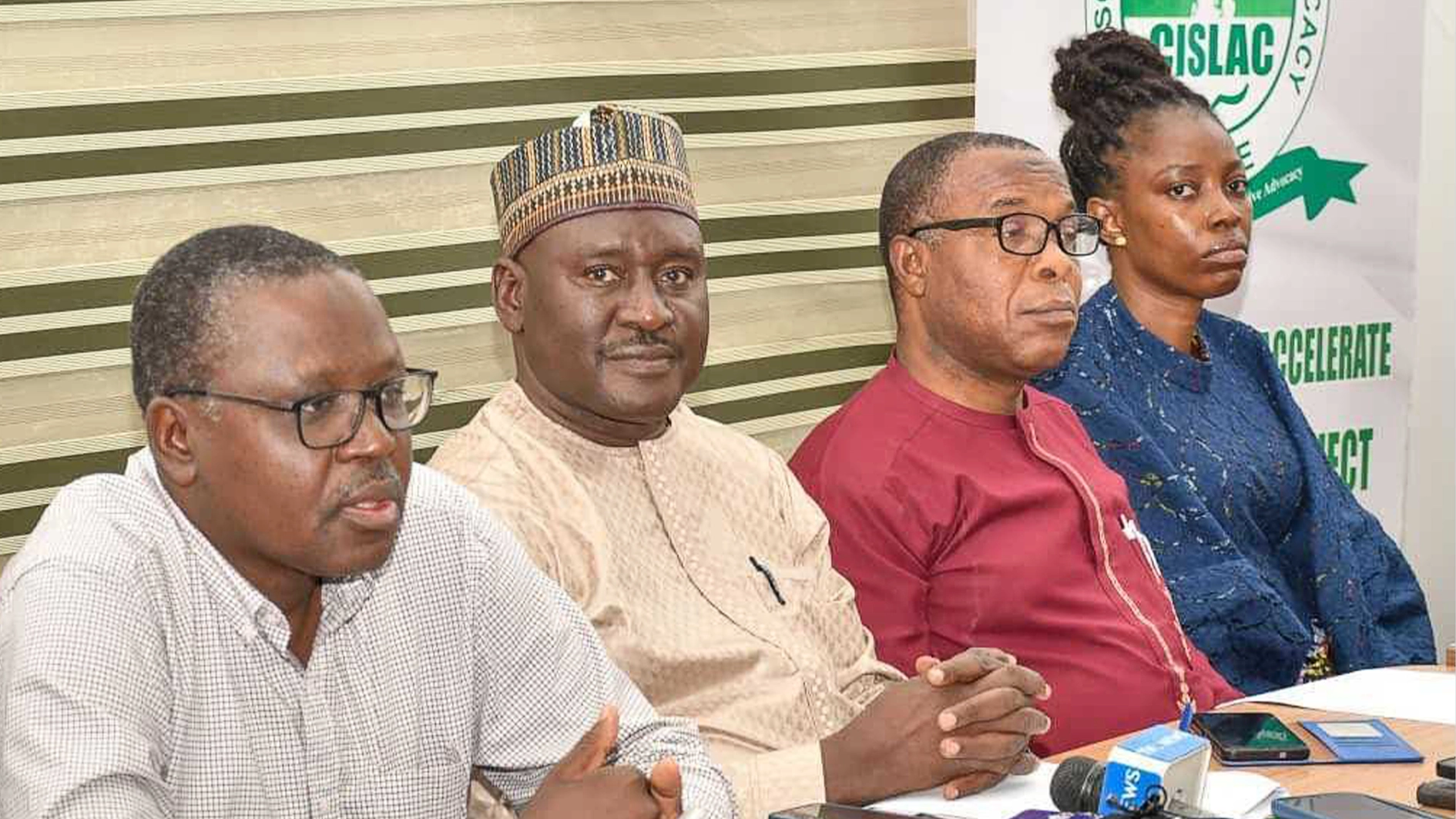
A coalition of 86 Nigerian, African and international civil society organisations (CSOs) has urged the National Assembly to immediately withdraw what it described as repressive bills currently before lawmakers while warning that their passage would significantly shrink civic space, undermine constitutional freedoms and weaken democratic governance ahead of the 2027 general elections.
The organisations argued that the proposed legislations, particularly the Foreign Aids (Regulation, Transparency and Disclosure) Bill, 2026 (SB.1034) and the bill seeking to compel social media platforms to establish physical offices in Nigeria, would hand excessive regulatory powers to the executive arm of government, weaken the independence of civil society organisations and stifle free expression.
They made the call on Monday at a joint press conference in Abuja, where the coalition was represented by the Executive Director of the Civil Society Legislative Advocacy Centre (CISLAC), Awwal Musa Rafsanjani; Director of the Centre for Democracy and Development (CDD), Dauda Garuba; Chief Executive Officer of Triple C, Lydia Odeh; and Country Director of Amnesty International Nigeria, Isa Sanusi.
Reading a joint statement on behalf of the coalition, the organisations said Nigeria’s civic space was facing one of its gravest threats since the country’s return to democratic rule in 1999, accusing the government of increasingly relying on restrictive laws, arbitrary arrests, politically motivated prosecutions and judicial intimidation to silence dissent.
The statement was jointly endorsed by 86 organisations, including Amnesty International Nigeria, CISLAC, the Centre for Democracy and Development (CDD), SERAP, BudgIT, Yiaga Africa, Connected Development (CODE), Media Rights Agenda, ActionAid Nigeria, Global Rights, the International Press Centre (IPC), the Wole Soyinka Centre for Investigative Journalism (WSCIJ), the Centre for Journalism Innovation and Development (CJID), Transition Monitoring Group (TMG), CLEEN Foundation and several other national and international civil society organisations.
According to them, “if enacted, these bills would significantly expand executive control over civic life and further undermine the rights to freedom of expression, peaceful assembly, freedom of association, media freedom, access to information, democratic participation and the rule of law.”

The groups said the pending bills should not be viewed in isolation but as part of a broader trend of shrinking civic freedoms.
They alleged that since President Bola Tinubu assumed office in May 2023, authorities have increasingly deployed restrictive legislation, strategic lawsuits, arbitrary arrests, intimidation and judicial harassment against journalists, bloggers, media organisations, human rights defenders, civil society organisations and other citizens peacefully exercising their constitutional rights.
As examples, the coalition cited the continued prosecution of activist and publisher Omoyele Sowore, alleged reprisals against the Socio-Economic Rights and Accountability Project (SERAP), what it described as the misuse of the Cybercrimes Act to prosecute journalists and critics of government, as well as repeated attempts to intimidate independent media organisations and civil society groups.
The organisations also referenced a May 2026 report by the Committee to Protect Journalists (CPJ), which documented 91 cases of journalists being arrested, attacked or otherwise harassed across 13 states and the Federal Capital Territory during the first three years of the current administration.
According to the coalition, the introduction of the pending bills ahead of the 2027 elections raises serious concerns about the future of democracy in Nigeria.
“The timing of these proposals is particularly concerning as Nigeria prepares for the 2027 general elections. Rather than creating an open environment where citizens, journalists, civil society organisations and political actors can participate freely, these measures risk entrenching fear, self-censorship and intolerance of dissent.
“Independent advocacy, investigative journalism and public scrutiny are not threats to democracy; they are essential safeguards of constitutional governance and accountability,” the statement read.
The coalition devoted significant attention to the Foreign Aids (Regulation, Transparency and Disclosure) Bill, 2026, acknowledging that transparency and accountability in the management of foreign assistance are legitimate objectives but insisting that the proposed legislation goes far beyond those goals.
It argued that while Sections 1 and 2 of the bill seek to promote transparency and prevent the misuse of foreign aid, they establish an excessively broad regulatory framework that makes no distinction between public funds managed by government institutions and private philanthropic funding received by independent organisations.
According to the coalition, such an approach would effectively transform financial regulation into state control over constitutionally protected activities carried out by civil society organisations.
The groups further criticised Sections three to five of the bill, which propose the establishment of a Foreign Aid Regulatory Commission (FARC) with powers to register recipients of foreign assistance, demand information, conduct inspections and audits, impose sanctions and enforce compliance with government-defined national policies and priorities.
They argued that the proposed commission would duplicate the responsibilities already performed by agencies such as the Corporate Affairs Commission (CAC), the Economic and Financial Crimes Commission (EFCC) and the Special Control Unit against Money Laundering (SCUML), without demonstrating why the existing institutions are incapable of performing those functions.
The coalition also faulted Sections 6 to 8 of the bill, which require every recipient of foreign assistance to register with the proposed commission within 30 days, criminalise non-registration and compel organisations to comply with extensive reporting and disclosure obligations irrespective of the size, purpose or risk profile of the funding received.
It warned that Sections 9 to 11 would compel foreign-funded projects, including those undertaken by independent civil society organisations, to align with government-defined national development priorities, a provision the coalition said could expose organisations involved in anti-corruption advocacy, election observation, humanitarian interventions, legal aid, governance reforms and public interest litigation to undue political interference.
The coalition equally criticised Sections 12 to 16 of the bill, which prescribe criminal sanctions, fines, imprisonment, suspension or revocation of operational licences and broad rule-making powers for the proposed commission.
According to the organisations, the definition of “foreign aid” under the bill is so broad that it could capture virtually every form of international financial or technical assistance received by Nigerian organisations.
The coalition also rejected the proposed legislation seeking to compel social media platforms to establish physical offices in Nigeria or risk being prohibited from operating in the country.
While acknowledging government’s right to regulate the digital economy, the organisations argued that making physical presence a condition for accessing Nigeria’s digital market was neither necessary nor proportionate.
They warned that the proposal could facilitate censorship, restrict access to information, discourage innovation and foreign investment, and pressure technology companies to prioritise political interests over internationally recognised human rights standards.
The organisations maintained that both bills are inconsistent with Sections 39 and 40 of the 1999 Constitution (as amended), which guarantee freedom of expression, peaceful assembly and association, while Section 22 recognises the responsibility of the media to hold government accountable.
They further argued that the bills violate Nigeria’s obligations under the African Charter on Human and Peoples’ Rights, the International Covenant on Civil and Political Rights (ICCPR), the International Covenant on Economic, Social and Cultural Rights (ICESCR), the United Nations Declaration on Human Rights Defenders and the African Commission’s Guidelines on Freedom of Association and Assembly in Africa.
The coalition noted that international courts have consistently rejected similar restrictions, citing decisions of the African Court on Human and Peoples’ Rights and the Court of Justice of the European Union, which held that transparency objectives cannot justify disproportionate restrictions on organisations receiving international support.
The organisations stressed that international funding remains critical to the work of many Nigerian civil society organisations involved in election observation, anti-corruption advocacy, humanitarian assistance, legal aid, public interest litigation and human rights monitoring.
They argued that such support represents legitimate international cooperation rather than evidence of foreign interference.
The coalition called on the Senate President, the Speaker of the House of Representatives and all members of the National Assembly to immediately withdraw the Foreign Aids (Regulation, Transparency and Disclosure) Bill, the bill requiring social media companies to establish physical offices in Nigeria and every other pending legislation that unjustifiably restricts civic space and democratic participation.
It urged lawmakers to ensure that all future legislation affecting civil society organisations, media freedom, digital rights and civic participation complies with the Nigerian Constitution and the country’s regional and international human rights obligations.
The organisations demanded transparent and meaningful consultations with civil society organisations, journalists, digital rights advocates, professional bodies, development partners and other stakeholders before any legislation affecting civic freedoms is passed.
“The National Assembly now faces a defining constitutional choice,” the coalition declared.
“It can enact legislation that expands executive control, shrinks civic space and accelerates democratic decline, or it can uphold the Nigerian Constitution, honour Nigeria’s binding regional and international human rights obligations, and reaffirm the country’s commitment to democratic governance, accountability and the rule of law.”

