 Follow Us on Google News
 Follow Us on Google Discover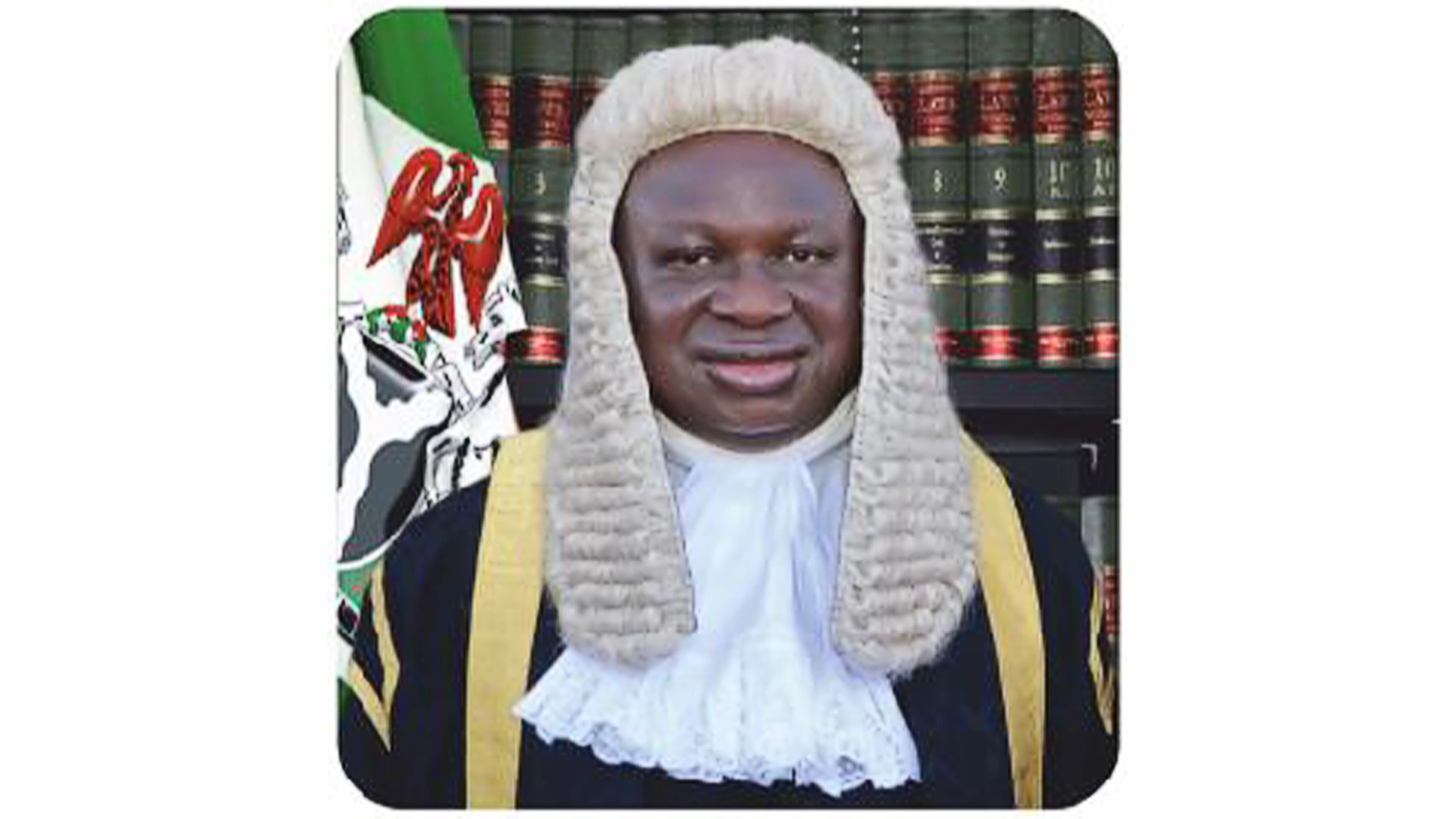
For years, casualisation, poor remuneration, and arbitrary dismissals have defined the experience of many Nigerian workers. However, a growing body of landmark judgments by the National Industrial Court of Nigeria (NICN) is reversing that trend. Through progressive interpretations of labour laws and constitutional protections, the court is promoting decent work, safeguarding employees’ rights and restoring dignity to the workplace. Notwithstanding the wins for employees, execution of judgement continues to lag. AMEH OCHOJILA reports.
Since its elevation as a superior court of record in 2011, the National Industrial Court of Nigeria (NICN) has exercised exclusive jurisdiction over employment disputes, trade union matters and workplace conflicts, ensuring that judges with specialised expertise handle labour cases.
Through its judgments, the court has strengthened the protection of workers against unjust labour practices, insisting on proper employment contracts, payment of wages and adherence to due process in disciplinary procedures. It has also addressed the widespread practice of casualisation, ruling on many occasions that keeping workers on perpetual casual status while they perform regular duties amounts to labour exploitation.
Through several decisions across its divisions, the NICN has continued to reinforce workplace justice, particularly in cases involving unlawful dismissal, breach of fair hearing, and improper exercise of disciplinary powers by employers.
Indeed, some landmark judgments that challenged the status quo have offered a rare glimpse into how judicial intervention can restore the dignity of workers at the lowest rung of the labour hierarchy.
Beyond individual disputes, the court has also helped stabilise industrial relations by mediating conflicts between the government and labour unions such as the Academic Staff Union of Universities (ASUU) and the National Association of Resident Doctors. It has also introduced procedural reforms and an Alternative Dispute Resolution (ADR) mechanism to accelerate the settlement of labour disputes and promote industrial harmony.
Instances of NICN’s adjudication
For instance, in Akanbi & Others v Central Bank of Nigeria, filed by poorly treated casual workers, the court delivered a judgment that has since been viewed by labour advocates as a milestone in the fight against exploitative employment practices.
It held that maintaining workers on perpetual casual status while they performed continuous duties was unjust and inconsistent with principles of fair labour practices and amounted to labour exploitation.
The court therefore ordered regularisation of the affected workers, directing that they be formally absorbed into the employment structure with access to statutory benefits. It also mandated payment of outstanding salary arrears while such workers are entitled to benefits associated with recognised employment, including pensions.
The recent cases also illustrate the protective role of the court in very clear terms, as well as showcase how it has continued to reinforce workplace justice, particularly in cases involving unlawful dismissal, breach of fair hearing, and improper exercise of disciplinary powers by employers.
In suit marked NICN/LA/471/2022, which was filed in the Lagos Judicial Division, between Mr Tajudeen Balogun and a commercial bank, Justice Maureen Esowe, who delivered judgment, set aside an unjust dismissal.
The dispute arose after the bank dismissed Balogun based on an alleged discrepancy in his academic record, following information earlier supplied by Obafemi Awolowo University (OAU), Ile-Ife.
The university had mistakenly reported that he graduated with a Third-Class degree instead of the Second-Class Lower reflected on his certificate. Acting on this erroneous information, the bank terminated his employment without properly affording him a fair hearing or formally confronting him with the allegation.
During proceedings, it was revealed that OAU later acknowledged the error in its initial communication. Justice Esowe held that the dismissal was procedurally flawed, violated the principles of fair hearing, and was based on unreliable information that affected the claimant’s reputation and career.
The court ordered the bank to withdraw the dismissal, awarded N5.5 million in damages, and granted N500,000 as litigation costs.
In the Abuja Judicial Division, in suit marked NICN/ABJ/321/2016, between Colonel Dukup Bise Dazang and the Nigerian Army & 2 Ors, Justice Sanusi Kado set aside the unfair retirement of a military officer.
Other defendants in the suit included the Nigerian Army, the Chief of Army Staff, and the Nigerian Army Council.
The claimant had challenged his compulsory retirement from service, arguing that it was carried out in violation of applicable military regulations and service conditions. The court agreed, holding that the Nigerian Army failed to comply with the lawful procedures governing the discipline and retirement of commissioned officers.
Justice Kado, who ruled that the retirement was unlawful, set aside the decision and ordered the immediate reinstatement of Col. Dazang to his former rank and position within the force.
A similar reaffirmation of due process occurred in the Jos Judicial Division, where Justice Ibrahim Galadima delivered judgment in a case involving Bulus Lambert and 55 other staff members of the Plateau State College of Health Technology.
The claimants were dismissed following actions attributed to the Plateau State Government. The court found that the governor and executive authorities lacked the statutory power to terminate or nullify the employment of the affected staff, as such authority resided in the institution’s governing statutory body.
It further held that even if irregularities existed in their appointments or they were on probation, the required disciplinary and statutory procedures were not followed.
The court consequently declared the dismissals unlawful, null, and void, ordered the reinstatement of the affected workers, and awarded monetary compensation and costs against the relevant state authorities and the institution.
In another development, Mrs Aderonke Adeyemi worked for nearly a decade as a cleaner in one of the country’s topmost universities. Her modest income barely covered food and transportation until she was abruptly sacked for alleged misconduct. “I begged them to let me talk, but they said my job is gone.” With children to care for and other bills to settle, Adeyemi’s situation quickly deteriorated.
While many people advised her to accept her fate since she was “just a cleaner,” she felt otherwise and dragged the institution to NICN, which, in another ruling, reinforced a core constitutional principle – that every worker is entitled to a fair hearing regardless of rank or income level.
Noting that terminating an employee without providing an opportunity to respond to allegations violates fundamental principles of natural justice, the court declared the dismissal unlawful, ordered Adeyemi’s reinstatement and directed that all salaries and benefits owed during the period of her removal be paid in full. “The court didn’t just give me my job back, it gave me my voice,” she said.
For instance, in Mr Gilbert Ifuro Keinma v. Nigeria National Petroleum Corporation (NNPC) Ltd (Suit No. NICN/PHC/01/2023), decided on January 15, 2025, the National Industrial Court examined the legality of the claimant’s termination and his demand for over N152 million in salaries, allowances, gratuity and pension benefits under the employer’s Conditions of Service.
In Ibrahim M. Gidado v. National Space Research and Development Agency (NASRDA) (Suit No. NICN/KN/21/2024), delivered on January 21, 2025, the court condemned the withholding of the claimant’s salaries for more than six years, ordered the payment of all salary arrears and awarded general damages equivalent to one year’s salary.
Similarly, in Mr Yannet Joshua v. DAAR Communications Plc (Suit No. NICN/KN/34/2020), decided on February 4, 2025, the court ordered the company to pay about seven years of outstanding salaries and awarded general damages after holding that the prolonged non-payment amounted to an unfair labour practice.
In Mr Rasheed Jimoh v. Dee-Pee Global Packaging Ltd (Suit No. NICN/IB/30/2022), the court ruled on January 13, 2025, that placing an employee on indefinite suspension without salary for over one year constituted wrongful termination and an unfair labour practice.
Also, in Dr Abidemi Taofeek Adesanya & Anor v. Police Health Maintenance Ltd (Suit No. NICN/ABJ/37/2023), decided on May 23, 2025, the court held that the non-payment of salaries and allowances for 23 months amounted to an unfair labour practice and granted reliefs in favour of the claimants.
Likewise, in Mr Oluwafemi Adesina v. Polaris Bank Ltd (Suit No. NICN/ABJ/119/2021), decided on July 4, 2025, the claimant challenged his dismissal and sought declarations that the termination was unlawful, alongside arrears of salaries, terminal benefits and damages.
In Mr Edmund Duru v. Arik Air Ltd & Ors, judgment delivered on June 25, 2025, the Court declared the claimant’s dismissal wrongful, ordered the payment of outstanding salaries, remittance of pension contributions with accrued interest, and awarded N5.16 million in general damages and costs.
Similarly, in Atinuke v. Retail Supermarkets Nigeria Ltd (Shoprite), decided on July 3, 2025, the court held that the employee’s appointment was wrongfully terminated without fair hearing and awarded salary in lieu of notice, N10 million in damages and N500,000 in costs.
The trend continued in 2026. In John K. Agomuo v. NICON Insurance Ltd (Suit No. NICN/ABJ/66/2022), the court ordered the company to compute and refund deducted salaries and allowances, pay terminal benefits and remit outstanding pension contributions within 30 days.
The court also declared UBA’s dismissal of an employee unlawful, nullified the dismissal and ordered the bank to pay outstanding salaries, gratuity and pension benefits.
In another case, the Court ordered the Federal Road Safety Corps (FRSC) to reinstate a dismissed officer after finding that the termination of appointment was unlawful.
Similarly, the court held that Julius Berger Nigeria Plc wrongfully terminated the appointments of 28 workers and directed the company to pay severance packages and other employment benefits.
Legal experts said that such judgments have reinforced a growing perception that NICN plays a critical role in protecting workers from exploitative conditions and arbitrary dismissals.
They said the cases demonstrated that labour justice is not the exclusive domain of executives, senior professionals or union leaders, but a shield for vulnerable and invisible workers and a reminder that justice must be accessible to all.
The growing relevance of the National Industrial Court is reflected in the number of disputes brought before it in recent years. Data shows that the institution received over 6,277 industrial and labour-related cases within two years and successfully disposed of 4,108 matters during the same period.
The President of the court, Justice Benedict Bakwaph Kanyip, who disclosed the figures, said the increasing number of complaints reflected rising awareness among workers of their legal rights and the expanding complexity of labour relations in the country.
For quick dispensation of justice, he introduced new practice directions regulating the filing of applications and motions in trade union matters, as well as procedures for marking exhibits in originating processes, to reduce trial delays and eliminate time wasted in court processes.
Justice Kanyip expressed the belief that labour disputes require quicker resolution than many other categories of litigation since they border on workers’ livelihood and industrial stability.
He, however, expressed concern that since its introduction, Alternative Dispute Resolution (ADR), aimed at resolving labour conflicts without prolonged litigation, has not been widely utilised by litigants and their legal representatives.
Stakeholders wade in
An Abuja-based lawyer, Omale Ajonye, said that the landmark judgments of the court have contributed greatly to addressing the widespread practice of casualisation in the country by condemning unfair labour practices and applying international labour standards and best practices in employment relations.
According to him, the court has, in several decisions, emphasised that employers cannot use contract staffing or outsourcing arrangements to deny workers basic labour protections. This judicial stance, he said, has helped draw attention to the problem and has provided legal remedies in specific cases.
The lawyer, however, said that the overall impact of such judgments in reducing casualisation in both public and private sectors remains limited, as casual employment practices are still widespread due to weak enforcement mechanisms, high unemployment rates, and the ability of employers to structure employment relationships in ways that avoid permanent obligations.
Ajonye emphasised that Nigeria’s principal labour legislation, particularly the Labour Act, is widely regarded as outdated and insufficient to address modern employment realities such as contract staffing, outsourcing and the gig economy.
As a result, many low-income workers remain inadequately protected.
Therefore, while the NICN has played an important role through progressive interpretations of labour rights, meaningful protection of vulnerable workers in the country will require comprehensive legislative reform, stronger labour inspection systems, and clearer statutory regulation of casual and contract employment.
In his reaction, a lawyer, Monday Ikpe, said that though the judgments attempted to check the abuse of casualisation, the deeper problem lies with Nigeria’s outdated labour laws.
He said that in many cases, the court has interpreted existing laws progressively to protect workers from exploitative contract arrangements, especially where employers disguise permanent staff as temporary or outsourced workers.
He stressed that judges are ultimately constrained by the limits of the legislation placed before them.
“The judiciary can only interpret and apply the law; it cannot completely redesign labour policy through judgments alone. From a legal perspective, the persistence of casualisation reflects serious loopholes within the Labour Act and related employment regulations.
“The law does not adequately regulate outsourcing, contract staffing or modern workplace realities, allowing employers in both public and private sectors to circumvent obligations relating to pensions, healthcare, redundancy benefits, and job security.
“As a result, many workers are trapped in precarious employment despite years of service. The courts may condemn unfair practices, but weak statutory protections continue to undermine lasting reform,” he said.
He said the situation was particularly troubling for low-income workers, who often lack the financial capacity to seek legal redress.
His words: “Even where favourable judgments exist, enforcement remains difficult, and many employees fear dismissal if they challenge exploitative conditions. This is the reason such issues go beyond judicial intervention. Without comprehensive labour reforms, employers will continue to exploit ambiguities in the law while vulnerable workers bear the economic consequences.”
Ikpe, therefore, called for a legislative reform that complements the efforts of the court.
“Nigeria requires stronger labour protections that clearly define the rights of temporary, outsourced and informal workers while imposing stricter penalties for abusive employment practices.
“The responsibility should not rest solely on the judiciary. The National Assembly and relevant regulatory institutions must modernise labour laws to reflect present economic realities and provide meaningful protection for the country’s growing low-income workforce,” Ikpe advised.

