 Follow Us on Google News
 Follow Us on Google Discover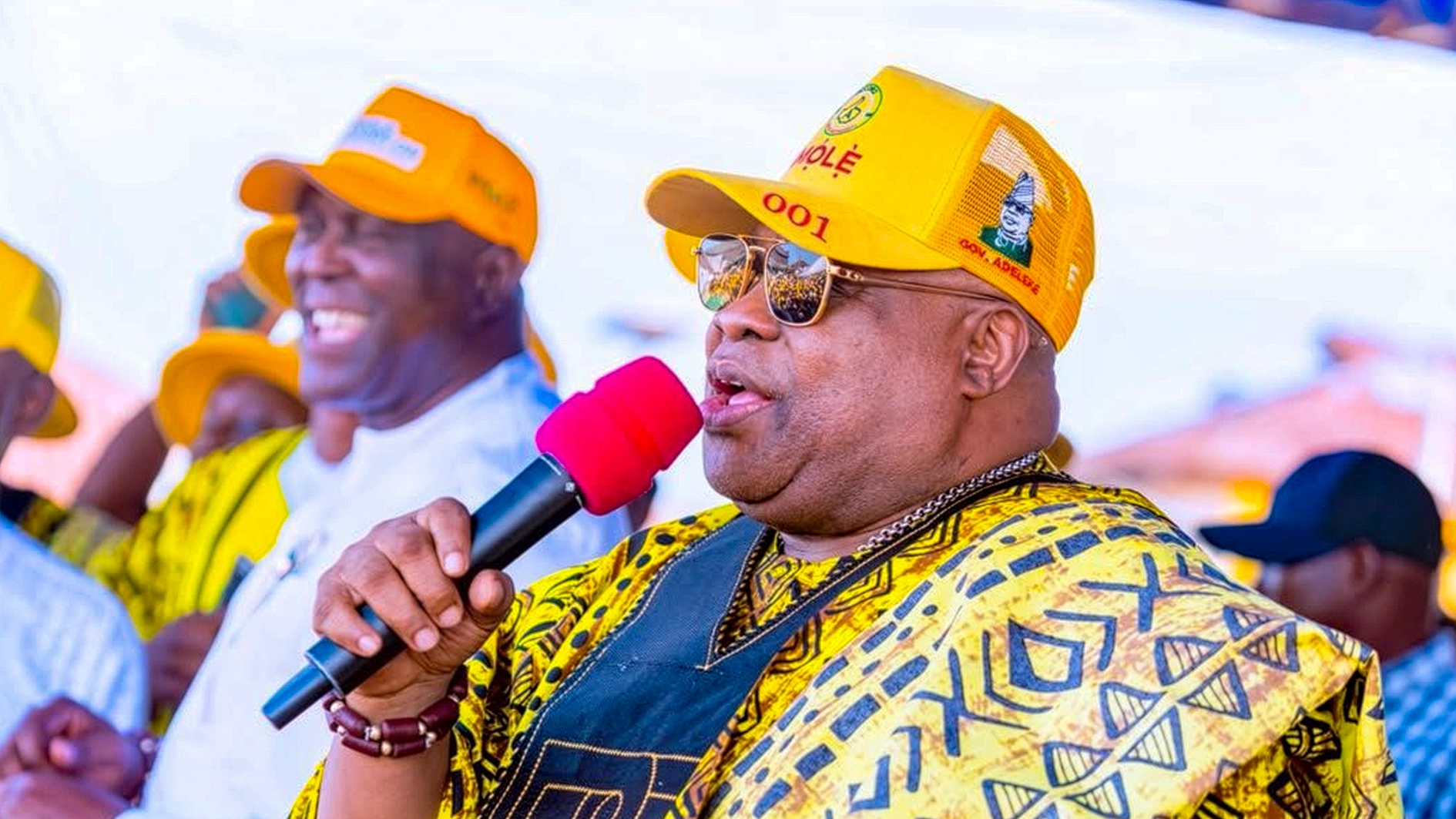
As Osun State prepares for the August 15 governorship election, the battle between incumbent Governor Ademola Adeleke of the Accord Party ( AP) and the All Progressives Congress (APC) candidate, Bola Oyebamiji, has assumed a significance that extends beyond who occupies the Government House in Osogbo.
For President Bola Ahmed Tinubu, Osun is not just another state on the electoral map. The state carries a deeply personal and political significance because Iragbiji, in present-day Boripe Local Government Area, is widely identified as his ancestral home.
Although Tinubu was born in Lagos and built much of his political career there, administering the state for eight years before his ascendancy to the exalted seat of the presidency, accounts tracing his family roots point to Iragbiji in Osun State. That background gives the governorship contest an additional layer of importance for the President.
An APC victory would enable President Tinubu to claim a significant political triumph in a state with which his family has ancestral ties, while another victory for the opposition could provide ammunition for those seeking to portray the ruling party as losing its grip on parts of the South-West.
The stakes are further heightened by Osun’s political history. The APC lost the state to Adeleke in the 2022 governorship election after its candidate, Gboyega Oyetola, now Minister of Marine and Blue Economy, was defeated in a fiercely contested poll. Oyetola was also born in Iragbiji, the same town identified in several accounts as Tinubu’s ancestral home.
For President Tinubu, reclaiming Osun state would therefore carry substantial symbolic value. It would mean restoring the APC to power in a state closely associated with his family history while demonstrating that the party remains capable of winning competitive elections in the South-West.
The result could also influence political calculations ahead of the 2027 presidential election. The South-West remains strategically important to Tinubu’s political coalition, and a convincing APC victory in Osun could strengthen the party’s grassroots structures and generate momentum for the President’s re-election bid.
Conversely, another APC defeat could intensify debate about the party’s electoral strength in the region. Opposition parties, including the African Democratic Congress (ADC) and other emerging political platforms, could interpret the result as evidence that Tinubu’s influence, despite his deep political roots in the South-West, does not automatically translate into victories for the APC at the state level.
The election is, therefore, both a battle for Osun Government House and a test of political influence. For Tinubu, the personal dimension is difficult to ignore: a state associated with his ancestral roots is now the theatre of a major political contest involving the party he leads at the national level.
The outcome will consequently be watched far beyond Osogbo. It could shape perceptions of Tinubu’s standing in the South-West, the APC’s capacity to recover lost ground and the political momentum heading into 2027.
For the President, Osun is more than an electoral statistic. It is a contest involving political power, regional influence and ancestral connection, making the August 15 poll one of the most consequential governorship battles since the return to democratic rule in 1999.
Arabinrin Aderonke Atoyebi, a member of the influential APC Osun State Governorship Campaign Council, said the party’s determination to reclaim the state was driven by its desire to restore good governance democracy dividends to the people of the state.
She said the APC regarded Osun as one of its traditional strongholds in the South-West and was determined to regain the confidence of voters through grassroots mobilisation and an issue-based campaign.
“The APC is determined to reclaim Osun because the state has always been one of the party’s traditional strongholds in the South-West. As Nigeria’s largest and most organised political party, the APC believes it has the structure, grassroots network and leadership capacity to earn the confidence of the people once again,” she said.
According to her, the party’s objective extends beyond electoral politics, as it wants Osun to align with the Renewed Hope Agenda of President Bola Ahmed Tinubu to maximise opportunities for development, infrastructure, investment and economic growth.
“The early inauguration of the National Campaign Council is a reflection of that determination and strategic focus,” she added.
Atoyebi said the APC was united and focused, insisting that the party was leaving nothing to chance in its bid to defeat the incumbent.
“The APC is united, focused and leaving nothing to chance. It is confident that with its strong grassroots mobilisation, experienced leadership and issue-based campaign, it can present a compelling alternative to the electorate. Ultimately, however, the decision rests with the good people of Osun, and the party is committed to earning their trust and mandate at the polls.”
However, the Coalition of United Political Parties (CUPP) has taken a contrary position, alleging that the APC’s determination to reclaim Osun has exposed what it described as the party’s “unquenchable appetite for rigging and power grab.”
The coalition, led by Chief Peter Ameh, expressed concern over what it described as the APC-led administration’s “well-established anti-democratic credentials” across the Nigerian political arena.
Ameh said: “What we are witnessing is not the behaviour of a party confident in its performance or popular mandate. Rather, it is the desperate actions of a political organisation driven by an unquenchable appetite for rigging and an insatiable hunger for power at all costs.”
He alleged that the APC’s actions in Osun represented an attempt to undermine the state government and called on democratic institutions and citizens to remain vigilant.
“CUPP condemns these anti-democratic tendencies in the strongest terms. Nigeria’s democracy cannot survive if any political party is permitted to treat electoral processes and state institutions as tools for power grabs rather than instruments of the people’s will,” Ameh said.
He urged the judiciary, trade unions and Nigerians committed to democracy to resist any attempt to subvert the will of voters.
Recall that the APC National Working Committee, led by Professor Nentawe Yilwatda last week tasked the Campaign Council with mobilising grassroots support for Oyebamiji and working to unseat the Adeleke administration.
The council is chaired by Imo State Governor and Chairman of the Progressive Governors’ Forum, Senator Hope Uzodimma. It has Yobe State Governor, Mai Mala Buni; Senate President, Senator Godswill Akpabio; and Speaker of the House of Representatives, Tajudeen Abbas, as co-chairmen.The Deputy Chairman is Ibrahim Kabir Masari, Senior Special Assistant to the President, while the Secretary is Deputy President of the Senate, Senator Barau Jibrin.
With the calibre of political heavyweights deployed to Osun, the APC has signalled that it regards the election as a strategic battle rather than an ordinary state contest. For President Tinubu and the APC, the August 15 election will consequently provide a crucial measure of the party’s organisational strength, its ability to reclaim lost territory in the South-West and the President’s continuing political influence in a region central to his 2027 re-election calculations.

