 Follow Us on Google News
 Follow Us on Google Discover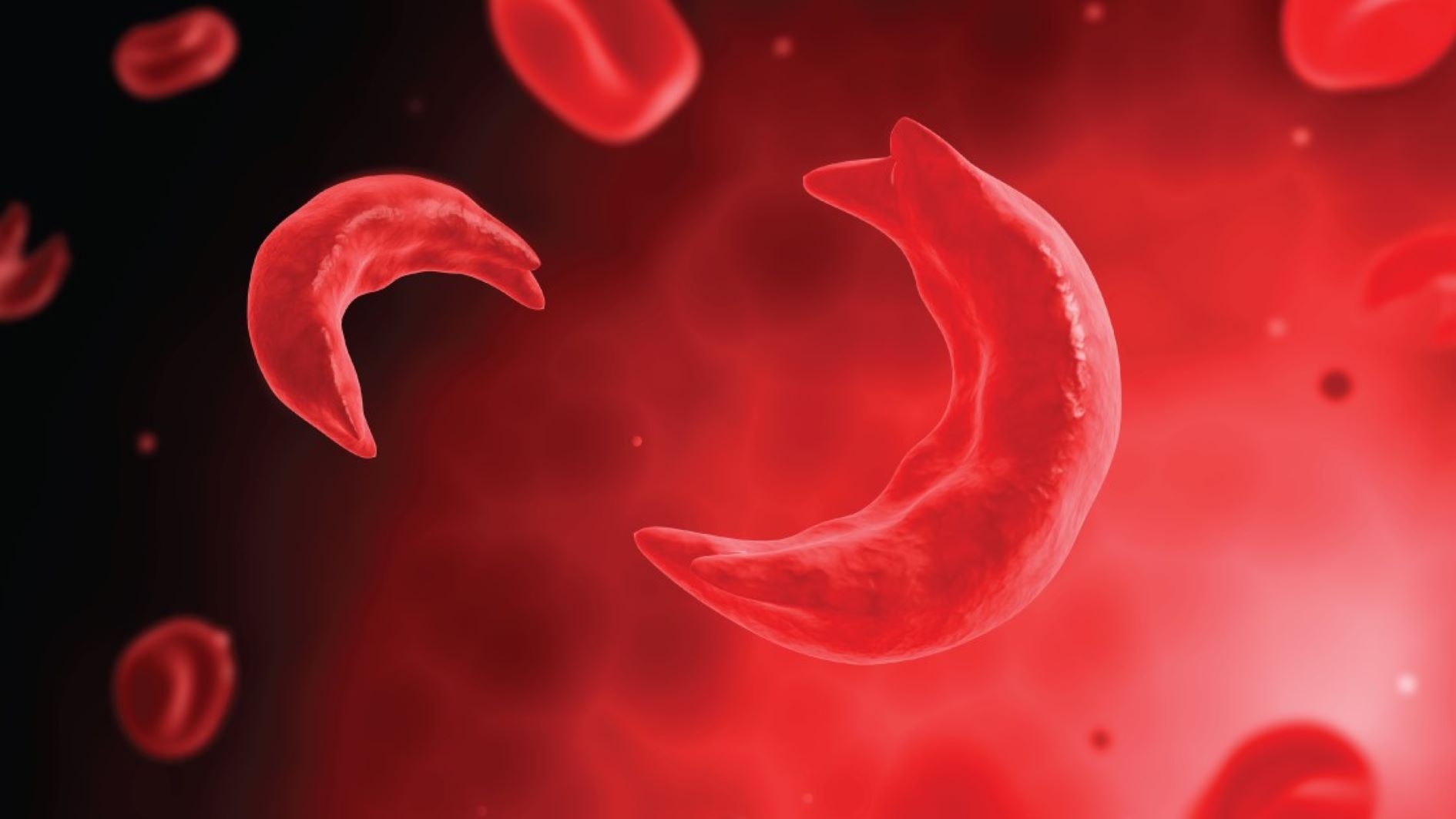
Nigeria’s record of holding a global lead as the epicentre of the world’s sickle cell burden is deeply tragic for a country richly endowed with human and material resources. Also, against scientific and medical breakthroughs on the sickle cell scourge, it is unacceptable that the country accounts for over 150,000 newborns trapped in this agonising condition every year.
Sickle cell disease (SCD) is a genetic blood disorder that affects haemoglobin, the protein responsible for carrying oxygen in red blood cells. Before the advent of modern medicine, high infant mortality from SCD in the country was misunderstood, as children with the disease were then perceived as Abiku among the Yoruba and Ogbanje among the Igbo and viewed as reincarnating spirits “born to die” in a cycle of grief.
Unfortunately, this narrative was not properly corrected for a long time before it became a menace, tearing families apart; no thanks to the failure to disseminate accurate diagnostics and information.
Painfully, for decades, the national defence mechanism has rested on a single, clear-cut mandate passed down to citizens: “know your genotype before you marry.” Millions of young Nigerians have dutifully walked into clinics, handed over their blood samples, and built their life plans around the slip of paper handed back to them.
But a devastating systemic failure has hollowed out this defence. Medical laboratory experts have exposed a terrifying diagnostic reality, where up to 40 per cent of medical laboratory results for genotype testing in Nigeria are inaccurate or entirely falsified; 40 per cent of errors are damning, should not and never be encouraged to grow.
This is no longer just a medical oversight; it is a national public health crisis, fast wreaking havoc on homes. Behind this clinical metric lies an immense trail of human suffering, marriages built on false promises, families financially ruined by unexpected medical expenses, and children condemned to lifetimes of unbearable, bone-crushing pain crises.

For young couples attempting to make responsible reproductive choices, the laboratory has become a roulette wheel. The phenomenon of discordant or conflicting laboratory reports, where an individual is labelled “AA” (normal) by one clinic, only to discover years later they are actually “AS” or “SC” (carriers), has become terrifyingly common.
Consider the tragic reality of mothers who, after receiving clear “AA” certifications in their youth, marry “AS” partners only to later watch their children suffer from severe sickle cell crises. A subsequent, frantic re-test reveals the horrific truth: the original lab report was completely wrong.
Many parents have continued to fall victim to this error and have threatened legal action. For instance, Kawthar Abdulazeez, a mother of two, threatened to sue a laboratory after discovering that her genotype is SC, contrary to the AA result she received from the centre 13 years ago. Married to an AS partner based on that report, both their daughters have now been diagnosed with sickle cell SS.
Abdulazeez blamed the diagnostic centre for what she described as a life-altering mistake.
Another respondent, Adewole, would have suffered a similar fate. A private lab tested his genotype and found it to be AS. “It wasn’t until a year before I graduated from the University that I was diagnosed with SC. This helped me in choosing a wife who is AA, and we have two healthy children now,” he said.
Painfully, these laboratory errors continue to emerge in a rather catastrophic manner. Various scenarios emerge, including the destruction of trust and preventable tragedies. For instance, blameless wives are frequently accused of infidelity when a child is born with the “SS” genotype, shattering otherwise stable families.
There have also been situations where career couples enter marriages under the false impression that their children face zero risk, only to find themselves completely unprepared for the emotional and physical toll of managing a chronic genetic disorder.
Clearly, the medical laboratory ecosystem has devolved into guesswork in far too many quarters. When science itself gives conflicting testimonies, the public is left entirely exposed to the very epidemic they are actively trying to avoid.
So, how did the gatekeepers of Nigeria’s diagnostic health become so unreliable? Findings revealed several distinct systemic failures.
First, many private, standalone laboratories across the country still rely heavily on manual solubility tests. These primitive methods are notoriously unreliable and routinely misidentify individuals carrying the sickle cell trait or variant strains (like Hb C) as having a perfectly normal “AA” genotype. While the global standard has long shifted to fully automated digital analysis, such as High-Performance Liquid Chromatography (HPLC) or Haemoglobin Electrophoresis, the high acquisition costs of these modern diagnostic platforms keep them out of reach for the average local clinic.
Second, Nigeria has increasingly become a dumping ground for uncalibrated equipment, expired chemical reagents, and substandard medical devices. When laboratory professionals are forced to work with compromised materials, even well-meaning technicians end up generating highly flawed data.
Third, a severe regulatory deficit compounds these issues. Thousands of unregistered diagnostic operations operate in urban alleys and rural communities, frequently staffed by unqualified personnel and lacking Quality Management Systems (QMS). The Medical Laboratory Science Council of Nigeria (MLSCN) routinely struggles to police this sprawling, informal network of medical quackery. Shockingly, the problem even extends to outright fraud: some unethical technicians are known to accept bribes from individuals desperate to alter an “AS” status to “AA” just to force a marriage approval from sceptical family members or religious institutions.
In addition, the Director of the Centre for Sickle Cell Research and Training in Africa (CESRTA), University of Abuja, Prof. Obiageli Nnodu, said that the low adoption of quality assurance management systems in the running of laboratories in Nigeria has led to many Nigerians having children with SCD, with even the little progress made in the area of premarital screening being undermined by the menace of inaccurate laboratory results.
She observed that the already high prevalence of SCD is further exacerbated by poor genotype testing and stressed the need to enhance advocacy for stringent quality control measures in genotype testing.
Nnodu noted that in a pediatric clinic in one of Nigeria’s states, 40 per cent of those with sickle cell disease who attended had incorrect laboratory results.
Truthfully, Nigeria must actively prevent the unintentional transmission of the sickle cell gene through flawless diagnostic science. Reclaiming the integrity of our healthcare system requires immediate, aggressive intervention on two distinct fronts.
Public health agencies must urgently reframe how they educate the public. The long-standing messaging of “know your genotype” must be updated to include a vital warning: “Do not trust a single test from an unverified source.”
Citizens must be explicitly taught to seek cross-verification from accredited, secondary reference laboratories before making major marital or reproductive decisions. Further, community education must work to dismantle the deep social stigmas surrounding the sickle cell trait. When carrier status is not treated as a social death sentence, the desperation that drives individuals to bribe lab technicians to falsify paperwork will be removed.
The Federal Government and health policymakers must treat diagnostic accuracy as a critical matter of national security. The state needs to legally phase out primitive manual solubility testing in favour of automated, digital chromatography. Simultaneously, the MLSCN must be empowered with the resources necessary to aggressively close down unaccredited facilities and penalise rogue practitioners.
Nigeria cannot expect to successfully lower its crippling sickle cell burden while its baseline laboratory infrastructure remains fractured. The ongoing cycle of physical heartbreak and psychological trauma will continue to claim young lives until the country’s medical authorities ensure that the science guiding citizens is absolutely beyond reproach.

