 Follow Us on Google News
 Follow Us on Google Discover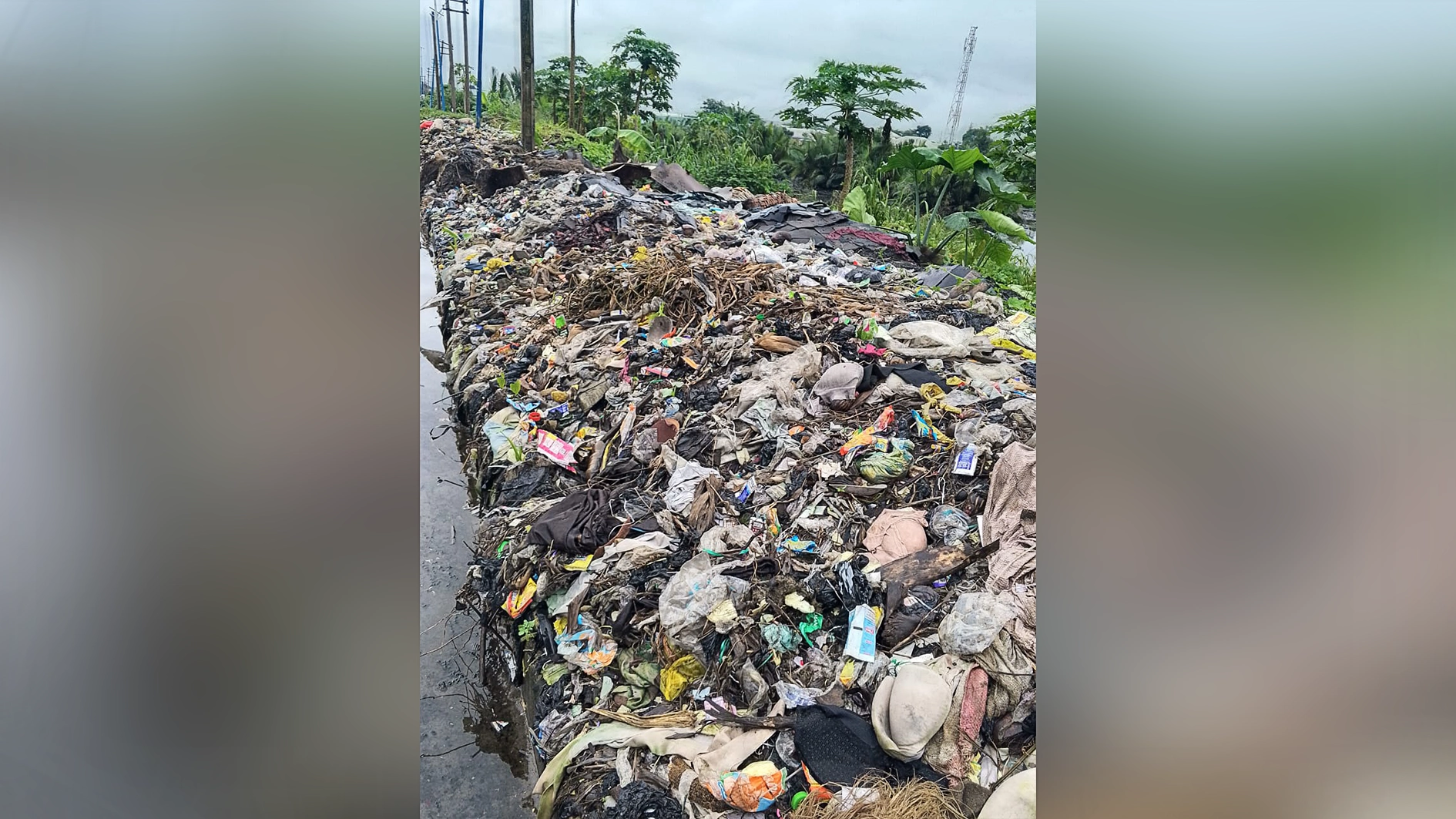
For many residents of Port Harcourt, waking up to the sight and smell of overflowing refuse dumps has become an unsettling daily routine, raising fears that the city once proudly known as Nigeria’s “Garden City” is gradually losing its cherished identity.
Across major roads and intersections, heaps of decomposing waste now compete with traffic for space, while the pungent odour hanging over parts of the metropolis has become a constant reminder of the city’s worsening sanitation crisis.
Although the Rivers State Government has intensified efforts to clear refuse from major roads following the return of democratic governance under Governor Siminalayi Fubara, checks by The Guardian show that the battle against mounting waste is far from over.
During a monitoring exercise at about 7:00 a.m. yesterday, The Guardian observed refuse contractors and sanitation workers clearing waste along the Rumuosi axis of the East-West Road through Nkpolu to Choba in Obio/Akpor Local Council.
However, barely 30 minutes later, fresh heaps of refuse had already appeared around Omachi Junction, near the Obio/Akpor Local Council headquarters, highlighting how indiscriminate dumping continues to outpace evacuation efforts.
Similar scenes played out along Ikwerre Road, Ada George Road and the Mile 4 axis near Agip, where refuse littered road medians and major intersections, diminishing the city’s aesthetic appeal and posing serious environmental and public health risks.

Residents said the monthly environmental sanitation exercise has done little to address the growing challenge, especially in the absence of sustained enforcement of sanitation laws and behavioural change among members of the public.
Further observations revealed that even after contractors evacuate refuse overnight, fresh waste often reappears on road medians before dawn, suggesting that illegal dumping remains widespread.
Stakeholders also expressed concern over the absence of an emergency response mechanism whenever contractors face operational difficulties. They argued that when contractors are unable to evacuate refuse because of equipment failure or other challenges, the state waste management authorities should immediately deploy backup arrangements to prevent waste from piling up.
The situation was worsened by the recent strike embarked upon by refuse contractors over demands for increased funding.
Although the industrial action has since been suspended, residents say the backlog of accumulated waste is still visible across the city.
However, investigations by The Guardian indicate that despite delays in the passage of the state’s budget, the Rivers State Government has continued to fund the Rivers State Waste Management Agency (RIWAMA).
The Head of Media to the Managing Director of RIWAMA, Harry Henry, insisted that Governor Fubara has consistently funded the agency and ensured prompt payment of contractors.
“The problem is not funding by the government,” Henry said. “The challenge arose because contractors went on strike. Even if operations stop for just two days, clearing the accumulated waste takes much longer because refuse continues to build up while each truck can only evacuate a limited quantity at a time.
“There has been significant improvement since the contractors resumed work, and they are working hard to restore Port Harcourt to its clean status.”
He added that the state government also provides contractors with financial support for diesel to ease operational costs.
Henry warned residents against dumping refuse outside approved hours, describing the practice as a violation of environmental regulations. He also blamed some cart pushers for collecting waste from households after official evacuation and dumping it indiscriminately at collection points.
According to him, the agency will soon begin strict enforcement of sanitation laws, with offenders liable to arrest and prosecution.
Health experts have warned that the sanitation crisis extends beyond the city’s appearance.
A family physician at the University of Port Harcourt Teaching Hospital, Dr Ephraim Iloabuchi, said indiscriminate refuse disposal creates stagnant pools of water that serve as breeding grounds for mosquitoes, increasing the risk of malaria and other vector-borne diseases.
He also warned that poor waste management contributes to respiratory infections, diarrhoea, typhoid fever and other waterborne diseases, while contaminated floodwater and blocked drainages expose residents to zoonotic diseases such as leptospirosis.
“It is important that we keep our environment clean. Indiscriminate dumping pollutes the environment and exposes people to preventable diseases. Government has a responsibility to provide effective waste management, but residents must also dispose of their waste properly,” he said.
Residents believe the responsibility for restoring Port Harcourt’s lost glory should not rest on government alone.
A resident of Ojoto Street in Mile 2, Michael Mba blamed the worsening situation on the indiscriminate waste disposal habits of some residents.
“People must properly bag and dispose of their refuse instead of dumping it on road medians. Government should also strengthen oversight of contractors to ensure timely evacuation,” he said.
Another resident, Patricia Nkemakoli, advocated a sustainable user-pay waste management system, arguing that treating refuse collection solely as a social service places enormous financial pressure on government.
She urged the authorities to properly enumerate households, assess the volume of waste generated and introduce affordable charges based on the quantity of refuse produced. She also called for the immediate deployment of newly acquired waste management equipment to improve evacuation and reduce delays at dump sites.
For many residents, however, the greatest concern is that unless waste evacuation is matched with stronger enforcement and a change in public attitude, Port Harcourt’s celebrated reputation as the Garden City may continue to fade beneath growing mountains of refuse.

