 Follow Us on Google News
 Follow Us on Google Discover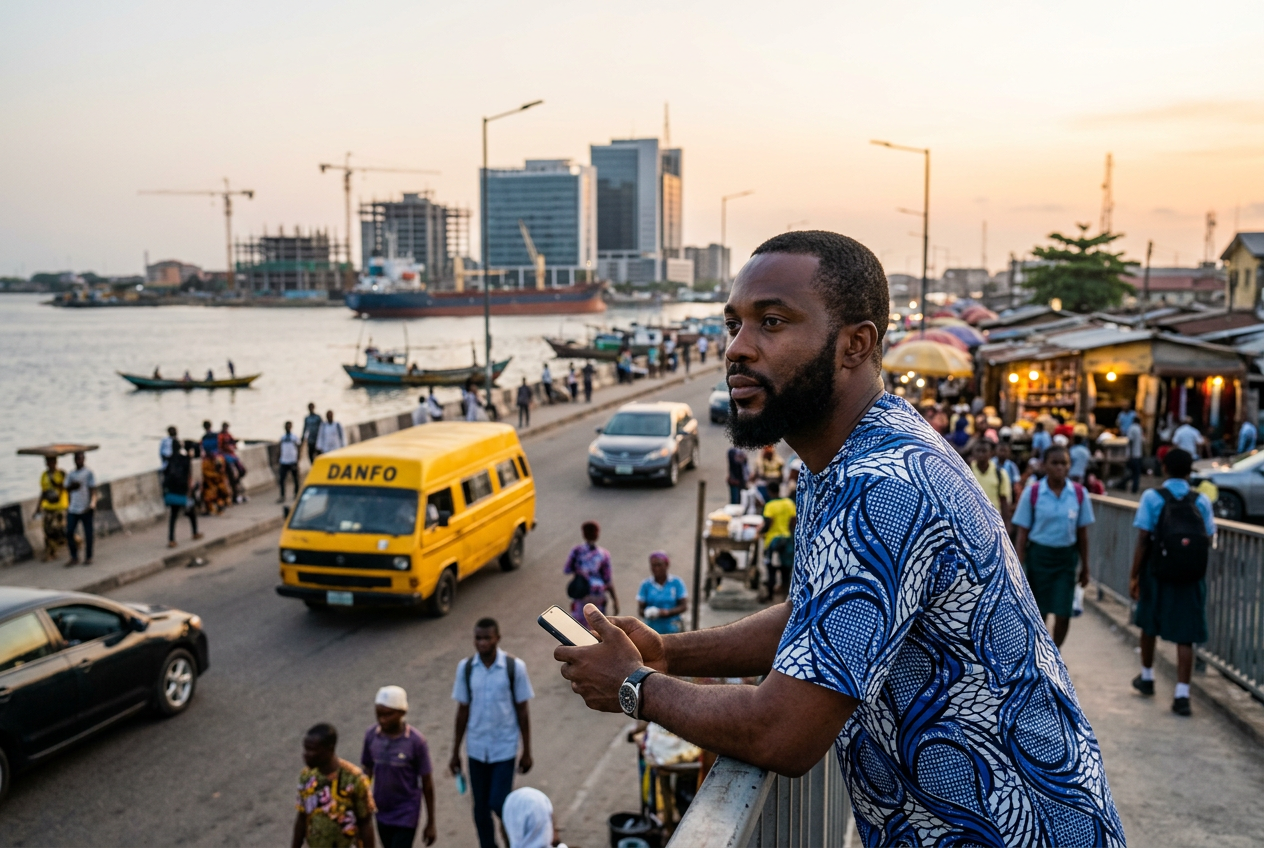
Welcome, and pull up a chair. The question of why is Nigeria so important gets asked in Lagos boardrooms and London seminar rooms alike, usually in very different tones of voice. This article is the end of months of research and the product of years spent writing about this country, and I have leaned hard on the demographic arithmetic that underpins almost every claim made about the place rather than on vibes.
Because vibes are what you usually get.
You get the boosterish version, in which Nigeria is the giant of Africa, the future of the world, an unstoppable force of nature. Then you get the sneering version, in which Nigeria is a cautionary tale, all potential and no delivery, a country that has been about to arrive for sixty-five years. I have sat through both dinner parties. Neither was much use.
What follows is my attempt at the third version: the one built out of actual numbers, checked against actual sources, and written by someone who has to live with the consequences of getting it wrong.
Why Nigeria is important to the world
Let us begin with the thing nobody disputes.
There are roughly 242.4 million Nigerians as of 2026, which makes this the sixth most populous country on earth and home to somewhere around 15 per cent of all Africans. The median age is eighteen. Eighteen! Think about what that means for a moment. Half the country has not yet turned nineteen, which is to say that half the country’s economic contribution has not happened yet.

Demographers project the population past 400 million by 2050. If that holds, roughly one in every twenty humans alive will be Nigerian. You do not need to like that fact, or fear it, or celebrate it. You simply need to plan around it, which is precisely what pension funds, telecoms operators and foreign ministries have been quietly doing for a decade.
Then there is the oil, which everybody knows about and almost everybody misunderstands.
Nigeria sits on proven reserves of around 37.5 billion barrels and produced an average of about 1.73 million barrels of crude and condensate per day in June 2026, according to the upstream regulator’s published terminal-by-terminal data. That is enough to matter to the global market without being enough to dictate it. Nigeria is a swing supplier, not a Saudi Arabia, and the difference is important. When Bonny Light goes offline, European refiners notice. When it stays offline, they adjust.
The misunderstanding is that oil is the point. It is not, and it has not been for years.
In real terms, the non-oil sector contributed 97.13 per cent of Nigerian output in the fourth quarter of 2025, according to figures published by the national statistics office. Ninety-seven per cent. The oil pays a disproportionate share of government revenue and nearly all of the foreign exchange, which is why it dominates the political conversation, but it is not what most Nigerians actually do for a living. Most Nigerians trade, farm, teach, drive, build, code and sell.
And then there is the third pillar, which is the one I find most interesting.
The people who left, and what they send back
Roughly seventeen million Nigerians live outside Nigeria. They are, by several measures, among the most educated immigrant groups in the countries they have settled in, and they send home an extraordinary amount of money. Formal remittance inflows have run above $20 billion in recent years, a figure tracked by the federal commission set up specifically to manage that relationship. In some years those inflows have exceeded what the country earned from oil exports.
At the official rate of roughly ₦1,364 to the dollar in early August 2026, $20 billion converts to something north of ₦27 trillion. That is not pocket money. That is school fees, hospital bills, land purchases, generator diesel and the deposits on half the new estates going up in Lekki and Gwarinpa.
Monthly inflows through official channels have tripled from about $200 million to more than $600 million, and the central bank governor told the Senate recently that the reforms behind that shift have made the economy harder to knock over. Whether you believe that claim depends largely on whether you have tried to buy a bag of rice lately, but the remittance numbers themselves are not in serious dispute.
Culture is the fourth pillar, and it is the one that has changed fastest.
Nollywood produces around 2,500 films a year and has become the default visual grammar for African storytelling across the continent. Afrobeats has moved from Lagos studios to Madison Square Garden and the Brit Awards within a single generation. This is soft power in the textbook sense, and Nigeria did not plan a bit of it. No ministry designed Burna Boy. No committee approved Chimamanda Ngozi Adichie. The state was, if anything, an obstacle.
Which is rather the point, and rather the problem
Why Nigeria is so important: the direct answer
Right. Here is the paragraph you came for.
Nigeria is so important because it combines four kinds of weight that almost no other country carries at once: demographic weight, as Africa’s largest population and the world’s sixth largest, with a median age of eighteen; energy weight, as the continent’s leading crude producer with 37.5 billion barrels of proven reserves; economic weight, as one of Africa’s three biggest economies and by far its largest consumer market; and cultural weight, through Nollywood, Afrobeats, literature and a global diaspora of some seventeen million people who send home over $20 billion a year. Add regional political weight through the Economic Community of West African States and the African Union, where Nigeria has historically underwritten peacekeeping and diplomacy across West Africa, and you have a country whose decisions spill over borders whether or not anyone intended them to. The importance is structural. It does not depend on any government performing well, which is fortunate, because they frequently have not.
That is the answer. Everything else in this article is texture around it.
Now, if you want to assess that importance for yourself rather than taking my word for it, here is the method I actually use. I have refined it over several years of being wrong in public.
- Start with the population figure and check its provenance, because Nigeria’s last census was in 2006 and every number since is a projection built on a projection.
- Separate nominal GDP from purchasing power parity GDP, since the naira’s movements swing the first figure wildly while barely touching the second.
- Divide any headline economic number by 242.4 million before you react to it, which is the single most clarifying arithmetic operation available.
- Check whether an oil figure refers to crude alone or crude plus condensate, as the two differ by roughly 200,000 barrels a day and analysts quote both interchangeably.
- Treat remittance data as a floor rather than a ceiling, because informal channels carry a large and genuinely unmeasurable share.
- Look at what Nigerians export culturally, not just materially, and ask who is capturing the revenue from it.
- Finally, ask what the country would need to stop doing, not just start doing, because most Nigerian reform debates skip that half entirely.
Follow those seven and you will already be reading the country more carefully than most of the people paid to comment on it.
Which country in Africa is richer than Nigeria?
Ah. This one has a genuinely awkward answer, and it depends entirely on what you mean by richer.
By total economic size, Nigeria has slipped. According to the International Monetary Fund’s April 2026 projections, South Africa now leads the continent at roughly $480 billion in nominal output, Egypt follows at about $430 billion, and Nigeria sits third at around $377 billion, with Algeria close behind at $317 billion. Nigeria held first place from the 2014 rebasing until 2022, so this is a recent and slightly bruising demotion.
But almost none of it is a fall in actual output.
The naira went from roughly ₦460 to the dollar in early 2023 to over ₦1,600 at its worst before settling near ₦1,364 in mid-2026. Measure the same factories, the same farms and the same phone contracts in a currency worth a third as much, and the dollar total collapses even though nothing physical has changed. Domestically, Nigerian GDP has grown steadily in naira terms, reaching ₦372.82 trillion in 2024 after the statistics office rebased the series to a 2019 base year. Same economy. Different ruler.
By income per person, though, the picture is far less flattering, and this is where honesty matters more than patriotism.
How Nigeria compares with Africa’s largest economies
| Country | Nominal GDP 2026 (US$bn) | Population (m) | GDP per person (approx. US$) | Rank by total GDP | Rank by GDP per person |
|---|---|---|---|---|---|
| South Africa | 480 | 64.7 | 7,400 | 1 | 7 |
| Egypt | 430 | 120.1 | 3,580 | 2 | 13 |
| Nigeria | 377 | 242.4 | 1,555 | 3 | around 30 |
| Algeria | 317 | 47.4 | 6,690 | 4 | 8 |
| Morocco | 194 | 38.5 | 5,040 | 5 | 11 |
| Seychelles | 2.2 | 0.13 | 17,000 | around 50 | 1 |
The per-person column is derived by dividing the GDP figure by the population figure rather than quoted directly, so treat it as an indication of scale rather than a precise statistic. What it shows plainly is that Nigeria’s size and its prosperity point in opposite directions: third by total output, roughly thirtieth of fifty-four by output per head.
So which African countries are richer than Nigeria? By total GDP, two or three depending on the month and the exchange rate. By GDP per person, somewhere between twenty-five and thirty of them, including Seychelles, Mauritius, Gabon, Equatorial Guinea, Botswana, Libya, South Africa, Algeria, Egypt, Morocco, Tunisia, Namibia and Ghana.
That is a sentence that annoys a lot of Nigerians. I understand why. But a country of 242 million people producing $377 billion is a country where the average person’s share of national output is roughly $1,555 a year, or about ₦2.1 million. Anyone who has tried to run a household in Lagos on ₦2.1 million a year knows exactly what that means.
Being big and being rich are different things. Nigeria is emphatically the first and not yet the second.
Which country loves Nigeria so much?
Now here is a question I enjoy, mostly because it is impossible to answer with a spreadsheet.
Countries do not love. People do. But if we ask which nation has developed the warmest popular affection for Nigeria, the honest shortlist is short, and the top of it is not where most people expect.
Jamaica. It is Jamaica.
The connection runs through the transatlantic slave trade, through language, through rhythm and through something harder to name. Jamaican Patois and West African Pidgin share structural bones. Afrobeats has become so dominant on Jamaican airwaves that the country’s own political figures have publicly grumbled about it crowding out reggae, which is the kind of complaint you only make about something you cannot ignore. Nigerians who visit Jamaica come back genuinely startled by the warmth. It is not diplomatic warmth. It is street warmth, which is rarer and worth more.
The United Kingdom is the more entangled relationship, though entanglement is not quite the same as affection.
Britain shaped Nigeria’s legal system, its official language, its civil service structure and a good deal of its class anxiety. Around 300,000 Nigerian-born residents live in the UK, alongside a far larger British-Nigerian population. During President Tinubu’s state visit in March 2026, King Charles spoke publicly about how substantially Nigerians have enriched British life, from music halls to Premier League pitches to the senior judiciary. That is a striking thing for a monarch to say about a former colony, and it reflects something real.
The United States hosts the largest Nigerian population abroad, with Nigerian Americans among the most credentialed immigrant communities in the country. Canada has courted Nigerian applicants deliberately through its immigration streams. China is the largest single investor in Nigerian infrastructure, though I would file that under interest rather than love.
So my answer, if you press me: Jamaica loves Nigeria most freely, Britain loves it most complicatedly, and America loves what Nigerians do rather than Nigeria itself. Those are three quite different things, and it pays to know which one you are being offered.
A summit in Lagos this year spent several days arguing about exactly this, with delegates pressing the case that cultural reach means little unless the ownership and the revenue stay on the continent. They were right to press it. Affection is lovely. Equity is better.
What is Nigeria lacking as a country?
Here is where I have to be a good journalist rather than a good patriot.
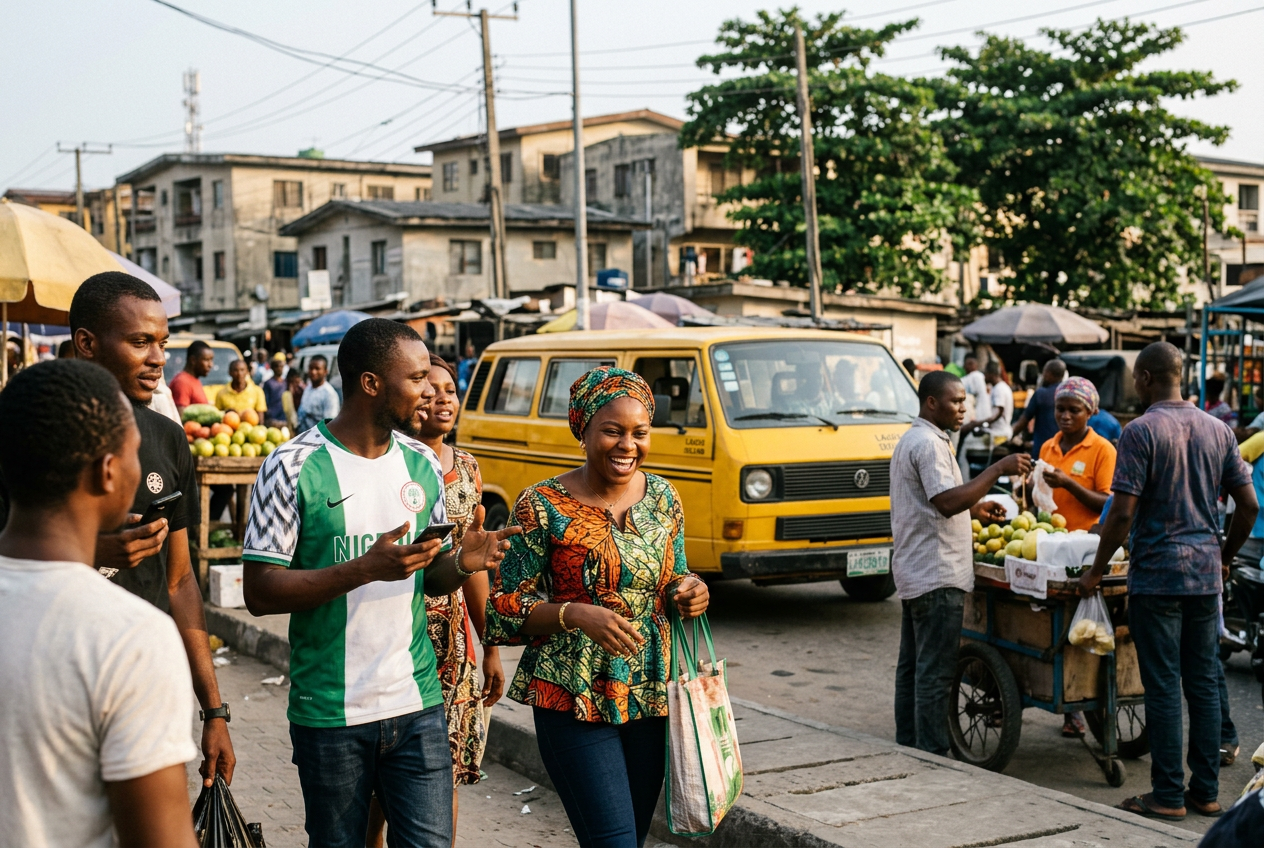
Nigeria is not lacking talent, ambition, resources, scale, creativity or work ethic. Anyone who has watched a Balogun Market trader run three businesses off one phone knows the raw material is not the constraint.
What Nigeria lacks is the boring infrastructure of a functioning state.
Start with electricity, because everything else runs through it. Nigeria has roughly 13 gigawatts of installed generating capacity and typically transmits well under 5,000 megawatts to more than 240 million people. Britain, with under a third of the population, runs a grid many times larger. Somewhere around 41.5 per cent of Nigerians have no reliable access to electricity at all. Every small business that survives does so by buying diesel at ₦1,200 or more per litre, which is a tax on productivity that no competitor in Vietnam or Bangladesh pays.
Then poverty, which has moved in the wrong direction. The World Bank estimates that around 63 per cent of Nigerians now live below the national poverty line, up from 61 per cent in 2024, with roughly seven million people pushed under during 2025 alone as food inflation bit. Poor households spend up to 70 per cent of income on food. There is no polite way to write that sentence.
Then security. Insurgency in the north east, banditry and mass kidnapping in the north west, farmer-herder violence in the middle belt, and separatist agitation in the south east. Insecurity is not only a human tragedy. It is an economic tax, because it raises the cost of moving goods, deters investment and keeps farmland fallow.
Then human capital. Adult literacy sits around 61 per cent. Roughly a fifth of adults never completed primary school. Maternal mortality remains among the highest in the world. Health workers leave in numbers so large that the exodus has its own nickname.
And underneath all of it, the deepest deficit: institutional trust. Public investment in infrastructure has run at roughly 2.5 per cent of GDP, less than half of what development banks say is required. That gap is not really a money problem. Nigeria has had money. It is a problem of whether money placed into a public process comes out the other end as a road.
I want to be careful here, though, because the deficit list can curdle into despair, and despair is analytically lazy.
Reforms since 2023 removed the fuel subsidy and floated the currency. Both were brutal, both were necessary, and both have started to show in the macro data. Inflation has come down substantially from its peak. Reserves have improved. The exchange rate premium between official and parallel markets has narrowed to around ₦40, which anyone who lived through 2024 will recognise as a genuine change. The Dangote refinery is running. Oil output has climbed four months in a row.
None of that reaches a household in Sokoto next Tuesday. But it is the difference between a country digging and a country sinking, and the distinction matters.
There is also a structural argument about what to do with the cultural momentum. One Guardian opinion piece made the case that Nigeria’s creative wins remain sporadic rather than systemic, and that building publishing and intellectual property infrastructure is the missing piece. I think that is exactly right. Nigeria exports culture magnificently and captures the value from it poorly, which is the same pattern as the oil, told in a different key.
Meanwhile the technology sector keeps quietly building. Nigeria accounts for something close to 30 per cent of all African startup funding, has produced at least five companies valued above a billion dollars, and hosts more than 20,000 registered startups. Different tallies of the unicorn count circulate depending on the tracker, but the direction is not ambiguous. Lagos is where African fintech gets tested, because if a payment product works in Nigeria it will work anywhere.
Final Thoughts
So, why is Nigeria so important? Because it is too big to ignore, too young to write off, and too central to West Africa for its choices to stay inside its own borders.
The country is third in Africa by economic size and roughly thirtieth by income per person. It is the continent’s leading crude producer and its most enthusiastic cultural exporter. It has seventeen million citizens abroad sending home more than the country earns from oil. And it has an electricity grid that would embarrass a mid-sized European city.
All of that is true at once. Holding both halves in your head simultaneously is the entire skill.
If you are trying to make a decision that touches Nigeria, whether that is investing, migrating, reporting, teaching or simply arguing more accurately at dinner, here is what I would actually do. Check the population source before you cite it. Convert everything to a per-person figure. Read the naira numbers alongside the dollar numbers. Watch the electricity data as your leading indicator, because power precedes manufacturing and manufacturing precedes jobs. And take the diaspora seriously as an economic actor rather than a sentimental footnote.
Nigeria’s importance is not a prediction. It is already a fact, and it was a fact throughout every year the country underperformed. The open question was never whether Nigeria matters. It is whether Nigerians get the benefit of it.
I remain, cautiously and stubbornly, an optimist. Ask me again after the next grid collapse.
- Judge Nigeria on per-person figures, not headline totals, because 242.4 million people change the meaning of every number.
- Track electricity access and security as your leading indicators, since both gate manufacturing, agriculture and investment before any other reform can land.
- Treat the diaspora and the creative sector as economic infrastructure, not decoration, given they now rival oil as sources of foreign exchange and global standing.
Related Articles
If this piece left you wanting the optimistic case argued at full length, my article on what is actually driving the current run of growth goes sector by sector through the reforms, the refinery and the technology investment that have shifted the outlook since 2023. It is the natural companion to everything above, and it treats the boom question far more sceptically than the headline suggests.
And if you are curious about the other side of the ledger, the reasons people actively choose to come here, I looked at that in detail in my piece on the pull factors bringing investors, returnees and visitors through Lagos arrivals. Between the two, you get a reasonably complete picture of why the world keeps paying attention to a country that so often frustrates its own citizens.
Key Takeaways
- Nigeria’s importance rests on four pillars at once: 242.4 million people with a median age of eighteen, 37.5 billion barrels of proven oil reserves, Africa’s largest consumer market, and a cultural and diaspora reach that no other African country matches.
- The country ranks third in Africa by nominal GDP but roughly thirtieth by GDP per person, a gap that explains almost every apparent contradiction in how Nigeria is discussed abroad.
- The binding constraints are electricity, security, human capital and institutional trust rather than any shortage of resources, talent or ambition.
Frequently Asked Questions About Why Nigeria Is So Important
Why is Nigeria so important?
Nigeria matters because it holds four kinds of weight simultaneously: Africa’s largest population at 242.4 million and the world’s sixth largest, the continent’s leading crude oil production, one of Africa’s three biggest economies and its largest consumer market, and enormous cultural reach through Nollywood, Afrobeats and a seventeen-million-strong diaspora. Its size and regional role mean its decisions affect West Africa and global energy markets regardless of how well any particular government performs.
Is Nigeria still the largest economy in Africa?
No, not by nominal GDP as of 2026, where International Monetary Fund projections place South Africa first at around $480 billion, Egypt second at about $430 billion and Nigeria third at roughly $377 billion. The change reflects naira devaluation rather than shrinking output, since Nigerian GDP measured in naira has continued to grow and reached ₦372.82 trillion in 2024.
How many people live in Nigeria in 2026?
Nigeria’s population is estimated at approximately 242.4 million in 2026, making it Africa’s most populous country and the sixth most populous in the world. That figure is a projection rather than a count, because the last full national census was conducted in 2006 when the population stood at 140.4 million.
How much oil does Nigeria produce?
Nigeria produced an average of around 1.73 million barrels per day of crude oil and condensate in June 2026, comprising roughly 1.56 million barrels of crude and 180,000 barrels of condensate. The country holds proven reserves of about 37.5 billion barrels, the largest in Africa, though production sits well below the three million barrel daily target regulators have set.
Which country in Africa is richer than Nigeria?
By total economic size, South Africa and Egypt are both larger than Nigeria in 2026, with Algeria close behind in fourth place. By income per person, roughly twenty-five to thirty African countries rank higher, including Seychelles, Mauritius, Gabon, Botswana, South Africa, Algeria, Egypt, Morocco and Ghana.
Which country loves Nigeria so much?
Jamaica has arguably the warmest popular affection for Nigeria, rooted in shared heritage, linguistic kinship between Patois and Pidgin, and the overwhelming popularity of Afrobeats on the island. The United Kingdom has the deepest institutional relationship through language, law and a large British-Nigerian community, while the United States hosts the largest Nigerian population abroad.
What is Nigeria lacking as a country?
Nigeria’s binding constraints are reliable electricity, physical security, human capital and institutional trust rather than any shortage of resources or talent. Roughly 41.5 per cent of Nigerians lack reliable power, about 63 per cent live below the national poverty line, and public infrastructure investment has run at around 2.5 per cent of GDP, less than half the level development banks consider adequate.
How much do Nigerians abroad send home each year?
Formal diaspora remittances have exceeded $20 billion annually in recent years, which at the August 2026 official rate of roughly ₦1,364 to the dollar converts to more than ₦27 trillion. Monthly inflows through official channels have tripled from about $200 million to over $600 million, and the central bank has publicly targeted $1 billion per month.
Why does Nigeria have so much influence over African culture?
Nollywood produces roughly 2,500 films a year and has become the default storytelling format across much of Africa, while Afrobeats has moved from Lagos studios to major international venues within a single generation. Neither was state-directed, which is why the influence is genuine but the revenue capture remains weak.
Is Nigeria’s economy actually improving?
Several indicators have moved favourably since the 2023 reforms, including falling inflation from its peak, improved external reserves, a narrower gap between official and parallel exchange rates, and four consecutive months of rising oil output. Those gains have not yet reached most households, however, with an estimated seven million additional Nigerians falling below the poverty line during 2025.
What role does Nigeria play in West Africa?
Nigeria accounts for the majority of West Africa’s economic output and has historically underwritten regional peacekeeping and diplomacy through the Economic Community of West African States. Its scale means that Nigerian currency policy, trade decisions and security outcomes spill directly into neighbouring economies whether or not that was intended.
Will Nigeria become more important in the coming decades?
Demographic projections place Nigeria above 400 million people by 2050, which would make roughly one in twenty humans alive Nigerian and rank the country third globally by population. Whether that scale converts into prosperity depends almost entirely on electricity, education and security rather than on any further natural resource discovery.

