 Follow Us on Google News
 Follow Us on Google Discover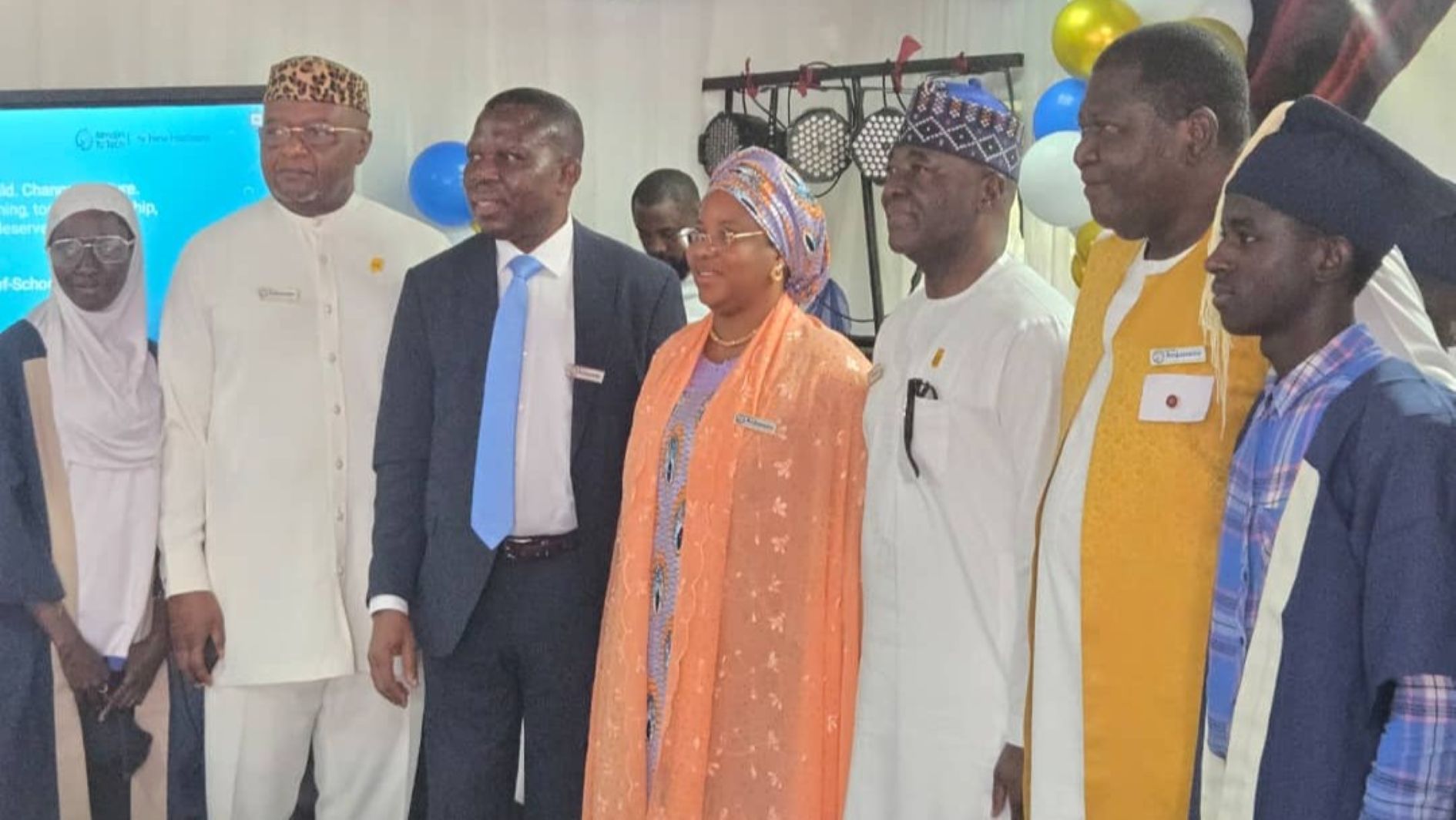
For millions of out-of-school and Almajiri children in Nigeria, childhood is often defined by uncertainty rather than opportunity. Instead of sitting in classrooms, many spend their days on the streets begging for alms, hawking or helping their families survive. Others grow into adulthood without formal education or employable skills, trapping generations of families in poverty.
For years, Zainab Aliyu was one of them. She spent most of her days at home with nothing to do. Her father was the family’s only breadwinner, struggling to provide for a household of 11.
Most days, the family survived on one meal, sharing a single room as the prospect of education or learning a vocational skill slipped further out of reach.
“I had nothing to do. I stayed at home while it was my father that used to go out and find money for us to eat,” Aliyu recalled.
“My mother gave birth to nine children and with my parents we are 11. We used to eat only once a day and we all slept in one room.”
Like millions of children and young people across Nigeria, poverty had pushed Aliyu to the margins, leaving her with few opportunities to continue her education or acquire the skills needed to earn a living.
According to UNICEF, Nigeria accounts for one of the world’s largest populations of children excluded from learning, with about 18.3 million children currently outside the formal education system. UNICEF attributes the crisis to a combination of poverty, insecurity, displacement and limited access to quality education, particularly in northern Nigeria where school attendance remains significantly below the national average.
The agency also noted that the challenge is particularly severe in northern Nigeria, where school attendance remains significantly lower than the national average and many children have never enrolled in formal education.
The Federal Government estimates that nearly 15 million children remain out of school across the country, making Nigeria home to one of the world’s largest populations of children outside the formal school system.
The World Bank has also warned that Nigeria’s education challenge extends beyond access to school. In its recent education assessment, the Bank noted that many children who are enrolled still struggle to acquire basic literacy and numeracy skills, highlighting the need for interventions that not only improve access to education but also equip young people with practical skills that can improve their livelihoods.
Despite the scale of the challenge, comprehensive national data remains fragmented. Key education agencies, including the Universal Basic Education Commission (UBEC), the National Commission for Almajiri and Out-of-School Children Education (NCAOOSCE) and the National Senior Secondary Education Commission (NSSEC), are yet to publish comprehensive datasets on out-of-school children on their official portals.
 To address the crisis, the Federal Government intensified interventions under the Nigeria Education Sector Renewal Initiative (NESRI), which seeks to reduce the number of out-of-school children and integrate learners from non-formal education systems into mainstream education.
Speaking during a special roundtable session at the Education World Forum in London, United Kingdom, the Minister of Education, Dr. Tunji Alausa, said the government was scaling up efforts to address the out-of-school children crisis through targeted interventions aimed at expanding access to education.
According to him, the Accelerated Basic Education Programme (ABEP) has been approved as a pathway for children outside the formal school system to return to learning and transition into junior secondary school.
While those interventions focus on bringing children back into classrooms, organisations outside government are exploring complementary approaches that combine education with employable skills for children who have already spent years outside the formal system.
For Aliyu, that opportunity came through the Almajiri-to-Tech Foundation.
She explained that a woman she met at her mosque introduced her to the programme after learning about her family’s circumstances.
“My mother went with me the next day and explained everything we were passing through. She then took me to the Almajiri-to-Tech Foundation,” she said.
Within weeks of joining the programme, Aliyu said she had learned to repair laptops, desktop computers and microwave ovens, while also building inverter batteries.
Today, those skills have become a source of income. “People in my community now bring their laptops and phones for me to repair. I’ve started making money and the money is helping to support my family,” she said.
For children like Aliyu, the programme has become more than a vocational training initiative. It represents an alternative pathway to economic independence at a time when millions of Nigerian children remain excluded from formal education.
New Beginning Through Skills
For Fatima Umar, the Almajiri-to-Tech Foundation offered more than vocational training. It restored hope at a time she believed her life was coming to an end.
Fatima said being told she had only six months to live after developing a heart condition, a diagnosis that plunged her into depression and forced her to abandon her education at a young age.
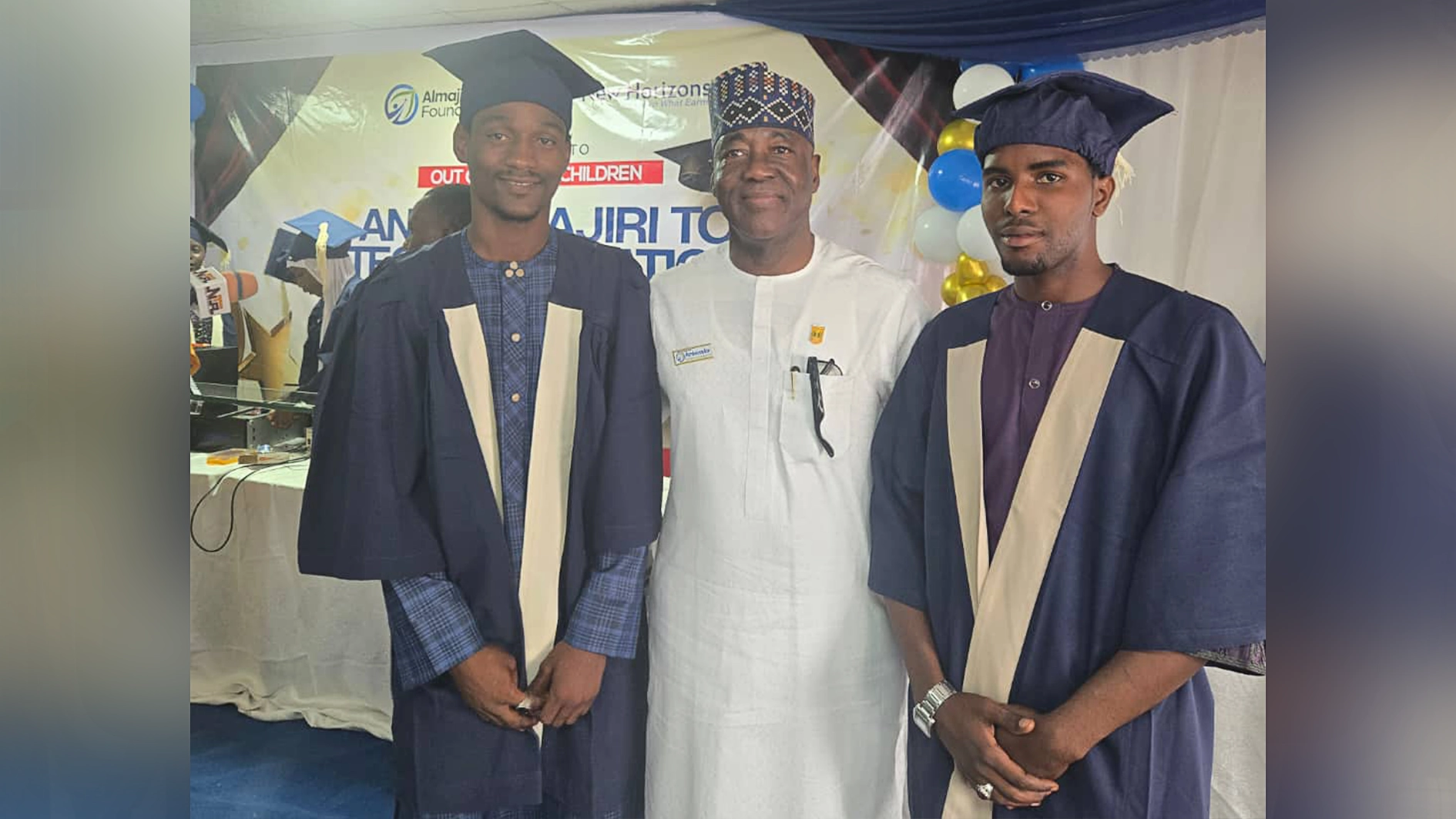 “I was very depressed. I completely lost hope because people kept telling me I couldn’t do it and that I was going to die,” she said.
She said only her parents continued to encourage her despite the uncertainty surrounding her health. “They always told me this was not the end of the world.”
Before her illness, Fatima said she enjoyed playing cricket with her friends at the International Stadium in Abuja. However, her health challenges gradually took away the life she once knew.
Her fortunes changed after enrolling at the Almajiri-to-Tech Foundation, where she learned to repair household appliances and other electronic gadgets.
Today, she repairs washing machines and other home appliances for customers, earning an income from the skills she acquired. She has also begun training four people in her community.
“I can now repair washing machines perfectly and people bring them to me for repairs. I also have four students that I’m teaching. Without the foundation, I wouldn’t have achieved what I have today or been able to impact other people,” she said.
Another beneficiary, Suleiman Abubakar, described the programme as a turning point after years of hardship and uncertainty.
He said life became difficult for his family while he was growing up, forcing him to move to Kano to live with his sister after completing primary school.
According to him, his brother-in-law enrolled him in a government secondary school, but after graduating and returning home, he found that his family’s circumstances had not improved.
“I came back and life was just the same as I left it,” he said.
His breakthrough came after an Imam at a central mosque introduced him to the Almajiri-to-Tech Foundation.
Before joining the programme, Abubakar said he had no vocational skills. Today, he works as a technician, repairing damaged household items and earning enough to support himself and contribute to his family’s upkeep.
“People now bring their spoiled items for me to repair. After fixing them, I get paid and use the money to support myself and my family. I’m grateful for this opportunity,” he said.
Different Approach To An Old Problem
When Tim Akano launched the Almajiri-to-Tech Foundation’s pilot programme, he expected to train children to repair a handful of electronic devices.
Instead, the results exceeded expectations. “I will describe the last six months in two words: incredible revelation,” he said.
According to him, the 21 beneficiaries mastered the repair of telephone handsets, desktop computers, laptops, fans, microwave ovens, power banks, televisions, rechargeable lamps, washing machines and pressing irons.
Beyond repairs, they also learned to build battery inverters, desktop computers, telephone handsets and drones from scratch.
“Before now, we all believed that it was not possible for an individual to master more than one or a maximum of three electronics repairs. The Almajiri children broke the ceiling.”
The programme, however, required considerably more resources than originally planned.
Akano said the foundation initially budgeted N50 million for a three-month pilot, but the cost eventually exceeded N100 million after practical attachments were added to the training.
The additional funding covered technical tools imported from China and practical learning materials designed to ensure beneficiaries could apply what they learned.
Rather than focusing solely on technical instruction, he said the foundation adopted a holistic approach aimed at addressing many of the barriers that had kept the children on the margins.
According to him, psychologists were engaged to help rebuild their confidence, while Qur’anic teachers visited weekly to teach values such as honesty, discipline, punctuality, teamwork and selflessness alongside the ICT curriculum.
The beneficiaries also received uniforms, nutritious meals, daily stipends and personal toolkits to encourage regular attendance throughout the six-month programme.
“I fed them daily. Sometimes twice daily. Their skin colour changed within three months.
“I paid them daily to come to school. Transport and pocket money challenges were shouldered by me.
Attendance was 100 per cent throughout the programme,” he said.
However, the foundation’s Programmes Manager, Patrick Akowe, who is one of two managers assigned to monitor the graduates’ transition into employment, provided additional insight into their progress. He told The Guardian that 18 of the 21 beneficiaries completed the programme, while three did not graduate after one returned to Niger State, another got married and a third travelled.
Akowe also gave a more realistic assessment of attendance during the six-month training, estimating it at between 95 and 98 per cent rather than a full 100 per cent. He attributed the few absences to illness and unforeseen family circumstances, including a period when one of the beneficiaries, Suleiman Abubakar, lost his father.
He said four of the 18 graduates have so far been provided with a fully equipped shared workspace at Mall in Wuse, Abuja, where they repair phones, laptops and other electronic devices.
The remaining graduates, he said, are still being monitored while the foundation works to secure sponsorship, employment opportunities and equipment to help them establish their own businesses.
“We are working to make sure they all remain engaged,” he said, adding that none of the graduates has dropped out since completing the programme.
Akowe added that the foundation has continued to monitor the graduates after the training, while efforts are ongoing to support those yet to establish their own businesses.
To inspire the trainees, the foundation also procured robots, humanoids and drones from China.
“I told them they could do anything Chinese children can do in technology. They stopped seeing limitations and started seeing possibilities.”
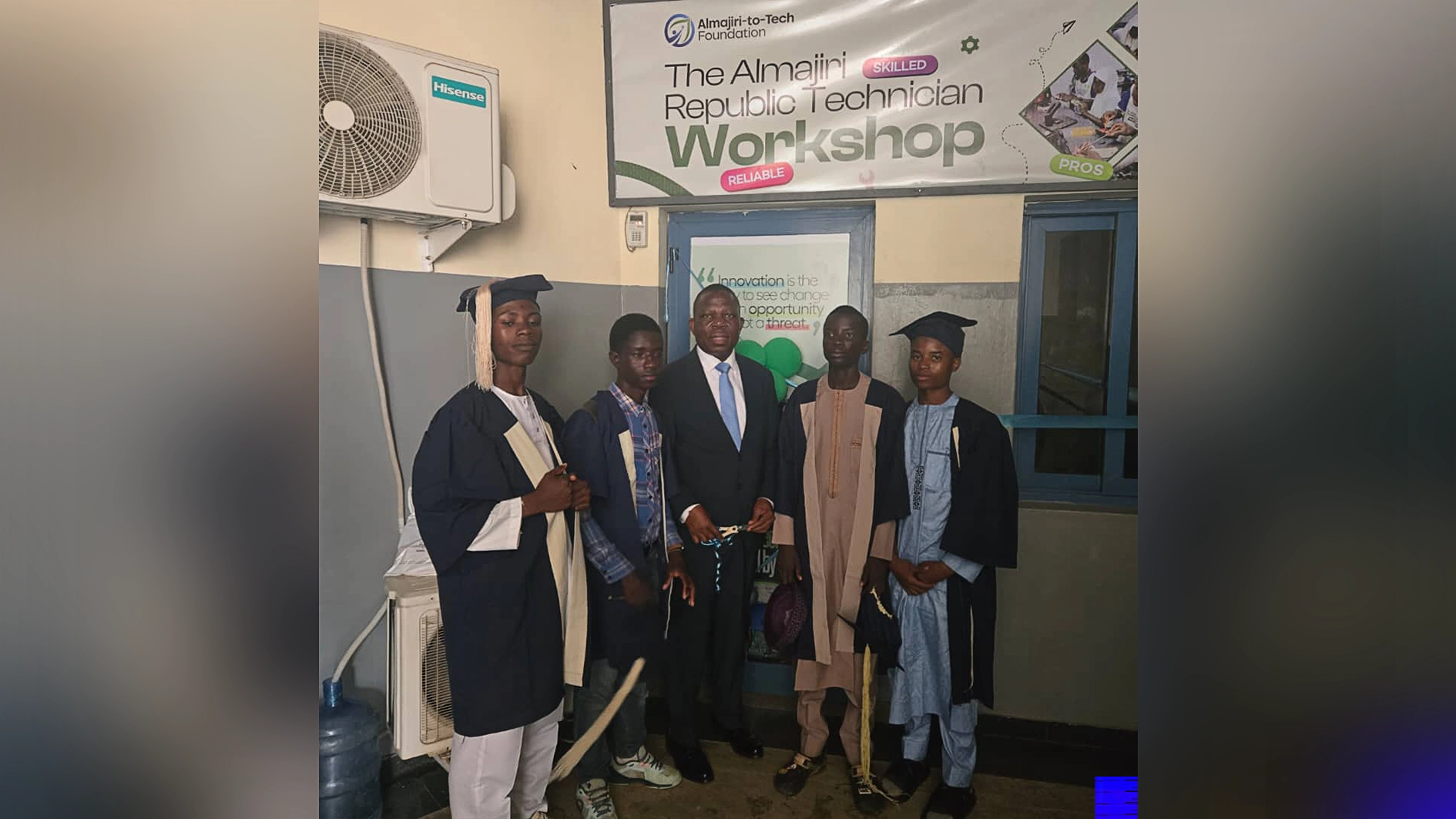
Recognising that training alone would not guarantee sustainable livelihoods, the foundation established the Almajiri Republic Technicians Workshop in Wuse 2, Abuja, where graduates now receive customers and continue practising their skills.
The foundation also plans to promote the graduates through its website and create a directory of certified technicians to connect them with potential customers.
Akano said two managers have been assigned exclusively to monitor the graduates, track their progress and provide continuous support as they establish their businesses.
The workshop was equipped with technical tools, while the rent was paid for one year to reduce the financial barriers facing graduates as they transition into self-employment.
He noted that partnerships with governments, corporate organisations and development partners will be essential if the model is to expand beyond the first 21 beneficiaries and reach more of Nigeria’s Almajiri and out-of-school children.

Evidence Beyond The Pilot
While organisations such as the Almajiri-to-Tech Foundation are experimenting with vocational pathways, the Federal Government has focused on expanding access to formal education through the Nigeria Education Sector Renewal Initiative (NESRI).
According to the Federal Ministry of Education, more than one million out-of-school children have been reintegrated into schools through ongoing interventions.
The ministry also said over 120 learning centres have been constructed nationwide, 36 state offices established to coordinate interventions, and more than 1,400 Tsangaya teachers trained to support the integration of formal education into traditional Islamic learning systems.
Other initiatives include the National Commission for Almajiri and Out-of-School Children Education, the Back2School campaign and an interactive dashboard designed to monitor data on out-of-school children and track government interventions.
The government has also introduced a new National Policy for the Enhancement of Almajiri Education, which seeks to reform the traditional Qur’anic education system by integrating literacy, numeracy, digital education and vocational skills into Almajiri learning centres.
The policy prohibits the use of Almajiri learners for street begging, mandates the registration of learning centres and provides for nationally recognised certification for graduates. It also requires centres to maintain records of learners, comply with child protection standards and meet minimum welfare requirements.
The Federal Government said the reforms are aimed at ending the long-standing practice of street begging associated with the Almajiri system while creating clearer pathways for children to acquire basic education and employable skills without altering the religious identity of Qur’anic schools.
For organisations working with vulnerable children, however, bringing children back into classrooms is only part of the solution. Many argue that older out-of-school children and young people also require practical skills that can help them earn a living and reduce their vulnerability to poverty, crime and social exclusion.
It is this gap that initiatives such as the Almajiri-to-Tech Foundation seek to address by combining technical training with mentorship and post-training support.
The Road Ahead
While the Almajiri-to-Tech Foundation’s pilot has demonstrated promising results for its first 21 beneficiaries, questions remain about whether a model that cost more than N100 million can be replicated at the scale required to address Nigeria’s millions of out-of-school and Almajiri children.
Akano acknowledged that moving beneficiaries from training to sustainable livelihoods would present new challenges.
“The biggest challenges the graduates are likely to face are marketing, financial management and continuous improvement,” he said.
He said addressing those challenges would require continued mentorship, business support and stronger partnerships with governments, corporate organisations and development partners.
According to him, the pilot was never intended to solve Nigeria’s out-of-school children crisis on its own. Rather, he said, it was designed to demonstrate that children often dismissed as unemployable or unreachable can acquire complex technical skills when given the right support.
“The experiment cost millions, but watching these children build computers and fly drones gave me the kind of fulfilment money cannot buy,” he said.
He called on state governments, development partners, corporate organisations and non-governmental organisations to support similar initiatives that expand opportunities for vulnerable children across the country.
Beyond Skills: What Makes Interventions Sustainable
While the Almajiri-to-Tech Foundation’s pilot demonstrates what can be achieved through intensive vocational training, experts say lasting success depends on much more than teaching technical skills.
Education expert and founder of Starlight Educational Hub, Charity Ameh, said Nigeria’s out-of-school children crisis extends far beyond education, describing it as a social, economic and child protection challenge.
According to her, millions of children across northern Nigeria, particularly Almajiri children, continue to grow up without access to formal education, limiting their future opportunities and their ability to participate meaningfully in the economy.
Ameh argued that interventions are more effective when they are designed around the realities of the children rather than expecting them to fit into conventional education models.
She cited the Teaching at the Right Level (TaRL) approach, which groups learners according to their literacy and numeracy levels instead of their age or grade, as one strategy that has helped children who missed years of schooling catch up academically.
She also stressed the importance of working with Qur’anic teachers and community leaders, noting that their involvement helps build trust and improves acceptance of education programmes within local communities.
While describing vocational and digital skills training as valuable, particularly for older out-of-school children, she cautioned that such programmes are most effective when built on strong foundational literacy and numeracy.
“I’ve watched something as simple as basic computer literacy change how a child sees their own future. But without literacy and numeracy underneath it, that training doesn’t go far because children still struggle to read instructions or handle basic calculations,” she said.
Ameh further argued that sustainable interventions require long-term community engagement rather than short-term projects.
She said programmes are more likely to succeed when parents, community leaders and religious teachers take ownership, while facilitators receive continuous coaching and monitoring instead of one-off training.
She also called for greater investment in teacher training, stronger integration of Almajiri and Islamiyya education into the formal education system, improved security for schools in conflict-affected areas and greater support for community-led models that have demonstrated results.
“This needs to be treated as a long-term structural problem, not something fixed with short bursts of funding,” she said.
While Ameh’s recommendations focus on strengthening education systems, organisations working directly with vulnerable children say implementation and sustained support are equally critical.
The Executive Director, Voice of the Street, Eedee-Bari Bawoh, described vocational training as one of the most effective pathways to educational empowerment, economic inclusion and the long-term reintegration of vulnerable children into society.
Bawoh said practical skills help young people move beyond survival by giving them opportunities to earn legitimate incomes while restoring their confidence and sense of purpose.
However, she cautioned that vocational training alone rarely delivers sustainable outcomes.
“Teaching a vocational skill is only one part of the solution. For vulnerable children to truly succeed, they require a holistic support system that addresses both the barriers that brought them to the streets and the challenges they face in sustaining their progress,” she said.
Bawoh explained that many vulnerable children have experienced abuse, neglect and extreme poverty, making psychosocial support, counselling, mentorship and safe learning environments just as important as technical instruction.
She also stressed the importance of foundational literacy and numeracy, noting that beneficiaries are better able to manage finances, communicate with customers, understand technical instructions and identify business opportunities when they possess basic educational skills.
Beyond technical competence, she said, entrepreneurship support is equally critical.
According to her, business development training, financial literacy, bookkeeping, access to start-up tools and seed funding significantly improve the chances that graduates will establish sustainable businesses rather than abandon the skills they acquired.
Bawoh further observed that practical support such as transportation stipends and meals during training often improves attendance and completion rates among children from low-income households who might otherwise abandon training in search of daily income.
Many of these elements formed part of the Almajiri-to-Tech Foundation’s pilot, where beneficiaries received daily meals, transportation support, technical tools, mentorship and continued access to a shared workshop after graduation.
Even so, Bawoh warned that one of the greatest challenges begins after training ends.
Many graduates, she said, still require equipment, working capital, apprenticeship opportunities and continuous mentoring before they can establish viable businesses.
Funding also remains a major limitation, restricting the number of vulnerable children organisations can support and reducing their ability to provide long-term business development, psychosocial care and follow-up services.
She added that sustainable rehabilitation cannot be achieved through short-term interventions alone.
Instead, programmes require continuous monitoring, mentoring and evaluation to identify emerging challenges, strengthen businesses and improve long-term economic independence.
Bawoh also highlighted the importance of involving parents, guardians, community leaders and faith-based organisations from the outset, arguing that programmes are more likely to succeed when communities take ownership of them and beneficiaries remain actively involved in shaping their own progress.
For such initiatives, she said, the ultimate measure of success will not simply be the number of children trained, but whether the model can be sustained, replicated and adapted to create opportunities for many more of Nigeria’s vulnerable children.
Founder, Street to School Initiative, Oluwatosin Olowoyeye-Taiwo, agreed that skills acquisition should be viewed as one component of a broader support system rather than a standalone solution.
Drawing from the organisation’s experience working with vulnerable children, she said vocational training restores confidence, provides employable skills and helps young people become financially independent, but only when accompanied by sustained support.
She cited the case of an orphan living with a physical disability who opted for vocational training after being assessed as not yet ready for formal schooling.
Two years later, she said, the beneficiary had mastered footwear production and was preparing to establish her own business.
“She transitioned from helplessness to resourcefulness. She became financially independent and no longer depends on people for survival,” she said.
Olowoyeye-Taiwo said lasting impact requires addressing several barriers simultaneously.
According to her, access to education, mentorship, psychosocial support, healthcare, nutrition and learning materials all contribute to better outcomes for vulnerable children.
“There is nothing that boosts school attendance the way free school meals do,” she said, noting that providing meals significantly improves attendance among children enrolled in the organisation’s free schools.
She also stressed that older children require internship opportunities, apprenticeships, financial literacy, start-up support and access to grants or equipment if vocational training is to translate into sustainable livelihoods.
Like other practitioners, the founder identified funding as one of the biggest constraints to scaling successful interventions.
She said donor fatigue has reduced the ability of many civil society organisations to sustain programmes for vulnerable children, while poverty, homelessness and family instability continue to affect attendance and retention.
She also argued that vocational training must evolve with labour market demands, including emerging technologies such as artificial intelligence.
Beyond funding, she said lasting transformation depends on long-term commitment from families, schools, community leaders and civil society organisations.
“No single organisation can do it alone, communities must take ownership because lasting change happens when everyone works together.”
According to her, whether through formal education or vocational training, the goal should remain the same, ensuring that every child has the opportunity to become a productive and self-reliant member of society.

