 Follow Us on Google News
 Follow Us on Google Discover
Mulls Reforms To Ensure Energy Security, Affordability
In a defining moment for Nigeria’s energy sector, the Board of the World Energy Council (WEC) Nigeria has appointed Bala Wunti as its inaugural Chief Executive Officer.
The announcement marks a significant shift from the council’s historically advisory role to a proactive, strategically driven entity. For a nation grappling with the complexities of energy transition, fiscal instability and infrastructure decay, this appointment signals a decisive move towards pragmatic, reform-minded leadership.
Wunti is not merely a technocrat; he is a structural engineer of energy policy, having spent over three decades navigating the tumultuous waters of the Nigerian petroleum industry. His career at the Nigerian National Petroleum Company (NNPC) Limited is a testament to his ability to dismantle bureaucratic bottlenecks and replace them with commercially viable frameworks. As the Chief Upstream Investment Officer of NNPC Upstream Investment Services (NUIMS), Wunti managed a multibillion-dollar portfolio that serves as the economic backbone of the nation. However, his legacy is defined by the deep-seated reforms he championed.
Perhaps the most significant feather in his cap is the successful renegotiation of Nigeria’s Deep Offshore Production Sharing Contracts (PSCs). For years, the international oil companies (IOCs) operated under terms that favoured their bottom lines while the Nigerian government hemorrhaged revenue. The stalemate seemed intractable until Wunti’s team brought a fresh, data-driven approach to the table. By ending decades of stagnation, he helped secure a substantial increase in revenue for the Federal Government, recalibrating the balance of risk and reward for all parties involved. This was followed by aggressive cost optimisation strategies, which saw upstream production costs tumble to below $10 per barrel, enhancing global competitiveness and insulating the sector against price volatility.
Wunti’s reformist zeal was equally visible in the midstream sector during his time at the Petroleum Products Marketing Company (PPMC). The “Operation White” initiative, a technology-driven monitoring system, was a direct answer to the pervasive problem of petroleum diversion. By leveraging technology to track product movement in real time, Wunti introduced a level of transparency that had been absent from the supply chain for decades. This accountability significantly curbed the “leakages” that plagued the system and strengthened the stability of fuel supply across the nation.
In accepting the role, Wunti stated that ideology would not cloud the judgment of the WEC Nigeria.
“Nigeria’s energy future cannot be shaped by ideology alone,” he said. “It must be grounded in the realities of energy security, affordability, sustainability and national development.”
This statement is a direct challenge to the often-polarised debates surrounding fossil fuels versus renewables. Wunti advocates for a nuanced approach where natural gas serves as a crucial transition fuel, ensuring that the energy transition is just and does not leave the Nigerian populace in the dark.
The appointment establishes the first dedicated executive leadership for WEC Nigeria since the country joined the global body in 1960. Under Wunti, the organisation will evolve into a “credible, impartial platform” that converts dialogue into “informed decisions, investable solutions and measurable progress.” This is critical for Nigeria, where policy inconsistency often scares off investment.
Wunti’s background as an alumnus of Harvard Business School and the Blavatnik School of Government at Oxford places him in a unique position to bridge the gap between local realities and global best practices. He also brings his experience from the OPEC Economic Commission Board and the Gas Exporting Countries Forum (GECF) to bear on the Nigerian energy discussion. His leadership is expected to unlock investment in the gas sector, support the expansion of electricity access and navigate the complex waters of the global energy trilemma with the same strategic acumen that he brought to the NNPC.
WEC Nigeria is now poised to become the central hub for energy diplomacy, moving beyond consultation to become the architect of the nation’s energy destiny.
Wunti heads World Energy Council Nigeria
Date: 8 August 2026 3:40am WAT
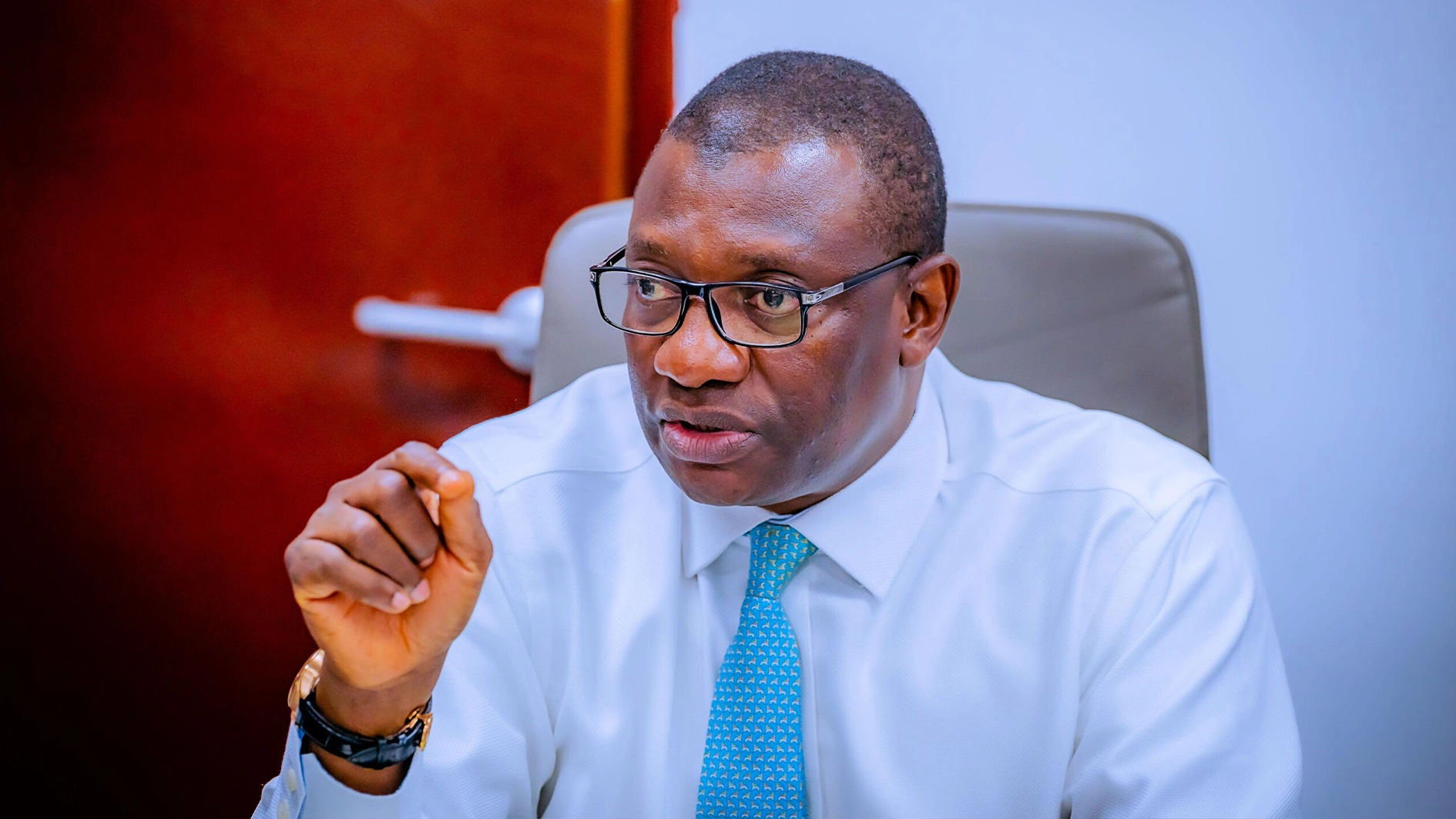
Dr. Bala Maijama’a Wunti
Dr. Bala Maijama’a Wunti

