 Follow Us on Google News
 Follow Us on Google Discover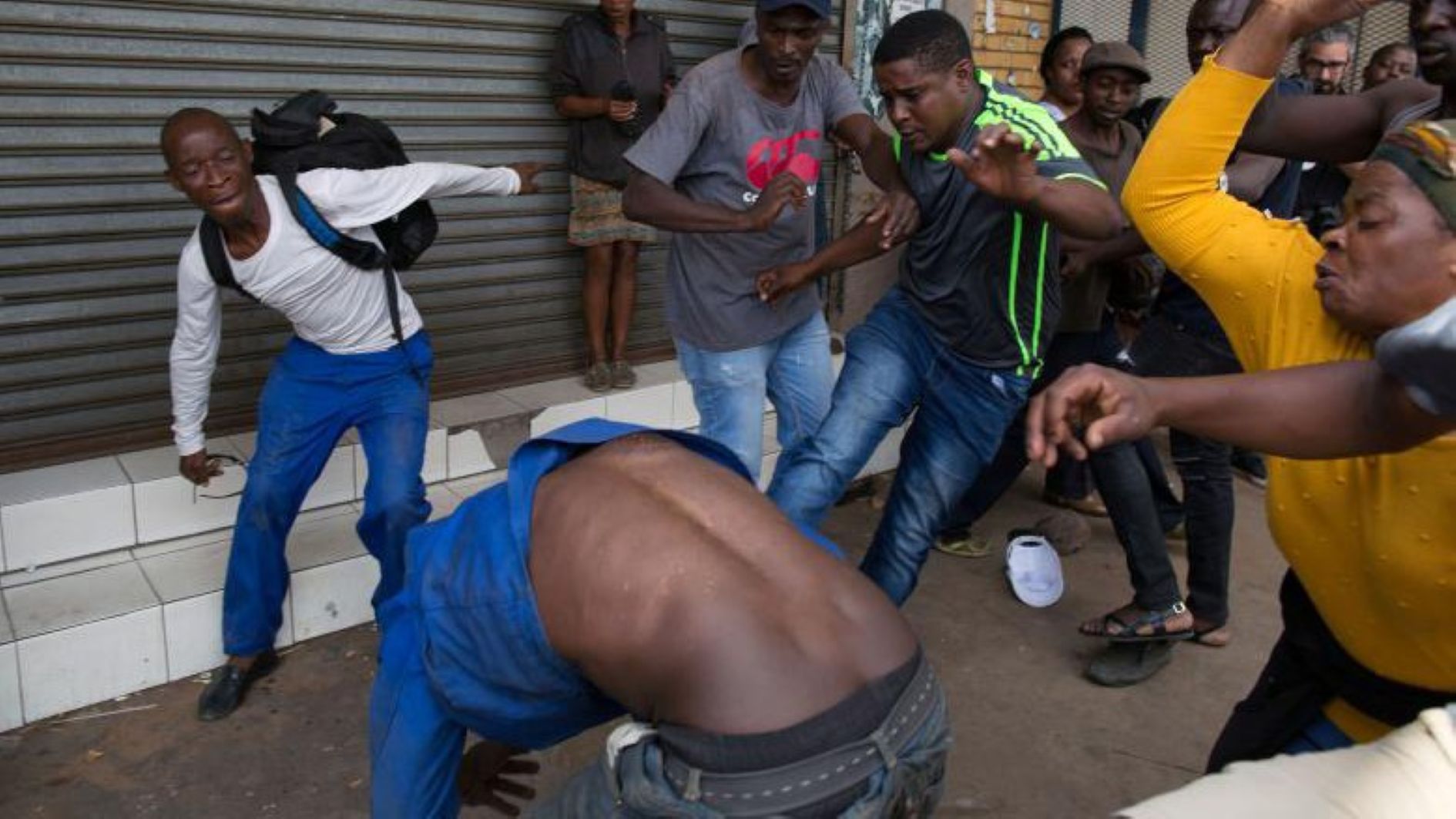
By Sylvester Odion Akhaine
My forthcoming work is titled “Goodbye Joburg,” and its leading chapter bears the same title. This present piece would be integrated into the work to complement the lone chapter. Many Africans are actually bidding goodbye to Joburg beyond this author, who has done so in a pleasant reminiscence. In this regard, Joburg becomes a metaphor for the exit of fellow Africans from Mandiba’s country. In general terms, they are saying goodbye to Azania, a nomenclature I have chosen to use instead of the vacuous South Africa. This subject is an afterthought.
It is a result of the Africa-wide anger against South Africa and its people, whom many Africans thought should have pan-Africanism in their veins given the Africa-wide solidarity to the struggle against Apartheid. The immediate prompt for me is the response of my acquaintances to the musical show by the South African singer Tyla in Nigeria on December 20, 2026. Omoyele Sowore, the presidential candidate of the African Action Congress (AAC), moved against the call for a boycott of the show. In his words, “No one should hold a talented musician like @Tyllaaaaaaa vicariously liable for the crimes of xenophobia.
Artistes are not responsible for the failures of politicians except where there is ample evidence they’re enablers…Tyla’s Lagos concert must go on. #RevolutionNow”. Another acquaintance of mine replied, “Didn’t know Sowore was this foolish, so he wants to be seen as Pan Africanist, nonsense. Tyla dare not come to perform in Nigeria.” This elicited a response from me: “Sowore is not foolish. Africa has only one colour, that of unity. If we divide ourselves in an era of return to jungle imperialism, we are doomed.” Yet another friend of mine replied to me and said, “True. But xenophobia is apartheid. Africans should fight xenophobia the way we fought apartheid.”
To get to the brass tacks, two instructive quotes are important. The first is from the Ram Column titled, “Resolving Xenophobic attacks, Moving Forward” in Newspeak 31 July 2026 by Abdu Rafiu: “The mob gangs in South Africa who targeted Nigerians, their homes and property for destruction in xenophobic attacks must necessarily give cause for concern. After drawing up a list of supposed transgressions against Nigerians, Black South Africans embarked on an orgy of hate and destruction against Nigerians, fellow Black Africans, Nationals of some other African countries were affected as well, and curiously directed at the citizens of the proverbial Frontline States of old. Harm is harm–harm to our fellowmen, to our neighbours, acquaintances, to associates, name it–no matter what may have led to it”.
The second is from the Vanguard news of July 31, 20 26, titled ‘Xenophobic attacks and ANC’s leadership failures,’ “South Africa is once again disgracing itself. The latest wave of xenophobic attacks against African migrants, including Nigerians, Zimbabweans, Mozambicans and Somalis, has reopened wounds that should have healed after the shameful outbreaks of 2008, 2015 and 2019. Shops have been looted, businesses destroyed, homes abandoned and livelihoods shattered simply because fellow Africans crossed borders in search of opportunities. For a nation whose freedom was sustained by the solidarity of the rest of Africa, this is an unforgivable betrayal”.

The xenophobia in South Africa calls for an in-depth and historical approach. I do so under six thematic areas, namely, the apartheid dehumanisation policy, the Grahamstown metaphor; geographical cu de sac, false consciousness, and false flag operation, and post-apartheid leadership failure.
In 1652, the Dutch East India Company established a settlement at the Cape, the Bay of Table Mountain, to cater for its fleets and sick sailors. Although it coincided with the period when Europeans were seeking out other lands to further their interest, there was no intention to occupy the Cape. But human contrivance would spark a temporary settlement which later evolved into the occupation of what is today’s South Africa. Jan van Riebeeck began the taming of the Table Valley from incipient trade, largely in meat, with the cattle-breeding Hottentots, the Burghers from Dutch land who ventured into farming, and the former became a “voluntary” labour force. Other Africangroups, like the Bushmen, retreated into the interior. The Boers would later encounter more Bantu (African) people, such as Xhosa, Zulu and Swazi, in the southernmost tip of the continent as a result of several centuries of southward migrations. This would mark the beginning of bloody encounters with the Africans who resisted the incursion of the white alien.
History is replete with the exploits of Shaka, Mzilikazi, Dingane, Makhanda, and Moshoshoe. Their resistance would later climax in the famous Bambata rebellion of 1906. In the second half of the seventeenth century, apart from the Burghers, the French Huguenots, Germans, and British migrated into South Africa. The British arrival in South Africa in the great power rivalry of the period led to the subjugation of the Boers and the formal take-over of the Cape Colony and Natal, retaining nominal control of the Orange Free State and Transvaal, until the Union of 1910.
The dynamics of state-building, especially the policy of exclusivity that matured into the apartheid regime in 1948, made the black man an alien in his fatherland and formalised his dehumanisation.
Grahamstown episode. It should be noted that the inroad of the Europeans actually sparked the convergence of races in South Africa, moreso the discovery of diamonds and gold between 1867 and 1886, a period that also witnessed the influx of Indian labour into South Africa. New towns such as Grahamstown in the Eastern Cape became a melting pot of races: white, black, Indian, coloured, mixed. It was a rainbow coalition of the future that would have produced a culture mix without ingrained racial discrimination. The White establishment determined to relegate the blacks, undermining Grahamstown. The Graham metaphor covers areas like District Six, the largest cosmopolitan communities in Cape Town before the segregation laws.
It had an estimated population of about 60,000; it was an interracial and socially integrated community of Black, white, Coloured and Indian people. As a result of the apartheid policy, the Group Areas Act of 1950, the population was removed outside the city. The point being made here is that apartheid policy mainstreamed the deliberate destruction of harmonious coexistence among the races in South Africa. This value has not been recovered in post-apartheid South Africa.
Professor Akhaine is with the Lagos State University.

