 Follow Us on Google News
 Follow Us on Google Discover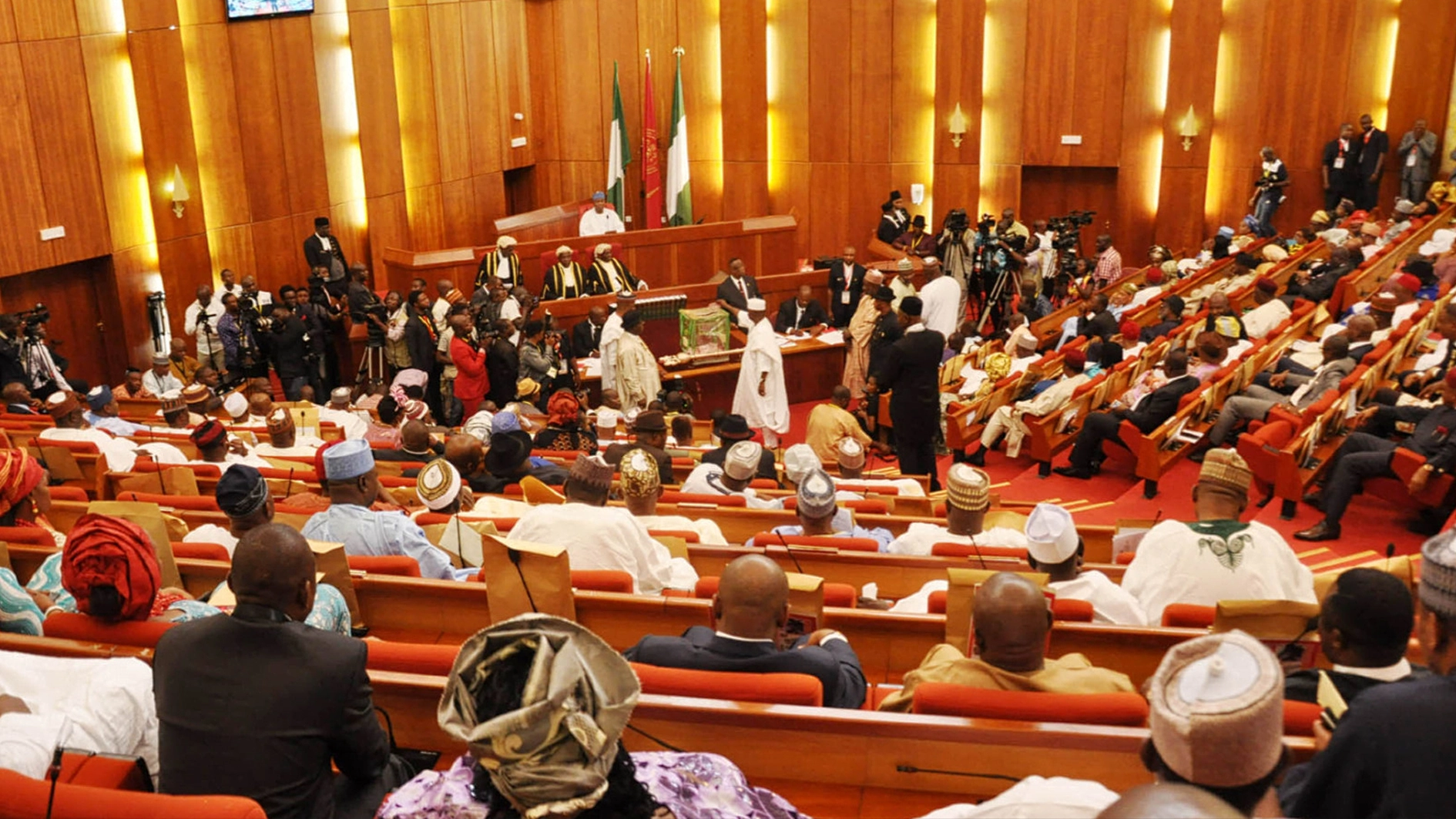
As Nigeria approaches the 2027 general elections, the recurring movement of outgoing governors angling for the National Assembly and lawmakers heading in the opposite direction, leading to the State Houses, is again raising questions about political recycling and the pursuit of power over public service, TUNDE BODUNRIN and ROTIMI AGBOLUAJE report.
Following the return to democratic rule in 1999, Nigeria’s political landscape has witnessed a recurring movement between the executive and legislative arms of government.
Former governors, after completing the constitutionally permitted two terms, increasingly seek seats in the National Assembly, particularly the Senate. At the same time, serving federal and state lawmakers are turning their attention to the Government Houses, seeking to translate legislative experience into executive power.
Ahead of the 2027 general elections, the pattern has become particularly pronounced. No fewer than 17 former governors are reportedly angling to return to, or contest for, Senate seats, while at least five serving lawmakers are preparing to contest governorship elections in their respective states.
The development has renewed debate over whether such movements represent a healthy progression in public service or merely a political elite recycling itself from one elective office to another.
The Nigerian Constitution assigns distinct responsibilities to the legislature and executive. While lawmakers are principally responsible for legislation, representation and oversight, governors exercise broad executive authority, implement budgets, make appointments and determine the direction of state policy.

Yet, over the years, political practice has created the impression that remaining in elective office is itself an important measure of political relevance. This has intensified competition for political positions and, critics argue, encouraged politicians to treat public office as a continuing career rather than a temporary mandate to serve.
The Senate has consequently become an attractive destination for former governors seeking to remain influential after leaving office. Among those linked to Senate ambitions for the next political cycle are Godswill Akpabio, Orji Kalu, Ahmadu Fintiri, Bala Mohammed, Henry Seriake Dickson, Ifeanyi Okowa, Adams Oshiomhole, Ibrahim Dankwambo, Inuwa Yahaya, Hope Uzodimma, Ibrahim Shekarau, Adamu Aliero, Yahaya Bello, AbdulRahman AbdulRazaq, Dapo Abiodun, Simon Lalong, Aminu Tambuwal and Mai Mala Buni.
For many, the Senate offers a platform to retain political relevance and influence in their former states and within their parties. Their experience as governors also gives them considerable political capital, networks and knowledge of government.
The historical pattern shows that the issue is not simply about ambition. It is also about how Nigeria’s political system rewards incumbency, networks, and familiarity, often giving established politicians an advantage over newcomers in securing nominations and mounting successful campaigns.
But the traffic is not one-way.
From gavel to governor
BARRING changes during the substitution process, The Guardian has identified five incumbent lawmakers seeking to exchange legislative office for executive power. They are Senator Solomon Olamilekan Adeola of Ogun State; Representative Kingsley Chinda of Rivers State; Speaker of the Kwara State House of Assembly, Yakubu Danladi Salihu; Senator Sharafadeen Alli of Oyo State; and Senator Aliyu Wadada of Nasarawa State.
Their emergence reflects a contrasting trend: while former governors are seeking continued relevance in the legislature, serving lawmakers are positioning themselves to lead state governments.
The difference in the current cycle is the concentration of several serving lawmakers among governorship contenders, prompting questions about whether legislative experience is increasingly becoming a pathway to executive office.
A Professor of Political Science at Obafemi Awolowo University, Ile-Ife, Prof. Femi Ajayi, attributed the attraction partly to the enormous concentration of political and financial authority in the office of the governor.
Unlike legislators, whose constitutional responsibilities revolve around lawmaking, oversight and constituency representation, governors supervise state bureaucracies, implement budgets, make key appointments and determine the direction of public policy. The office, therefore, offers broader political influence and greater capacity to shape governance.
Ajayi also identified changing succession politics as another major factor. As governors approach the end of their constitutionally permitted two terms, he said, parties increasingly seek candidates who combine electoral appeal, administrative experience, established political structures and loyalty.
Serving lawmakers, he noted, often satisfy those requirements.
“Legislative office gives politicians broad political exposure, a firm understanding of public finance and budgeting, and opportunities to build strong relationships within their parties. These qualities make them attractive governorship candidates, particularly for parties seeking continuity,” he said.
A scribe of the Nigeria Union of Journalists, Achike Chude, pointed to another factor: the rising financial and political demands of governorship campaigns.
In an increasingly competitive electoral environment, he said, parties appear more inclined to invest in experienced politicians with established structures than relatively unknown aspirants. For outgoing governors seeking continuity, trusted legislators who understand government and enjoy public recognition are often considered safer political choices.
Supporters of the trend argue that such experience can strengthen executive performance. Years spent scrutinising budgets, conducting oversight, participating in policy formulation and engaging constituents, they contend, provide lawmakers with institutional knowledge that can be transferred to Government House.
A former member of the House of Representatives for Epe Federal Constituency in Lagos State, Lanre Odubote, therefore cautioned against automatically describing the movement as political recycling.
According to him, legislative service can equip politicians with practical knowledge of budgeting, public finance, lawmaking, oversight and constituency engagement, all of which are relevant to effective governance.
“It is a logical progression in public service. Experience acquired in the legislature prepares many politicians for the greater responsibilities of executive office,” he said.
Odubote added that the central issue should not be whether politicians move from one elective office to another, but whether the process remains transparent, competitive and open to qualified aspirants.
Yet, succession politics cannot be ignored. Four of the five serving lawmakers seeking governorship seats, Adeola in Ogun, Chinda in Rivers, Danladi Salihu in Kwara and Wadada in Nasarawa, are generally regarded by political observers as enjoying the backing of outgoing governors or influential political establishments in their states.
Such backing can provide access to party structures, campaign machinery, grassroots networks and loyal supporters. For governors nearing the end of their tenure, trusted legislators can be attractive successors because they understand the existing political arrangement and may be more willing to sustain policies and alliances.
The Oyo contest presents a different dynamic. Senator Sharafadeen Alli is seeking to unseat the incumbent administration without the support of the sitting governor. His candidacy, therefore, depends more heavily on opposition mobilisation and party strength than on the machinery of incumbency.
The trend also cuts across party lines. The Peoples Democratic Party has fielded several former federal legislators as governorship candidates, including Emmanuel Bwacha in Taraba, Garba Yakubu Lado in Katsina, David Ombugadu in Nasarawa, Usman Shehu Bawa in Kaduna and Ladi Adebutu in Ogun. Their emergence suggests that legislative experience is being valued across political parties as preparation for executive leadership.
But the argument over experience versus recycling remains unresolved.
A lecturer in the Department of History at the University of Ilesa, Dr Adebukola Ayoola, sees the trend more critically, describing it as evidence of an entrenched political class.
“It is political recycling and dangerous for the polity. Remove politics from them, and they become practically redundant,” he said.
Ayoola argued that when governorship tickets consistently go to serving lawmakers, former governors or other established political figures, opportunities for younger politicians, technocrats, and first-time aspirants become increasingly limited.
He acknowledged that experience matters, but argued that democracy also requires space for fresh leadership, innovative ideas and wider participation.
“The recurring movement from governor to senator, senator to governor and legislator to executive office reflects an entrenched political elite that continues to rotate public offices among itself, thereby narrowing the political space for a new generation of leaders,” Ayoola stated.
Odubote, however, maintains that experience should not be treated as a liability simply because it comes from the same political class. The real test, he argues, should be the quality of leadership and the integrity of the electoral process.
The concern becomes more serious when the movement between offices is driven not by public service but by the desire to preserve political power, influence and access to state resources.
Nigeria’s expensive electoral system has long encouraged politicians to build and maintain political structures capable of supporting future contests. Critics contend that some elected officials devote considerable energy to accumulating resources and securing political succession instead of concentrating on governance.
This is one reason the phrase “political recycling” resonates with sections of the public. If political office becomes a continuous cycle in which governors become senators, senators become governors, and legislators move between chambers and Government Houses, the question is whether citizens are receiving new leadership or merely witnessing the rearrangement of established political interests.
A legal practitioner, Abel Adeyemi, raised another concern: the effect of succession politics on legislative oversight.
If legislative office increasingly becomes a stepping stone to Government House, he warned, lawmakers may become reluctant to challenge incumbent governors who wield considerable influence over party structures and succession arrangements.
Such calculations, he contended, could weaken legislative oversight and undermine the constitutional principle of checks and balances, particularly in states where governors are perceived as kingmakers.
The issue, therefore, goes beyond individual politicians changing offices. It touches on the structure of Nigeria’s political system, the strength of political parties and the ability of elections to produce genuine alternatives.
There is nothing inherently wrong with a former governor seeking legislative office or a legislator aspiring to become governor. Democratic systems often benefit when experienced public officials move between branches of government, provided they bring competence, integrity and respect for institutional boundaries.
Indeed, legislative experience can strengthen executive leadership, just as a former governor can bring administrative and policy experience to the Senate. The problem arises when the office becomes an end in itself, or when political structures make it difficult for new entrants to compete on equal terms.
As the 2027 elections approach, the growing movement in both directions offers a revealing picture of Nigeria’s political class. Former governors are looking to the Senate to preserve influence, while serving lawmakers are seeking the greater authority of Government House.
Whether this represents a healthy exchange of experience or another chapter in Nigeria’s culture of political recycling may ultimately depend less on where politicians have served than on why they seek the next office, how they secure their tickets and what they do with power when they get there.
For voters, the more important question is therefore not whether a candidate is a former governor, senator or legislator. It is about whether the candidate can demonstrate competence, accountability, vision, and a genuine commitment to the public interest.
The 2027 governorship and National Assembly elections may provide another test of that principle. If political parties continue to favour familiar names and established structures, the movement between offices will likely persist. But if voters and party members demand stronger competition and greater accountability, the same experience now being used to justify political continuity could be subjected to a more rigorous performance test.
Whichever argument prevails, the outcome of the 2027 governorship elections could shape future calculations about who controls Nigeria’s political institutions and whether the next generation will find enough space to enter them.

