 Follow Us on Google News
 Follow Us on Google Discover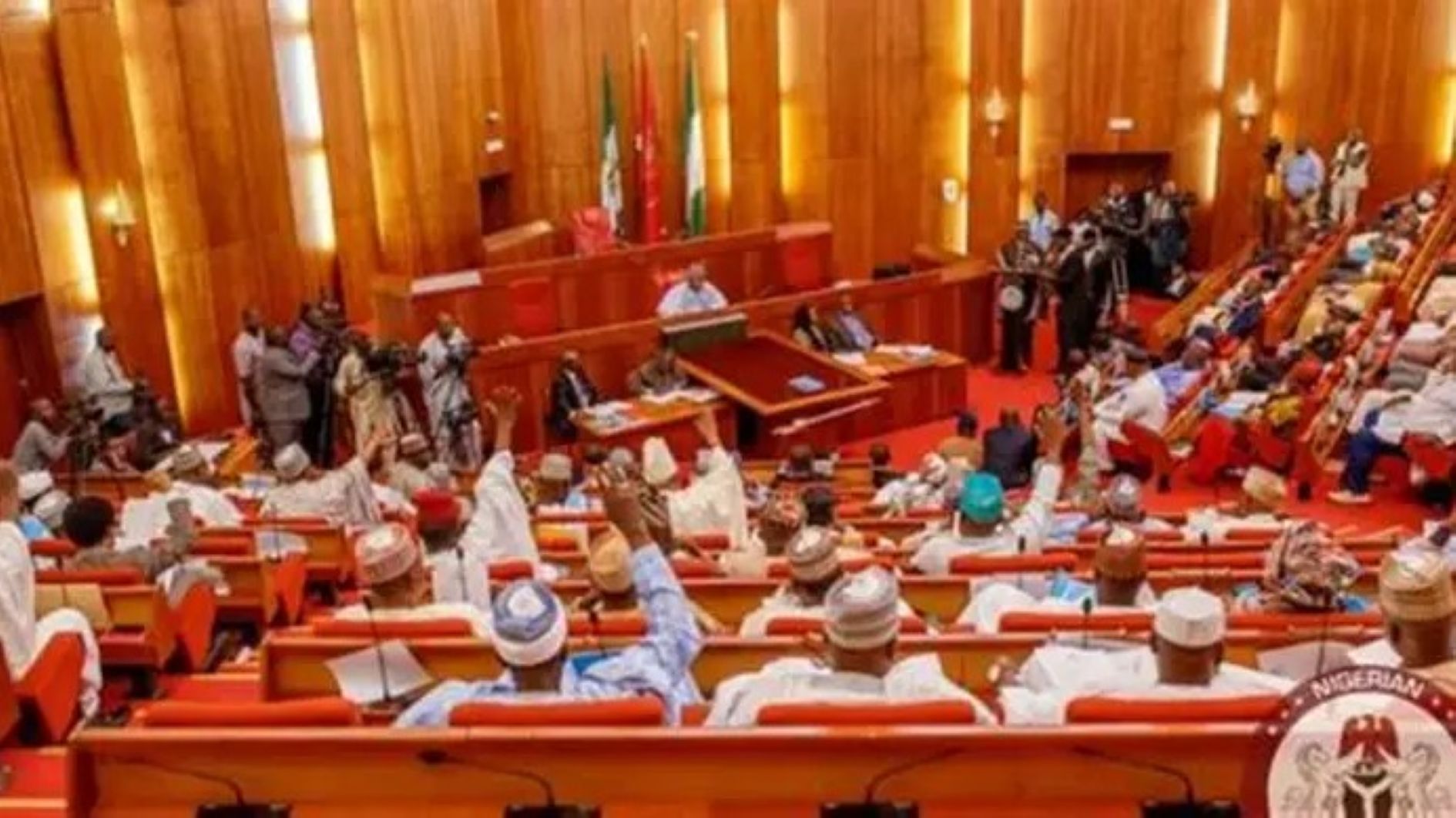
he Senate Committee on Banking, Insurance and Other Financial Institutions has intensified efforts to strengthen Nigeria’s financial system, convening an expanded stakeholders’ engagement with key financial sector regulators to promote economic stability, financial inclusion and sustainable growth.
Speaking at the engagement in Lagos, Chairman of the committee, Senator Mukhail Adetokunbo Abiru (Lagos East), who was represented by Senator Osita Izunaso (Imo West), reaffirmed the Senate’s commitment to legislative reforms, stronger regulatory collaboration and policies capable of repositioning Nigeria’s financial architecture for long-term economic prosperity.
The engagement brought together the leadership of the Central Bank of Nigeria (CBN), Nigeria Deposit Insurance Corporation (NDIC), Asset Management Corporation of Nigeria (AMCON), National Insurance Commission (NAICOM) and Nigeria Export-Import Bank (NEXIM), among other industry stakeholders and financial experts.
Abiru said the Senate recognised the financial sector as a critical driver of investment, job creation, business expansion and macroeconomic stability.
He said, “The financial sector remains at the heart of our economic development. Its ability to mobilise savings, channel credit to productive sectors, facilitate investment and manage risks is fundamental to achieving sustainable economic growth.”
According to him, the current economic realities made stronger collaboration between lawmakers and financial regulators imperative.
“Current economic realities demand closer collaboration between the legislature and our financial regulators. We cannot afford isolated interventions when the challenges confronting the financial system are interconnected,” he said.
Abiru identified inflationary pressures, global economic uncertainties, cybersecurity threats, low insurance penetration and the urgent need to diversify Nigeria’s export base as some of the challenges requiring coordinated policy responses.
He said, “Inflationary pressures, global economic uncertainties, cybersecurity threats, low insurance penetration and the urgent need to diversify our export base require coordinated policy responses rather than isolated interventions.”
The lawmaker said the expanded stakeholders’ engagement was convened to encourage frank discussions and produce practical solutions that could strengthen the country’s financial architecture.
“This engagement is designed to foster frank and constructive discussions and, more importantly, to generate practical and implementable solutions that will strengthen our financial system and support sustainable economic growth,” he said.
Abiru added that the various components of the financial system were interconnected and must therefore be strengthened collectively.
“The effectiveness of monetary policy, the strength of our financial safety nets, the soundness of our banking institutions, the vibrancy of the insurance industry and the availability of export finance are all interdependent components of a stable and well-functioning financial architecture,” he said.
He said the theme of the engagement, “Strengthening Financial System Architecture for Sustainable Economic Growth and Stability in Nigeria,” reflected the need for greater synergy across the financial sector.
According to him, “The theme speaks directly to the need for synergy among monetary policy, deposit insurance, asset recovery, insurance development, export financing, digital finance and financial regulation.”
The Commissioner for Insurance and Chief Executive Officer of the National Insurance Commission (NAICOM), Mr Olusegun Ayo Omosehin, said the Nigeria Insurance Industry Reform Act (NIIRA) 2025, sponsored by Abiru and the committee, had contributed significantly to stabilising the insurance sector.
Omosehin said, “The NIIRA 2025 has helped in stabilising the sector and repositioning insurance practice in Nigeria in line with current best global practices.”
He disclosed that 43 insurance companies had successfully recapitalised, describing the development as a major milestone for the industry.
He said, “As we speak, 43 insurance companies have successfully recapitalised. This is a significant achievement for the sector and demonstrates the impact of the reforms being implemented.”
Omosehin commended Abiru and members of the committee for their role in the passage of the insurance reform legislation, urging the House of Representatives to expedite action on the bill.
“We commend Senator Abiru and the committee for their commitment to reforming the insurance industry and for the passage of the Insurance Regulatory Commission Bill,” he said.
“We plead with the House of Representatives to give the bill timely consideration and passage, so that it can receive the assent of Mr President and become fully operational,” he added.
Representatives of the Governor of the Central Bank of Nigeria, as well as the Managing Directors of AMCON, NEXIM and NDIC, commended the Senate committee for its oversight and legislative support to the respective agencies.
They said the committee’s interventions had helped strengthen the agencies’ capacity to effectively discharge their statutory mandates.
The engagement also featured policy presentations by Professor Uche Uwaleke, President, Capital Market Academics of Nigeria (CMAN); Professor Biodun Adedipe, Chief Consultant, B. Adedipe Associates Limited; and Dr Tilewa Adebajo, Chief Executive Officer, CFG Advisory.
The experts presented policy papers addressing key issues affecting Nigeria’s financial system and offered recommendations aimed at strengthening financial stability, investment and sustainable economic growth.
In his closing remarks, Abiru said the Senate would sustain its engagement with financial sector regulators and other stakeholders.
He said, “The Senate will continue to work closely with our financial regulators and other stakeholders to deepen financial inclusion, strengthen public confidence in our financial institutions and improve regulatory effectiveness.”
He added, “Our objective is to position Nigeria’s financial system to compete more effectively in the global economy while ensuring that it remains resilient, responsive and capable of supporting our economic transformation agenda.”
Abiru said the expanded stakeholders’ engagement was part of the Senate’s broader legislative oversight efforts to ensure that financial institutions remained sufficiently resilient to support businesses, investors and the wider Nigerian economy.

