 Follow Us on Google News
 Follow Us on Google Discover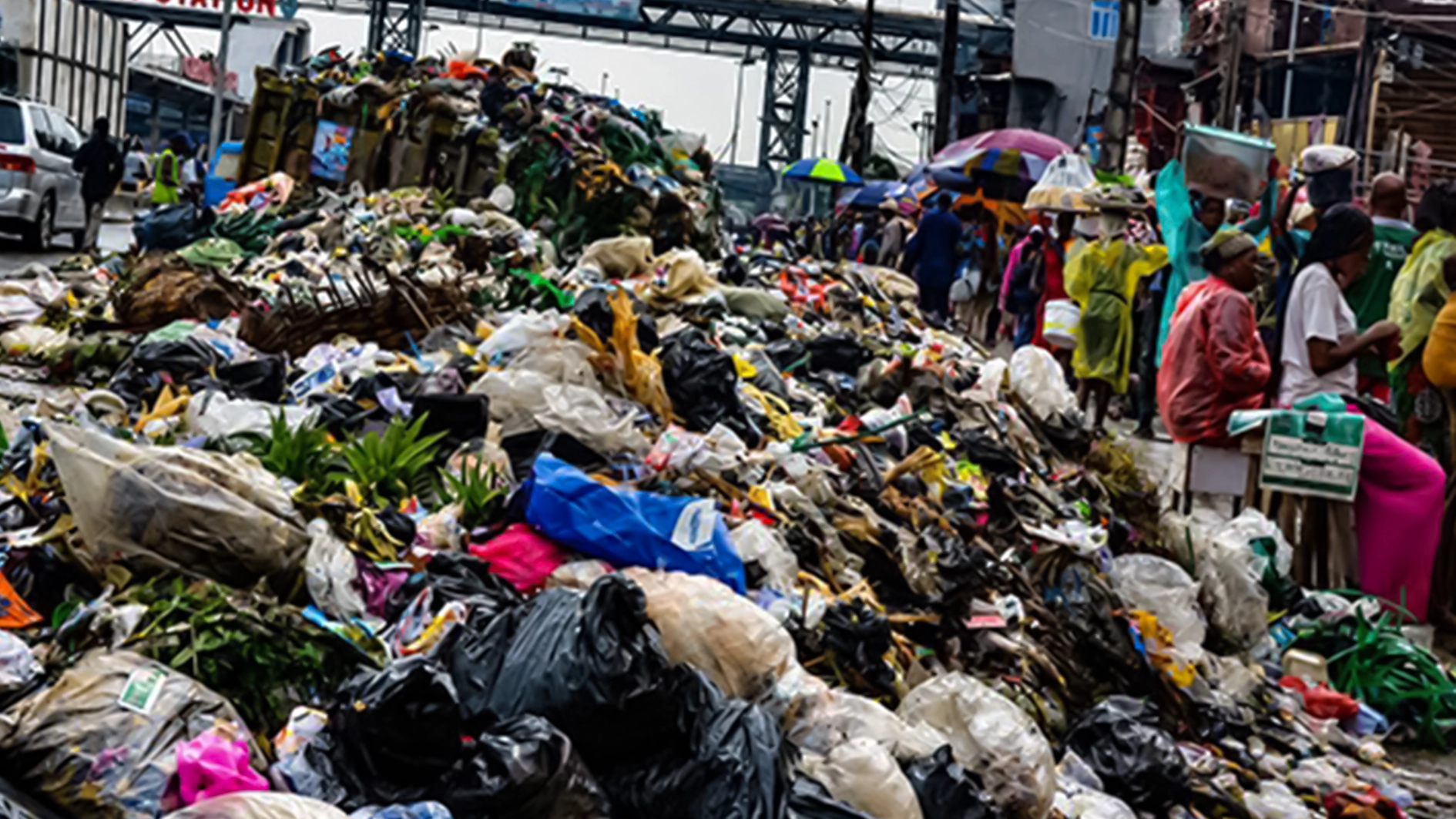
By Salahudeen Shakirat Boluwatife
For a city that markets itself as the mega city of Nigeria and the gateway to West Africa, parts of Lagos tell a different story: streets littered with dirts, gutters choked with refuse, and drains turned into open sewers. Walk along Mushin Market Road, cross the Iyana Isolo Expressway, or stand at Five-Star Junction after a downpour, and you will see the evidence that cleanliness has become a casualty of neglect and, worse, of collective indifference.
Beyond the main roads and markets, dirt is now being stored right in front of people’s houses. In many streets, bags of refuse are displaced outside, lining the road and filling the air with foul odours. This daily reality shows how a failure of basic services turns whole neighbourhoods into dumping grounds, with serious consequences for health, dignity and safety.
he other day, I watched that indifference play out. I was at an event centre in the rain when a woman tossed a biscuit-nylon out of a bus window. The wrapper snagged on a gutter, then drifted into a drain. It was a small, thoughtless act but it is one of many small acts that add up to erosion, blocked waterways and flooding. That one wrapper can join countless others, clog a drain, and turn an ordinary rain into a local disaster.
This is not only an aesthetic complaint. Poor waste management is a public-health hazard. Blocked drains mean stagnant water, which breeds mosquitoes and increases malaria risk. Rotting refuse in front of houses releases odours and attracts flies and rodents, helping disease to spread. Contaminated runoff from these waste piles flows into streets and compounds, raising the risk of diarrhoea, typhoid and cholera, especially in densely populated neighbourhoods. The burden lands hardest on children and low-income families who already face limited access to healthcare. Every flood, every outbreak, is a reminder that refuse is not merely unsightliness; it is a direct threat to lives and livelihoods.
The economic cost is also steep. Markets and small businesses lose goods to flood damage, commuters spend hours stuck in gridlock made worse by indiscriminate dumping that blocks side streets and drainage. Municipal resources are drained by emergency clean-ups and repairs that could have been avoided if collection and disposal were properly planned and enforced. Informal recycling networks exist and provide livelihoods, but without formal support they cannot scale to meet the city’s needs or significantly reduce the volume of plastic and other waste choking Lagos. The city’s image crucial for investment and tourism suffers when visitors see refuse piled in front of homes and overflowing onto the roads.

Why, then, is the conversation of a dirty muted? State agencies set policy, local governments handle neighbourhood services, private contractors execute collection, and residents generate and, sometimes, dump waste. When roles overlap or are unclear, accountability evaporates, and no one feels truly responsible for the heaps of refuse that reappear after every sanitation drive. Politicians deflect blame, contractors point to local governments, and residents point to contractors and daily business continues as usual.
Equally dangerous is a civic culture that normalises dirty streets and dirty environment. Without visible consequences or reliable services, many prioritise convenience over proper disposal, especially in crowded markets and bus stops where bins are scarce. Urban design compounds the problem: inadequate public bins, poor drainage design, and construction sites left unsecured all funnel waste into the same channels we rely on to carry away stormwater. The result is predictable: erosion of the soil, blocked drains, and floods that sweep waste back into homes.
No doubt, clean streets and clean environments are achievable goal if Lagos state chooses to make it a priority. The solutions are practical and can be implemented without waiting for a miracle. What is missing is political will and a shared sense of civic responsibility.
Also, responsibility must be clarified and measurable targets set. Lagos needs a single, transparent waste-management strategy that clearly assigns duties across state ministries, local governments and private contractors. This strategy should include specific targets for how often household waste is collected in each neighbourhood, how many kilometres of drains are cleared, and how quickly complaints about uncollected refuse are resolved. Publishing these targets and reporting progress publicly each quarter will make it harder for any agency to hide behind excuses.
Logically, logistics and infrastructure must improve. There should be enough bins and designated collection points so residents are not forced to store refuse in front of their houses. Collection schedules must be regular and known so that residents can plan around them and hold operators accountable when they fail. In flood-prone areas, drains should be desilted frequently, and roads upgraded so waste trucks can access narrow streets without damaging property. This will reduce the chances that a simple rainstorm becomes a flood disaster fuelled by scattered refuse.
Furthermore, the informal sector needs to be integrated and supported. Waste collectors and small recyclers already recover value from plastic, metal and other materials, often working on the same streets where residents dump their refuse. Formalising their roles through training, safety equipment, microcredit and access to recycling centres will help move waste off the streets and into productive use. When recyclers are recognised and organised, they can help reduce the amount of material that ends up blocking drains and littering doorsteps.
Fourth, enforcement must be paired with education. Illegal dumping of refuse in front of homes and along the street should attract penalties, but punishment alone is not enough. Community service, such as joining clean-ups, can turn sanctions into positive action. At the same time, sustained public education campaigns in schools, markets, bus parks and religious centres should explain how everyday acts of indiscriminate dumping of refuse lead directly to erosion, blocked drains and floods. People need to see the link between their habits and the disasters they fear.
Fifth, community ownership is essential. Resident associations, street committees and market unions should be involved in deciding where bins go, when trucks collect refuse, and how environments are kept clean. When local people help design and monitor solutions, compliance improves because the system reflects their realities. Street-by-street clean-up days, backed by local leaders and supported with tools and trucks, can reset norms and show that dirty fronts and smelly streets are no longer acceptable.
Finally, waste management must be properly financed and monitored. Transparent contracts and performance-based payments for waste operators will ensure that refuse in front of houses is removed on schedule. Modest, clearly explained service charges tied to visible improvements can help fund better equipment and more workers, while external funding and partnerships can support larger infrastructure projects. When money follows results, the incentive is to keep streets and frontages clean, not to wait until crisis forces action.
These steps require courage and consistency. Leaders must be prepared to cut inefficient contracts, speak honestly about failures, and prioritise everyday infrastructure over flashy projects. Residents must reclaim their role as stewards of their environment, insisting that refuse is no longer stored at their premises and refusing to add to the problem with careless dumping.
Lagos’s future depends on whether it continues to treat dirt as normal or chooses to see it as a sign of deeper neglect. A single dirt tossed into a gutter, a single bag of refuse left outside a house, is not just litter; it is the first act in a chain that leads to blocked drains and flooded homes. From Mushin Market Road to Iyana Isolo Expressway and Five-Star Junction, the evidence is clear: dirt persists where denial lives. Change will not be instant, but with clear targets, better logistics, empowered recyclers, consistent enforcement and genuine community buy‑in, Lagos can be both vibrant and clean.
If we keep shrugging at refuse stored in front of our houses and waste tossed into our drains, we will pay later with floods, disease and lost opportunity. If we act now government, operators and residents together the city will regain not only its streets but its dignity and safety, and that restoration is worth every effort.
Boluwatife, a web designer, wrote from Lagos.

