 Follow Us on Google News
 Follow Us on Google Discover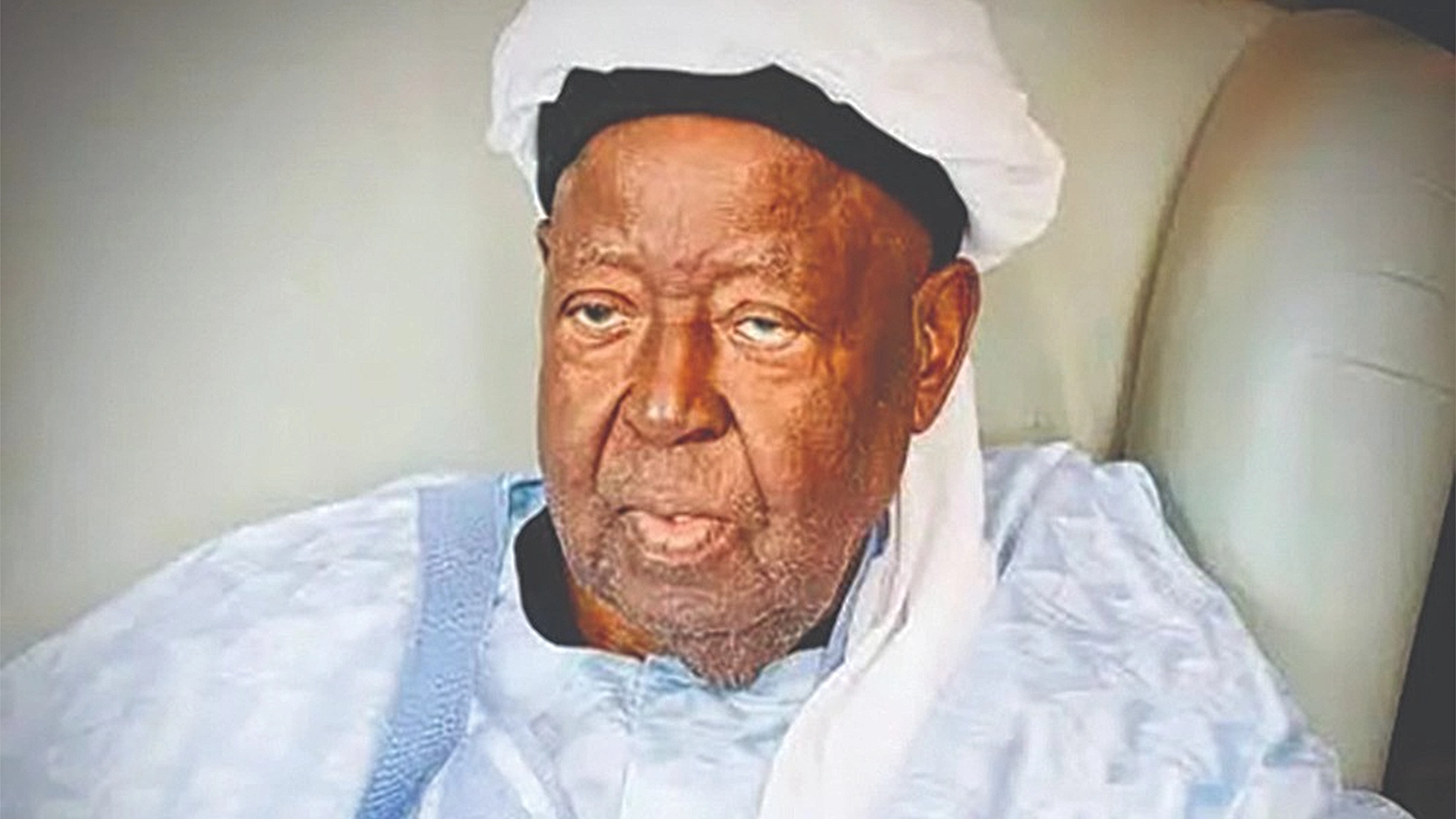
By Mohammed Hayatu-Deen
Last week, one of the nation’s and indeed the world’s foremost technocrats was called to the great beyond by Almighty Allah. I was far away when I received the news.
A High Prince of the Caliphate, the Sardaunan Sokoto, Alhaji Abubakar Alhaji devoted his formidable intellectual energy and effort to a lifetime of extraordinary public service here at home and around the four corners of the globe.
Born of blue blood, his humility, charm, comportment, enormous self-confidence, extraordinary people skills, and his quick, agile mind were his strongest armour as he went about serving his nation, Africa, and the global community with finesse, authority, and deep patriotism for the better part of 60 years.
He was dispatched overseas at a very tender age for higher education after graduating from Katsina Government College, along with some of his contemporaries, by the late Premier of Northern Nigeria, Sir Ahmadu Bello, the Sardauna of Sokoto—a title that Alhaji Abubakar inherited after many decades of keeping the vacancy in abeyance, most probably out of respect for the late Premier.
In England, Alhaji Abubakar attended Bournemouth College of Commerce and the University of Reading, earning a degree in Political Economy in 1964. He also underwent postgraduate programmes at the Hague Institute of Social Sciences and the IMF Institute in Washington, D.C.

Immediately after his graduation, he returned home to assume duties at the Federal Ministry of Finance and thus began honing his legendary skills in financial management and development economics as he moved steadily up the career ladder to the pinnacle of the civil service as Permanent Secretary. It was especially in the Ministry of Finance, however, that his reputation soared to dizzying heights, not just in Nigeria but across the globe, particularly in Western capitals.
He was such a deft and highly influential financial and economic expert that his advice was sought on the seminal issues of the day, including national budgeting, economic planning, and the deconstruction and reconstruction of the nation’s balance sheet, both at moments of opportunity and of peril. He worked closely with the monetary authorities to engender a climate conducive to macroeconomic stability.
His skills in debt negotiations and international financial diplomacy, in particular, were legendary, and it can be argued that no one before or after him has received such accolades and distinction as a financial talisman. His global stature was earned in the negotiating rooms of the IMF, the World Bank, the Paris Club, and the London Club, where he became one of the principal architects and international advocates of Nigeria’s economic reform programme. The esteem in which he was held internationally was perhaps best illustrated by an episode from that period.
Following the fall of the Iron Curtain in 1990, the world entered a unipolar moment, with America bestriding it like a colossus. It was in those heady days that Alhaji Abubakar Alhaji, as the technocratic head of the Federal Ministry of Finance, was hosted for dinner as guest speaker at the National Press Club, the crème de la crème of American journalism. Much of the top echelon of the American establishment filled the room to the brim, puffing away at their cigars. As I watched on NTA News, Alhaji rose to speak extempore, opening with a wisecrack: “Ladies and gentlemen, Nigeria and America have one thing in common: we were both part of the British Empire.” The room burst into laughter and applause. The irony, of course, was that America hated being tagged a colony and fought to the bitter end to secure its independence.
I pay tribute to this extraordinary statesman and public servant through the vista of my close personal and professional interactions with him.
I was a relatively inexperienced 30-year-old Group Chief Executive of the New Nigeria Development Company (NNDC Ltd.) in 1984 when I met Alhaji Abubakar, who was then Permanent Secretary in the Ministry of Finance. My mission was simple: NNDC needed a bundle of help from the Federal Government. First, to facilitate an introduction to World Bank Headquarters as a basis for building a strategic alliance with NNDC. Second, to secure lines of credit from multilateral financial institutions in Europe and the Americas. Third, to tap into the vast resources of the United Nations Industrial Development Organisation (UNIDO) to forge technical management services agreements for several of our struggling manufacturing plants, especially in textiles and cement.
As I entered his office, the aura of his personality and charisma filled the room, and it was a sight to behold. Deeply immersed in his paperwork, he raised his head, took one good look at me, shook my hand in a flash, then waved me to a seat and continued with his work. After some 15 minutes, having dispatched many files, he raised his head and asked what had brought me to his office, his face perfectly straight.
Unfazed, I explained my mission in about 10 minutes. I then proceeded to give him my personal story and background, but he cut me short and said, “I know all about you, and I have heard you loud and clear. What we need is action to develop all parts of Nigeria so that we can achieve balanced and rapid development.”
There and then, he picked up his phone and made calls to the chief executives and executive directors of these international institutions, then furnished me with the telephone numbers of their personal assistants so I could arrange appointments to visit them. I then asked if he would give me official letters of introduction to strengthen my hand, to which he replied, “Young man, I don’t give letters or handwritten notes. Word of mouth is enough. Here are my office and home phone numbers. Call me if you encounter any unexpected problem.”
Within six months, the visits to London, Brussels, Washington, New York, and Vienna had taken place, with agreements signed, sealed, and delivered by these multilateral institutions. In the case of Europe’s premier development bank, the European Investment Bank, it extended a credit line equivalent to €50 million to NNDC to finance its pipeline of projects on highly concessionary terms, with a view to enhancing it to €100 million in a new round of financing. NNDC thus luxuriated in this vast ocean of support from the community of multilateral institutions and AAA-rated insurance guarantee entities around the world.
By the time I moved closer to Alhaji Abubakar Alhaji in Lagos in 1990, the country, under the distinguished and forward-looking leadership of President Ibrahim Babangida, was going through a raft of reforms anchored on deregulation, liberalisation, and privatisation. Alhaji played a pivotal role in shepherding FSB International Bank, transforming it from a loss-making national savings bank into a dynamic and innovative financial institution.
In large part, FSB became a turnaround success story because some selfless and eminent public officers across the Federal Government put their names and prestige behind the project under the direction and guidance of Alhaji Abubakar Alhaji, Dr. Hamza Zayyad, Chairman of Nigeria’s Privatisation Program, Dr. Hayford Allie, DG NSE, Mr. George Akamiokhor, DG SEC, Alhaji Aliyu Mohammed, and Chief Olu Falae, who were then Secretary to the Government of the Federation and Minister of Finance, respectively.
More instructive is the fact that Alhaji Abubakar tapped the vast reservoir of his network of partnerships and alliances and placed them at the disposal of FSB. He became the gateway to forging enduring bonds with several government ministers, including Prof. Tam David-West, Dr Kalu Idika Kalu, Dr Chu Okongwu, Dr Rilwanu Lukman, and Chief John Oyegun, who was then Permanent Secretary, Ministry of Industries, and with whom we closed many important transactions both at NNDC and FSB. It was through his good offices that FSB was able to gain access to sources of capital from multilateral and international private financial institutions.
On the personal front, after my first meeting with him, he embraced me as his mentee and accorded me all the rights and privileges he would have extended to his contemporaries. He came to Kaduna at least two or three times a year, and I hosted him at the Chairman’s Guest House, even though he had no shortage of places to stay with his contemporaries. He would refuse to have meals delivered to him and instead insist on coming to my house for dinner every day.
I was perhaps one of the few people who could enter his Ikoyi residence unannounced. He would typically be home by 6:00 p.m., go upstairs for prayer and meditation, then come down at exactly 8:30 p.m., and we would sit at the dinner table to discuss the nation’s ecosystem, especially the plight of the poor and downtrodden. He passionately wanted Nigeria to get going in the image of the emerging Asian Tigers. The knowledge, insight, and wisdom I gained from those interactions have remained with me ever since.
There were many lighter moments, too, that revealed another side of his personality. He once recounted, with characteristic amusement, that Queen Elizabeth II found “Alhaji Abubakar Alhaji” something of a mouthful and simply christened him “Triple A”, a nickname that soon acquired a life of its own. He told the story not as a badge of honour, but with the understated humour that so often accompanied his recollections. To many he was “Triple A”. To those of us privileged to know him more closely, he was much more than the sobriquet suggested.
One hot Tuesday afternoon in 1992, I was seated at my desk at the bank in Lagos when I received a phone call from him. He said, “Alhaji Hayatu-Deen, where are you?” I told him I was in Lagos, and he suggested that I should take three days’ casual leave, pack a small bag, so that we could go for the lesser Hajj on Thursday and return on Monday.
I did not have a clue where this was coming from, so I simply said, “Yes, sir,” and that was it. Later that evening, I paid an impromptu visit to his residence, as usual, hoping to gain further insight into the motivation behind this sudden and unusual trip. As no information was volunteered, however, I did not ask. He informed me that he had already purchased my air tickets, and that together with all other travel expenses, the cost would be split right down the middle. I was to reimburse him for my share upon our arrival in Saudi Arabia, which I duly did.
He did not take along a single security officer or butler. Upon landing at Jeddah Airport, there was no formal diplomatic reception, and we simply took a taxi to our hotel. We prayed together, shoulder to shoulder, at every holy site in Mecca and Medina and performed all our religious rites together. With his characteristic boundless energy, speed, and efficiency, we concluded our obligations by Sunday and immediately headed back to Lagos.
In 1994, this time on a week’s notice, we repeated the experience of 1992. During these trips to the Holy Land, I came to know many facets of this noble man’s complex mind and extraordinary character. Through these and other encounters, he imparted profound insights on world history and the place of Africa and Nigeria in global affairs. He often stated that unless we, as citizens, collectively came together to make careful and deliberate choices about the path the nation should tread, we might all become bogged down and drift away as we buckle up to face a new millennium full of promise and uncertainty.
Three years after our second, and last visit together to Saudi Arabia, I asked him, during a casual conversation, why he had thought it fit to invite me to accompany him to the Holy Land. His answer was deep and instructive:
“You have been carrying on your young shoulders the colossal burdens of managing complex and politically charged institutions, especially the NNDC. But because you have been totally consumed by your duties, you never seemed to look over your shoulder to see the gathering storms all around you. It was fairly obvious to me that you had no armour to shield yourself. I therefore thought it important, without raising any alarm, to beseech you to pray to Allah, thank Him for His abundant favours, and ask Him to protect you from the harsh vicissitudes of life.”
I then asked him why he thought I was in any kind of danger, to which he retorted: “I do not think so. I know so. I know so because I know what you do not know, young man.”
It was only much later that I came to understand the true meaning of those words. They were born not merely of wisdom, but of genuine concern. They reflected the instinct of a man who regarded mentorship as a responsibility. He invested himself in people with the same commitment that he brought to public service. That quiet generosity was the thread that ran through every chapter of his remarkable life.
To the people of the Sokoto Caliphate, he was the Sardauna, the worthy custodian of a noble heritage. To generations of public servants, he was the consummate technocrat whose intellect and judgement helped shape the economic destiny of our nation in its early years. To the international financial community, he was a formidable negotiator and a trusted voice whose counsel commanded uncommon respect. To colleagues and contemporaries, he was a gentleman of rare grace, wit, and unfailing courtesy. To younger men and women whom he quietly took under his wing, he was mentor, guide, and protector. To his family, he was undoubtedly much more.
To me, he was all of these. He was one of those rare souls who carried greatness with remarkable ease, wore authority with quiet humility, and never allowed rank or accomplishment to diminish his humanity. In his company, one learnt how to serve one’s country, but also how to live a life anchored in purpose, dignity, faith, and generosity.
Such men do not truly depart. They endure in the institutions that they strengthened, in the lives that they quietly shaped, and in the values that they entrusted to those who had the privilege of knowing them.
May Almighty Allah, in His infinite mercy, forgive his shortcomings, and grant him Aljannatul Firdaus. I extend my heartfelt condolences to His Eminence, the Sultan of Sokoto, the Government and people of Sokoto State, and to his family. Amin.
Hayatu-deen is a distinguished Nigerian economist and banker. With decades of experience across finance, business and economic development, he has also served as the GMD of the Nigerian National Development Company (NNDC) and Chairman/CEO of FSB International Bank PLC.

