 Follow Us on Google News


 Follow Us on Google Discover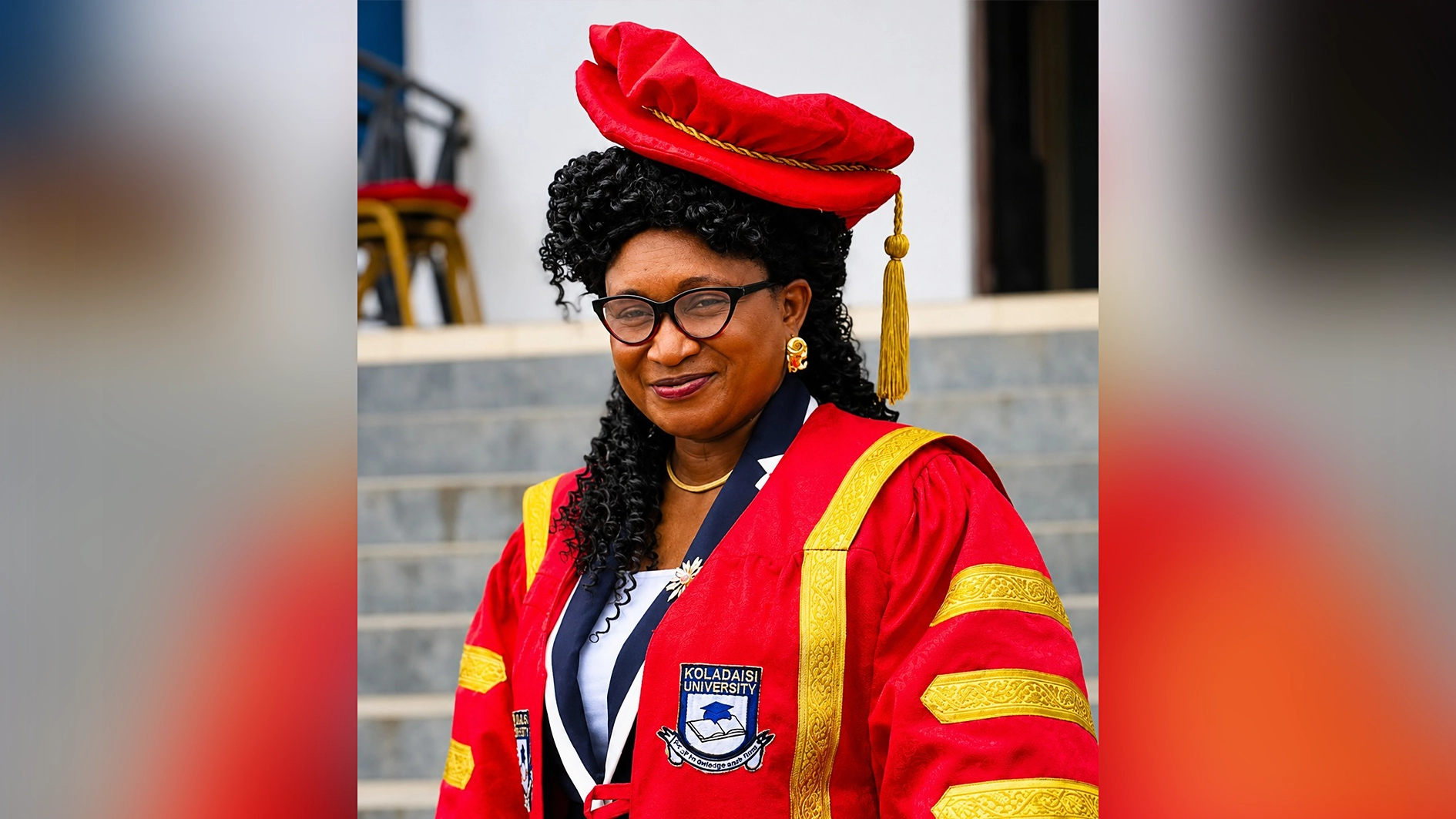
The Vice-Chancellor of KolaDaisi University (KDU), Ibadan, Professor Olajumoke Morenikeji, has called on the Federal Government to increase investment in education, strengthen funding for universities and improve the welfare and working conditions of academics, saying the country cannot build a sustainable future without adequately developing its human capital.
Morenikeji, who acknowledged that the government is investing in education, said the critical question was whether the level of investment was commensurate with the country’s needs and whether available resources were reaching the areas where they were most required.
“The government is investing in education, but we must ask whether we are investing enough, and whether the resources being committed are reaching the areas where they are most needed,” she said.
The Vice-Chancellor made the call in an interview with The Guardian in Ibadan, stressing that education must be treated as a strategic national investment rather than simply another item of government expenditure.
“A country that does not take care of its education is actually jeopardising its future. So, in any country, education is one aspect you really have to pay attention to,” she said.
Drawing on her many years as an academic and administrator in Nigeria’s federal university system, Morenikeji said she had experienced firsthand the consequences of resource constraints on teaching, research and infrastructure.

She recalled occasions when academics had to find creative ways of delivering their responsibilities despite institutional limitations. On one occasion, she personally purchased materials required for a practical class to ensure that students did not miss an important learning experience.
“That shouldn’t happen. Why should that happen?” she asked.
For her, the experience underscored the need to ensure that lecturers have access to the resources required to deliver quality teaching, adding that academics should not be expected to personally finance materials necessary for effective instruction.
According to her, lecturers’ welfare must therefore be considered alongside the provision of functional laboratories, libraries, teaching materials, research grants, digital resources and other facilities required for effective university education.
She said the quality of education delivered by universities was inseparable from the conditions under which academics worked.
“If we want quality education, we must provide the people who deliver that education with the tools to do their jobs,” she said.
Morenikeji urged the Federal Government to give education a significantly stronger place in the national budget, noting that sustained investment in the sector was essential to developing the human capital required for technological advancement, economic growth and national transformation.
She also called for stronger support for research and innovation, arguing that universities should not merely produce graduates but should generate knowledge, develop solutions to national problems and contribute to technological and economic transformation.
“If we are producing nurses, engineers, doctors and the likes that are not grounded, then we have a problem as a nation,” she said.
The Vice-Chancellor stressed that the responsibility for quality education did not rest with the government alone, noting that universities themselves must also be accountable for the standards they uphold.
Morenikeji said her experience in the public university system had also shaped her philosophy of leadership at KolaDaisi University.
Having experienced some of the challenges within the public university system, she said her current responsibility as Vice-Chancellor of a private university had reinforced her conviction that institutions must also model the standards they expect from the government.
She said that while the government had a major responsibility to provide an enabling environment and adequate funding for public universities, private universities must also take responsibility for maintaining high standards of teaching, research, student welfare, staff development and institutional governance.
“We cannot continue to say the government should do this and the government should do that without asking ourselves what we are doing within our own institutions,” she said.
According to her, leading KolaDaisi University has provided an opportunity to translate some of the principles she advocates for the wider Nigerian university system into institutional practice.
“For me, it is important that we practise what we advocate. If we are asking the government to provide the right environment for academics, then as a university, we must also strive to provide that environment within the limits of our resources,” she said.
She acknowledged that private universities also face financial and infrastructural constraints, but argued that the ownership structure of an institution should not become an excuse for compromising academic standards.
She said KDU’s goal was to create an environment in which lecturers had the resources and support required to teach effectively, students received a quality and well-rounded education, and research and innovation were encouraged.
“Whether public or private, every university has a responsibility to contribute to the kind of education system we want for Nigeria,” she said.
Morenikeji said universities should be places where young people are equipped not only with academic qualifications but also with practical skills, critical thinking, ethical values and the capacity to contribute meaningfully to society.
For her, the debate about education funding is therefore not simply about how much the government should spend, but about what kind of institutions and graduates Nigeria wants to build.

