 Follow Us on Google News
 Follow Us on Google Discover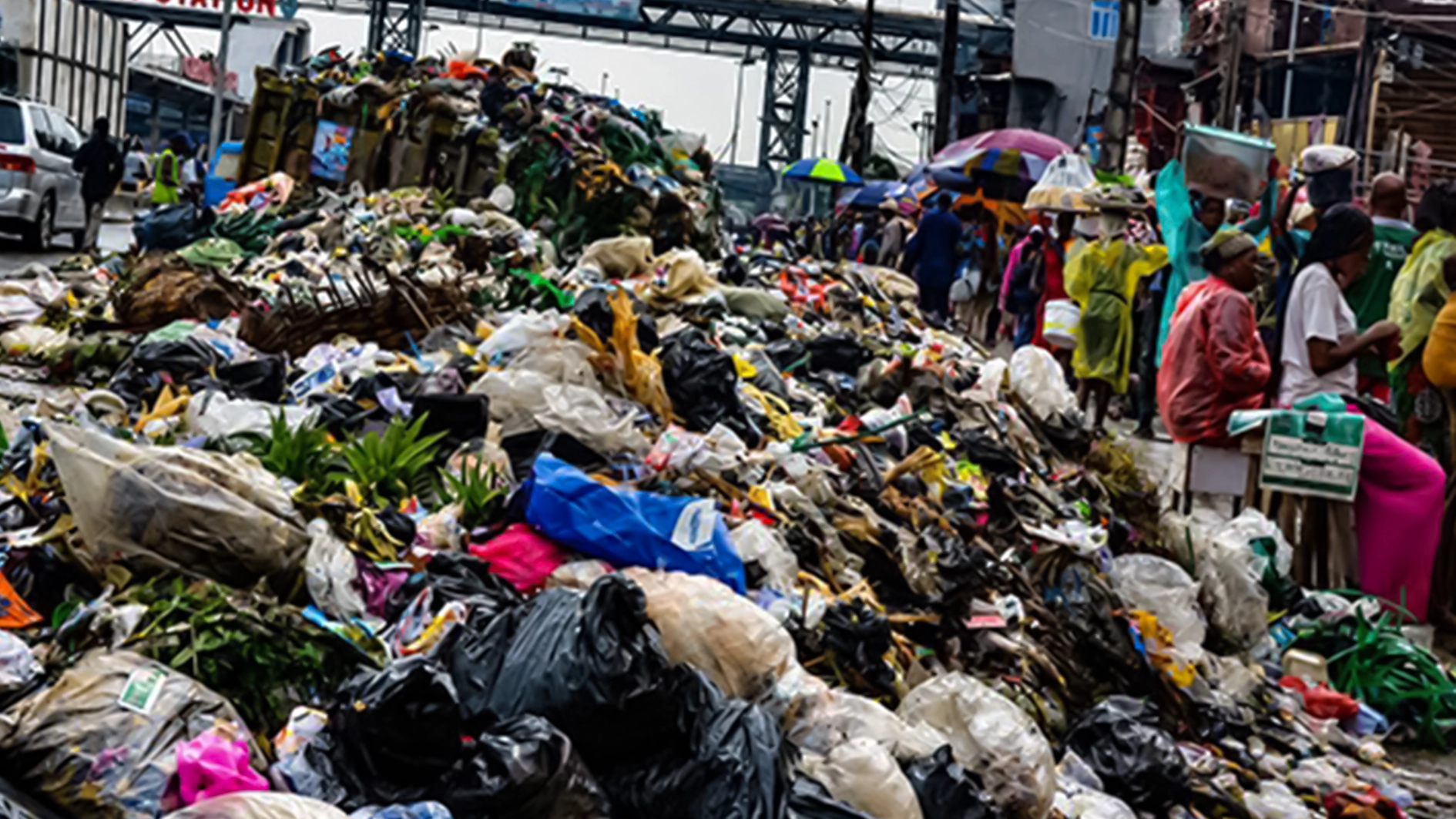
By Sulaiman Salawudeen
Lagos has long prided itself on being a state/city of “firsts”: it is a place where history and modernity merge to produce admirable milestones. In recent years, the state has won laurels that consolidated its capacity for leadership.
First was the five-star state rating recently awarded by Phillips Consulting in its State Performance Index conducted in 2025. Just weeks back, Lagos again emerged as the most climate-resilient state in West Africa, topping the 2026 West Africa Climate Governance Index.
That assessment earned Governor Babajide Sanwo-Olu Grand Laureate of Climate Governance award, a personal honour that seemed to crown his administration’s climate agenda.
The WACGI report was no small feat. Covering 209 sub-national governments across the 15 ECOWAS member states, it evaluated climate risk exposure, governance visibility, financial transparency, public participation, and implementation capacity. Lagos scored a distinctive 86.3 out of 100, earning a Grade “A” and surpassing rivals including Kano, Abuja, Greater Accra, Praia, Dakar, Porto Novo, Abidjan, São Filipe, and Bombali.
Nigeria itself was commended for its Climate Change Act of 2021, the establishment of the National Council on Climate Change, the NDC 3.0 framework, and the Energy Transition Plan. These recognitions align with the United Nations’ Sustainable Development Goals, particularly Goal 13 on Climate Action and Goal 17 on Partnerships, as well as the African Union’s Agenda 2063. Lagos’ triumph was therefore not only a local victory but a continental statement.

Yet, even as Lagos celebrated these dual achievements, a paradox reared its head. The state began grappling with visible and embarrassing challenge, as a news outlet published an investigation which catalogued widespread garbage heaps along the Apapa-Mile 2-Oshodi stretch, Ikotun-Jakande Gate, LASU-Iyana Iba, and in markets across the state. Residents in Jakande, Ikeja, Mushin, Alimosho, Surulere, Ikorodu, and Lagos Island indeed complained bitterly of delayed or inconsistent waste collection.
Private Sector Participant (PSP) operators cited soaring diesel prices, vehicle maintenance costs, and long distances to disposal facilities as reasons for rising operational expenses, which in turn impeded routine waste evacuation; and environmental experts warned that blocked drainage channels from indiscriminate dumping worsened flooding, while decomposing refuse spread disease. Governor Sanwo-Olu responded by mobilising LAWMA, LASEPA, and the Ministry of Environment to deploy extra trucks and personnel.
Despite the efforts, the heaps have maintained their disturbing presence across the state. The governor’s failure to tighten administrative procedures, enforce consistent monitoring, and ensure adequate remuneration for PSP operators enabled the vacuum that allowed refuse to overwhelm communities. In a city that generates roughly 13,000 tonnes of municipal solid waste daily – among the highest in sub-Saharan Africa, such lapses are not minor oversights. They are dangerous failures that endanger lives.
Governor Sanwo-Olu’s administration has been praised for its climate governance, but the waste management debacle reveals a troubling laxity. LAWMA’s public-private model has been ensuring the collection and disposal of most of Lagos’ waste, but the garbage heaps continue to lie unattended. This is partly explained by localised pressure points, illegal dumping, and the resurgence of banned “cart pushers” who dispose of refuse at convenient, rather than designated, points. Although government has often responded with heightened penalties, including fines of N250,000 or three months’ imprisonment for illegal dumping, enforcement has been inconsistent. The governor’s failure to institutionalise strict oversight mechanisms has allowed loopholes to persist. Without rigorous monitoring and quality assurance platforms, penalties remain more symbolic than effective.
Researchers from the African Cities Research Consortium contend Lagos needs structural reforms. They recommend stronger collaboration among government agencies, private waste operators, informal waste collectors, and communities; expansion of waste sorting and recycling programmes; investment in modern infrastructure capable of handling growing waste volumes; and integration of informal collectors into the formal system. These recommendations are not new. They have circulated for years. What is missing is the political will and administrative rigour to implement them.
The consequences of administrative weaknesses are not abstract, though. They manifest in blocked drainage channels that worsen flooding during rainy seasons; in decomposing refuse that spreads cholera, typhoid, and respiratory diseases; in the indignity of residents forced to live amid smelly heaps of garbage. In Mushin, residents complain of refuse blocking access roads. In Ikotun, traders lament that garbage heaps discourage customers. In Alimosho, parents worry about children playing near decomposing waste. These are not isolated inconveniences. They are protracted public health hazards.
Yet, it is misleading to conclude Lagos’ waste management system has collapsed entirely. Subsisting initiatives continue to function, albeit under strain. But the paradox remains: how can a state celebrated as West Africa’s most climate-resilient simultaneously allow garbage heaps to fester? Climate resilience must surely include effective waste management. A dirty state cannot sustain environmental accolades. Governor Sanwo-Olu’s administration has done enough to earn Lagos a climate prize, but the prize has a price in consistently maintaining visual cleanliness statewide, and residents must be dragged to abide by rules, however strict. The paradox of smelly garbage heaps, even if fleeting, undermines the credibility of Lagos’ climate laurels.
The lesson is clear: Lagos must reassess its master plan to accommodate far more ambitious waste management performance. Its population, estimated at 20 million, continues to grow, instantiating demographic pressures that exacerbate waste generation, housing shortages, and infrastructural strain. A possible New Lagos Master Plan must envision not only improved waste disposal but also broader urban reforms.
The next administration will inherit both triumphs and trials. The challenge will be to sustain climate governance achievements while revolutionising garbage management. This will require establishing monitoring, evaluation, and quality assurance platforms, not simply to prevent smelly pile-ups but to as well overhaul operational template for waste contractors.
PSP operators must be given definitive orders and commensurate remuneration, especially in dense districts such as Oshodi, Mushin, Iyana Ipaja, Iyana Iba, Ikotun-Egbe, Idumota, Alimosho, and Agbado, and such areas where there are more people than houses, unlike other areas in same Lagos where there are more houses than people.
While clearing garbage piles is not summative of climate governance, it is critical still. Housing and urbanisation projects for the less privileged must be integrated into the plan, to offset demographic pressures in dense districts. Without such interventions, waste management will remain reactive rather than proactive.
The path forward requires bold reforms: integrating informal waste collectors into the formal system, recognising their role in recovering recyclables; investing in modern infrastructure capable of handling growing waste volumes; expanding recycling programmes to reduce stress on landfills; and enforcing penalties against illegal dumping with consistent monitoring.
Subsisting initiatives are overstretched, if not already exhausted and outdated. Definitely, frequency of waste evacuation must be determined basically by the velocity of generation. Sanwo-Olu’s failure to tighten administrative procedures has exposed the fragility of Lagos’ waste management system. His likely successor, Obafemi Hamzat, will inherit the responsibility of building upon the foundation, while correcting its weaknesses.
A New Lagos Master Plan must integrate waste-to-wealth initiatives, recycling, composting, energy recovery, and housing reforms. Only then can Lagos sustain its “firsts”. The challenge before government is not merely to clear garbage piles but to revolutionise the architecture of waste management entirely.
The Master Plan will have to envision, as already clarified, creation of financially accessible housing and urbanisation projects for the less privileged to offset existing densities in already overstretched communities – emplacement of whole new residential environments for an implacable throng of Nigerians who swarm upon the state, incurably bewitched by its primordial allure.
Salawudeen, essayist/polemicist, wrote via: [email protected]

