 Follow Us on Google News
 Follow Us on Google Discover
QHSES Leadership Academy has reinforced its focus on human capacity building as Nigeria grapples with the challenge of equipping its youthful population with the skills, competence and ethical leadership needed for economic growth and national development.
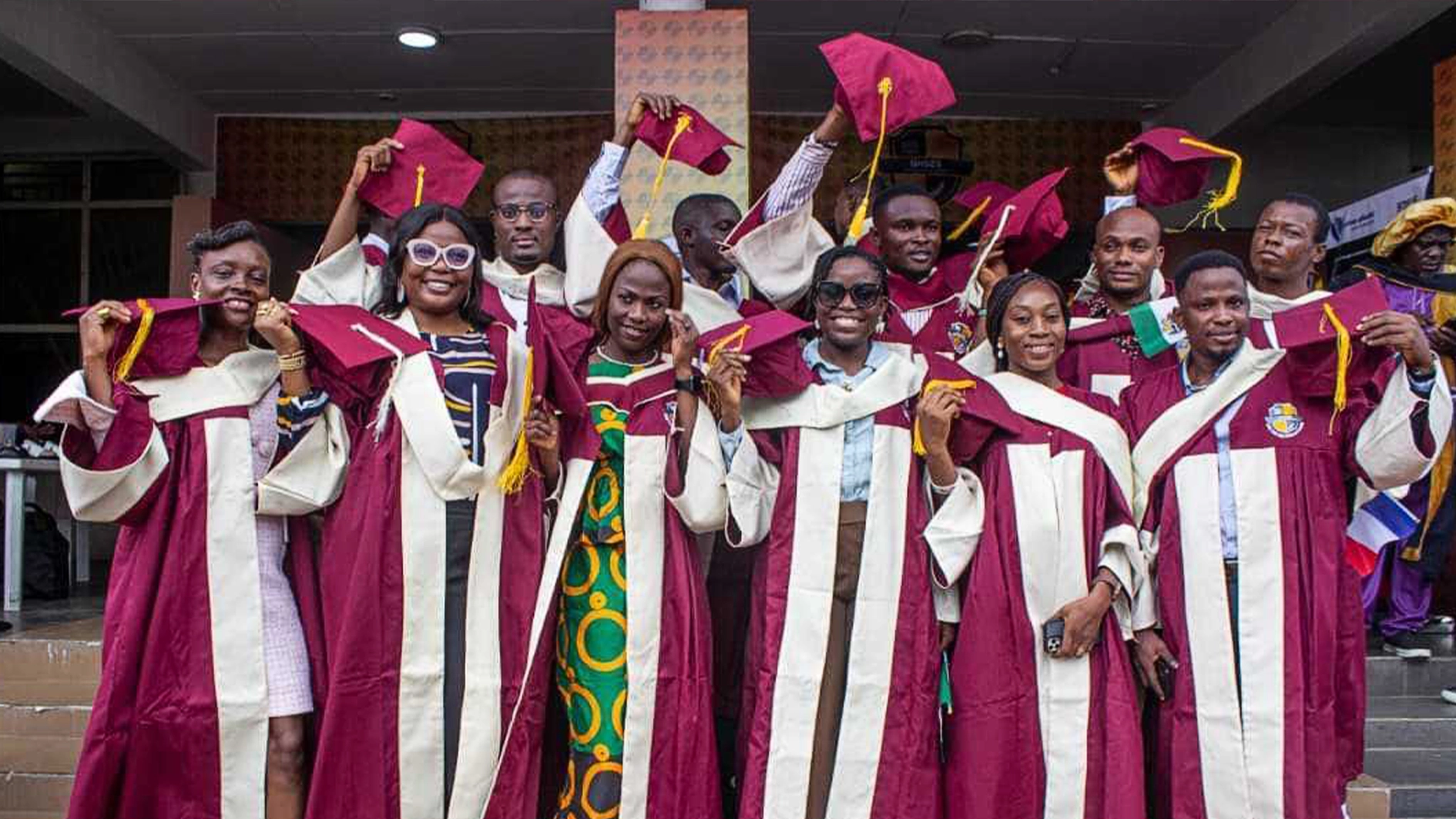
Marking its fifth anniversary, the tuition-free social innovation academy said it has graduated 1,966 students since 2022, as it works to develop professionals equipped with critical skills, leadership values and a social innovation mindset.
With participants from Nigeria and countries including Tanzania, Kenya, Uganda, Germany, the United States, Britain and Canada, its fifth convocation in Lagos added 719 graduates to that pool. The academy received 3,617 applications for its 2026 class, from which 1,594 students matriculated.
Leader, QHSES Leadership Academy, Engr. Jamiu Badmos, popularly known as the Jagaban of Safety in Africa, said the institution was established to make learning accessible while developing responsible leaders capable of creating lasting impact.
”Five years ago, a vision was born, a vision to make education accessible, raise responsible leaders, and create lasting impact. Through mentorship, coaching, collaboration and practical learning, the academy seeks to equip participants with knowledge, character and leadership skills suited to a changing world,” he said.
Delivering the convocation lecture, Immediate Past Dean, Faculty of Education, University of Lagos, Prof. Adebayo Oladipo, said Nigeria, with an estimated population of more than 242 million in 2026 and a median age of 18.3 years, faced an urgent task of turning its youthful population into productive human capital. Roughly six in 10 Nigerians are under 25, according to figures he cited during the lecture.
”The future of this country will be determined, for better or worse, by what we do with this extraordinary concentration of young energy, young ambition and young talents,” Oladipo said.
He described institutions such as QHSES Leadership Academy as part of the effort to develop the professional competence required for national transformation, saying the academy’s quality, health, safety, environment and sustainability orientation trained people to deliver outcomes safely and to global standards.
At the convocation, Olufunke Mary Oderemi became its first female overall best graduating student, while visually impaired Okeoghene Akpaeva graduated with distinction.
Badmos said the performance of women was a highlight of the class, describing the emergence of a woman as the academy’s best student for the first time in five years as a significant milestone.
Akpaeva said the academy gave her an opportunity to participate and compete despite her visual impairment.
”The Academy did not just educate me. They created an accessible environment for me to learn, compete on equal ground,” she said. “True inclusion is not charity. It is an equal opportunity.”
National Leader for Gen Z in Nigeria, Chukwuemeka Agomeze, urged the graduates to translate their education into responsibility for the country’s future.
Former Lagos West Senator Ganiyu Olanrewaju, who served as Grand Leader of the Day, called for support for the academy’s tuition-free model and pledged to help extend its human capacity building opportunities to Mushin.
Awards and more than N5 million in cash prizes were also gifted to outstanding graduating students. Academy students also showcased practical innovations and talents, including waste recycling into shoes, waste-to-art projects and musical performances.
QHSES Academy harps on skills, ethical leadership
Date: 13 August 2026 10:17am WAT
QHSES Leadership Academy
QHSES Leadership Academy

