 Follow Us on Google News
 Follow Us on Google Discover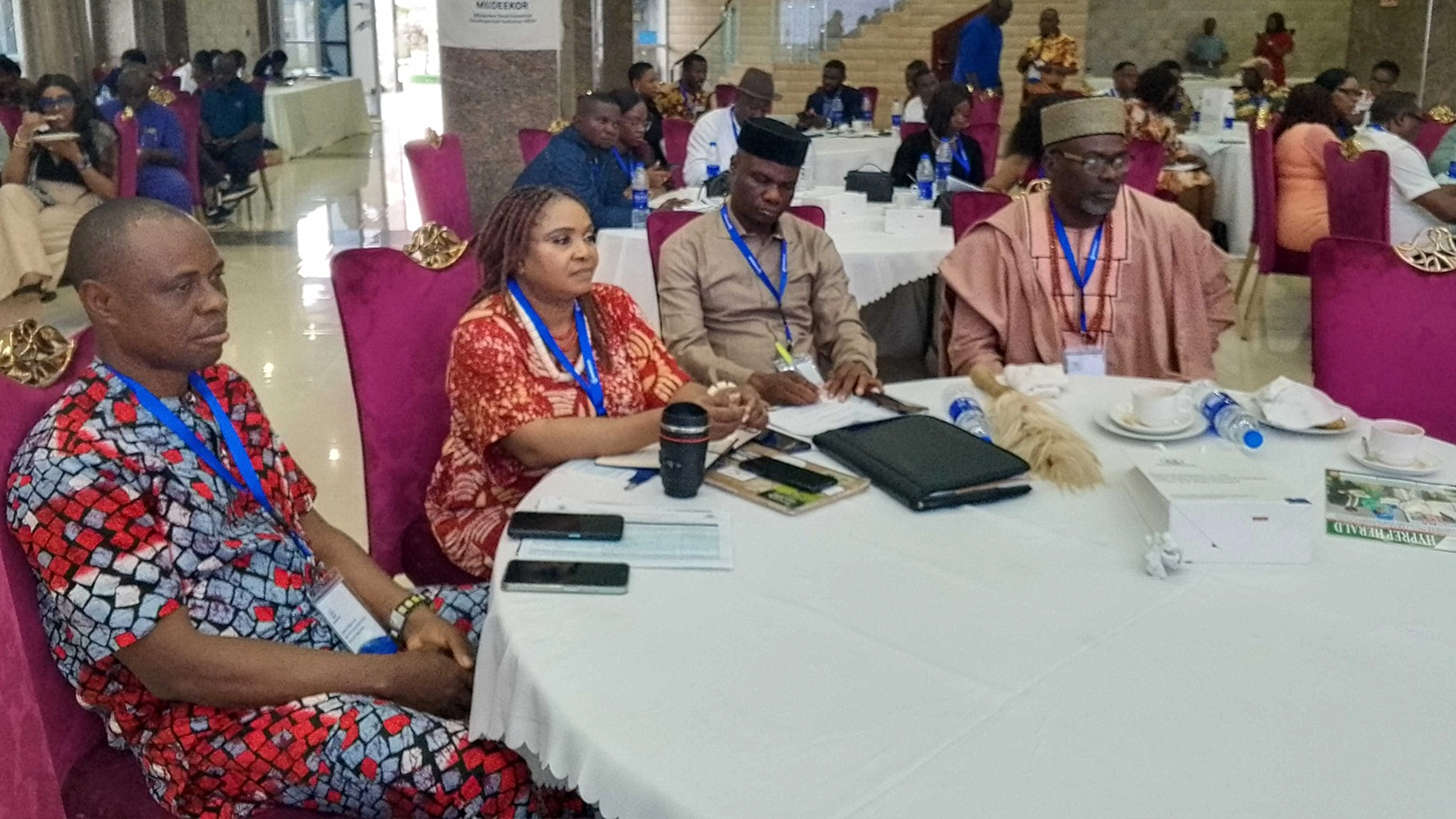
Stakeholders in the Niger Delta have insisted that 2027 election campaigns should prioritise environmental concerns and the restoration of the region’s degraded ecosystem .
They urged political aspirants seeking elective offices to make clear commitments on how they intend to address decades of oil pollution, gas flaring, environmental degradation and the loss of livelihoods across the region.
The stakeholders spoke in Port Harcourt on Thursday during a regional dialogue on Niger Delta Environmental Clean-up: Issues and Way Forward, organised by the Miideekor Environmental Development Initiative (MEDI).
Executive Director of MEDI and frontline environmentalist, Celestine Akpobari, said the people of the Niger Delta should use their votes to demand concrete commitments from politicians on environmental restoration.
He said: “Who will solve our problem should have our vote. Our vote should not just be as we used to give. People must make commitments.
“Like late former President Muhammed Buhari told the Ogoni people, that, ‘If I win, I will do the clean-up and he won and showed commitment by starting the process ”

Akpobari said politicians seeking the votes of Niger Delta residents must explain what they would do to restore the environment and improve infrastructure in oil-producing communities.
He criticised the Federal Government’s approach to development in the region, noting that “difficult terrain” was often cited as an excuse when communities demanded infrastructure, even though the same challenge did not prevent oil exploration and production.
According to him, a journey from Warri to Benin that should take about 20 minutes can take several hours because of poor infrastructure.
He urged the Federal Government to give the Niger Delta the same attention being given to development projects in other parts of the country.
The keynote speaker and former Commissioner for Environment in Bayelsa State, Iniruo Wills, also called for the 2027 elections in the region to be tied to candidates’ commitment to environmental restoration.
Wills said the Niger Delta had been neglected for too long, stressing that anyone aspiring to lead the country must demonstrate a clear commitment to addressing the region’s environmental crisis.
He questioned why the Federal Government could issue an executive order to promote offshore investment but had not shown similar urgency in addressing the environmental devastation in the Niger Delta.
Wills also criticised lawmakers from the region for failing to exert sufficient pressure on the Federal Government.
“Most of the lawmakers from the region are sleeping on the job. The President can only act when there is pressure. The people should begin to question them, hold them accountable or pass a vote of no confidence on them,” he said.
He added that the Petroleum Industry Act (PIA) did not adequately reflect the demands and aspirations of the people of the Niger Delta.
Speaking further,Akpobari said, the environmental crisis was not limited to Ogoniland but affected virtually every oil-producing state in the region.
He listed oil spills, gas flaring, mangrove destruction, artisanal refining, coastal erosion and other petroleum-related activities among the factors threatening communities and ecosystems in Bayelsa, Rivers, Delta, Ondo, Akwa Ibom, Imo, Abia, Edo and Cross River states.
He said the 2023 report of the Bayelsa State Oil and Environmental Commission, which described the situation in the state as “environmental genocide”, underscored the severity of the crisis.
According to him, environmental clean-up in the Niger Delta must go beyond Ogoniland.
“Pollution does not respect the lines drawn between us, and neither should our accountability. A clean-up that saves one community while abandoning its neighbours is not a clean-up; it is a public relations exercise dressed in environmental language,” he said.
Akpobari noted that it had been 15 years since the United Nations Environment Programme (UNEP) documented the extent of environmental degradation in Ogoniland, yet the people were still waiting for the full implementation of the recommendations.
He also expressed concern that the Federal Government had not funded the Environmental Restoration Fund as expected, while oil companies responsible for historical pollution were divesting from assets in the region.
He questioned the decision to allow fresh oil exploration in Ogoniland while the ongoing remediation programme had not been completed.
“Not to grieve again; we have grieved enough, and grief alone has never remediated a single hectare of land. We are here because grief without organisation is exactly what has allowed 15 years to pass without enough changing,” he said.
Akpobari called for honesty, clear direction and sustained action after the dialogue, stressing that any communiqué issued at the end of the meeting must translate into concrete action.
He said the struggle for environmental justice in the Niger Delta predated the Ogoni struggle, recalling the contributions of Isaac Adaka Boro and the sacrifices of Ken Saro-Wiwa and the Ogoni Nine.
He said their struggles should inspire a renewed regional campaign for environmental justice, accountability and sustainable development.
The traditional ruler of Ayetoro community in Ondo State, HRH Oba Okuwambe Ojagbohunmi, described his community as one of the most polluted in the region.
He said residents had repeatedly raised their concerns without receiving adequate attention from the authorities, adding that the regional dialogue provided an opportunity to strengthen collective demands for a better Niger Delta.
The Director of Programmes, Social Action, Boti Isaac, said the environmental crisis went beyond polluted land, stressing the need to address air pollution arising from gas flaring.
According to him, gas flaring has had severe consequences for communities living around oil facilities.
He cited findings from a study conducted in an oil-producing community in Delta State, which, he said, revealed serious health concerns among residents.
Isaac urged the Federal Government to treat gas flaring as an emergency and enforce existing provisions of the PIA and other environmental regulations aimed at curbing the practice.
Director of Planning, Research and Statistics, Patterson Ogon, said a large part of the Niger Delta was still suffering from the effects of decades of oil exploration and production.
“Today, we are left with photographs. We are still losing a lot,” he said, stressing the need to amplify the voices of communities demanding environmental restoration.
He noted that the impact of pollution had gone beyond the environment to the health and wellbeing of residents, calling for greater attention to the medical consequences of environmental degradation.
Environmental advocate Alagoa Morris and Executive Director of Kebetkache Women Development and Resource Centre, Emem Okon, also called for urgent action to address gas flaring and environmental pollution in communities across Rivers, Delta and Bayelsa states, including Bille.
A representative of the Rivers State Ministry of Environment, Dr Nimi Elele, said there was a need for greater collaboration among stakeholders at the regional level to develop sustainable solutions to the environmental challenges confronting the Niger Delta.
Another environmental advocate, Ken Henshaw, said the challenges confronting the region had gone beyond compensation.
“Compensation can no longer heal the suffering and pains. It has to be about holding people accountable and healing the wounds,” he said.
Henshaw called for a genuine restoration framework that would address both environmental degradation and the social and economic consequences of oil pollution.
He urged civil society organisations and community groups to remain engaged after the dialogue and continue to hold government and oil companies accountable.
He said stakeholders must move from discussions to concrete action that would deliver a cleaner and healthier Niger Delta.

