 Follow Us on Google News
 Follow Us on Google Discover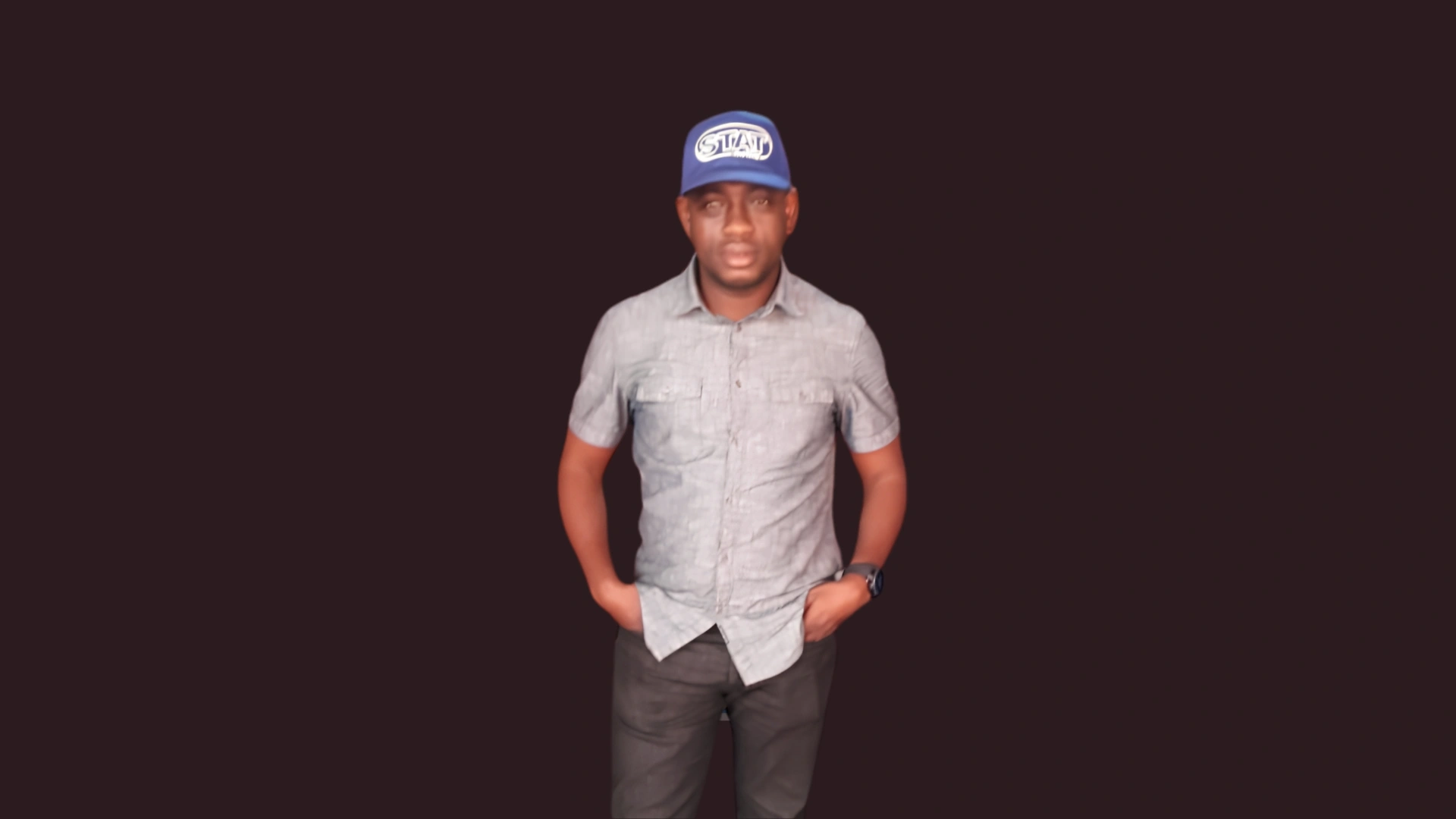
Far beneath the ocean surface, repairing a damaged pipeline is an engineering challenge with little room for improvisation. Unlike an onshore pipeline, a subsea flowline cannot simply be exposed and repaired by a conventional work crew. Water depth, pressure, currents, restricted access, specialised vessels and remotely operated equipment can turn a localised defect into a complex operational problem.
It is within this demanding part of Nigeria’s offshore energy industry that mechanical engineer Kazeem Olatunji Olafimihan has built much of his career.
His professional experience shows a progression from conventional piping engineering to subsea inspection, emergency pipeline response and offshore integrity management. His work has increasingly focused on a fundamental question for offshore operators: how can critical underwater infrastructure be monitored, maintained and repaired before a defect develops into a major failure?
One of the clearest examples of this work was the Egina Emergency Pipeline and Subsea Repair System project, where Olafimihan served as Project Leader with STAT Marine on a project for Total Nigeria.
His responsibilities included preparing repair-scenario reports covering three major categories of subsea infrastructure: flowlines and pipelines and their associated equipment, mooring lines, and dynamic umbilicals.
Each presents a different engineering challenge.

Pipelines transport fluids, while dynamic umbilicals can carry electrical power, hydraulic control and communications to subsea equipment. Mooring lines, meanwhile, help maintain the position of floating offshore infrastructure.
Consequently, damage to each component requires different intervention strategies, equipment and repair sequences.
Emergency pipeline response engineering is therefore largely about preparing for problems before they happen. Engineers assess credible failure scenarios and develop workable intervention plans so that operators are not starting from scratch when an incident occurs.
Olafimihan’s earlier experience in piping engineering provided a foundation for that work.
His professional record includes experience in material take-offs, equipment layouts, piping general arrangements and isometric drawings, as well as piping stress analysis and flange-leakage assessments using Caesar II. His work has also involved engineering standards including ASME, ASTM, API and ANSI requirements.
That conventional engineering experience subsequently expanded into subsea inspection.
On the Bonga Main and Northwest Subsea Inspection project for Shell Nigeria Exploration and Production Company, Olafimihan worked as Project Coordinator. His responsibilities included supporting the subsea inspection scope, facilitating implementation of the inspection programme and contributing to reports covering anomalies, integrity threats and degraded conditions.
The work represents another important aspect of offshore integrity management.
While emergency response focuses on what should happen after a serious defect or failure, inspection seeks to identify deterioration before it reaches that stage.
Olafimihan later served as Subsea Lead Engineer on the IKIKE Subsea Maintenance and Inspection Engineering project. His responsibilities covered baseline inspection, pigging preparation, Emergency Pipeline Response Systems, spare parts, Safety and Environmental Critical Elements, integrity assurance, computerised maintenance and inspection management, as well as maintenance and inspection documentation.
Taken together, these assignments illustrate a career spanning three connected areas of asset integrity: designing and analysing piping systems, inspecting infrastructure already in service, and preparing for maintenance or emergency intervention when conditions deteriorate.
That experience also informs Olafimihan’s more recent interest in predictive pipeline integrity.
In research separate from his project work, he has examined how offshore inspection could move beyond periodic surveys towards more continuous monitoring of subsea infrastructure.
One area of his research considers the use of autonomous underwater vehicles equipped with integrated sensors to patrol pipeline corridors and collect structural information. The proposed approach combines technologies such as sonar, sensor fusion, autonomous navigation and anomaly detection to identify potential vulnerabilities.
The underlying problem is straightforward: pipeline deterioration does not necessarily wait for the next scheduled inspection.
Remotely operated vehicle surveys can provide detailed information about subsea infrastructure, but they generally require specialised vessels, personnel and planned offshore campaigns. More autonomous systems could potentially allow inspection of pipeline corridors at greater frequency, reducing the information gap between conventional inspection campaigns.
His research also extends into maintenance decision-making through the use of artificial intelligence and digital-twin models.
The concept involves combining sensor information, operational history and predictive simulations to assess the condition of pipeline assets, estimate potential risks and help engineers prioritise maintenance.
The technology, however, does not eliminate the need for engineering judgement.
Predictive systems depend heavily on the quality of the data available to them. Offshore environments also introduce challenges involving communications, sensor reliability, uncertain degradation rates and changing environmental conditions. A model can support a decision, but the reliability of that decision ultimately depends on how accurately the system represents the physical asset.
This makes the connection between Olafimihan’s field experience and research particularly significant.
His work on Egina involved preparing potential repair responses. His Bonga assignment focused on identifying anomalies and integrity threats through subsea inspection. The IKIKE project expanded that experience into maintenance and inspection engineering, while his research explores whether autonomous sensing, predictive analytics and digital representations of physical assets can provide earlier and more useful information for making integrity decisions.
The progression reflects a broader shift taking place across the offshore energy industry.
As subsea infrastructure becomes more complex and operators seek to extend the productive life of existing assets, the value of knowing an asset’s condition before failure becomes increasingly important. The objective is not simply to collect more inspection data, but to turn that information into decisions about when an intervention is necessary, which assets should receive priority and how repairs can be safely executed.
For Olafimihan, the engineering challenge therefore extends beyond repairing pipelines after they fail.
It is about developing better ways to understand what is happening beneath the surface before a failure occurs.
That may ultimately be where autonomous inspection, predictive analytics and digital-twin technologies have their greatest value: not replacing engineers, but giving them earlier and better information with which to make decisions in one of the most difficult environments in the energy industry.

