 Follow Us on Google News
 Follow Us on Google Discover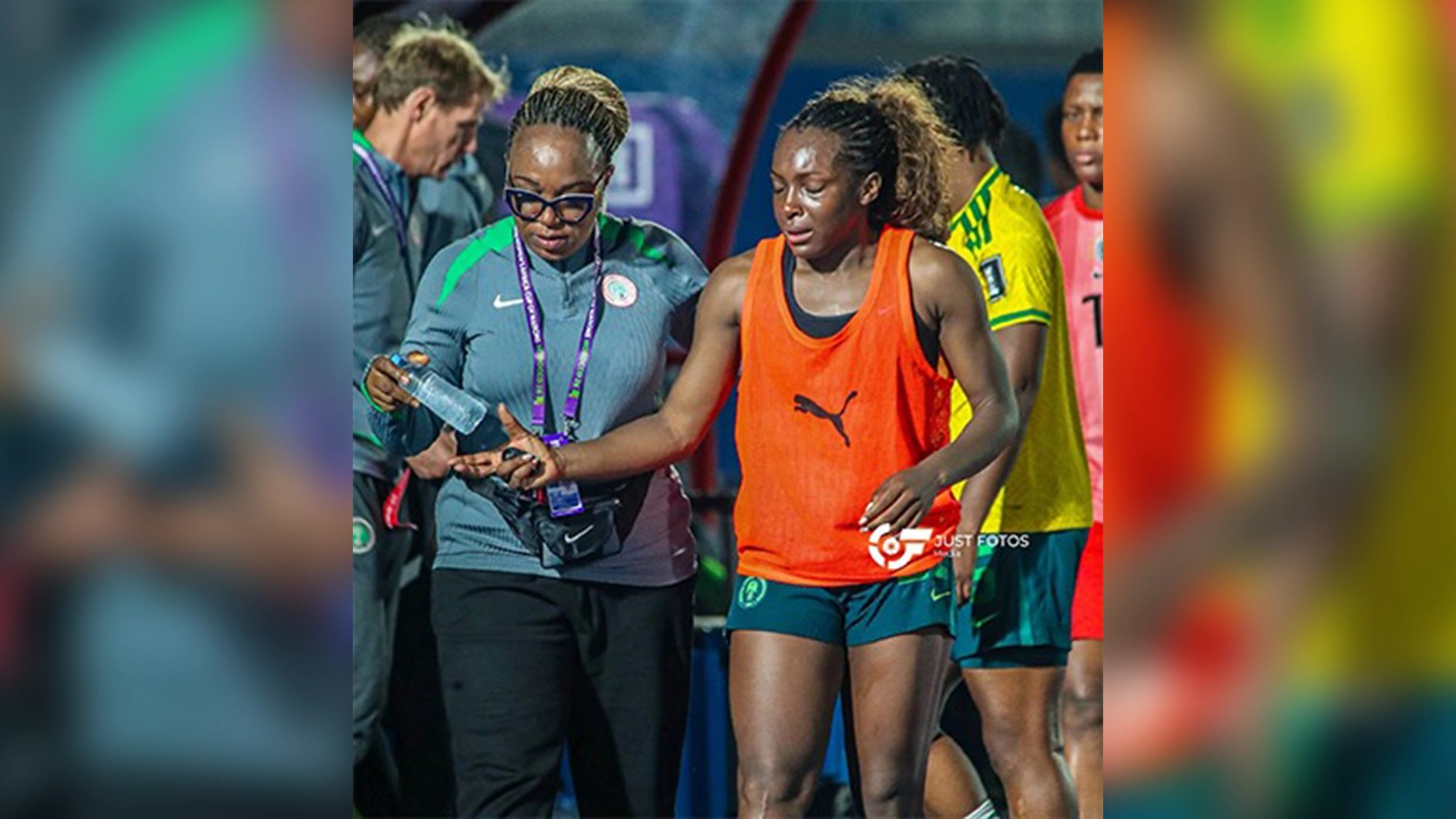
• Stakeholders lament Super Falcons’ exit
The ‘free fall’ of Nigerian football came to a climax in Morocco, on Thursday night, with 10-times Africa Champions, Super Falcons, eliminated from the 2027 FIFA World Cup, no thanks to their 1-2 defeat by the Banfana Banfana of South Africa
The Super Falcons have appeared at every edition of the FIFA World Cup since the tournament began in China 1991, but all that 35-year-old history came crumbling on Thursday night during the Africa playoff for the 2027 World Cup.
The Super Falcons’ exit, coupled with other defeats suffered by Nigeria national teams have forced many stakeholders to voice out their anger.
Former Green Eagles winger, Adegoke Adelabu, told The Guardian on Friday that the present NFF leadership has lost its relevance in the administration of football.
“We need to look at the root cause of this free fall, which is domestic league and the level of professional competence of the coaches,” Adelabu said. “The administrators are too big to attend conferences to upgrade themselves and also there is a wide gap in knowledge among the key players or administrators.”

According to Adelabu, a former player of IICC Shooting Stars of Ibadan, now a Sports Scientist, the free fall of the nation’s football must stop.
“Everyone has his or her definitions of what is right and wrong depending on whose connection brought them into administration, irrespective of their experiences or level of administrative competence,” he stated.
There were insinuations, on Friday, that some top officials of the National Sports Commission (NSC) are planning to see President Bola Tinubu to brief him on a ‘Planned Normalisation Committee’ to run the NFF affairs for three months.
The committee, it was gathered, is being planned to replace the NFF Elective Congress already scheduled for next month in Lafia, Nasarawa State.
A source told The Guardian on Friday, that the NSC would have loved to avoid crisis by allowing Ibrahim Gusau to continue his second term but the free fall being experienced in all the national football teams has thwarted it.
“What we are hearing now is that the NSC has already briefed FIFA and is looking for a way to discuss it with President Tinubu. But the only problem now is that a particular NSC official wants to bring back former NFF President Amaju Pinnick to head the Normalization Committee. That won’t work because all these problem started under Amaju-led administration. The NSC also want to retain Dr. Mohammed Sanusi as the secretary pending when the Normalization Committee conduct elections in three months time. Sanusi has been around for over 19 years, and it will not make any sense to retain him in the Normalisation Committee,” the source stated.
No official of the NSC was ready to speak on the planned ‘Normalisation Committee’ on Friday.
For some stakeholders, Nigerian football presently need hard working football technocrats to stop the mess.
Super Falcons’ failed mission in Morocco completes the circle. The Super Eagles could not make it to Qatar 2002 World Cup, and also failed to participate at 2026 World Cup hosted by Canada, Mexico and USA. Nigeria was not at Paris 2024 Olympics, and was not also at previous Olympics.
From the CHAN Eagles, Flying Eagles to the Golden Eaglets, it has been one missed opportunity to another for Nigeria.
In 2025, the CHAN Eagles had a disgraceful performance against South Sudan, losing 4-0. The last U-17 World Cup hosted by Brazil, Nigeria couldn’t make it out beyond the quarterfinal. Since then, it has been very difficult for the Golden Eagles to qualify.
The women U17 team, the Flamingoes have not been able to progress from the group stage at the FIFA World Cup. And just last week, the Flying Eagles lost to Burkina Faso in the WAFU Tournament in Cot d’Ivoire, losing the chance to qualify for the Africa Championships to be hosted by Ghana.
Back home, teams representing Nigeria in CAF Champions League can’t qualify from the group stage. The last Nigeria got to the quarterfinals was in 2018 by Lobi Stars, and since then, no other team has progressed. The same free fall applies to Nigerian teams in the CAF Confederations Cup teams.
With the free fall of Nigeria football at all level, players in the domestic league no longer attract big money and move to Europe, unlike in the 1990s and early 2000, when Nigerian players featuring in the league attracted big offers from European clubs.
Some concerned stakeholders are of the view that the only way to end Nigeria football free fall, despite government funding, FIFA and CAF development support and major sponsorship deals, is to stop the Ibrahim Gusau-led NFF Board from returning to office.
According to an online report, a ranking of NFF administrations by qualification failures placed the Gusau’s first term at the top with 10 listed failures, followed by Amaju Pinnick’s first term with eight, Aminu Maigari with six, Pinnick’s second term with six, Ibrahim Galadima with five and Sani Lulu Abdullahi with two.
The Gusau administration has recorded seven failures, most prominent setback has been Nigeria’s failure to qualify for the 2026 FIFA World Cup, resulting in the Super Eagles missing football’s biggest tournament for the second consecutive edition. The failure came despite Nigeria having a large pool of established players and an expanded African allocation for the 2026 World Cup.
The situation has raised fresh questions about the effectiveness of Nigeria’s football development structure and the management of resources available to the NFF.
Nigeria has received substantial financial support from different sources over the years, including the Federal Government, which has provided funding and interventions for national teams and football programmes, while FIFA’s Forward programme has also channelled development resources to the country.
FIFA records show that Nigeria has benefited from millions of dollars in Forward funding for football infrastructure and development. The NFF has also repeatedly secured commercial partnerships and sponsorship agreements involving major corporate organisations, providing additional resources for national-team programmes and other football activities.

