 Follow Us on Google News


 Follow Us on Google Discover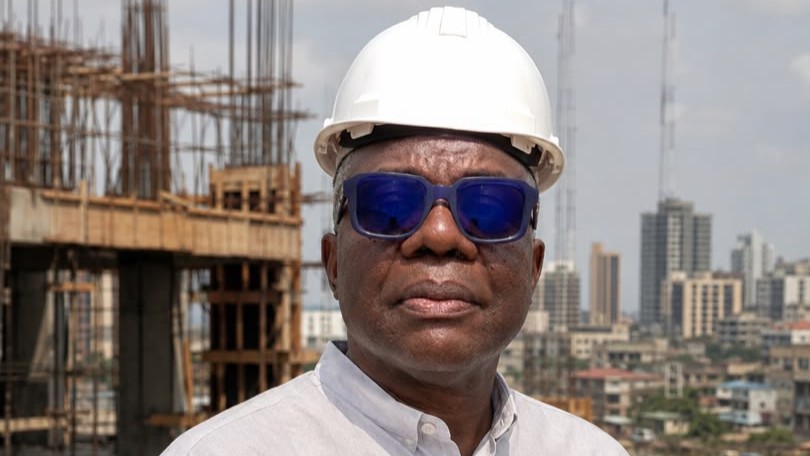
Cities are not just skylines of concrete, steel, and glass — they are reflections of the policies that shape them. This is the conviction driving Arc. Effiong Edet Essang, a Lagos-based architect who has become an outspoken voice for reform in Nigeria’s built environment sector. With more than three decades of experience designing healthcare centers, residential estates, and large-scale urban developments, Arc. Essang has witnessed firsthand how outdated regulatory frameworks continue to undermine Nigeria’s architectural progress.
“We’re building on broken systems,” he says. “You can’t design a hospital without access roads. You can’t plan cities when land use policies are outdated.”
At the center of his critique is the Land Use Act of 1978, a nearly five-decade-old law vesting control of land in state governors. Originally meant to simplify land administration, it has instead become a bottleneck — slowing development, fueling opaque allocation, and leaving Nigerians vulnerable to disputes and inconsistent enforcement across states. “Land is the foundation of every structure we build,” he explains. “When that foundation is unstable, everything built on top of it inherits that instability.”
Arc. Essang is pushing for a coordinated overhaul of Nigeria’s spatial development framework, built on three priorities: legally binding, consistently enforced master planning; transparency in land acquisition; and regulatory accountability for government agencies and developers alike. “Until the government prioritizes master planning and enforces it with integrity, we will continue to see chaos in our urban centers,” he warns, citing recurring flooding, traffic gridlock, and informal settlements as consequences of policy failure.
His critique isn’t that of an outsider. Through his firm, Designhaus, he collaborates with public agencies on master plans, infrastructure layouts, and urban resilience strategies. “It’s easy to criticize from a distance,” he says. “It’s harder — and more useful — to sit in the room with policymakers and push for change.”
His message is one of foundational thinking: lasting cities aren’t built from vision alone, but from the policies that give that vision room to grow.

“For Nigeria to grow,” he concludes, “its buildings must rise from the ground up — on the foundation of sound policy.”

